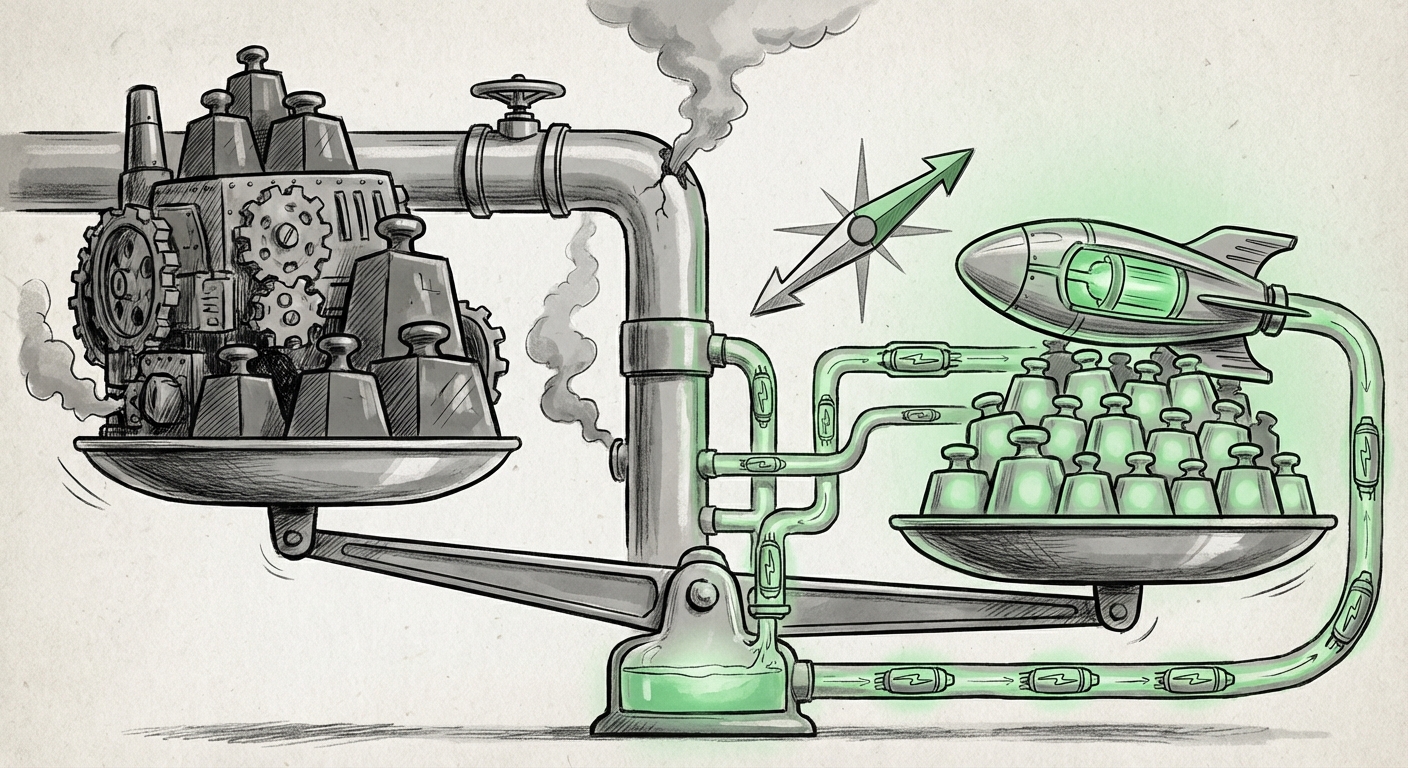
OpenAI's "Project Camellia" in Georgia Secures a Massive 3.2-Gigawatt Power Deal Through 2032 – What This Means for the Future of AI
The artificial intelligence industry has an insatiable appetite for electricity. Training a single large language model can consume as much energy as hundreds of homes use in a year. Running inference for billions of users multiplies that demand many times over. Now, a landmark deal offers a glimpse into how AI companies plan to meet that demand for years to come.
OpenAI has announced a massive power agreement through its project known as "Project Camellia" in Georgia. The agreement secures a stunning 3.2 gigawatts of electricity capacity through the year 2032. To put that number in perspective, a single gigawatt can power about 750,000 average American homes. Three point two gigawatts could power nearly 2.4 million homes – or, in this case, one of the world's most ambitious artificial intelligence companies.
This is not just a routine utility contract. It is a signal that the race to build the next generation of AI is also a race to secure energy on an unprecedented scale. And the implications ripple far beyond OpenAI's data centers in Georgia.
The Scale of AI's Energy Hunger
To understand why a 3.2-gigawatt deal is so significant, we need to look at how AI systems consume power. Modern AI models, especially large language models and image generators, require vast clusters of specialized computer chips – often graphics processing units (GPUs) or custom accelerators like Google's TPUs. These chips run constantly during training, sometimes for weeks or months, drawing enormous amounts of electricity. After training, the model must be deployed to serve users, which also requires continuous computing power.
Currently, data centers account for about 1–2% of global electricity consumption. But as AI adoption accelerates, that share is projected to climb sharply. Some estimates suggest that by the end of this decade, AI could consume as much electricity as entire countries like Japan. The 3.2-gigawatt commitment from OpenAI is a clear bet that this trend will continue and even intensify.
Moreover, the deal runs through 2032, a 6-year horizon that shows OpenAI's confidence in sustained growth. It is not a short-term hedge; it is a long-term strategy to lock in capacity before competitors or other industries bid up the available power in key regions.
Why Georgia?
Georgia has become a hotbed for data center construction, thanks to several advantages. The state offers relatively low electricity rates compared to many parts of the country. It has a robust transmission grid, access to renewable energy sources, and business-friendly policies. The location also offers proximity to major internet infrastructure in the southeastern United States.
By choosing Georgia, OpenAI positions itself to tap into a region that already hosts data centers for companies like Google, Microsoft, and Facebook. The state's utility providers are experienced in handling large industrial loads. And with the 2032 timeline, OpenAI can work closely with local utilities to build or upgrade the necessary substations and transmission lines.
The "Project Camellia" name itself may reference the state flower of Georgia, emphasizing a local commitment. Whether intentional or not, it signals a deep integration with the state's energy ecosystem.
What This Means for the Future of AI
This single deal carries several powerful messages about where AI is headed.
1. AI Infrastructure Is Becoming a Major Energy and Construction Industry
Building AI is no longer just about algorithms and data. It is about concrete, steel, and electrical cables. A 3.2-gigawatt commitment requires enormous physical infrastructure: data center buildings, cooling systems, backup generators, and high-voltage connections. This transforms AI from a purely software endeavor into a heavy-industry operation. Future AI companies will need partnerships with utility firms, construction companies, and even governments to secure the resources they need.
2. The "Energy Moats" Are Real
Just as companies compete for top talent and computing chips, they will compete for access to reliable, affordable electricity. The company that locks in the best power deals will have a significant cost advantage. Energy is one of the largest operational expenses for data centers. A 3.2-gigawatt deal at favorable rates could save OpenAI hundreds of millions of dollars annually compared to competitors who have to buy power on the spot market or in more expensive regions.
3. Renewables vs. Reliability: A Balancing Act
Massive energy deals like this raise questions about the source of the power. Many tech companies have committed to carbon-neutral or 24/7 clean energy goals. While specifics of the Georgia deal are not public, securing 3.2 gigawatts of firm, around-the-clock capacity likely requires a mix of sources: perhaps some renewables plus natural gas or nuclear power. The 2032 timeline suggests that OpenAI is planning for a future where grid reliability is paramount, even as renewables grow. This may accelerate investments in battery storage and advanced grid technologies.
4. Geographic Diversification of AI Compute
OpenAI has other data centers in locations like California and overseas. Adding Georgia gives the company geographic diversity, reducing risk from regional outages or natural disasters. It also spreads the economic benefits – jobs, tax revenue – across more communities, which can help with public relations and local support for future expansions.
Practical Implications for Businesses and Society
The ripple effects of Project Camellia will be felt far beyond OpenAI's server racks.
For Businesses Running AI Workloads
- Energy costs will become a bigger part of AI budgets. If you run AI models or rely on cloud AI services, expect your provider to pass on some energy costs. Efficiency will be a competitive differentiator.
- Location matters. Where you place your own AI infrastructure – or which cloud region you choose – will have a major impact on your carbon footprint and operating costs. Regions with cheap, green energy (like parts of the U.S. Northwest, Scandinavia, or the Middle East) will become increasingly attractive.
- New business opportunities. The demand for AI energy will spur innovation in chip efficiency, cooling technology, and software optimization. Companies that can help AI use less power per unit of compute will find eager customers.
For Society and Policy Makers
- Grid planning must evolve. Utilities and regulators need to anticipate the rapid growth of AI data centers. Multi-gigawatt loads can destabilize local grids if not planned for. Governments may need to streamline permitting while ensuring reliability and affordability for other consumers.
- Energy equity concerns. If AI companies consume huge shares of clean energy, that could drive up prices for residential and small business customers. Policy makers will need to balance industrial growth with consumer protection.
- Environmental impact. While 3.2 gigawatts of clean power is a positive step, the overall carbon footprint of AI is growing. Society must push for transparency in energy sourcing and for stronger commitments to net-zero operations.
For AI Developers and Engineers
- Green coding matters. Writing efficient code that uses fewer GPU cycles will directly translate into lower energy bills and environmental impact. "Sustainable AI" will become a career specialty.
- Model size vs. efficiency trade-offs. The energy cost of training and running ultra-large models may become prohibitive. This could shift the industry toward smaller, more specialized models that achieve comparable performance with less compute.
- Hardware innovation accelerates. The need to do more with each watt will drive demand for better chips. Expect more announcements from companies like NVIDIA, AMD, Intel, and startups developing next-generation AI accelerators.
Actionable Insights for the AI Community
Whether you are a CTO, a data scientist, or an investor, the Project Camellia deal offers lessons you can apply today.
1. Start tracking your AI energy footprint now. Tools like cloud provider dashboards, carbon accounting software, and hardware power meters can help you understand your usage. Set reduction targets and report progress.
2. Evaluate your cloud provider's energy strategy. Ask where their data centers are located, what mix of energy they use, and whether they have long-term power purchase agreements. Providers with good energy deals may offer more stable pricing.
3. Consider geographic diversification. If your AI workloads are mission-critical, have a plan to run in two or more regions with different energy sources and risk profiles.
4. Invest in model optimization. Techniques like pruning, quantization, distillation, and efficient architectures (e.g., Mixture of Experts) can dramatically reduce energy per inference. The most energy-efficient models will become more competitive.
5. Stay informed about utility and regulatory changes. As AI power demand grows, new tariffs, interconnection rules, and renewable mandates will emerge. Being proactive can save money and avoid surprises.
Conclusion: Energy Is the New AI Compute
The 3.2-gigawatt power deal secured by OpenAI's Project Camellia in Georgia marks a turning point. It shows that AI companies are no longer just software companies; they are industrial energy consumers on par with aluminum smelters or large manufacturing plants. The future of AI will be shaped as much by energy markets and grid infrastructure as by algorithms and data.
For businesses, the message is clear: AI adoption will require strategic energy planning. For society, the challenge is to enable AI's benefits without overwhelming the power system. And for the AI community, the energy constraint is not just a problem to solve – it is an opportunity to innovate. The most successful AI systems of the next decade will be those that deliver the most intelligence per watt.
Project Camellia is just one flower in a blooming garden of AI infrastructure. But its root system – a decade-long, multi-gigawatt commitment – reaches deep into the ground beneath every future AI model we build.