Why Bigger AI Models Are the Only Path Forward — What Google's Next Move Means for Everyone
Google CEO Sundar Pichai made a bold statement that is already sending ripples across the entire technology industry: the next major leap for Gemini depends on building "much larger base models." This is not just news for AI researchers or Google engineers. It is a signal about the future of computing, business, and the way we interact with intelligent systems. This article breaks down what this announcement means, why scale still matters, and how businesses and society should prepare for what comes next.
If you have followed the world of artificial intelligence over the last few years, you have likely heard a recurring debate: are bigger models always better? Some experts argue that we have hit a point of diminishing returns. Others claim that we are just scratching the surface of what scale can unlock. With Pichai's latest remarks, Google has firmly planted its flag on the side of bigger being better — at least for now.
When the CEO of one of the world's most influential technology companies says that the future of its flagship AI system depends on "much larger base models," it is worth paying close attention. This is not a minor update or a routine product improvement. This is a strategic declaration about the direction of an entire field.
Let's explore what this really means, why it matters, and how it will shape the AI landscape in the years ahead.
The Core Idea: Size Still Matters in AI
At its simplest level, a "base model" is the large, general-purpose AI system that companies like Google, OpenAI, and Meta build first. These models are trained on enormous amounts of text, code, images, and other data. They learn patterns, relationships, and reasoning abilities. After this initial training, the models can be fine-tuned for specific tasks like answering questions, writing code, generating images, or analyzing documents.
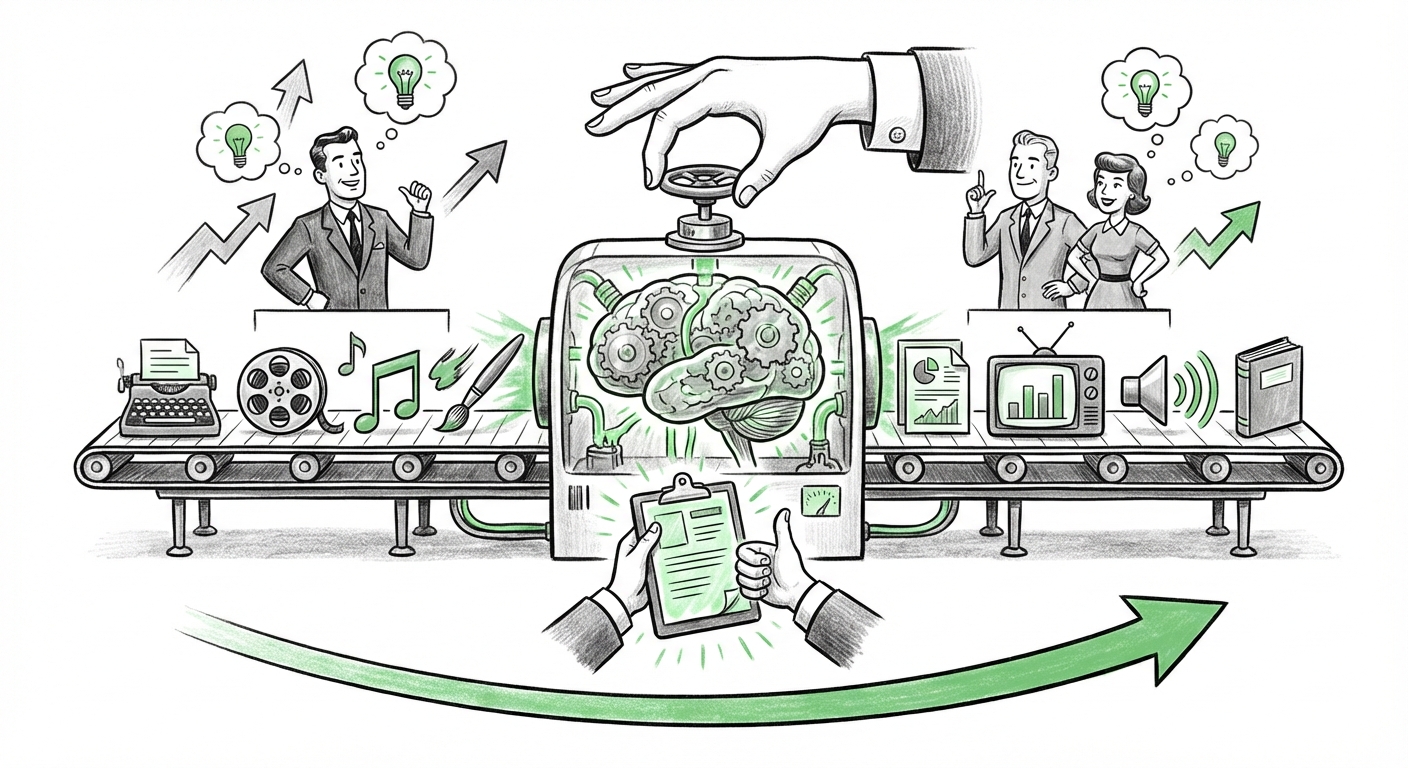
Pichai's statement makes clear that Google believes the next big jump in Gemini's capabilities will come from increasing the size and scale of this foundational training. That means more data, more computing power, more parameters, and more complex architecture. In short: a much bigger brain.
This is significant because many in the industry have been asking whether we have reached the ceiling of what scaling can achieve. The answer from Google's top leadership is a clear "no." They see a direct line between larger models and better, more capable, more useful AI systems.
For businesses and developers who rely on AI, this signals that the frontier of possibility is about to expand again. Models that are already powerful will become significantly more capable. Tasks that are currently difficult or impossible for AI may become routine. The gap between human-level reasoning and AI reasoning is expected to narrow further.
Why Google Is Doubling Down on Scale
To understand why Google is taking this path, it helps to look at the competitive landscape. The AI industry is in a race where capability directly translates to usefulness, user adoption, and revenue. Companies that offer the most capable models attract the most users, developers, and business partners. Being second-best in this space means losing ground that is hard to regain.
Gemini is Google's answer to systems like OpenAI's GPT series, Anthropic's Claude, and Meta's Llama. Each of these competitors is also pursuing larger and more powerful base models. By explicitly committing to larger scale, Google is signaling that it will not settle for incremental improvements. It wants a leap.
There is also a deeper technical logic at play. Larger base models tend to exhibit what researchers call "emergent abilities." These are capabilities that were not explicitly programmed or trained for but that appear naturally as the model gets bigger. For example, a model trained primarily on language might develop basic reasoning, translation, or coding skills without being specifically taught. The larger the model, the more of these unexpected skills emerge.
For Google, building a much larger base model for Gemini means unlocking abilities that no one has fully anticipated. That is the kind of breakthrough that can redefine a product category and reshape user expectations.
What This Means for the Future of AI
The decision to build much larger base models has far-reaching implications beyond Google's own product roadmap. It tells us where the entire AI industry is heading.
First, the era of "good enough" AI is ending. Smaller models that perform adequately on narrow tasks will still have their place, but the frontier of what is possible will be defined by scale. Companies that want to lead will invest heavily in infrastructure, data acquisition, and model architecture innovation. The barrier to entry for frontier AI development will become even higher.
Second, the cost of AI development will continue to rise. Training much larger base models requires vast amounts of energy, specialized hardware, and engineering talent. This concentration of resources means that only a handful of organizations — likely large technology companies and well-funded startups — will be able to compete at the highest level.
Third, the capabilities of AI systems will become more general. Larger base models are better at transferring knowledge from one domain to another. A model trained on a huge and diverse dataset can handle a wider range of tasks without needing separate fine-tuning for each one. This moves AI closer to the dream of a single "universal" assistant that can help with almost any cognitive task.
Fourth, safety and alignment challenges will grow. More powerful models bring more potential risks. Ensuring that these systems behave reliably, ethically, and safely becomes both more important and more difficult as they become larger and more capable. Google will need to invest heavily in safety research alongside its scaling efforts.
Practical Implications for Businesses
If you run a business, work in technology, or simply use AI tools in your daily work, this shift toward much larger base models will affect you directly. Here is what to watch for.
Better AI Products and Services
The most immediate benefit will be more capable AI tools. Whether you use AI for customer service, content generation, data analysis, software development, or decision support, the quality of outputs will improve. Larger base models are better at understanding context, generating coherent responses, and handling complex instructions. Expect fewer errors, more nuance, and greater reliability.
Higher Expectations from Users
As AI systems become more powerful, user expectations will rise accordingly. A chatbot that was impressive two years ago may soon feel basic and frustrating. Businesses that integrate AI into their customer-facing operations will need to keep pace with the improvements in base models. Falling behind means delivering a subpar experience compared to competitors that use the latest systems.
New Opportunities for Innovation
Larger base models open up use cases that were previously impractical. For example, AI systems that can reason through multi-step problems, draft complex legal documents, write sophisticated code, or simulate entire business scenarios will become available to more organizations. Companies that think creatively about how to apply these capabilities will gain a competitive edge.
Infrastructure and Cost Considerations
For most businesses, the shift to larger base models will be experienced through the services they use rather than through building their own models. However, the cost of running these models — both for training and for inference (using the model to generate responses) — is likely to be higher than for current systems. Businesses should plan for increased spending on AI services and infrastructure in the coming years.
Societal Implications: The Big Picture
Beyond individual businesses, the move toward much larger base models raises important questions for society as a whole.
Access and equity. If only a few organizations can build frontier AI systems, there is a risk that the benefits of AI become concentrated among a small number of powerful players. This could widen the digital divide and create new forms of inequality. Policymakers and industry leaders will need to consider mechanisms for broadly sharing the benefits of advanced AI.
Employment and skills. As AI becomes more capable, more tasks that were once reserved for humans will be automated. This does not necessarily mean mass unemployment, but it does mean that the skills that are most valuable in the labor market will change. Education and training systems will need to adapt rapidly.
Governance and safety. With great power comes great responsibility. Larger base models are more capable but also more unpredictable. Ensuring that these systems are aligned with human values and do not cause unintended harm will require ongoing research, regulation, and oversight. The decisions that Google and other companies make about safety will affect everyone who uses or is impacted by AI.
Environmental impact. Training larger models consumes significant energy. As AI scales up, the environmental footprint of the industry will grow. Companies will need to invest in renewable energy, efficient hardware, and sustainable practices to mitigate this impact.
Actionable Insights for the Next Few Years
If Pichai's announcement is a sign of what is to come, here are practical steps you can take to prepare.
- Stay informed about model capabilities. Follow developments in base model releases from Google, OpenAI, and others. Understanding what the latest models can and cannot do will help you make better decisions about where to apply AI in your work or business.
- Invest in AI literacy. As models become more powerful, the ability to use them effectively becomes more valuable. Learn about prompt engineering, model selection, and the strengths and weaknesses of different systems. This knowledge will be a career asset.
- Plan for higher AI spending. Whether you are a startup or a large enterprise, budget for increasing costs related to AI tools, APIs, and infrastructure. The best capabilities will come at a premium, but the return on investment can be substantial.
- Focus on high-value use cases. Not every task needs the most powerful model. Identify the areas where larger base models can deliver the biggest impact — complex analysis, creative work, advanced automation — and allocate resources accordingly.
- Think about safety and ethics. If you build products or services that use AI, invest in testing, monitoring, and safeguards. As models become more capable, the potential for misuse or unintended consequences grows. Responsible AI practices are not optional.
- Watch for new interfaces and experiences. Larger base models enable new ways of interacting with computers. Voice, visual, and multimodal interfaces will become more natural and capable. Be ready to adopt these new interaction paradigms as they mature.
Conclusion: The Era of Bigger Brains Is Just Beginning
When the CEO of Google says that the next leap for Gemini depends on building "much larger base models," it is more than a product announcement. It is a statement about the direction of the entire AI field. Scale is not dead. The frontier is not closed. The most powerful AI systems are still ahead of us, not behind us.
For businesses, this means preparing for a world where AI capabilities improve dramatically year over year. For society, it means grappling with the opportunities and challenges of increasingly powerful intelligence. For individuals, it means that staying curious and adaptable is more important than ever.
The race to build bigger, better, and more capable models is accelerating. Google's Gemini is one major contender in that race, and the commitment to scaling up is a signal that the company intends to lead. But the implications go far beyond any single product. They touch every industry, every job, and every aspect of how we live and work.
The future of AI is not just about smarter algorithms or better data. It is about building systems that are fundamentally more capable — systems that can reason, create, and help us solve problems we have not yet even imagined. And if Pichai is right, that future depends on thinking bigger. Much bigger.