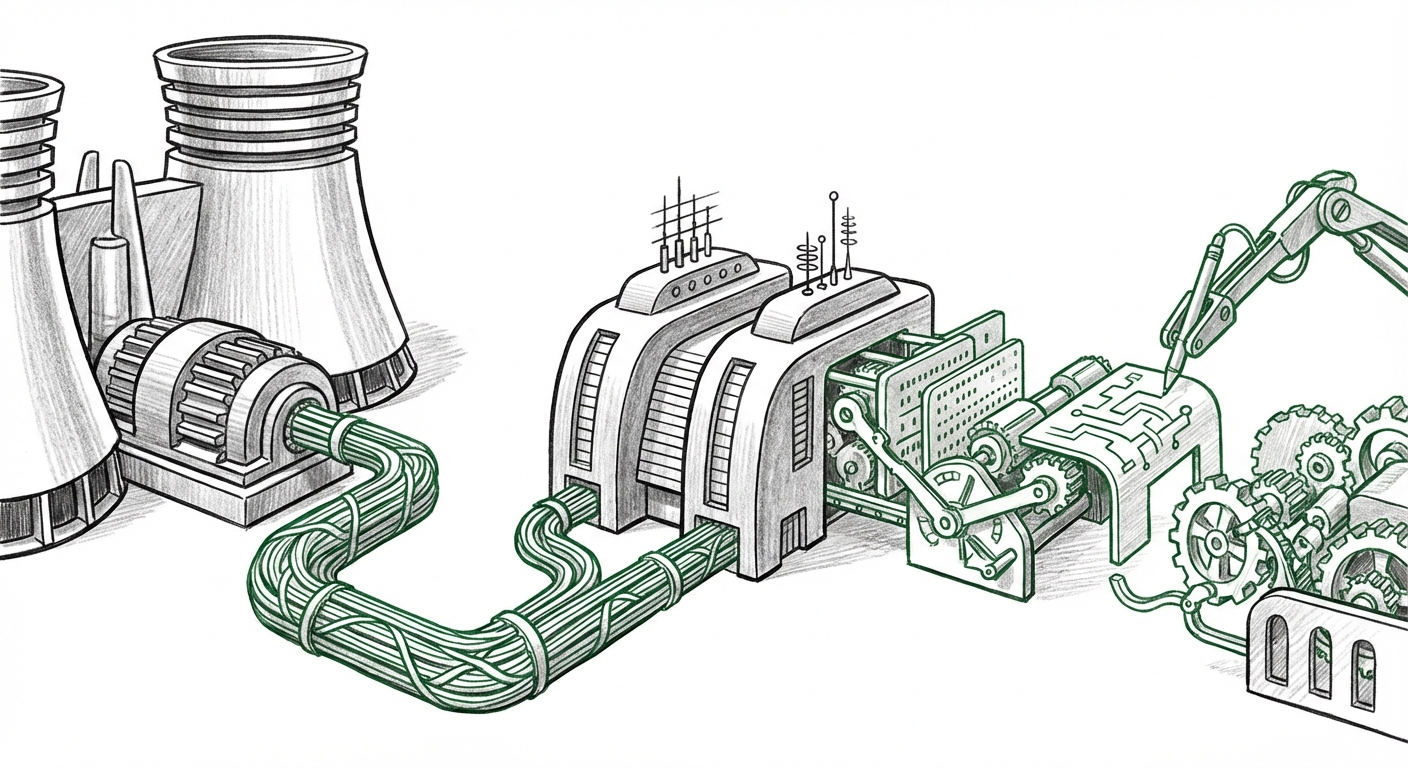
The Next Frontier of AI Interaction: Claude's Voice Mode Gets a Major Intelligence Upgrade
Voice has always been the holy grail of user interfaces. It is the most natural, fastest, and most accessible way for humans to communicate. Yet, for years, talking to an artificial intelligence has often felt like talking to a highly functional, but deeply limited, smart speaker. You could set timers, check the weather, or play a song, but the moment you tried to have a real conversation or tackle a complex problem, the experience fell apart. The intelligence simply wasn't there.
That paradigm is shifting. As of July 24, 2026, a significant update has gone live: Claude's voice mode now operates on Anthropic's most capable models and is available across all platforms. This is not a minor feature tweak. It represents a fundamental re-architecture of how we interact with AI. We are moving from a world of voice commands to a world of voice reasoning.
For businesses, developers, and everyday users, understanding the weight of this change is critical. This article explores what this intelligence upgrade means, why the "all platforms" rollout is a strategic masterstroke, and how society will begin to use AI differently when the interface finally matches the power of the engine.
The End of the "Voice Command" Era
To understand why this is a big deal, we have to look at the recent history of voice AI. Most voice assistants today rely on a process of "Speech-to-Text, Query, Text-to-Speech." While effective, the "Query" part has historically been handled by a lighter, faster, and less expensive model. This kept latency low, but it also kept the ceiling of reasoning low.
You couldn't ask a voice assistant to analyze a complex spreadsheet, review a legal contract for inconsistencies, or help you plan a multi-step business strategy—at least, not effectively. The voice interface was a thin layer over a relatively shallow brain.
This is what has changed. By putting Claude's voice mode on its most capable models, Anthropic has effectively removed the intelligence bottleneck. The voice interface is no longer a separate, limited function; it is a direct channel to the core reasoning engine. When you speak to Claude now, you are not just dictating a search query. You are engaging in a thoughtful, context-aware, and deeply analytical conversation.
The implications for latency and nuance are profound. A more capable model understands tone, implication, and complex instructions better. It can hold much longer threads of conversation without losing the plot. It can ask clarifying questions that actually help solve a problem, rather than just repeating a script.
Why "Across All Platforms" is the Real Game-Changer
A powerful AI that is locked in a lab is useless. A powerful AI that is only available on a specific device or operating system creates friction. The announcement that this upgrade is rolling out across all platforms is arguably just as important as the intelligence upgrade itself.
What does "all platforms" mean in practice?
- Web: The deepest, most feature-rich experience. Ideal for complex workflow integration.
- Mobile: The natural home for voice interaction. This is where Claude becomes a true on-the-go assistant, capable of handling everything from answering emails verbally to analyzing a photo taken in a warehouse.
- API: This is the sleeping giant. Developers can now build voice applications that run on Anthropic's top-tier intelligence. This opens the door for third-party apps, enterprise tools, and specialized services that operate entirely through voice.
This universal access creates a consistent intelligence layer. A user can start a complex reasoning task on their desktop, continue it verbally on their phone during a commute, and have the API call that same logic in a custom business dashboard. The intelligence follows you, regardless of the device.
For businesses, this standardization is a dream. It means they can invest in training and workflows around a single AI interface, knowing that the same high-quality reasoning will be available to employees on any device. It lowers the barrier to adoption and speeds up the return on investment.
Practical Implications: How Business and Society Will Use This
When you combine top-tier reasoning with a natural voice interface, the use cases expand exponentially. Here are the key areas where this upgrade will have an immediate and lasting impact.
1. The Reinvention of the Executive Assistant
The traditional executive assistant role is high-touch, high-context, and high-stakes. Claude's upgraded voice mode can now handle the cognitive load of that role. Imagine briefing an AI verbally on the nuances of a complex negotiation. The AI listens, processes the strategy, and can then verbally walk you through risk scenarios, draft responses, or summarize a competitor's earnings call—all through a natural conversation. This is not task automation; this is cognitive delegation.
2. Accessible Expertise for Hands-On Work
Consider a field technician repairing a complex machine, a surgeon in an operating room, or a chef creating a new recipe. These professionals often need information, but their hands and eyes are busy. Voice is the only interface that works. Now, that voice interface is backed by a model capable of reading technical manuals, analyzing diagnostic data, and providing expert-level guidance in real time. This is a massive leap for productivity in blue-collar and high-skill physical environments.
3. Revolutionizing Education and Tutoring
The best way to learn is often through dialogue—asking questions, getting clarifications, and talking through a problem out loud. Previous voice AI was too brittle for this. It would often misunderstand a student's specific gap in knowledge and provide a generic answer. Claude's upgraded voice mode can act as a true Socratic tutor. It can listen to a student's reasoning, identify the flaw in the logic, and guide them to the correct answer through conversation. This is personalized, conversational education at scale.
4. Transforming Healthcare Triage and Monitoring
While not a replacement for a doctor, an intelligent voice agent can perform much more sophisticated health triage. A patient can describe their symptoms in natural language, and the model can ask follow-up questions that a less capable system could never generate. It can track the progression of symptoms over time verbally and provide early warnings based on subtle changes in a patient's description. This brings a level of analytical rigor to remote patient interaction that was previously impossible.
The Developer Ecosystem: Building the Voice-First Future
Perhaps the most significant long-term impact is on the developer ecosystem. By making this capability available via the API, Anthropic is effectively handing the keys to the kingdom to builders.
We will likely see a wave of voice-first applications that were previously too complex to build. Consider:
- Legal document analysis: "Claude, listen to this deposition excerpt and tell me if it contradicts paragraph three of the contract."
- Software engineering: "Claude, I'm going to describe a bug in the payment gateway. Listen, and then help me trace the error in the code."
- Creative writing: "Claude, I have a character idea. Let's talk through their backstory and motivation."
The barrier to entry for building "smart" applications just dropped significantly. Developers no longer have to choose between a fast, dumb voice interface and a slow, smart text interface. They can now have both.
What This Means for the AI Competitive Landscape
Anthropic is making a clear bet: that the future of AI interaction is verbal reasoning. While competitors have focused on multimodal capabilities (vision, audio generation) or agentic tasks (booking flights, ordering food), this update signifies a focus on the quality of the conversation itself.
This creates a new axis of competition. It's no longer just about which model scores highest on a benchmark. It's about which model feels the most intelligent when you talk to it. Tone, memory, reasoning depth, and conversational flow become the new battlegrounds.
For the industry, this pushes everyone to invest more heavily in the alignment of voice interfaces. A powerful model that is rude, forgetful, or logically inconsistent in conversation is useless. The focus must shift to making the interaction not just accurate, but natural and trustworthy.
Actionable Insights for Business Leaders
This is not a future development; it is happening now. Here are three actions business leaders should take today:
- Audit for Auditory Workflows: Look at your organization's workflow. Which processes rely on verbal communication (meetings, calls, briefings, training)? These are the workflows that will be most radically improved by an intelligent voice interface.
- Prototype a Voice Agent: Do not wait for a perfect use case. Take a specific, bounded problem in your department (e.g., "summarizing daily sales calls") and build a prototype using this new voice capability. The cost of experimentation is low, but the potential upside is enormous.
- Prepare for "Voice-First" Expectations: Your customers and employees are about to experience the gold standard of voice AI. Their tolerance for clunky, unintelligent voice menus and chatbots is about to drop to zero. Now is the time to upgrade your customer service and internal tooling.
The Road Ahead: Voice as the Operating System of Daily Life
This update is a significant step toward a future where AI is in the background, ready to help, but never in the way. When the interface is as natural as speech, the technology disappears. We stop thinking about "using an AI" and start thinking about "solving a problem."
Claude's voice mode running on its most capable models across all platforms is more than a product update. It is a signal that the Age of Voice Reasoning has truly begun. The conversation is no longer artificial; it is finally intelligent.
The smart speaker era was about convenience. The Claude voice era is about capability. The distinction will define the next decade of human-computer interaction.