Moonshot AI Releases Kimi K3 With Open Weights — What This Means for the Future of AI and How It Will Be Used
The artificial intelligence world just experienced a major shift. Moonshot AI, a company that has been quietly shaking up the frontier model race, has released Kimi K3 with open weights and full infrastructure. This is not just another model launch. It is a signal that the rules of the AI game are changing fast.
For anyone who builds with AI, invests in AI, or simply uses AI in their daily work, Kimi K3 represents something significant. It points to a future where powerful models are no longer locked behind closed doors. Instead, they are available for anyone to study, modify, and deploy. Let’s break down what happened, why it matters, and what comes next.
Who Is Moonshot AI and Why Should You Care?
Moonshot AI might not be a household name yet, but it has become a serious force in the AI landscape. Before the Kimi K3 release, the company had already turned heads by competing directly with some of the biggest names in frontier AI. They showed that a determined team with strong research and engineering could build models that rival the best in the world.
The decision to release Kimi K3 with open weights is a bold move. Open weights mean that the trained model parameters are publicly available. Anyone can download them, inspect how the model works, and even fine-tune them for their own purposes. This is very different from closed models where you only get access through an API and have no idea what is happening under the hood.
By releasing both the weights and the infrastructure, Moonshot AI is sending a clear message: they believe the future of AI is open, collaborative, and transparent. That message has huge implications.
What Does Open Weights Really Mean for AI Development?
To understand the importance of open weights, it helps to think about how most frontier models have been released in the past. Companies like the ones behind GPT-4, Gemini, and other top-tier models have kept their weights secret. You can use the model through an interface or an API, but you cannot see what makes it tick. You cannot tweak it. You cannot run it on your own servers without paying per query.
Open weights change everything. With Kimi K3, developers and researchers can:
- Run the model locally on their own hardware, reducing cost and improving privacy.
- Fine-tune the model for specific tasks like medical diagnosis, legal document analysis, or customer service in a particular industry.
- Study the model's behavior to understand its strengths, weaknesses, and potential biases.
- Build custom tools on top of the model without needing permission from a central company.
This level of access accelerates innovation across the entire AI ecosystem. Small startups, academic labs, and even individual developers can now work with a frontier-level model. They are no longer dependent on a handful of Big Tech companies for access to cutting-edge AI.
How Kimi K3 Is Shaking Up the Frontier Model Race
The phrase "shaking up the frontier model race" is not just hype. For the past few years, the frontier has been dominated by a small number of players. Each new release from those players set the bar a little higher. But the cost of training those models kept climbing, and access remained tightly controlled.
Moonshot AI broke that pattern. Kimi K3 reportedly matches or even surpasses many closed models on key benchmarks. By releasing it openly, Moonshot AI has proven that you do not have to be a trillion-dollar company to build world-class AI. And you do not have to lock it down to make it valuable.
This puts pressure on other frontier labs. If the best models are open, why would developers pay a premium for closed APIs? The competitive landscape is shifting from "who has the best model" to "who provides the best ecosystem, tools, and support around their model."
It also changes how we think about safety and alignment. Open models can be audited by the global research community. Bugs, vulnerabilities, and biases can be found and fixed faster. This is a more distributed, democratic approach to AI safety compared to the "trust us, we have it under control" model used by closed labs.
What This Means for Businesses
If you run a business that uses AI or is thinking about using AI, Kimi K3 and the trend it represents should be on your radar. Here is why.
Lower Costs and More Control
With an open-weights model, you are not locked into a per-token pricing plan. You can run the model on your own infrastructure, or on a cloud provider of your choice. For companies with high-volume AI usage, this can slash costs dramatically. You also have full control over data privacy — no need to send sensitive information to a third-party API.
Customization Becomes Practical
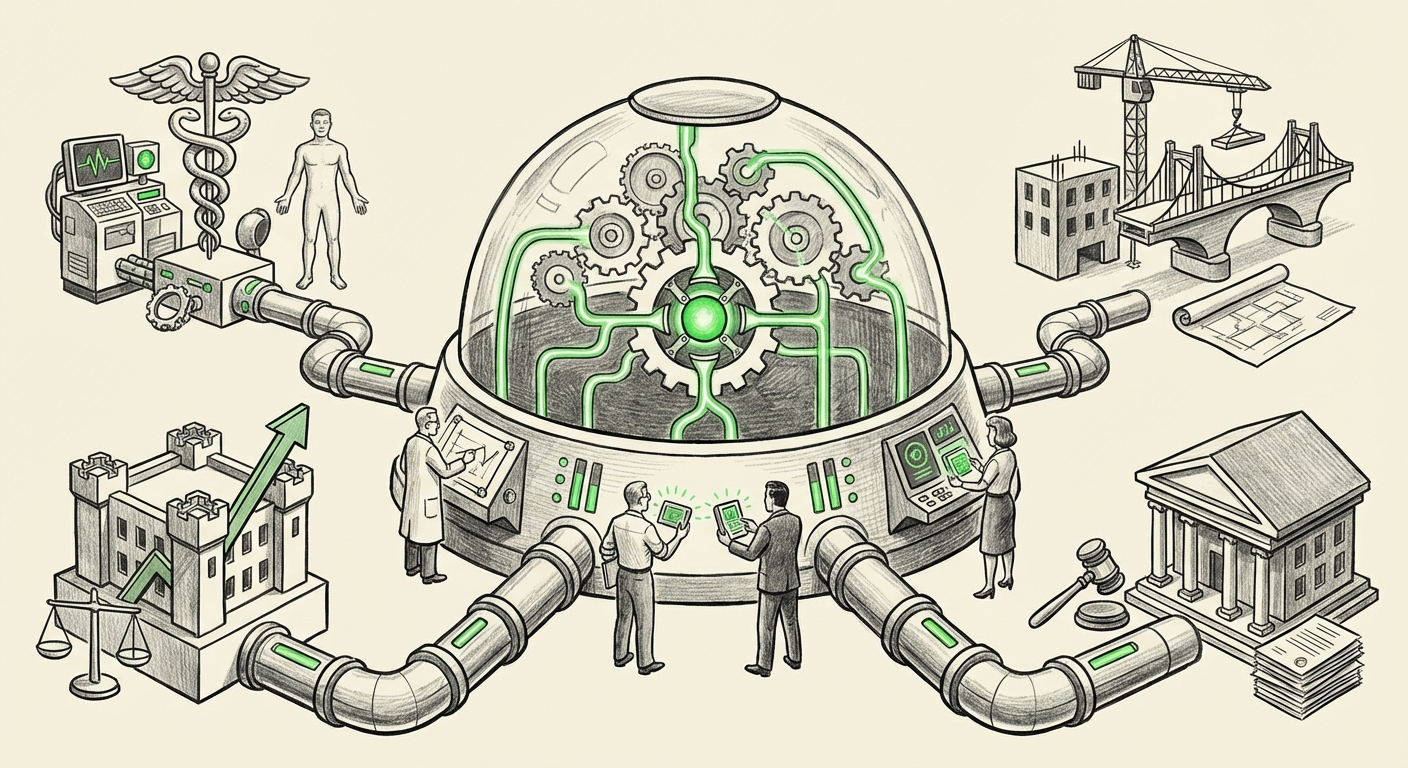
Off-the-shelf models are general purpose. But most businesses need AI that understands their specific domain. Open weights allow you to fine-tune Kimi K3 on your own data. A legal firm can train it on past case law. A hospital can adapt it to medical records and clinical guidelines. A retailer can tune it to understand product catalogs and customer returns. This is where the real value lies.
Faster Experimentation
When the weights are open, your team can experiment freely. They can test different prompting strategies, try different fine-tuning approaches, and iterate rapidly without waiting for API rate limits or feature releases from a vendor. This speed is a competitive advantage.
Supply Chain Resilience
Relying on a single AI provider is a risk. Pricing changes, service outages, policy shifts — all of these can impact your operations. Open models like Kimi K3 give you an alternative. You can build your stack around an open core and use proprietary APIs only when it truly adds value.
What This Means for Society
The societal implications of open frontier models are just as important as the business ones. When powerful AI is widely available, the benefits and the risks both grow.
Democratizing Access to Intelligence
Smaller companies, nonprofits, researchers in developing countries, and independent creators can all use Kimi K3. This levels the playing field. AI does not become a tool only for the wealthy and powerful. It becomes a public resource that anyone can adapt to solve local problems.
Think about a small farming cooperative in a remote region. They could fine-tune Kimi K3 on local weather data, soil conditions, and crop prices to give farmers personalized advice. That kind of application is simply not feasible when every API call costs money and data must be sent to a distant server.
Transparency and Trust
Open models can be inspected. Researchers can look for hidden biases, security vulnerabilities, or privacy leaks. This transparency builds trust. In contrast, closed models are black boxes — we have to trust the company's claims about safety and fairness. Open weights shift the burden of proof from "trust us" to "check for yourself."
Risks of Misuse
Of course, open weights also come with risks. Bad actors could use Kimi K3 to generate misinformation, create harmful content, or automate cyberattacks. This is a real concern. But the argument for open models is that the security and safety benefits of transparency outweigh the risks of misuse. The global community can develop safeguards, filters, and monitoring tools that work across many different deployments.
No approach is perfect. But the open model community has already developed strong norms around responsible release. Moonshot AI's decision to release infrastructure along with weights suggests they are thinking carefully about how to enable good uses while limiting bad ones.
What Comes Next for Moonshot AI and the Wider Industry
The release of Kimi K3 is not the end of a story — it is the beginning of a new chapter. Here are a few trends to watch.
More Open Frontier Models
Moonshot AI's success will inspire other labs to consider open releases. We may see a race not just to build better models, but to build better open models. This is healthy competition that benefits everyone.
Infrastructure as a Differentiator
Moonshot AI released both weights and infrastructure. That infrastructure — the code, tools, and pipelines needed to run and customize the model — is a major differentiator. In the future, the value may shift from the model itself to the ecosystem around it. Companies that provide the best tools for fine-tuning, deployment, monitoring, and safety will win.
New Business Models
If the model is free and open, how do you make money? Moonshot AI may be betting on services: hosted versions, enterprise support, custom fine-tuning, consulting, and integration with other products. This mirrors the open-source software playbook. Red Hat proved you can build a billion-dollar business on free software. The same model is now emerging for AI.
Regulatory Attention
Open frontier models will attract attention from regulators. Governments will ask: should there be limits on who can download and deploy such powerful technology? The debate between open and closed AI will intensify. Moonshot AI's release provides a concrete case study for policymakers to consider.
Actionable Insights for Developers and Leaders
Whether you are a developer, a product manager, or a CEO, here is how you should think about Kimi K3 and the open-weights trend.
- Start experimenting now. Download Kimi K3, run it, test it on your own data. See what it can do. The best way to understand the potential is to get hands-on.
- Evaluate your AI supply chain. Do you rely on one API provider? Could an open model reduce your costs or improve your privacy? Build a backup plan around open weights.
- Invest in fine-tuning infrastructure. The ability to customize models is where the long-term value lies. Build the data pipelines and evaluation frameworks you need to fine-tune effectively.
- Watch for ecosystem plays. Moonshot AI is not just releasing a model; they are releasing an infrastructure. Pay attention to the tools, libraries, and platforms that emerge around Kimi K3. These may become essential parts of your stack.
- Prepare for a more competitive landscape. When frontier models are open, differentiation shifts to data, domain expertise, and user experience. Invest in those areas.
Conclusion: The Genie Is Out of the Bottle
Moonshot AI's release of Kimi K3 with open weights is a landmark moment. It proves that frontier-level AI can be built outside the usual suspects and that it can be shared openly with the world. This changes the calculus for every company, researcher, and policymaker involved in AI.
The future of AI will not be controlled by a single company or a handful of labs. It will be shaped by a global community of builders who have access to powerful tools. Kimi K3 is one of those tools. How we use it — for good, for profit, for progress — is up to us.
The open-weights era has truly begun. Moonshot AI has opened the door. Now it is time for the world to walk through it.