Nvidia Invests in Ilya Sutskever's AI Lab — Why the Shift Away from Google Chips Reshapes the AI Landscape
In a move that sends shockwaves through the artificial intelligence world, Nvidia has invested in Ilya Sutskever's AI lab, a decision that is already shifting the lab's computing infrastructure away from Google chips. This is not just another funding deal. It is a signal about where the center of gravity in AI research is moving, and which hardware makers will power the next generation of thinking machines.
Sutskever, a co-founder of OpenAI and the chief scientist behind many of the breakthroughs that gave us modern generative AI, left to start his own lab focused on building safe superintelligence. Until now, that lab relied heavily on Google's custom chips — the tensor processing units that have long been a favorite for large-scale AI training. With Nvidia's investment, the hardware strategy is changing. And that change tells us a great deal about the future of AI development, the battle for chip supremacy, and the direction of safety research.
This article unpacks what this investment means, why it matters for businesses and society, and what it signals about the next phase of AI. Whether you are a technical leader, a business decision-maker, or simply someone trying to understand where AI is headed, this story has implications you need to know.
The Deal That Changes the Chip Game
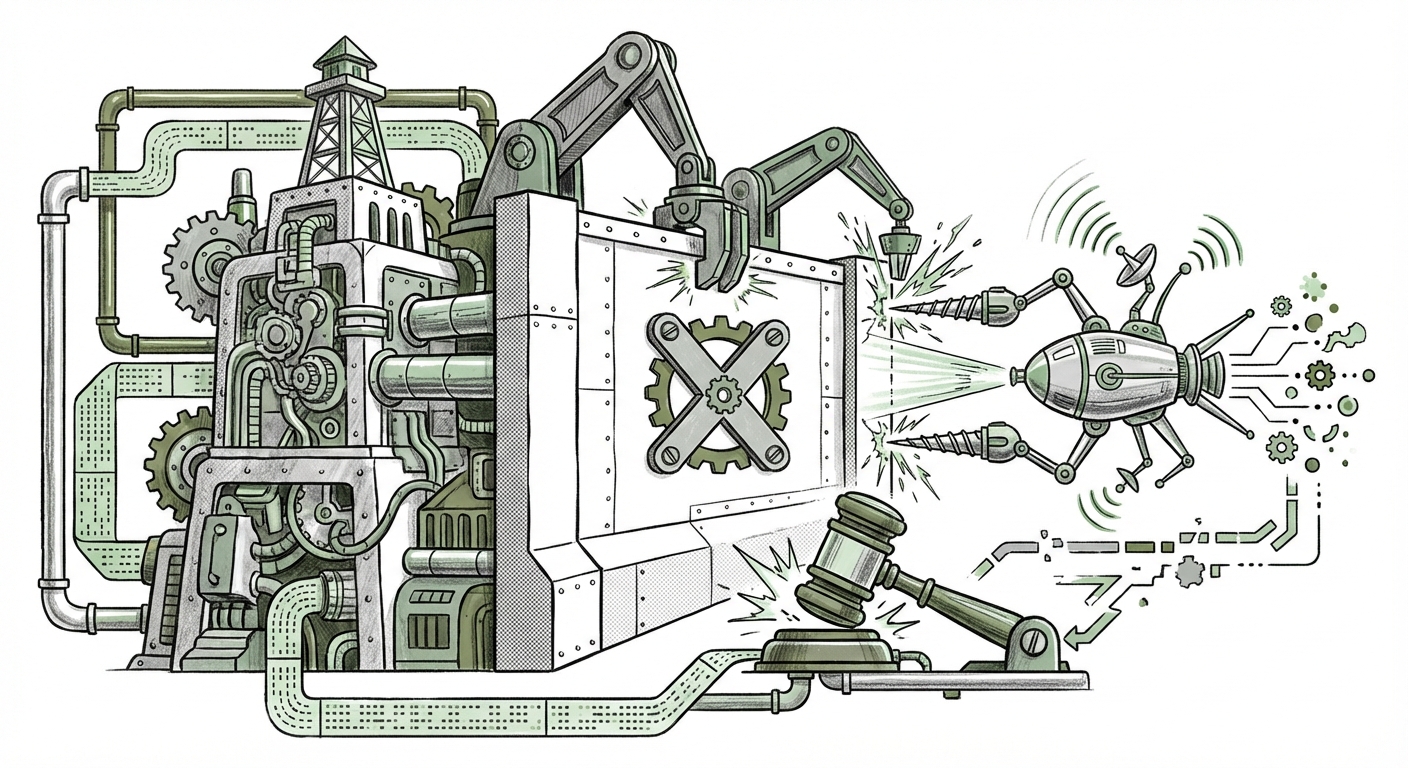
Let's start with the basic facts. Nvidia has made a direct investment in Ilya Sutskever's AI lab. As a direct result, the lab is moving its computational workload away from Google chips. This is a concrete, strategic shift — not a rumor or a distant possibility. The lab, often referred to by its initials SSI, had been using Google's tensor processing units for training large models. Now, it is transitioning to Nvidia's hardware.
Why does this matter? Because the choice of chip is not a trivial detail. In AI, the hardware you use determines how fast you can train models, how large those models can be, and ultimately, what kind of research you can pursue. Google's TPUs are custom-built for machine learning and have been a powerful tool for many labs. Nvidia's GPUs, especially the H100 and its successors, have become the de facto standard for AI training across the industry. By moving to Nvidia, Sutskever's lab is aligning itself with the dominant hardware ecosystem.
But this is not just about performance benchmarks. It is also about independence, strategic partnerships, and the long-term vision for building safe artificial general intelligence. When a lab with the pedigree of Sutskever's chooses one chip maker over another, it sends a message to the entire industry.
Ilya Sutskever's Vision for Safe Superintelligence
To understand why this investment matters, you have to understand what Sutskever's lab is trying to do. Sutskever was a driving force behind some of the most important advances in deep learning — from the original AlexNet that kicked off the modern AI revolution, to the sequence-to-sequence models that power translation, to the GPT series that changed how the world thinks about language AI. He was a key architect of the technology that underpins ChatGPT.
But Sutskever has also been one of the most vocal voices about the dangers of uncontrolled AI development. His new lab is explicitly focused on building superintelligence — AI that surpasses human capabilities — but doing it safely. The lab's mission is to ensure that when superintelligence arrives, it is aligned with human values and does not pose an existential risk.
That is a monumental task. It requires not just cutting-edge research, but also the computational resources to experiment with the largest models. And it requires a hardware partner that can provide those resources reliably, at scale, and with the flexibility to support novel training architectures. By bringing Nvidia in as an investor, the lab gains a deep ally with world-class chip technology and a vested interest in the lab's success.
Why This Signals a Shift in the AI Hardware War
The AI chip market has been dominated by two major players: Nvidia and Google. Nvidia's GPUs are the workhorses of the industry, used by OpenAI, Microsoft, Meta, and countless startups. Google's TPUs are a powerful alternative, tightly integrated with Google's cloud infrastructure and optimized for Google's own models.
For a long time, the choice between them was a matter of preference and existing infrastructure. Many labs used both. But Nvidia's investment in Sutskever's lab is a sign that the battle for AI hardware is intensifying. By tying a high-profile lab to its ecosystem, Nvidia is making a long-term bet on its architecture becoming the standard for safety-critical AI research.
This is especially important because Sutskever's lab is not just any AI lab. It is one of the few places in the world with the talent and the mission to build superintelligence. If the lab succeeds, its choice of hardware will be seen as a defining decision. Other labs may follow. And if the lab's research leads to breakthroughs in safety and alignment, those breakthroughs will be built on Nvidia's chips.
For Google, this is a loss. The search giant has invested billions in TPU development and has made its cloud platform a home for many AI researchers. Losing a lab of this caliber is a blow to its standing in the AI community. It does not mean Google is out of the game — far from it. But it does mean the competition is getting sharper, and the stakes are higher.
What This Means for the Future of AI Safety Research
The shift away from Google chips has implications that go beyond hardware. It is also a statement about the ecosystem in which safety research happens. Google has its own AI safety teams and its own approach to alignment. By moving to Nvidia, Sutskever's lab is signaling that it wants to operate independently, without being tied to the infrastructure of a company that is also a competitor in AI development.
This independence is crucial for safety research. When a lab is dependent on a cloud provider that also builds AI models, there can be conflicts of interest. The provider has access to the lab's workloads, its training data, and its research directions. By using Nvidia hardware — which is available through multiple cloud providers and on-premises deployments — the lab gains more control over its infrastructure and its data.
Furthermore, Nvidia has positioned itself as a neutral provider of compute power. It does not compete with its customers in the AI model business. That makes it a more attractive partner for labs that want to keep their research proprietary and independent. For safety-focused labs, this neutrality is a significant advantage.
What Businesses and Society Should Watch
This development has practical implications for anyone who uses AI, builds AI, or invests in AI. Here are the key takeaways.
For Businesses Building AI Products
If you are building a product that relies on large language models or other advanced AI, the hardware ecosystem matters. Nvidia's dominance is becoming even more entrenched. That means you should plan for a world where Nvidia GPUs are the standard. But it also means you should watch for innovations from competitors like Google, AMD, and emerging chip startups. The battle is heating up, and new options may emerge.
For Companies Using AI in Operations
The shift in Sutskever's lab is a reminder that AI development is not just about software. It is about hardware, energy, and infrastructure. Companies that rely on AI should think about their own compute strategy. Are you locked into one cloud provider? Do you have the flexibility to move workloads? The choices made by leading labs today will shape the options available to everyone tomorrow.
For Society and Policymakers
Safety research is moving in a direction that prioritizes independence and alignment. That is a positive development. But it also means that the concentration of AI compute power in a few companies is a concern. Policymakers should pay attention to who controls the hardware that fuels AI research. The shift from Google chips to Nvidia does not solve the concentration problem — it just changes which company is at the center.
Actionable Insights for the AI Community
What can you do with this information? Here are some practical steps.
- Evaluate your hardware dependencies. If your AI workloads run on a single chip architecture or cloud provider, consider diversifying. The ability to move between hardware platforms gives you leverage and resilience.
- Monitor the safety research landscape. The labs that are working on alignment and safety are the ones that will define the future of AI governance. Their choices of hardware and partners are signals about their direction.
- Pay attention to Nvidia's investment strategy. Nvidia is not just a chip maker. It is becoming a kingmaker in AI. Its investments in labs like Sutskever's give it influence over the direction of research.
- Plan for a multi-cloud future. Even if Nvidia hardware becomes the standard, the cloud providers that offer it are still competing. Keep your options open.
- Watch for Google's response. Google has deep pockets and world-class engineering talent. It will not let this loss go unanswered. Expect new investments, new chips, or new partnerships from the search giant.
The Bigger Picture: What This Tells Us About AI's Future
This investment is a snapshot of a larger trend. AI development is becoming more capital-intensive, more hardware-dependent, and more strategically aligned with a small number of powerful companies. The days when a lab could train state-of-the-art models with a few racks of consumer GPUs are over. The frontier of AI requires massive clusters, custom interconnects, and close relationships with hardware vendors.
That concentration of resources has both benefits and risks. On the benefit side, it means that leading labs can push the boundaries of what AI can do. They can train models that are smarter, more capable, and more aligned with human values. On the risk side, it means that a small number of actors control the direction of AI development. If those actors make mistakes, the consequences could be global.
Sutskever's lab is explicitly trying to address those risks. By focusing on safety from the start, and by choosing hardware partners that support its independence, the lab is modeling a different way of doing AI research. It is a way that prioritizes caution, alignment, and long-term thinking over speed and market dominance.
That is why this investment matters. It is not just a business deal. It is a bet on a particular vision of how AI should be built — safely, independently, and with the best possible tools. Whether that vision succeeds will depend on the research, the engineering, and the partnerships that follow. But the first step has been taken, and the chips are being laid.
Conclusion: A Defining Moment for AI Hardware and Safety
Nvidia's investment in Ilya Sutskever's AI lab, and the resulting shift away from Google chips, is a defining moment in the evolution of artificial intelligence. It signals that hardware is no longer just a commodity — it is a strategic asset that shapes the direction of research. It tells us that safety-focused labs are seeking independence from the cloud providers that also build competing AI models. And it shows that Nvidia is willing to make bold bets to secure its position at the center of the AI ecosystem.
For businesses, this means paying attention to the hardware landscape and planning for a world where compute power is a key differentiator. For society, it means recognizing that the choices made by a few labs and a few companies will determine the trajectory of AI for years to come. And for anyone who cares about the future of intelligence — human or artificial — it is a story worth following closely.
The chips are changing. The labs are shifting. And the race to build safe superintelligence is only getting faster.