Microsoft AI Bets on Cheap Specialist Models Instead of Chasing the Frontier
The race for the most powerful general-purpose AI model has dominated headlines for years. Giants like OpenAI, Google, and Anthropic have poured billions into building ever-larger frontier models that can answer any question, write any code, and generate any image. But now, one of the biggest players is quietly shifting strategy. Microsoft has decided to bet on cheap specialist models rather than chasing the frontier. This is a pivotal moment for the entire industry, and it changes what AI will look like for businesses and everyday users.
The Big Shift: From General to Specific
For a long time, the AI world believed that bigger was always better. The assumption was that if you built a model large enough and trained it on enough data, it would eventually become smart enough to handle any task. This thinking drove the creation of models with hundreds of billions of parameters. But these models are incredibly expensive to build and run. Every query to a frontier model costs real money in computing power.
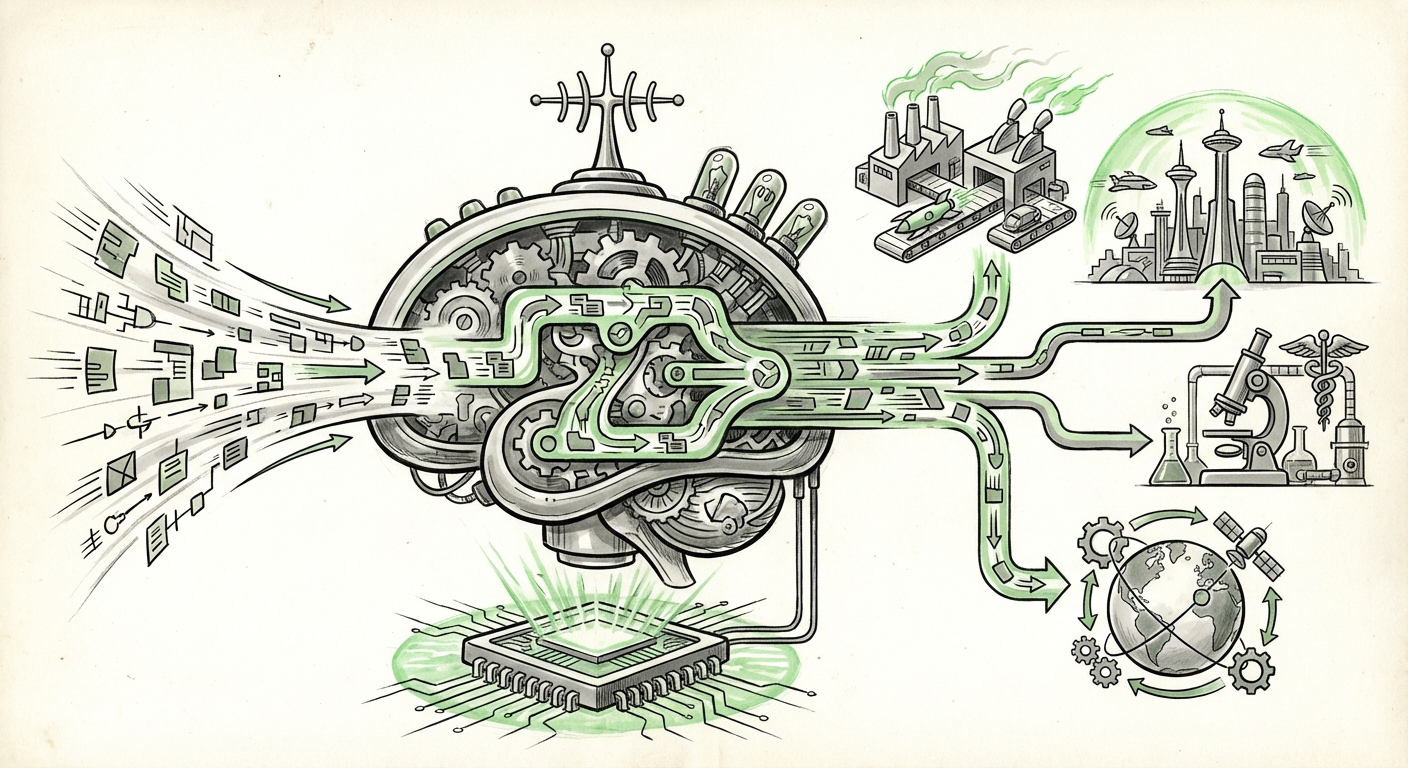
Microsoft is now challenging that assumption. Instead of trying to build one model that does everything, Microsoft is investing in smaller, cheaper models that are designed to do one thing extremely well. These specialist models are not as smart as frontier models in general, but they are much better at their specific job. And they cost a fraction of the price to operate.
This is a fundamental change in philosophy. It says that the future of AI is not about building a single brain that rules them all. The future is about a swarm of smaller, focused brains, each doing its own job efficiently and cheaply.
Why This Matters: The Cost Problem of Frontier Models
To understand why this shift is so important, you have to understand the cost problem. Frontier models like GPT-4 and Gemini are incredibly expensive to train. Estimates for training a single large model often run into the hundreds of millions of dollars. And the cost does not stop at training. Running these models — a process called inference — requires massive amounts of computing power. Every time a user types a query, it costs the company money.
For many real-world applications, this cost structure simply does not work. Imagine you want to use AI to power a customer support chatbot for your small business. If every conversation costs you pennies per query, and you have thousands of conversations a day, the costs add up fast. A frontier model might give you a slightly better answer, but it is too expensive for most practical business use cases.
Microsoft recognizes this. By focusing on cheap specialist models, the company is making AI affordable for the mass market. This is not just a technical decision. It is a business decision that recognizes that most users do not need a model that can pass the bar exam. They need a model that can accurately answer questions about their product catalog, route support tickets, or summarize meeting notes.
The Rise of Specialist Models: What They Look Like
Specialist models are not a single thing. They come in many shapes and sizes. Some are fine-tuned versions of smaller open-source models. Others are trained from scratch on highly specific datasets. What they all have in common is that they are optimized for a narrow range of tasks.
For example, a specialist model for medical coding would be trained almost entirely on medical records and billing codes. It would not need to know anything about poetry, history, or astrophysics. It would just need to be extremely accurate at converting doctor's notes into billing codes. Because it is smaller and more focused, it can run much faster and at a much lower cost than a frontier model.
Another example is a specialist model for code generation. Microsoft already has experience here with models like Codex. These models are not general-purpose chatbots. They are built specifically to understand and generate code. They are smaller, cheaper, and more accurate at coding than a general model of the same size.
Microsoft is now applying this logic broadly across many domains. The idea is to create a marketplace of specialist models that businesses can pick and choose from, rather than forcing everyone to use the same giant model.
What This Means for the Future of AI
This strategic bet has huge implications for where the entire AI industry is heading. For years, the narrative has been that we are on a relentless march toward artificial general intelligence — a model that is as smart as a human at everything. Microsoft's move suggests that even if that destination is possible, it may not be the most valuable one for most people.
The future of AI is likely to be fragmented. Instead of one model ruling everything, we will see many models, each designed for a specific purpose. This is similar to what happened with software. In the early days, people used giant mainframes that did everything. Then the industry shifted to smaller, specialized applications for word processing, spreadsheets, and design. The same thing is happening now with AI.
Another key implication is that the barrier to entry for AI is about to drop dramatically. If you can build a specialist model for a fraction of the cost of a frontier model, then many more companies can participate. Startups and mid-sized businesses will be able to create their own custom AI tools without needing a billion-dollar budget.
This could lead to an explosion of innovation. When the cost of building and running AI drops, people find new uses for it. We may see AI in places we never expected — in agriculture, logistics, local government, and small retail shops. The specialist model approach makes AI democratic.
Practical Implications for Businesses
For business leaders, this shift is both an opportunity and a warning. The opportunity is clear: you no longer need to be a tech giant to use advanced AI. You can buy or build specialist models that are tailored to your exact needs at a price you can afford.
The warning is that the era of the one-size-fits-all AI is ending. If you are building your entire AI strategy around a single frontier model, you may be missing out on better, cheaper, and more accurate solutions. Companies that embrace the specialist model approach will have a competitive advantage. They will be able to deploy AI faster, at lower cost, and with higher accuracy for their specific tasks.
Here are some practical steps businesses can take right now:
- Audit your AI needs: Instead of asking "what can a frontier model do for me," ask "what specific tasks do I need AI to perform?" Break your operations into small, well-defined problems.
- Evaluate specialist models: Look for models that are fine-tuned for your industry. There are already specialist models for legal document review, medical diagnosis support, customer service, and financial analysis.
- Consider cost per query: When comparing AI solutions, look at the total cost of ownership. A frontier model that gives slightly better answers may not be worth 10 times the cost if a specialist model is accurate enough.
- Build a portfolio of models: Do not rely on one model for everything. Use specialist models for specific tasks and reserve larger models only for tasks that truly need their generality.
- Plan for customization: As the ecosystem of specialist models grows, you will be able to fine-tune them on your own data. This will make them even more accurate for your specific use case.
The Role of Open Source in the Specialist Future
Open-source models play a big role in this shift. Microsoft has been a major supporter of open-source AI, and many of the cheapest specialist models are built on open-source foundations. Because open-source models are free to use and modify, they are the perfect starting point for creating specialist tools. Companies can take an open-source model, add their own data, and create a custom specialist model without paying any licensing fees.
This is a stark contrast to the frontier model approach, where the largest models are closed and expensive. The open-source ecosystem allows for rapid experimentation and iteration. If a specialist model does not work well, you can quickly tweak it or try a different approach. This flexibility is a huge advantage for businesses that want to move fast.
What This Means for Society
The shift to cheap specialist models also has broader societal implications. One of the biggest concerns about AI is that it will concentrate power in the hands of a few companies that control the largest models. If the future is about specialist models, that concentration of power may not happen. Instead, AI capabilities will be distributed widely. Many companies, universities, and even individuals will be able to build and run their own AI tools.
This could lead to more diversity in AI applications. Instead of a few giant models that reflect the biases and priorities of their creators, we could see many models that reflect the values and needs of different communities. A specialist model built for a local farming cooperative will be different from one built for a global bank. That diversity is healthy.
There are also environmental benefits. Frontier models require enormous amounts of energy to train and run. Specialist models are much more efficient. If the industry shifts toward smaller, cheaper models, the overall carbon footprint of AI could shrink significantly. This is good news for companies that care about sustainability.
However, there are also risks. The proliferation of many specialist models could lead to a fragmentation of AI capabilities. If one company uses a specialist model for customer service and another uses a different one, the experience for users may become inconsistent. There is also the risk that some specialist models are not as rigorously tested as large frontier models, leading to lower quality or even harmful outputs in specific domains. Quality control will become an important issue.
The Frontier Is Not Dead
It is important to note that this shift does not mean frontier models are going away. They will still be needed for tasks that require broad knowledge and reasoning. If you need to analyze a complex legal document that touches on many areas of law, a frontier model may still be the best choice. Similarly, research and scientific discovery will likely continue to push the boundaries of large models.
What is changing is the assumption that the frontier is the only game in town. Microsoft's bet says that for most real-world applications, cheap specialist models are the better choice. The frontier will continue to advance, but its role will be to push the boundaries of what is possible, while specialist models will be the workhorses that actually get deployed in businesses and homes.
This is a mature and pragmatic view of AI. It recognizes that technology is most useful when it is accessible and affordable. A model that is 95% as good as the frontier but costs 5% as much is often the better choice in practice. This is the logic that drives Microsoft's strategy.
Actionable Insights for the Future
So what should you do with this information? Here are the key takeaways for anyone who works with or thinks about AI:
- Stop obsessing over the biggest models. The best model for your task is not necessarily the one with the most parameters. It is the one that gives you the best balance of accuracy, speed, and cost for your specific need.
- Start thinking about tasks, not capabilities. Instead of asking "what can AI do," ask "what problem do I need to solve." Then find a model that was built specifically for that problem.
- Watch the ecosystem of specialist models. Over the next year, we will see an explosion of models fine-tuned for specific industries and tasks. Stay informed about what is available in your field.
- Prepare for a multi-model world. Your company's AI strategy should not depend on a single model. You should have a portfolio of models, each assigned to the tasks it does best.
- Expect costs to drop. As specialist models become more common, the cost of running AI will continue to fall. This will open up new use cases that were previously too expensive to consider.
The AI industry is at a crossroads. For years, the path was clear: build bigger and bigger models. Microsoft is now signaling that there is another path, one that leads to cheaper, more focused, and more accessible AI. This is not a retreat from the frontier. It is a bet that the real value of AI lies not in a single super-intelligence but in a thousand small, smart, affordable tools that actually get used.
If Microsoft is right, the future of AI will look very different from what many people expect. It will be less about a single brilliant mind and more about a busy workshop full of skilled specialists, each doing their part. And for most of us, that is a future that is easier to reach, easier to afford, and easier to use. That is a future worth building.