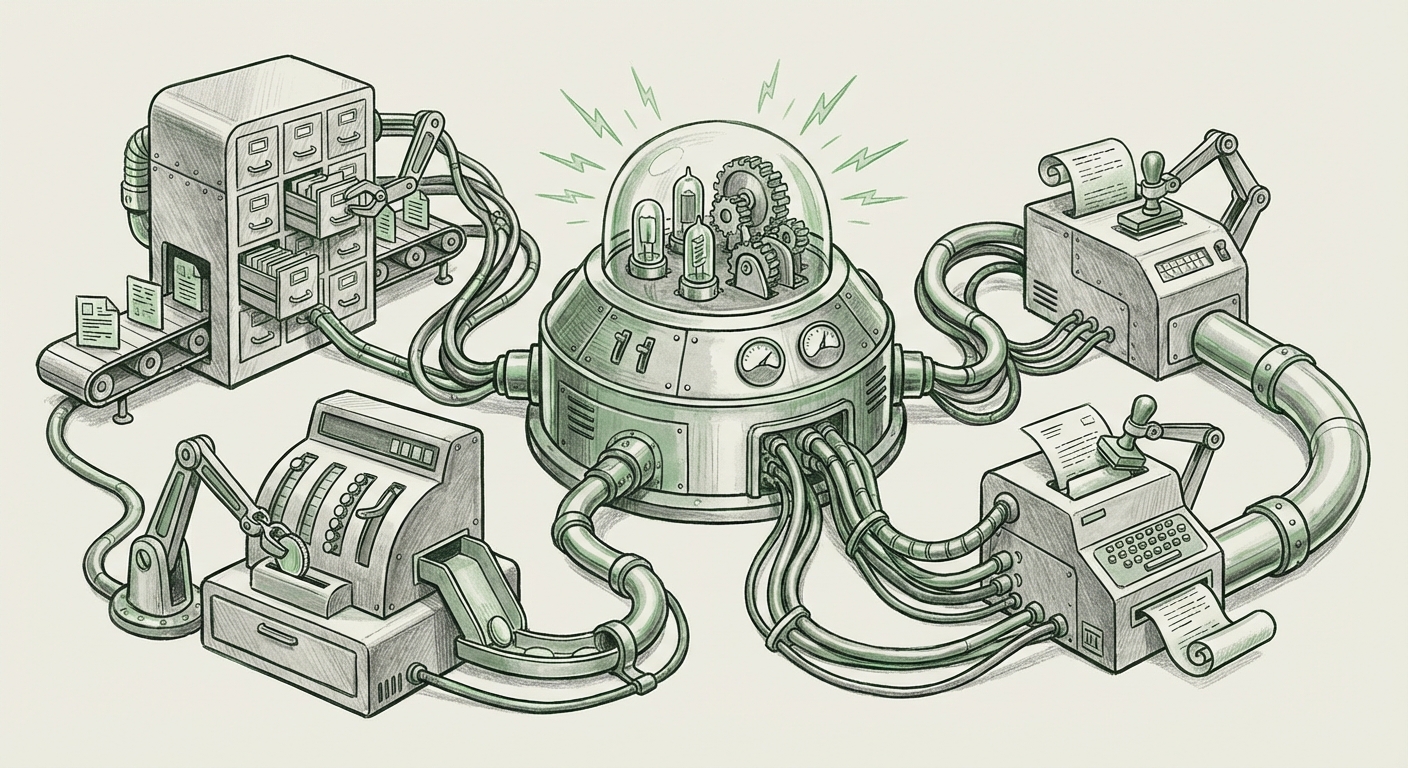
Who Builds the Robot Brain? The High-Stakes Race Powering the Future of Robotics
For years, people have wondered when robots would finally take over everyday tasks. The machines got stronger. Their arms got more precise. Their sensors got sharper. But something important was still missing: a brain.
Robots have been getting better bodies for decades. Yet the breakthrough everyone is waiting for is a robot with real intelligence — a machine that can understand the world, make decisions, and act on its own. That raises one of the biggest questions in technology right now: Who actually builds the robot brain?
This article explores that question from every angle. We will look at why the brain is suddenly worth more than the body, who is competing to build it, and what this race means for businesses, workers, and everyday life.
Why the Robot Brain Matters More Than the Metal Body
In the early days of robotics, the story was all about hardware. Companies poured money into stronger motors, more flexible joints, and sharper cameras. Every improvement was impressive, but the machines were still limited. A robot that could weld a car door could not fold a towel. A robot that sorted boxes in a warehouse could not pour a cup of coffee.
The problem was never the body. It was the software. Traditional robots follow step-by-step instructions that humans write for them. They are brilliant at repeating one exact motion millions of times, and almost helpless the moment something changes.
That is why the rise of the robot brain matters. These are AI systems that can sense a messy, unpredictable world, plan an action, and learn from mistakes — much like a person does.
The economics are shifting too. Robot hardware is becoming cheaper and easier to produce. The body of a robot is well on its way to becoming a commodity — something you can buy off the shelf. The intelligence inside it is where the real value now lives.
The path to that intelligence is often described as a sequence of breakthroughs. Sensing. Understanding. Planning. Acting. Learning. Each step feeds the next. Recent advances have made every step faster, and that is what opened the race to build the brain that ties it all together.
Who Is Building the Robot Brain?
The question “Who builds the robot brain?” has no single answer yet. Several very different groups are racing toward it, and each brings its own strengths.
The first group is the big technology companies. These giants employ some of the best AI researchers in the world and own enormous computing power and data. They see the robot brain as the natural next step after chatbots and image generators. They can afford to spend years on research before earning a profit, and they are already working to put their AI into physical machines, from factory helpers to home assistants.
The second group is the startups. Small, fast-moving companies are building robot intelligence from the ground up. Many focus on a single tough problem, like teaching a machine to pick up objects it has never seen or to walk through a crowded space. Startups can take risks that big companies avoid, and they are willing to rethink robotics from scratch rather than improve on old designs.
The third group is the traditional robot makers. These are the companies that have built factory arms and warehouse machines for decades. Their biggest advantage is hard-won experience with real customers, safety rules, and the messy realities of physical work. Their biggest challenge is escaping old habits and old software.
Finally, there are universities and nonprofit labs. They produce many of the breakthrough ideas that the other groups later turn into products. Their role is easy to overlook, but nearly every modern robot brain traces its roots back to academic research.
What makes this race unusual is that no one has won it yet. There is no dominant operating system for robots the way there is for smartphones and personal computers. The company or team that creates the standard brain could control a huge slice of the future economy.
What Makes a Robot Brain Different From a Chatbot Brain
It is tempting to think of a robot brain as a chatbot strapped to a machine. In reality, they are very different. Giving a brain a physical body creates problems that purely digital AI never faces.
The first problem is the messiness of the real world. A chatbot works with text, which is clean and predictable. A robot works with the physical world, which is noisy and endlessly varied. The same coffee mug can look different in morning light and evening light. The same drawer can stick when the weather changes. A robot brain must handle all of that without breaking down.
The second problem is time. When a chatbot answers slowly, nobody gets hurt. When a robot is crossing a busy warehouse floor, a delay of half a second can cause a crash. Robot brains must make decisions in real time, juggling camera feeds, touch sensors, and motion data all at once.
The third problem is safety. A chatbot that gives a wrong answer is annoying. A robot that misjudges a movement could injure a person. So robot brains must be built with much deeper caution. They need to understand not just what they can do, but what they should never do.
The fourth problem is data. Modern AI learns from enormous piles of text and images taken from the internet. There is no giant pile of physical experience waiting online. A robot must learn by touching, pushing, lifting, and falling. That kind of data is slow and expensive to collect, and it is one of the biggest bottlenecks in the field.
These differences mean the winning robot brain cannot simply be a copy of the winning chatbot. It will need new ideas, new safety standards, and new ways of learning.
What This Means for the Future of AI
The race to build the robot brain is more than a robotics story. It is the next chapter of artificial intelligence itself.
So far, AI has lived inside screens. It writes emails, makes pictures, and answers questions. The robot brain pushes AI out of the screen and into the physical world, where it can touch, build, carry, and fix. Many researchers believe this is the ultimate goal of AI: a machine that perceives, reasons, and acts as smoothly as a person.
If the robot brain reaches its potential, the ripple effects will be enormous:
- In the home, machines could handle chores, care for older relatives, and help people with disabilities live independently.
- In hospitals, robots could move supplies, assist surgeons, and support exhausted nurses.
- On farms, they could pick fruit, monitor fields, and cut down on food waste.
- In disasters, they could search through rubble, fight fires, and go places people cannot.
In short, the robot brain is what changes robotics from a factory tool into a general-purpose helper for all of humanity.
What Businesses Should Do Right Now
For business leaders, the robot brain race might sound futuristic. But the time to prepare is now. Companies that wait until perfect robot brains are sitting on a shelf will be years behind. Companies that start experimenting today will be ready when the technology arrives.
Start by looking for work that is dangerous, dull, or hard to staff. Those are the first jobs intelligent robots will take over. Next, get serious about data. The organizations that understand their own operations, workflows, and sensor data will be best placed to train robot brains for their industry. Finally, invest in people. The workers who thrive will be the ones who can team up with intelligent machines, supervise them, and handle the unusual situations robots cannot solve alone.
For job seekers, the message is just as clear. The rise of the robot brain will change the skills the market demands. Routine physical tasks may shrink, while jobs that combine technical knowledge with real-world judgment will grow. Learning the basics of AI, data, and robotics is no longer only for engineers. It is becoming a basic life skill.
The Risks We Cannot Ignore
For all the excitement, the robot brain brings serious risks that society must face now, before these machines arrive in force.
Safety is the most obvious issue. A robot brain that works perfectly in a lab may fail in a cluttered kitchen. We need testing and certification standards, and they barely exist yet. Privacy is another concern. Robots with powerful cameras and sensors will gather enormous amounts of information about the places they work and the people they serve. Clear rules are needed for who owns that data and how it can be used.
Then there is fairness. If the benefits of the robot brain are captured by a few giant companies, the technology could widen the gap between rich and poor. Investment in education, retraining, and broad access to the technology will decide whether this revolution lifts everyone or only a few.
These risks are not reasons to slow down. They are reasons to be thoughtful. The robot brain is coming. How we build it, who controls it, and who benefits are choices we get to make right now.
The Brain Is the New Battleground
The question of who builds the robot brain is one of the defining questions of our time. The mechanical parts of robots are no longer the bottleneck. Arms, legs, and sensors keep improving and growing cheaper every year. The intelligence that guides them is the last great frontier.
No one has won the race. It could be a giant technology company, a fast-moving startup, a traditional robot maker, or a research lab nobody expected. What is certain is that the robot brain will be built, because the economic prize is enormous and the scientific momentum is real.
Here is what it all means for the future: the story of robotics is not really about metal. It is about minds. The businesses and countries that understand this first — and invest in the brain as carefully as in the body — will shape how intelligent machines transform our world.
The sequence is already underway. Sensing. Understanding. Planning. Acting. Learning. The only question left is who will connect all the pieces — and what kind of future that brain will build.