AI Coding Agents Can Modernize Research Software — But They Still Can't Judge If the Science Is Right
Imagine having a tireless assistant who can read millions of lines of old code, rewrite them in a modern programming language, add helpful comments, and spot technical bugs in seconds. That is the promise of AI coding agents. They are changing how research software is built, updated, and maintained. But there is one enormous limit that everyone needs to understand: AI coding agents can modernize research software, but they cannot judge if the science is actually right.
This is the key insight shaping the next phase of artificial intelligence. It is not a story about AI failing. It is a story about AI succeeding at the wrong job if we let it. Research software is the hidden engine behind modern science. It powers climate models, drug discovery, economic forecasts, and medical imaging analysis. If we use AI to modernize that software without understanding its limits, we could accelerate progress — or we could spread silent, dangerous errors across every field that depends on code.
Let's break down what this means for the future of AI, for businesses, and for society.
What Exactly Are AI Coding Agents?
Before we dive deep, let's make sure we are on the same page. An AI coding agent is an artificial intelligence system that can help people write, review, repair, and transform computer code. Unlike a simple autocomplete tool that suggests the next word, a coding agent can handle bigger tasks. It can look at an entire code file, understand its structure, and make changes. It can translate code from one programming language to another. It can add tests, write documentation, and refactor messy code into clean, organized modules.
Think of it like a very fast, very knowledgeable junior developer who has read millions of open-source projects. That junior developer can do a lot of good work. But that junior developer has never actually done science. They don't know whether a statistical method is appropriate for a study. They don't know whether a physics equation describes the real world. They only know patterns in code.
This is the heart of the matter. AI coding agents are excellent at form. They are not reliable at meaning.
The Great Promise: Modernizing Research Software at Scale
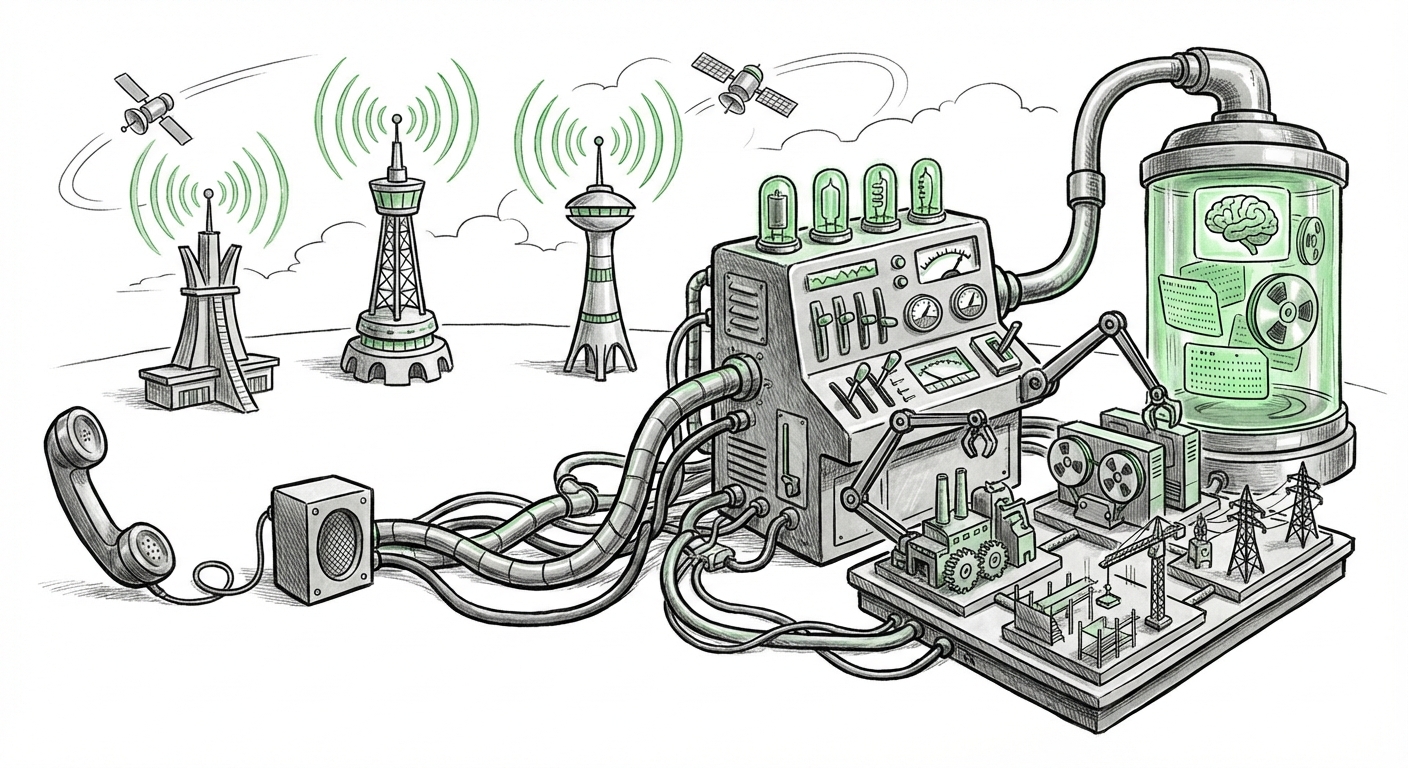
Research software has a huge problem. Much of it is old. Really old. In fields like climate science, physics, and bioinformatics, researchers still use programs written decades ago in languages like Fortran. These programs are often poorly documented, hard to update, and full of subtle quirks. A scientist might spend weeks just getting a legacy codebase to compile on a modern computer, let alone understand what it does.
AI coding agents can change that. They can read old code and translate it into modern, supported languages. They can generate clear comments so the next person can understand the logic. They can build automated tests that check whether the code runs correctly under different conditions. They can spot security problems and performance issues that human eyes might miss.
This is genuinely exciting. Modernizing research software means:
- Faster discoveries: Scientists spend less time fighting code and more time doing research.
- Better reproducibility: Well-documented, tested code is easier to share and verify.
- Longer software life: Old projects get new life instead of being abandoned.
- Safer results: Modern languages have fewer memory bugs and better built-in protections.
In this sense, AI coding agents are a massive win. They are the movers, the shovels, and the construction crew for the digital infrastructure of science. But every construction crew needs an architect. And in this case, the architect must be the scientist.
The Critical Limit: No Judgment of Scientific Correctness
Here is the warning that we cannot ignore: AI coding agents can modernize research software but cannot judge if the science is right. This is not a small limitation. It is the line between a useful tool and a dangerous one.
What does "judging if the science is right" actually mean? It means knowing whether a calculation represents the real world. It means evaluating whether the right statistical test was used. It means understanding whether a simulation's assumptions match the physical system. It means catching the difference between "the code runs" and "the code produces a scientifically valid result."
AI coding agents see tokens, syntax, and structure. They do not see the meaning. They can look at a function and tell you that it is technically correct — it computes exactly what the code says. But they cannot tell you whether the code says what it should say based on scientific theory.
Consider a simple example. Imagine a research program that calculates the dosage of a medication based on a patient's weight. An AI coding agent might "improve" the code by changing a formula to run faster or look cleaner. The code still runs. It still produces numbers. But if the AI accidentally changes the units from milligrams to grams, the result could be deadly. The AI would declare the code correct because it follows the new instructions. But the science — and the patient — would be wrong.
This is why the phrase "it works" can be deeply misleading when AI is involved. For an AI coding agent, "it works" usually means "the program executes without crashing." That is not the same as "the program gives trustworthy scientific answers."
Why This Matters Right Now
We live in a moment of enormous excitement about AI. Companies are racing to use AI for everything. Researchers are eager to accelerate their work. But with that excitement comes risk. When AI can modify research software at lightning speed, it also multiplies mistakes at lightning speed.
Think about the scientific replication crisis. Many published studies have failed to reproduce. Some of that failure comes from bad research software. Now imagine adding AI that confidently "improves" that software. Without human checkpoints, AI could bake hidden errors into research pipelines. Worse, because the code looks modern, clean, and well-tested, people may trust it even more. A neat, documented codebase can give a false sense of safety if the science behind it was never validated.
The danger is not that AI will rebel. The danger is that we will let automation become authority. In the future, the most important skill will not be writing code. It will be judging whether the code means something real.
The Future of AI: Partnership, Not Replacement
So what does the future look like? It is a future of collaboration. AI coding agents will do what they are great at: speed, scale, and technical transformation. Human scientists will do what they are great at: understanding the world, testing hypotheses, and deciding what counts as truth.
We should expect to see new workflows emerge in research teams around the world. A scientist will hand a legacy codebase to an AI coding agent and say, "Modernize this." The AI will translate, refactor, and document. But then the scientist — or a domain expert — will review every change not just for code errors, but for scientific meaning.
We will also see the rise of "scientific verification layers." These are automated checks designed to test whether the output of AI-modified code matches known scientific results. For example, a climate model might be tested against historical temperature data. A drug simulation might be tested against lab experiments. These verification layers act as guardrails. They tell us, "The code is running, and it is producing answers that match reality."
That kind of system is not a rejection of AI. It is a mature way to use AI. We do not stop using a powerful tool because it has limits. We design around those limits.
Practical Steps for Every Research Team
Whether you work in a university lab, a pharmaceutical company, a financial firm, or a government agency, you can start preparing today. Here are actionable insights to use AI coding agents responsibly:
- Treat AI coding agents as assistants, not authorities. Always assign a human to own the outcome.
- Pair every AI code change with domain-expert review. A code expert can approve the syntax; a scientist must approve the science.
- Create "golden datasets" for validation. Use known inputs with known correct outputs. Run these tests every time AI changes the code.
- Keep a complete audit trail. Record what the AI changed, when, and why. This makes it possible to trace errors back to their source.
- Adopt a scientific review gate. No AI-modified research software goes into production until a qualified scientist signs off on its results.
- Educate everyone about the limits. The people using these tools must understand that "it compiles" is not "it is correct."
These steps may sound like extra work. They are. But they are the cost of using AI without losing the integrity of science. And in the long run, they are far cheaper than discovering a subtle scientific error after thousands of papers or products have relied on it.
What Businesses and Society Should Watch For
For business leaders, the lesson is clear: AI coding agents can give your organization incredible speed in updating research and development tools. They can reduce technical debt and make your teams more productive. But you must build the right governance around them. A corporate research pipeline that trusts AI blindly is a liability. A corporate research pipeline that combines AI with human scientific judgment is an asset.
We should also call on policymakers and funding agencies to set standards. When AI modifies code that affects public safety — in medicine, infrastructure, climate policy, or food safety — there should be clear expectations about validation and accountability. This is not about slowing AI down. It is about making sure the AI systems we use are worthy of trust. And trust requires evidence.
Society benefits when AI coding agents make research software better. Patients benefit when medical analysis code is modernized and secure. Citizens benefit when climate models are faster and more reliable. But those benefits only come if we respect the boundary between technical modernization and scientific judgment.
A New Kind of Scientist
Looking further ahead, we can imagine a new kind of scientist emerging. This scientist may not be a master programmer, because AI handles the code. Instead, they are a master of curiosity and verification. They ask the right questions. They design the right experiments. They look at the AI's output and ask the deepest question of all: "Does this make sense in the real world?"
That is the future of AI in science. Not a future where machines replace minds, but a future where machines handle the mechanical burden. The human mind remains the place where meaning is created, doubted, tested, and confirmed.
AI coding agents can modernize research software. They can break down old walls and build new bridges. But the source of scientific truth is still human judgment. The moment we forget that, we trade our greatest strength for a convenient illusion.
Conclusion
We are entering an era of powerful AI assistance. The best teams will be those that use AI coding agents broadly but verify scientifically. The teams that fail will be those that assume the AI's work is automatically correct because it looks clean and runs smoothly.
The takeaway is simple: AI coding agents can modernize research software, but they cannot judge if the science is right. Use them to move faster. Use them to clean up legacy code. Use them to build new capabilities. But always, always keep a human expert standing at the gate, asking the one question AI cannot answer: "Is this actually true?"