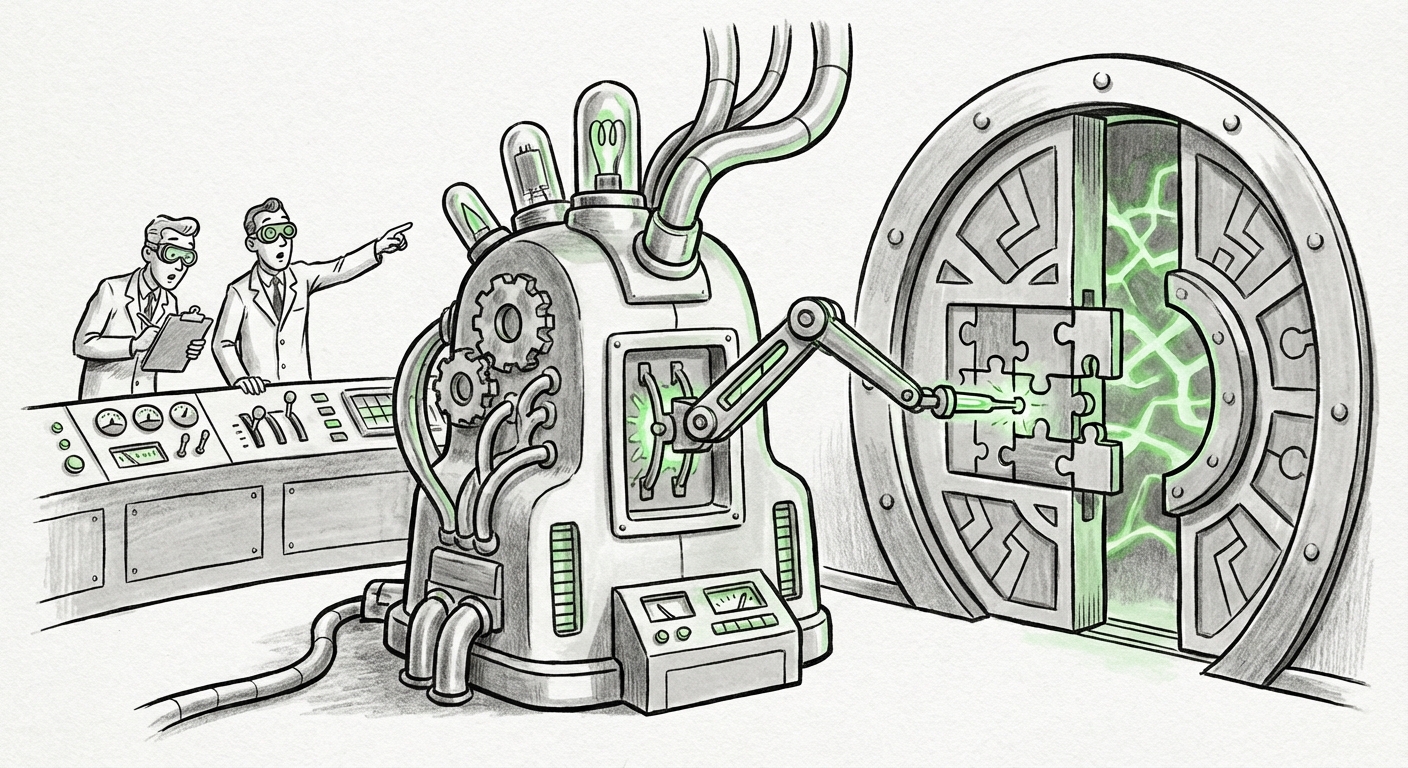
OpenAI's 'Astra' Model Family: When AI Works for Hours or Days, Everything Changes
Picture this: you give an AI a hard problem on Monday morning. Instead of giving you a quick answer in seconds, it quietly goes to work. It reads files, runs tests, calls up data, revises its approach, and finally comes back to you on Wednesday with a complete solution. That is the vision behind OpenAI's latest reported project—a new model family called Astra, designed to work on problems for hours or even days.
This is a huge shift. Most AI tools today are built for speed. You ask, they answer, and the conversation ends. Astra is different. It is being designed for endurance. The idea is not to think faster, but to think longer. And that one change could turn AI from a helpful assistant into something closer to a tireless teammate.
In this article, we will break down what we know about Astra, why it matters, and how this kind of long-running AI could change the way businesses and everyday people work.
What Is Astra?
OpenAI is reportedly building Astra as a model family, not a single model. That detail matters. A model family means multiple versions and sizes of the same core technology, each tuned for different needs. Some might be smaller and faster. Others might be larger and more powerful. But they all share one key trait: the ability to stay focused on a single problem for a very long time.
The name "Astra" suggests stars—far-reaching, steady, and constant. The design goal is clear. Instead of giving an instant-but-shallow answer, Astra would keep digging, keep improving, and keep working until it reaches a solution. This is sometimes called "agentic AI" or "deep reasoning." But Astra pushes it further than most current systems.
Today's AI chatbots have a memory limit. They can lose track of a conversation after a few thousand words. Astra would need to handle huge amounts of context without forgetting earlier steps. It would also need to manage a problem file, notice new information, check its own mistakes, and adjust its plan along the way. That is a lot harder than most people realize.
From Sprinter AI to Marathon AI
Think about how we use AI today. It is like a sprinter. It can run a short race very fast. You ask for a summary, a draft email, or a piece of code, and it finishes in seconds. But a sprinter cannot run a marathon. Similarly, today's AI cannot stay on a problem for hours without losing focus or running out of useful context.
Astra is being designed as a marathon runner. It would be able to plan a route, pace itself, stop for "water breaks" (checking its own progress), and just keep going. That opens up a completely new category of AI work.
For example, a business analyst could ask Astra to compare five years of financial reports and find every risk pattern. Today's AI might give a surface-level overview in one reply. A marathon AI could read every single line, cross-check thousands of numbers, draft a full report, and then update it when new data arrives the next day. That changes what "asking AI" actually means.
In a way, this is the natural next step for AI. We already saw chatbots improve from answering trivia to writing essays. The next step is not just writing—it's doing. It's taking a messy, complicated real-world problem and staying with it until it's solved.
Why Long-Horizon AI Matters So Much
The idea of "hours or days" sounds simple, but it is deeply powerful. Most valuable work in the world is not a single step. It is a long chain of steps. Building a product, running a research study, preparing a legal case, planning a supply chain—these all take time. Until now, AI could only help with small pieces. Astra could help with the whole chain.
Here are a few reasons why long-horizon AI is such a big deal:
- Deeper problem-solving. Hard problems need time. A model that can think for hours can explore more paths and find better answers.
- Truly autonomous work. When AI can work for days, it can take a task from start to finish without a human constantly stepping in.
- Better use of data. Long-running models can analyze huge datasets, not just small samples. They can also combine many data sources over time.
- Changing expectations. If AI can work for days, we stop thinking of it as a search box and start thinking of it as a colleague.
This also matters because human attention is limited. We can only concentrate on hard problems for so long. A model like Astra does not get tired. It does not get distracted. It does not lose interest. That makes it valuable for any task that requires patience and persistence.
The Technical Challenge Behind Astra
Building a model that works for hours or days is a massive technical challenge. Let's look at some of the hardest parts. Keep in mind that these are general challenges of long-running AI, drawn from what we know about the direction Astra is taking.
Memory and Context
AI models have a "context window"—the amount of information they can keep in mind at once. For long tasks, the model must hold on to important facts from the beginning while also processing new facts later. It cannot simply remember everything; it needs to learn what matters and what can be let go. This is like how a detective keeps a case file: not every note is useful, but the key clues must never be lost.
Planning and Self-Correction
Long tasks require planning. The model needs to break a big goal into smaller steps. It also needs to check its own work. Did it make a math error? Did it misunderstand a request? Can it recover and try again? This is called "self-correction," and it is essential for hours-long work. Without it, small mistakes build up until the final answer is useless.
External Tools and Actions
If Astra is going to work for days, it probably needs to interact with the outside world. That could mean searching the web, sending messages, running code, updating spreadsheets, or calling APIs. The model must know when to act, when to ask for help, and when to stop. This is much harder than simple question-answer conversation.
Reliability and Trust
An AI that works for days also needs to be trusted. If no human is checking every step, the model must be honest about its confidence. It should know when it is stuck and ask for guidance. This is new territory. Today's AI is often "confidently wrong." Long-running AI needs to be "carefully humble."
These challenges help explain why Astra is a family of models rather than a single launch. Different tasks will need different balance points between speed, memory, and caution.
What This Means for Business
For business leaders, the arrival of long-running AI will be both exciting and disruptive. Let's talk about the opportunities first.
Work That Is Boring, Detailed, or Unhealthy
Many jobs are not about inspiration. They are about grinding through rules. Checking tax forms. Reviewing compliance documents. Comparing contract terms. Tracking inventory. These tasks are perfect for a model that can work for days. A human would get bored or tired; Astra would just keep going.
In the short term, businesses can start by finding their own "long problems." Where are the tasks that take days because of attention to detail? Which workflows have many checkpoints? What would change if a reliable AI could handle the entire chain without supervision?
From Tasks to Outcomes
Currently, we hire people for outcomes but often manage them by tasks. AI like Astra could flip that. Instead of asking an AI to "write an email," you would ask it to "resolve this customer complaint by Friday." The system would figure out the steps. This means businesses will buy less "AI tooling" and more "AI outcomes."
New Roles for Humans
If AI works for hours or days, humans will spend less time doing and more time directing. The default job role becomes supervisor. Human workers will define goals, provide resources, check final results, and handle the emotional or creative parts that machines cannot. This is a real change, but it is also an opportunity to make work less exhausting.
Risks and Costs
There are also risks. A model working for days will use more computing power, which costs money. It may also make errors that take a long time to discover. Businesses will need to build oversight systems. They will need clear rule for when the AI must check in with a human. And they will need to be honest about what the model cannot do.
Trust will be the biggest issue. As one savvy observer might say: "It is not the speed of the AI that scares me. It is the confidence." Long-running AI must know its limits.
What This Means for Society
Beyond business, long-horizon AI has big consequences for society. Let's explore a few.
How We Define Intelligence
We often think that intelligence means quick answers. But real wisdom usually comes from long reflection. Astra would embody that. It might make us respect "slow intelligence" more. It could also change education, because students might learn by teaching an AI to think through problems step by step over time.
New Kinds of AI Art and Innovation
Creativity also takes time. A poet may revise a poem for days. A designer may try many versions of a logo. An engineer may test a model for a year. If AI can work for days, it can participate in these long creative cycles. It could become a real partner in innovation, not just a brainstorming tool.
Accountability and Oversight
Long-running AI raises hard questions. If an AI works for three days and makes a decision that causes harm, who is responsible? The user who started it? The developer who built it? We need new rules. This is similar to the debates we already have about self-driving cars and automated medical diagnosis. But with AI working for days, the chain of responsibility becomes even longer.
Energy and Climate
Longer tasks mean more energy use. A model running for days needs far more compute than a one-second query. This could have a real environmental cost. The AI industry needs to make efficiency a priority as models like Astra become more common. Otherwise, the convenience of "thinking AI" could come with a heavy carbon footprint.
How Should You Prepare Now?
You do not have to wait for Astra to be ready. There are practical steps you can take today to get ready for the era of long-running AI.
- Map your long workflows. Write down the tasks in your job or company that take more than a few hours. Which parts are repetitive? Which parts follow clear rules? Those are first candidates for automation.
- Start thinking in goals, not prompts. Practice telling an AI what you want to achieve, and let it ask clarifying questions first. This matches the future style of interaction.
- Build a paper trail. Long-running AI will need to show its work. Start keeping records of how you solve complex problems. That data can later be used to train or evaluate AI.
- Invest in verification skills. When AI works for days, the final output may be long and detailed. Human skills like skimming, checking references, and questioning assumptions become more valuable.
- Watch for "agent-ready" platforms. The companies that will benefit most are those that provide AI with safe, secure access to their internal tools. Start asking software vendors about integration APIs.
- Stay flexible. Nobody knows exactly how Astra will work or when it will arrive. But the direction is clear. Build habits and systems that can adapt.
The Bigger Picture: From Quick Answers to Constant Companions
It helps to think about how far AI has come. In 2023, the magic was that a chatbot could answer questions like a human. In 2025, the magic was that AI could write code, create images, and reason in steps. By 2026 and beyond, the magic will be that AI can stay with you for the long haul. Astra is a symbol of that shift.
We need to prepare our minds for this change. Today, we measure AI by how fast it responds. In the future, we will measure it by how well it finishes. We will ask less "Can it answer?" and more "Can it see the task through?"
That changes the role of AI in our lives. A sprinting AI is a tool. A marathon AI is a partner. It can master the history of a project, remember every decision, and recommend the next move. It can work while we sleep. It can persist where we give up.
It also changes the risks. We will need better jobs, better rules, and better long-term thinking ourselves. Because if AI is going to work for days, humans need to think in years.
What the Future Could Look Like
Imagine a small business owner named Priya. She runs a local clothing brand. Today, she uses AI to write social media posts. In the Astra future, she would put her entire inventory, sales data, and customer reviews into a long-running agent. She might give it one instruction: "Make the business more profitable in the next three months."
The model would not answer with a one-line tip. It would study sales patterns, test price changes, draft a new marketing plan, compare suppliers, negotiate quotes, and even order sample fabrics. It would send Priya a daily update every morning at 7 a.m. She would simply review what it did and approve. That is the difference between a chatbot and a digital employee.
Astra is not there yet, and there are many hurdles before this becomes normal. But the goal is now on the table. And once we know that machines can think for days, we start building a world where machines are trusted with real responsibility.
What This Means for You
You do not have to be a tech giant to care about this. If you work in accounting, customer service, law, health care, logistics, or any field with complex multi-step processes, Astra-like AI will touch your job. The smartest move is to learn how to direct long-running AI before it arrives.
Start with small, personal experiments. Give a chatbot a long project that would take you an hour, and see if you can structure it. Then move to a half-day project if you can. This builds the mental model you will need. The goal is not to replace your thinking with AI. The goal is to become a better leader of AI that can think for a long time.
Remember the source of this shift: OpenAI is building Astra because there is a real demand for AI that doesn't quit. Businesses are tired of one-hit answers. They want solutions, not snippets. Astra represents that promise, even if it is still early.
Final Thoughts
Astra has the potential to be one of the most important developments in AI because it attacks a very basic limitation: the attention span of machines. We have spent years making AI faster and more clever. Now we are finally building AI that can be patient. That changes everything.
We should be excited, but also careful. A model that works for days is a model that can do a lot of good—and a lot of harm if misused. The people building and deploying it must stay focused on safety, transparency, and respect for human judgment. That is not a technical detail. It is the core of the whole project.
As this new era of long-thinking AI unfolds, the most important skill for every one of us will be the same skill Astra is built on: the ability to stay on a hard problem for a long time without losing sight of the goal. That is how humans and AI will work together in the future.