OpenAI Presence: The Push to Make AI Agents Actually Work for Real Businesses
Artificial intelligence has spent the last few years wowing us. It has written poems, passed exams, generated videos, and held conversations that feel almost human. But for most businesses, the real question has never been "Can AI chat?" It has been "Can AI do the job?"
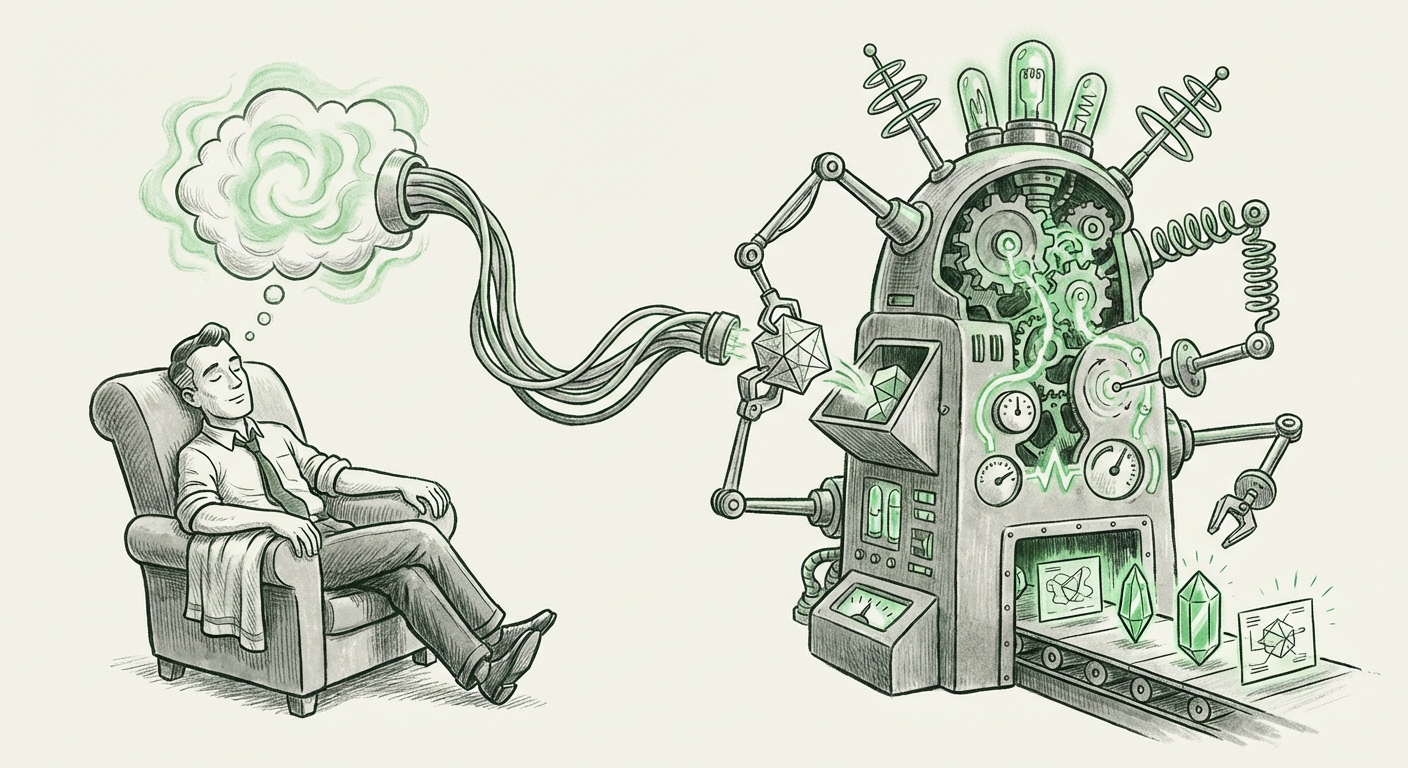
That question is exactly what OpenAI Presence aims to answer. The initiative is designed to make AI agents production-ready for businesses — meaning agents that don't just talk a good game but can be trusted with real tasks, real data, and real consequences. The name itself is a promise: AI that isn't a novelty you visit in a browser tab, but a working presence inside your organization, handling work around the clock.
This matters because we are at a turning point. The AI industry is shifting from building impressive demos to building dependable digital workers. And how that shift happens will determine whether the next decade belongs to businesses that embrace agentic AI — or those that get left behind.
First Things First: What Exactly Is an AI Agent?
Before we dig into what "production-ready" means, it helps to understand what an AI agent is. A chatbot answers questions. You type, it replies, and the conversation ends. An agent is different. An agent can take action.
Think of an agent as a digital employee with superpowers. You can hand it a goal — "process these 500 invoices," "monitor this network for security threats," "respond to these customer support tickets" — and it can plan the steps, use tools, jump between software applications, make decisions along the way, and keep going until the job is done.
In recent years, we have seen early versions of this. AI tools can draft code, book meetings, sort emails, and even shop online. But these are mostly partial steps. The industry has talked a great deal about "agentic AI" — AI that works independently — while the reality often fell short. Many so-called agents could only handle narrow, carefully scripted tasks in a controlled environment.
What OpenAI Presence represents is the next stage: moving agents out of the sandbox and into the real world of business operations. That is a much bigger deal than it sounds.
The Hard Truth: Why Businesses Haven't Trusted AI Agents Yet
Here is the uncomfortable reality. Most AI agents today are beautiful demos. They work perfectly in a two-minute video. They fall apart in a real office.
Why? Because the real world is messy. Your business runs on outdated software, inconsistent data, cranky legacy systems, and edge cases nobody wrote down. An AI agent that was trained on clean examples can stumble the moment it meets your messy reality. It might misinterpret a customer request. It might skip a required approval step. It might make a confident error that a human would never make.
There is also the problem of hallucinations — moments when AI simply makes things up. A chatbot that invents a fact is annoying. An AI agent that invents a refund amount, deletes the wrong file, or approves a contract clause that was never authorized is a nightmare. That is why many businesses have kept AI on a short leash, using it for suggestions and drafts, but not for actual work.
The gap between "can do it sometimes" and "can be trusted to do it every time" is the single biggest barrier to AI adoption in the enterprise. And it is precisely this gap that "production-ready" is meant to close.
What Does "Production-Ready" Actually Mean?
The phrase "production-ready" sounds like business jargon. But behind it is a set of very real requirements. For an AI agent to work in a business, not just in a lab, it needs to meet standards in several areas:
1. Reliability
In production, the agent must do the same task correctly, over and over, without constant supervision. A 95 percent success rate sounds great — until one wrong automated payment slips through every 20 transactions. Production-ready agents need to know what they know, and — just as importantly — know when they don't know.
2. Security and Privacy
An agent handling customer data, financial records, or health information needs serious protection. It must follow the same security rules your human employees follow. It must not leak data, fall for prompt-injection attacks (where hidden instructions trick the AI), or overstep its access permissions. Enterprises will demand airtight controls before letting an agent anywhere near sensitive systems.
3. Compliance and Audit Trails
Regulated industries — finance, healthcare, legal — have rules about who did what and why. If an AI agent approves a loan, rejects a claim, or sends a regulatory filing, there must be a record. Businesses need to be able to audit the agent's decisions, trace its steps, and prove a clear chain of accountability.
4. Observability
You cannot manage what you cannot see. Production-ready agents come with dashboards, logs, and monitoring — so a human team can watch what the agent is doing at all times, spot problems early, and step in when the agent goes off track. Think of it like a cockpit for AI workers.
5. Integration
An agent that lives in its own little bubble is useless. Real value comes when agents can plug into the tools businesses already use — CRMs, ERP systems, help desks, email, spreadsheets, and databases. That integration is hard work, but it's what makes an agent feel less like a separate app and more like part of the team.
6. Human Oversight
Production-ready does not mean "unattended." It means the right balance of autonomy and guardrails. High-risk actions might require a human approval. Routine work can run automatically. The best agent setups are collaborative: the AI does the heavy lifting, and humans handle judgment calls.
These six pillars are the boring, unglamorous side of AI. But they are exactly what separates a science project from a business tool. Any effort serious about production-ready AI — including OpenAI Presence — will ultimately be judged by how well it masters these practical details.
Why This Is a Turning Point for AI
The push for production-ready agents matters far beyond any single product. It signals that the AI industry is leaving the "wow phase" and entering the "work phase."
For the last couple of years, the goal was to prove AI was powerful. The next decade will be about proving AI is useful — reliably, safely, and at scale. That is a fundamentally different challenge. It is less about model size and more about engineering discipline. Less about benchmark scores and more about uptime and accuracy in the real world.
This shift also changes the way we should think about AI's future. The vision is no longer a single super-intelligent thing living in the cloud. It is thousands, maybe millions, of specialized agents — each present in a specific workflow, a specific department, a specific business — quietly getting work done. One agent manages supplier invoices. Another monitors customer churn. Another coordinates shipping schedules. They are not science fiction. They are the direction the industry is heading.
OpenAI's move makes a statement: the future of AI is not just conversation. It is action. And the companies that figure out how to deploy reliable agents will have an enormous advantage over those still treating AI as a chat widget on their website.
What This Means for Businesses
If production-ready AI agents become real, the implications for business are huge. Here is what the future could look like on a practical level:
Entire Workflows Automate — Not Just Tasks
Today, AI automates pieces of work. A human still strings the pieces together. With reliable agents, entire workflows can run end-to-end. A customer order could be received, checked, scheduled, invoiced, and confirmed by agents working together — with humans only called in for exceptions. That changes the economics of almost every back-office process.
Smaller Teams, Bigger Output
When agents handle the repetitive, high-volume parts of a job, human teams can focus on creativity, relationships, strategy, and complex problem-solving. A marketing team of five might do the work of twenty. A customer service team might handle ten times the tickets. This does not necessarily mean fewer jobs — but it absolutely means different jobs.
24/7 Operations
Agents don't sleep, don't take vacations, and don't slow down at 5 p.m. Businesses can offer round-the-clock responsiveness that was previously possible only for giants with global teams. For small and mid-sized businesses, this levels the playing field in a profound way.
Faster Decisions
Agents can gather data, analyze options, and present recommendations in seconds. Businesses will shift from weekly planning cycles to real-time operations. The speed of decision-making becomes a competitive weapon.
The Cost of Getting It Wrong
But there is a flip side. The same power that makes agents valuable makes them risky. A production-ready mistake is not a funny chatbot blunder; it is a financial loss, a compliance violation, or a damaged customer relationship. Businesses will need new levels of governance, testing, and oversight. The companies that treat agent deployment with the same seriousness as hiring a new senior employee will succeed. The ones that rush in recklessly will get burned.
What This Means for Tech Teams
For engineers and IT leaders, the age of production-ready agents brings new responsibilities. The skills that mattered for building AI prototypes are different from the skills needed to run AI in production.
Teams will need strong evaluation systems — ways to continuously test whether an agent is doing the right thing before and after every update. They will need guardrails that keep agents inside approved boundaries. They will need fallback plans for when agents fail, so the business keeps running. And they will need to build trust slowly: start with low-risk tasks, prove the agent works, then expand its responsibilities.
This is an engineering discipline problem as much as an AI problem. The companies that treat agent deployment as a serious systems-integration project — not a hackathon experiment — will get the best results.
The Risks We Must Not Ignore
No honest discussion of production-ready AI is complete without talking about the dangers. If agents are given more autonomy, the stakes of failure rise.
There are questions of accountability: when an agent makes a harmful decision, who is responsible — the company, the developer, the AI provider? There are questions of job displacement: as agents take over more routine knowledge work, workers will need retraining and new safety nets. There are questions of bias: agents trained on flawed data can make unfair decisions in hiring, lending, or healthcare. And there are security questions: agents are new attack surfaces, and adversaries will try to manipulate them.
None of these risks mean we should stop pursuing production-ready agents. But they mean we must pursue them with caution, transparency, and humility. The businesses that build trust into their AI systems — with customers, employees, and regulators — will be the ones allowed to keep using them.
How to Get Ready: Actionable Insights for Leaders
If the age of production-ready agents is coming, what should you do today? Here is a practical checklist:
- Start small but start now. Pick one low-risk, high-volume process — like invoice matching, meeting notes, or report generation — and pilot an agent on it.
- Measure everything. Define success before you deploy. Track accuracy, speed, cost savings, and error rates with the same rigor you apply to any business metric.
- Insist on human oversight. Design your workflows so that risky actions require a human approval. You can always increase autonomy later; you cannot undo a bad automated decision.
- Build an audit trail. Make sure every agent action can be reviewed and explained. This protects your customers, your compliance posture, and your own reputation.
- Invest in data quality. Agents are only as good as the data they touch. Cleaning up your systems now will pay off enormously when agents start running on them.
- Think about skills, not just technology. Plan how your people will work alongside agents. Invest in training, change management, and new roles like "agent supervisor" or "AI operations manager."
- Demand transparency from vendors. When evaluating AI tools, ask hard questions: How is the agent tested? What happens when it fails? Who is liable? Can we see its reasoning? If a vendor cannot answer, keep looking.
The Road Ahead
The arrival of OpenAI Presence is a reminder that AI is not just getting smarter — it is getting more responsible. The race is no longer about who can build the most impressive model. It is about who can build AI that shows up to work every day, follows the rules, plays well with existing systems, and earns the trust of the people depending on it.
That is the real meaning of production-ready. And it is why this moment matters so much.
Over the next few years, the businesses that thrive will not necessarily be the ones with the most advanced AI. They will be the ones that integrate AI agents into their operations with discipline, transparency, and a clear eye on both the opportunities and the risks. The technology is arriving. The question is whether we are ready to put it to work — wisely and well.
The future of AI is not a conversation. It is a coworker. With initiatives like OpenAI Presence, that coworker is finally clocking in.