Snap and LinkedIn Fight the Flood of Low-Quality AI Content: What It Means for the Future of AI
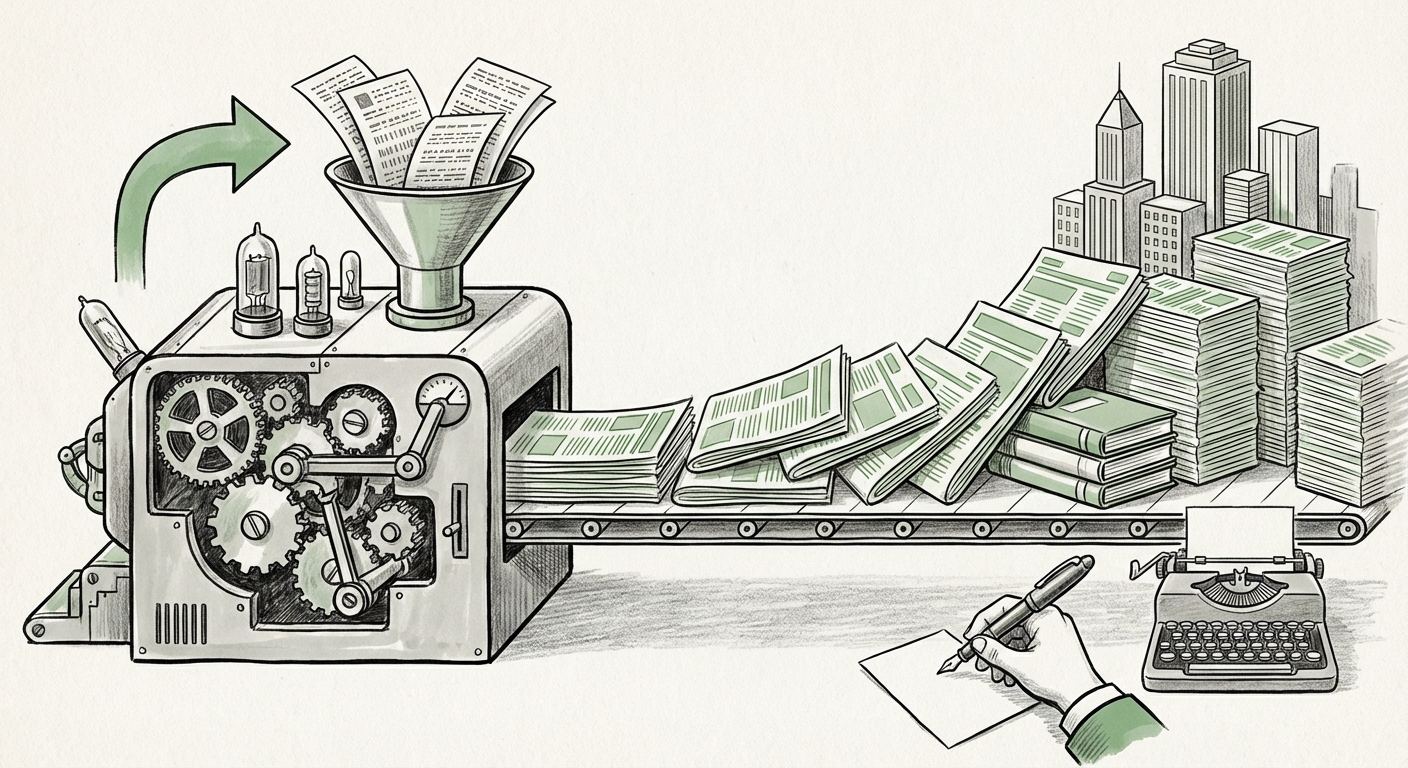
The internet has always had spam. But this time, it is different. Today, one person with an AI tool can generate thousands of posts in a few minutes. Some of those posts are useful. Most are not. They are recycled advice, generic motivation, and empty comments designed only to grab attention.
Now, two major platforms are pushing back. Snap and LinkedIn are fighting back against the flood of low-quality AI content that has been drowning out real human voices. This is not just a story about two companies. It is a story about the future of the internet, the value of human attention, and the role AI will play in both. When big social platforms start policing machine-made noise, every business and every content creator needs to pay attention.
The Flood Everyone Can See
Low-quality AI content is easy to spot once you know what to look for. Imagine a post that says, "Here are 10 ways to be more productive!" and then lists tips you have already read a hundred times. Imagine a comment under a breaking news article that simply says, "Wow, great points! Thanks for sharing!" Imagine a product review that sounds like it was written by a robot — because it was. Or a photo that looks real, but was built from pixels and has no connection to any actual moment.
None of these things are new on their own. But AI changed how fast they can be made. In the past, creating bad content still took time and effort. A spammer had to write, edit, and publish. Mistakes were obvious. Now an AI can do all of that in the time it takes to blink. The cost of producing content has dropped to nearly zero. And when the cost of something drops to nearly zero, the world ends up with way too much of it.
This flood matters because attention is limited. Every human has the same 24 hours in a day. When those hours are filled with machine-made noise, real content gets buried. Honest reviewers, thoughtful writers, and talented creators lose their audience to the bots. Trust erodes. People start to doubt everything they see online, even the posts that are genuine.
Why Snap and LinkedIn? They Protect Trust
At first glance, Snap and LinkedIn seem like strange partners in this fight. Snapchat is known for quick, fun, disappearing messages between close friends. It is built around real-life moments and personal connections. LinkedIn, on the other hand, is a serious professional network. People use it to find jobs, build careers, recruit talent, and grow businesses. These are completely different worlds.
But the two platforms share something vital: both are built on trust.
On Snap, people share personal moments with people they know. The entire point is authenticity. If the feed fills with robot voices, fake images, and automated noise, the magic disappears. Users will stop opening the app because it no longer feels like their friends — it feels like a broadcast station.
On LinkedIn, the entire point is professional credibility. Recruiters use it to find candidates. Salespeople use it to find clients. Founders use it to share their company's story. A flood of generic AI-generated motivation posts makes the platform feel cheap. Worse, it makes it harder to tell who actually knows what they are talking about. That confusion can cost people real money and real opportunities.
That is why both companies are fighting back. They understand a simple truth: if spammy AI content takes over, users will leave. Not because they hate AI, but because they hate feeling tricked and overwhelmed. Fighting low-quality AI content is really about protecting the one thing every platform needs to survive — user trust.
A Turning Point for AI
This moment matters far beyond Snap and LinkedIn. It marks a turning point for the entire AI industry.
The first wave of generative AI was all about showing what machines can create. Write a poem! Make an image! Answer any question! It was an amazing display of power. But the next wave is completely different. It is about judgment. It is about deciding what should be created, what should be shown, and what should be removed.
Here is what that shift means for the future of AI and how it will be used.
1. Trust Becomes the Most Valuable Resource
When content is nearly free to make, attention becomes precious and trust becomes golden. The winning platforms of the future will not compete on how much content they host. They will compete on how much of that content you can believe in. We are moving from an economy of volume to an economy of trust.
2. AI Will Be Used to Filter AI
Here is the irony: the best tool for finding machine-made content is another machine. Detection models learn the patterns of AI writing — the repeating phrases, the perfect grammar, the lack of real experience. In the future, AI will work on both sides of the fight. It will generate content, and it will clean that content up. The arms race between creators and moderators will be fought with the same technology.
3. Quality Becomes the Only Advantage
For years, the game was "more." More posts, more videos, more content, more volume. That game is ending. When everyone has a robot writing for them, the only way to stand out is to be better. New ideas. Real stories. Honest opinions. Content that could only come from a real human mind. That is the new competitive edge.
4. Human Voices Become Premium
As the internet fills with AI-generated material, the label "made by a human" becomes something people actively seek. Real experience cannot be faked. A doctor's advice about health, an engineer's story about a project that failed, a teacher's explanation of a hard concept — these become more valuable, not less, in an AI world. Authenticity is no longer just nice to have. It is the product.
5. Platform Rules Shape How AI Is Used
Snap and LinkedIn are not the first platforms to push back, and they will not be the last. The policies these companies set — what they allow, what they remove, what they boost in feeds — will shape how businesses use AI for years. When platforms penalize low-quality AI content, they send a signal to every marketer, writer, and creator: use AI wisely, or lose your reach.
What This Means for Businesses
Businesses should read this news as both a warning and an opportunity.
The warning is simple: do not use AI to flood the internet with low-quality content. It might work for a short time, but platforms are getting better at spotting it, and customers are getting better at ignoring it. A short-term boost in posts can turn into a long-term loss of reputation. Once people decide your brand is just a bot with a logo, it is very hard to win them back.
The opportunity is bigger. Companies that use AI thoughtfully can move ahead while others get filtered out. That means using AI to speed up the boring parts of content creation — research, drafts, formatting, brainstorming — while keeping real human judgment on the final product. The best content in the AI age will be a partnership: machine speed with human soul.
Actionable Insights for the AI Age
So what should you actually do? Here are practical steps for businesses, creators, and everyday users.
- Keep a human at the wheel. Let AI draft, research, and brainstorm. Then have a real person add experience, opinion, and personality. If your content could have been written by anyone with a chatbot, it is not worth publishing.
- Add something only you can add. Original data, personal stories, lessons from failures, inside knowledge. These are the things AI cannot invent. They are also the things audiences cannot find anywhere else.
- Do not automate your engagement. Those automated "Great post!" comments and robot replies damage your brand faster than almost anything else. If you do not have time to reply like a human, do not reply at all.
- Pay close attention to platform rules. Policies about AI content are changing quickly. What is allowed today may be penalized tomorrow. Staying informed is now part of staying visible.
- Measure quality, not just quantity. Stop counting likes and posts. Track whether people actually read, remember, and share what you create. Deep engagement beats wide reach every time.
- Invest in editing and judgment skills. In the AI age, the ability to tell good output from bad output is a superpower. Great editors will be worth more than great generators.
For society as a whole, the message is hopeful. The internet does not have to become a wasteland of robot text. The people who run our digital town squares understand the danger, and they are acting. Snap and LinkedIn are showing that human connection and human trust still matter. The tools have changed. The values have not.
Conclusion: The Future Belongs to the Genuine
The flood of low-quality AI content was predictable. When you give everyone a machine that can produce words, images, and videos at almost no cost, the world will see an explosion of content — and a lot of it will be junk. But the response is also becoming clear. Platforms like Snap and LinkedIn are standing up for the people who use them. They are choosing trust over volume and humans over noise.
For the rest of us, the lesson is simple. AI will only become more powerful. It will write faster, draw better, and sound more human every year. But the winners in this new world will not be the ones who produce the most. They will be the ones who produce the best — and the ones who protect the trust of the people they serve.
That is the real future of AI. It is not about making machines smarter, although they will get smarter. It is about using smart machines to protect what makes us human: our stories, our voices, and our ability to trust one another. Snap and LinkedIn just reminded us of that. The smartest move any of us can make is to listen.