Interpol Says AI Is Now the "Core Operational Driver" of Cybercrime Across Africa, What This Means for the Future of AI
For years, experts have warned that artificial intelligence would eventually make cybercrime faster, smarter, and harder to stop. That future is no longer coming. It is already here. In a major announcement, Interpol has declared that AI has become the "core operational driver of cybercrime" across Africa. This is not a small shift. It is a turning point in how crime works, how AI is used, and how the rest of the world must respond.
This statement matters far beyond Africa. Cybercrime does not respect borders. An attack launched in one country can hit businesses and families on another continent in seconds. When AI becomes the engine of crime in any region, the entire world feels the effects. To understand where AI is headed, we have to understand this moment. Let us break down what Interpol's warning really means, why it matters for the future of AI, and what businesses and everyday people can do about it.
The Announcement That Should Wake Up the World
The news is simple and stark: Interpol, the international police organization that connects law enforcement agencies across nearly every country, now sees artificial intelligence as the core operational driver of cybercrime in Africa. That phrase matters. It does not say AI is a helpful tool for criminals. It does not say AI is one method among many. It says AI is the engine, the central force, that powers how cybercrime is being planned, executed, and scaled.
This is a major upgrade in threat level. In the past, cybercriminals needed technical skills. They needed to know how to write malicious code, build phishing pages, or break into networks. AI changes that equation completely. Now, much of that skill lives inside the machines. A person with almost no technical background can use AI to create convincing scams, realistic fake voices, and even harmful software. The barrier to becoming a cybercriminal has dropped dramatically.
The fact that Interpol is calling this out in Africa specifically is significant. Africa is one of the fastest-growing digital regions in the world. Mobile money, online banking, and internet access are spreading quickly across the continent. That growth creates opportunity, but it also creates a large and tempting target for criminals. When AI is added to the mix, the risk multiplies.
What Does "Core Operational Driver" Actually Mean?
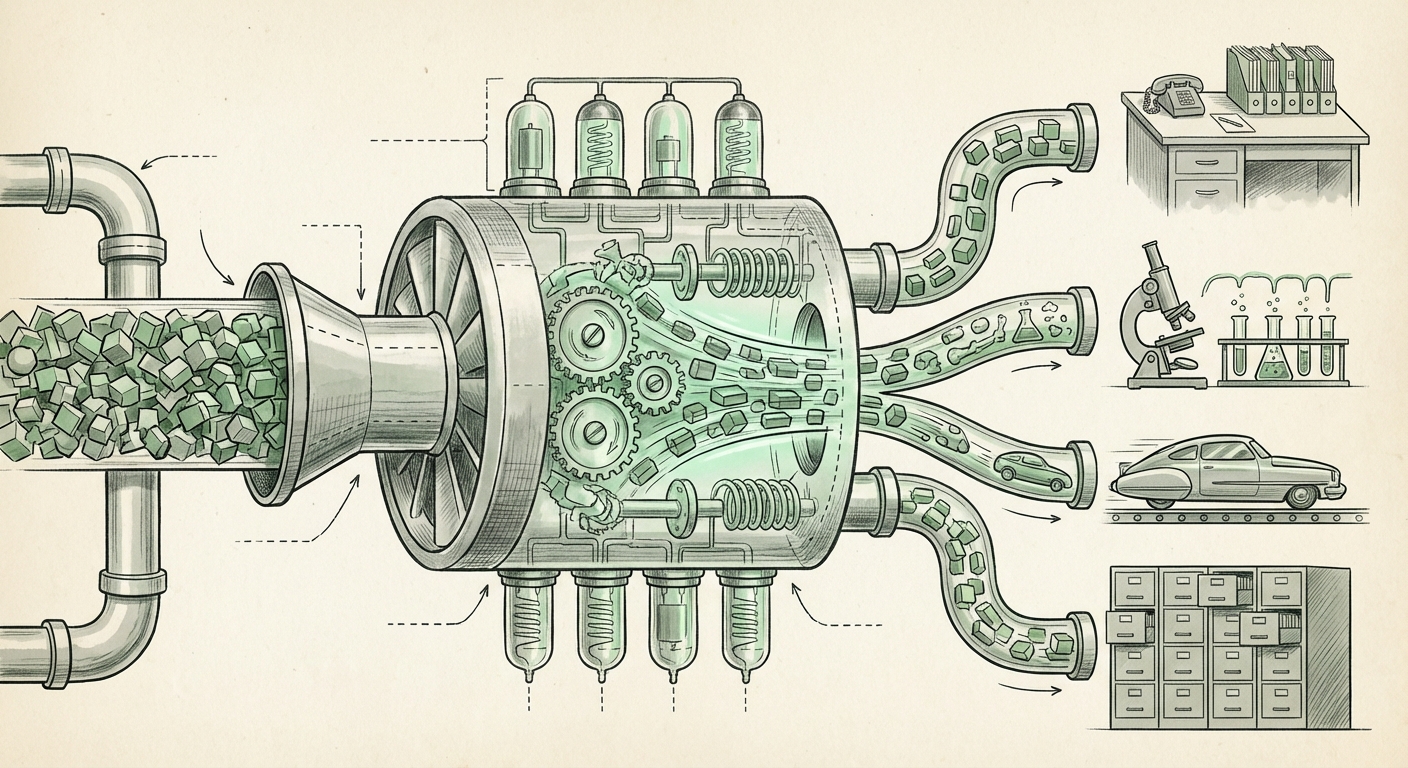
Let us unpack that phrase, because it is the heart of this story. A "core operational driver" is the main thing that makes an operation run. For a delivery company, the core operational driver might be its fleet of trucks and the software that routes them. For a cybercrime operation, that driver is now AI.
That means AI is not just being used for one small step in a scam. It is being used across the entire chain of criminal activity. AI can help criminals:
- Find victims, AI can scan millions of online profiles, posts, and public records to identify who is most likely to fall for a scam.
- Craft convincing messages, AI writing tools can produce phishing emails in perfect local languages, with no spelling mistakes, personalized to each target.
- Fake voices and faces, Deepfake technology can mimic a CEO's voice on a phone call or a family member's face on a video chat to trick people into sending money.
- Write malicious code, AI can generate malware and ransomware even for people who cannot program at all.
- Scale attacks automatically, AI systems can launch thousands of attacks at once, adapt to defenses, and keep going around the clock without getting tired.
- Evade detection, AI can study how security systems work and change its behavior to slip past them.
When you put all of this together, you can see why Interpol used such strong language. AI has turned cybercrime from a craft into an assembly line. It has made crime cheaper, faster, and available to almost anyone.
How AI Is Supercharging Cybercrime
To understand why this is such a dangerous turning point, it helps to look at how AI changes the game at every step of a cyberattack. The pattern is nearly always the same. First, the criminal gains trust. Then, they steal something. Finally, they disappear. AI makes each of those steps more effective.
Trust Is Now Manufactured
Most cybercrime relies on tricking people. The technical term is "social engineering." A criminal pretends to be a bank, a boss, a colleague, or a loved one. In the past, these tricks were often clumsy. Bad grammar, weird formatting, and obvious mistakes gave them away. AI has erased those tells. Emails now read perfectly. Phone calls sound exactly like the person they are imitating. Video calls can even show a realistic fake face. Criminals are no longer guessing; they are manufacturing trust at scale.
Speed and Scale
A human criminal can send maybe a few hundred scam messages in a day. An AI-powered system can send millions. It can personalize each message to the person receiving it, referencing their job, their hobbies, or their recent purchases. This level of scale was simply impossible before AI. It is why the volume of attacks is climbing around the world.
Adapting Faster Than Defenders
Security teams update their defenses, and AI updates the attacks. The same machine-learning techniques that help spam filters improve can also help criminals learn what gets through. It becomes a constant race. The worry is that attackers can move faster because they have fewer rules to follow.
Crime for Everyone
Perhaps the most important change is who can become a cybercriminal. Before AI, you needed serious technical knowledge. Now, AI chatbots can walk a beginner through every step. This "democratization of crime" means the number of potential attackers is exploding. Interpol's warning suggests that in Africa, and increasingly everywhere, we are seeing a surge of AI-powered offenders who would never have had the skills to commit these crimes on their own.
Why This Shift Matters for the Future of AI
This news is not just about crime. It is about the dual nature of AI. Every powerful technology can be used for good or for harm. Fire warms homes and burns them down. The internet connects people and spreads lies. AI is the most powerful dual-use technology we have ever built, and Interpol's announcement is a clear sign that the harmful side is getting stronger.
For the future of AI, this creates three big questions.
First, how do we build safety into AI itself? Right now, many AI tools are designed to be helpful and easy to use. Very few are designed to resist abuse. Future AI systems will need built-in guardrails, ways to detect when they are being used to write scams, create deepfakes, or generate malware. The companies building AI will face growing pressure to make safety a core feature, not an afterthought.
Second, can AI defense keep up with AI offense? The same technology that powers criminal AI can power security AI. Already, companies are using machine learning to spot unusual behavior, block phishing attempts, and respond to threats in real time. The future will be an arms race between AI attackers and AI defenders. Interpol's warning suggests the attackers currently have a lead in some areas because they are unburdened by rules, ethics, or caution.
Third, how do we govern AI across borders? Cybercrime is global, but laws are local. A crime that starts in one African country, uses servers in Europe, and targets victims in North America crosses many legal systems at once. Future AI regulation will need international cooperation to be effective. Interpol is at the center of that effort, and its warning is a call for countries to work together more closely.
What Businesses Need to Do Now
If you run a business, big or small, this news is a wake-up call. The threats are becoming more sophisticated, and the attackers are becoming more numerous. The good news is that there are practical steps you can take today to protect yourself.
Treat AI Threats as a Boardroom Issue
Cyber security is no longer just an IT problem. It is a business risk that affects revenue, reputation, and customer trust. Leaders need to ask hard questions: How prepared are we for deepfake fraud? Can our staff spot an AI-generated phishing email? What happens if our payment systems are hit by ransomware? If you cannot answer those questions, it is time to make a plan.
Adopt AI-Powered Defenses
You cannot fight AI with old tools alone. Consider security platforms that use AI to detect threats in real time. These systems can spot patterns that humans would miss and respond in milliseconds. Think of it as hiring a tireless digital guard that never sleeps.
Verify Everything Important
Because deepfakes can imitate voices and faces so convincingly, businesses should adopt a simple rule: never transfer money or share sensitive data based on a phone call or video call alone. Use a second verification method, like a confirmation code sent through a different channel. Train employees to treat urgent requests for money as suspicious, even if they seem to come from the CEO.
Train People, Not Just Software
Technology is only half the battle. Your employees are on the front lines. Regular training that shows real examples of AI-powered scams can make a huge difference. People need to know that what they see and hear can no longer be trusted automatically. A healthy level of skepticism is now a job skill.
Have a Response Plan
Assume that one day, despite your best efforts, an attack may succeed. Having a clear plan for how to respond, who to call, how to contain the damage, how to tell customers, can save you from much worse harm. Practice the plan like a fire drill.
What Governments and Society Must Consider
Businesses cannot solve this problem alone. Governments, international organizations, and individuals all have a role to play.
For governments, the priority should be digital safety for everyone. As more people in Africa and around the world go online for banking, healthcare, and communication, they need protection. Public awareness campaigns can teach people how to spot AI-generated scams. Investment in law enforcement training can help police track and catch AI-powered criminals. And laws need updating so that creating a deepfake or using AI to commit fraud carries clear consequences.
For international organizations like Interpol, this announcement is a call for stronger cooperation. Criminal networks do not care about borders. Neither should the defense against them. Sharing intelligence, coordinating investigations, and building joint response teams are all critical steps.
For society as a whole, we face a deeper challenge: the erosion of trust. When anyone can fabricate a voice, a face, or a message, how do we know what is real? The future will demand new habits of verification. We will learn to double-check important information through trusted channels. We will develop a healthy instinct to question the too-good-to-be-true offer, the urgent request, the unexpected phone call. This is not paranoia. In an AI-powered world, it is survival.
The Road Ahead: A Race Between Harm and Help
Interpol's warning is sobering, but it is not a reason for despair. It is a reason for action. AI is not inherently evil. It is a tool, and the same capabilities that criminals are abusing can be turned against them. AI can detect fraud faster than any human. It can flag deepfakes, trace ransomware payments, and uncover criminal networks hiding in mountains of data. The defenders have the same technology, they just need to use it with the same urgency as the attackers.
What makes this moment different from past cybersecurity challenges is the speed of change. In earlier waves of cybercrime, defenses had years to catch up. Here, the offense and defense are evolving at machine speed. Every month brings new capabilities, new tricks, and new risks. Standing still is not an option.
For individuals, the message is simple: protect yourself and stay informed. Use strong, unique passwords and a password manager. Turn on two-factor authentication everywhere you can. Be suspicious of urgent requests, strange attachments, and offers that seem too good to be true. And keep learning, because the scams will keep changing.
For businesses, the message is equally simple: invest now. Build your defenses, train your people, plan for the worst. The cost of prevention is almost always far lower than the cost of a successful attack.
For governments and international bodies, the message is to cooperate. Cybercrime is a shared enemy, and it is only as strong as the weakest link. When one country builds strong defenses, it helps protect everyone. When one country is left vulnerable, criminals will flock there.
Conclusion
Interpol has named the moment clearly: artificial intelligence has become the core operational driver of cybercrime across Africa, and by extension, a growing force in global cybercrime. This is a turning point in the history of AI. It marks the moment when AI moved from being a promising technology to being the central engine of one of the world's biggest criminal industries.
The future of AI will be shaped by how we respond to this challenge. If we bury our heads, AI-powered crime will keep growing. If we act with the same energy and creativity that the criminals are using, AI can become our greatest defense. The technology will not slow down. We must not either. The next chapter of AI is being written right now, and it will be defined by whether we choose to use it for harm or for protection. The warning has been sounded. The choice is ours.