Two Teams Cracked the Same Quantum Crypto Problem With GPT-5.6—Just Three Hours Apart. Here's What It Means
Two teams. One of the hardest puzzles in quantum cryptography. And one AI model that helped both teams solve it—within three hours of each other.
That is the story behind one of the most striking research moments of 2026. Two independent groups of researchers, working on the same demanding problem, both used GPT-5.6 and arrived at the same solution nearly at the same time. On the surface, it looks like a coincidence. Look deeper, and it is something more: a preview of how artificial intelligence is changing the way discoveries happen.
Here's what happened, why it matters, and what it means for the future of AI—and for anyone who uses technology to build, compete, or protect.
What Happened: The Same Problem, Solved Twice
In August 2026, the research world took note of a remarkable double event. Two separate teams had been working on the same open problem in quantum cryptography. Quantum cryptography is the science of protecting information using the strange rules of quantum mechanics. It is widely seen as the next big frontier in data security—especially because quantum computers are expected to one day make today's encryption methods obsolete.
Both teams were using GPT-5.6 as a research partner. The AI helped them reason through the problem, test ideas, and refine their approach. What nobody predicted was the ending: both teams produced the same solution, independently, just three hours apart.
Three hours is not just fast. It is almost synchronized. In the past, when two labs solved the same problem close together, scientists usually assumed one team had seen the other's work. But in this case, the two efforts were independent. The closeness came from something else: the shared intelligence of the AI itself.
Why Quantum Cryptography Is More Than a Science Problem
To understand why this matters, it helps to know what quantum cryptography actually does. Today, the security of nearly everything we do online depends on mathematics. When you buy something on the internet, or send an encrypted message, your data is locked with math problems that ordinary computers cannot solve quickly enough to break.
Quantum computers change that. They can solve certain types of problems dramatically faster than classical computers. That means the encryption protecting our digital world could become vulnerable. Researchers around the world are racing to build new, quantum-safe ways to protect data.
Solving a problem in quantum cryptography, then, is not just an academic achievement. It is a step toward building the data protection systems of the future. When two teams crack such a problem in the same morning, it's a signal that the field is moving faster than anyone expected.
The AI Connection: Same Tool, Same Answer
Here's the part that makes the double-solve remarkable. The two teams did not share notes. They were not collaborating. They worked independently. But they shared one important advantage: GPT-5.6.
GPT-5.6 is a large language model—a form of AI trained on enormous amounts of text, code, and scientific knowledge. It can hold conversations, reason through problems, and produce solutions. But it is not a magic wand. It is a tool, and like any tool, it shapes the work of the people who use it.
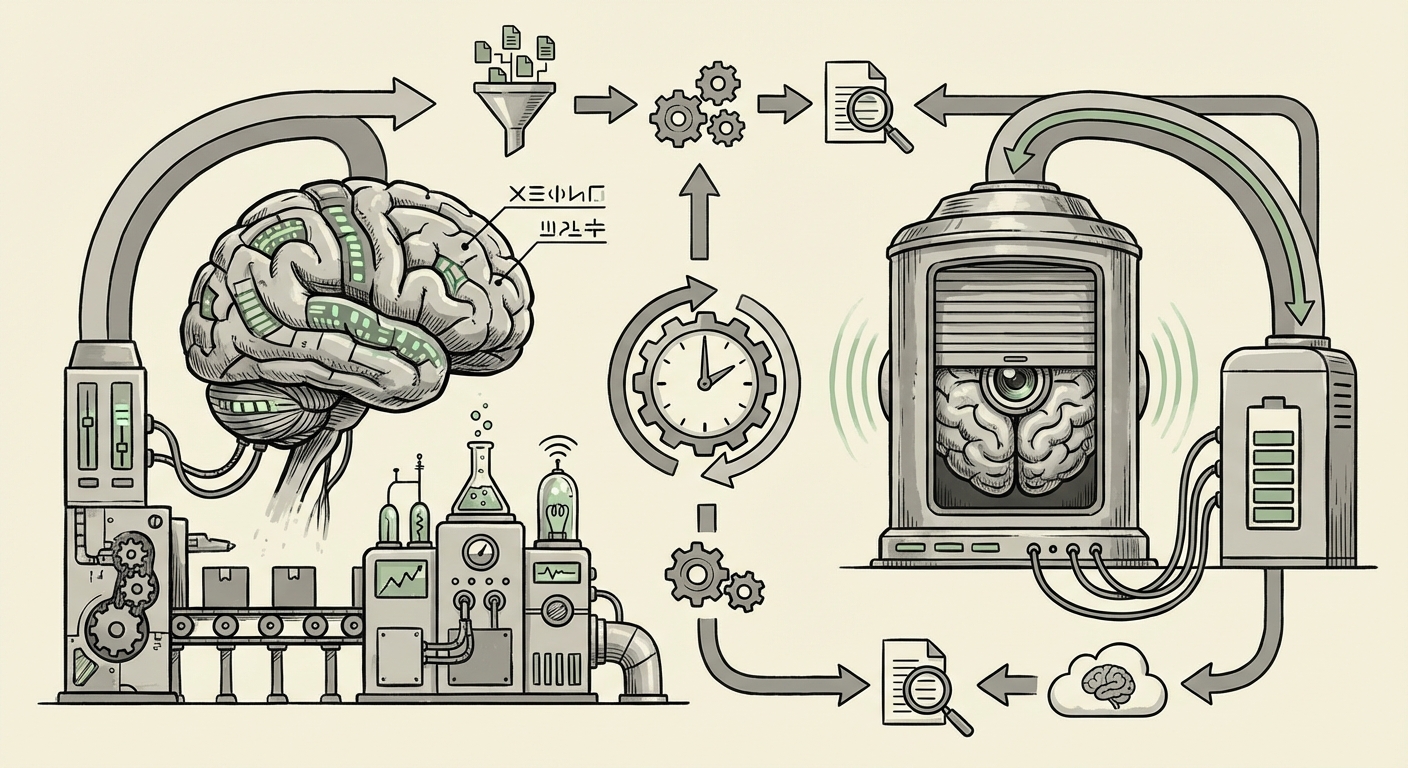
This is where the "three hours apart" detail gets interesting. When different people use the same powerful AI to work on the same problem, they are, in a sense, consulting the same expert. That expert may point them down the same path. In the past, different research teams had different training, different instincts, and different methods. Now, at least some teams share something else: the same "brain" in the loop.
In other words, GPT-5.6 functions a bit like a shared teacher. It has seen the same knowledge, learned the same patterns, and reasons in similar ways for everyone who uses it. So it makes sense that two teams using it would converge on the same answer.
Why This Is a Big Deal for Research
This convergence effect has deep implications for how breakthroughs will happen in the future.
First, it means speed. Things that once took research teams months can now happen in weeks, days, or mere hours. AI does the heavy cognitive lifting: reading papers, exploring angles, pointing out flawed logic. Human researchers still steer the boat, but they no longer have to row every stroke by themselves.
Second, it means access. You no longer need to be a top lab at a rich university to work on frontier problems. If you can use GPT-5.6, you have access to a world-class research assistant. That democratizes discovery in a way the world has never seen.
Third, it means ideas are becoming less "owned" by any single group. When many people use the same powerful tools, they are likely to reach similar conclusions at similar times. That's good for verifying results. It is also a warning for anyone who hopes to keep a breakthrough secret for long.
What This Means for the Future of AI
Looking forward, the double-solve is a preview of three bigger trends.
1. AI Is Becoming a Research Partner, Not Just a Tool
In the past, most people used AI to draft emails or summarize documents. But when AI starts solving open problems in quantum cryptography, it has crossed a line. It is no longer just a writing assistant. It is a scientific partner. Future AI will not merely answer questions; it will raise new ones, propose experiments, and challenge assumptions. Researchers who treat AI as a colleague will go further than those who treat it as a search engine.
2. Human Judgment Still Matters Most
Here's the nuance. GPT-5.6 did not solve the problem by itself. The teams guided it, questioned it, and interpreted its answers. The model is powerful, but it still needs a human who understands the goal. The future of AI is not "machines replace people." It is "people plus machines beat machines alone"—and "people plus machines beat people alone." The teams that excel will be the ones who combine human creativity with machine speed.
3. Convergence Will Become the Norm
If two teams can solve the same problem three hours apart, expect more groups to arrive at similar findings close together. The era of the lone genius or the single secret lab is fading. In its place: a fast-moving, AI-connected community of researchers, all moving toward the same breakthroughs at nearly the same speed. The winners will be those who can execute and implement once the breakthrough happens—not just those who get there first.
What This Means for Businesses
For business leaders, the lesson from this story is clear: if you aren't using advanced AI in your core work, you are falling behind.
Think about what it takes to solve a hard problem today. You need expertise, experience, and time. In the past, if you had the best team, you won. Now, a team with a capable expert and an AI like GPT-5.6 can move at the pace of the best teams in the world. That doesn't mean everyone becomes equally good. But it means the gap between the best and the rest is shrinking faster than ever.
What should companies do?
- Use AI for the hard problems, not just the routine ones. If you only use AI for memos and marketing copy, you're missing the point. Put AI to work on your hardest product, engineering, or strategy questions.
- Pair AI with your best people. The tool is powerful, but direction matters. Give your sharpest experts a powerful AI assistant and watch what they do.
- Watch your competition. Somewhere out there, a competing team is using AI to solve problems that took your company years. You need to know what they are working on.
- Rethink "secret projects." If AI helps everyone converge on similar answers, then keeping ideas secret for years may no longer work. Speed of execution becomes the advantage, not secrecy.
What This Means for Society and Security
The security angle deserves special attention. Quantum cryptography is not just an academic field. It is the foundation of future digital trust. When breakthroughs in this field happen faster than expected, both good and concerning possibilities open up.
On the good side, faster breakthroughs mean faster protection against quantum threats. We may reach quantum-safe security sooner than planned.
On the concerning side, a world where many teams can solve the same problems means many groups can hold the same capabilities. Governments and companies that used to rely on unique expertise to stay ahead will have to assume that adversaries may gain similar powers, just hours later.
For society, this raises serious questions. If AI helps groups solve sensitive problems in security, how do we make sure those tools are used responsibly? How do we let researchers push boundaries while keeping the public safe? These are not easy questions, and they will only get harder as AI improves.
But here's a thought worth holding onto: the double-solve shows that progress is now collective. When knowledge is shared through a common AI, breakthroughs arrive for everyone at nearly the same time. That is a hopeful idea, but it is also a heavy responsibility. We are entering a world where no one has a monopoly on new ideas for long.
What You Should Do Now
Here are a few practical steps, whether you're a leader, a researcher, or just someone curious about AI.
- Learn to use AI at the edge of your ability. Don't just ask it easy questions. Give it the hardest problems you face and see what it comes back with.
- Treat AI as a thinking partner, not a text generator. Ask it to challenge your reasoning. Ask it to explain where you might be wrong. Use it to find blind spots.
- Build a hybrid team. Pair people with deep domain knowledge with people who know how to push AI to its limits. The magic is in the combination.
- Think in terms of speed and execution. If your competitors can match your ideas in three hours, your advantage has to come from how quickly you execute.
- Question old assumptions about secrecy and rivalry. If the same AI is helping everyone, the smartest strategies may involve collaboration, open science, and moving fast—rather than hiding and hoping.
The Bigger Picture
So what does it mean that two teams solved the same quantum cryptography problem using GPT-5.6, just three hours apart?
On one level, it's a milestone. AI has proven it can help crack some of the most difficult problems in science.
On another level, it's a mirror. It shows us the future we're building. A future where knowledge is shared, ideas move fast, and breakthroughs are no longer events that happen to a single group. They are waves that wash over everyone at once.
The race is no longer about who has the smartest people, the most funding, or the best laboratory. It is about who can work best with the machine, who can ask the best questions, and who can move the fastest once the answer appears.
If that's the new world, the teams that understand it will not just be three hours ahead. They'll be a generation ahead.