The AI Brain Transplant: Why Distilling Transformers Into New Architectures Is the Next Big Shift
The world's most powerful AI systems share a secret. Most of them are built on the same kind of model: the transformer.
Transformers changed everything. They made it possible for machines to understand language, write code, and analyze huge amounts of data. They power the modern AI boom. And they are very good at one specific job: learning the patterns inside sequences of information.
But transformers have a problem. They are enormous. They need massive data centers, huge amounts of electricity, and serious computing power. That makes them expensive to build and expensive to run.
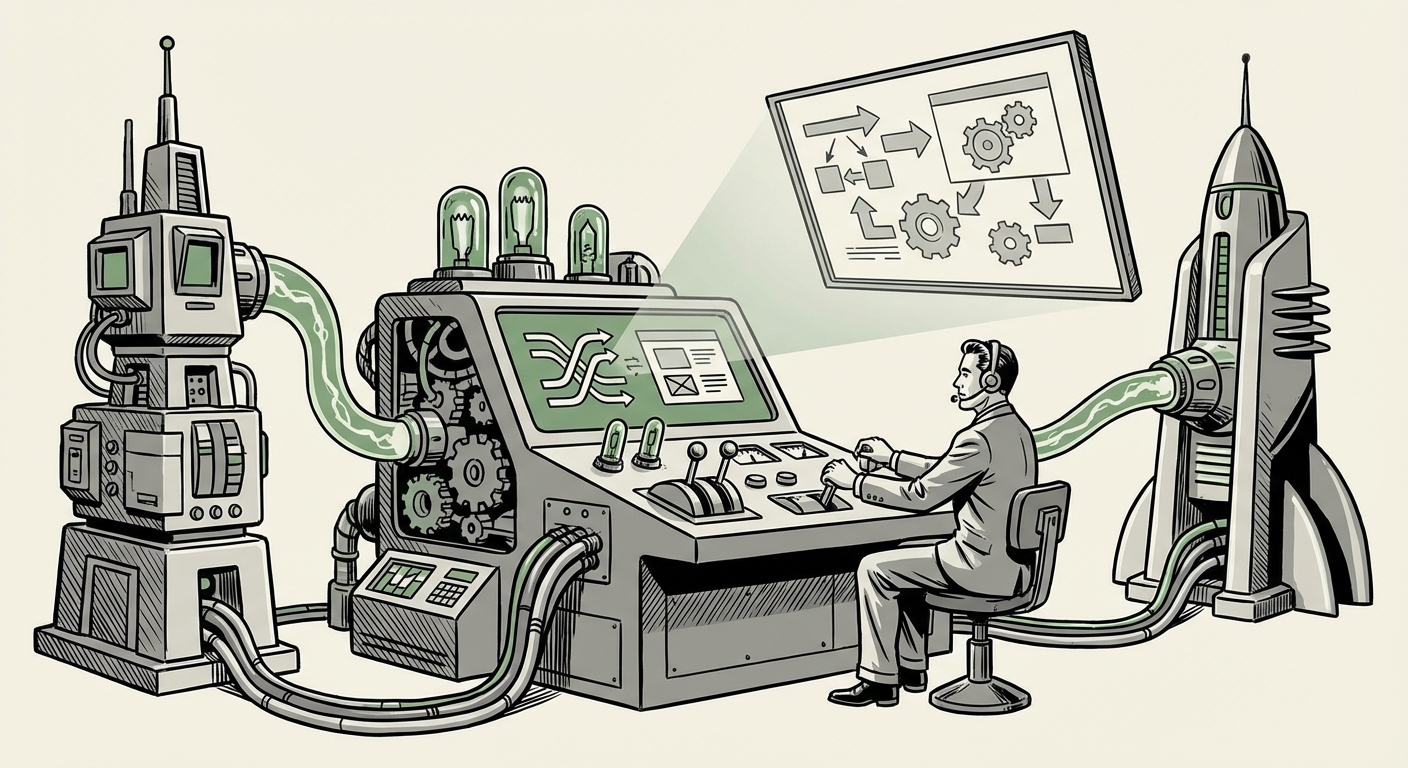
That is why one of the most exciting ideas in AI right now is something researchers call the brain transplant. The goal: take everything a transformer has learned, and move that knowledge into a completely different kind of AI architecture. Keep the brain. Trade the body.
The Transformer Era Has a Weight Problem
To understand why a brain transplant matters, it helps to know what a transformer does. A transformer is a type of neural network built to handle sequences. It looks at words in a sentence, notes in a song, or steps in a process, and learns how the pieces relate to one another. This ability to track relationships across long sequences is what makes transformers so powerful.
That power made the transformer the default choice for most modern AI systems. But there is a catch. The best transformers are also the largest. As models grow, so do the costs:
- Money. Training and running these models costs a fortune.
- Energy. They consume electricity around the clock.
- Access. Only large organizations can afford the hardware to run them.
- Speed. The bigger the model, the slower and more expensive each request becomes.
For years, the industry's answer was to make the transformer smaller. Distill a huge transformer into a small transformer. That works. But you still end up with a transformer. What if you could move the knowledge into an entirely different kind of machine?
What Is Knowledge Distillation?
Before we talk about transplants, we need to talk about distillation.
Knowledge distillation is a proven machine-learning technique. The idea is simple. Start with a large, powerful model — the teacher. Build a smaller, cheaper model — the student. Then train the student to copy the teacher.
The student learns to make the same predictions the teacher would make. Over time, it absorbs much of the teacher's knowledge, in a much smaller package. Think of it as a student who does not read every book in the library but learns from a brilliant tutor who has read them all.
Distillation has been used for years to shrink AI models. The result is usually a model that is smaller, faster, and cheaper, while keeping most of the teacher's performance.
But here is the twist. In traditional distillation, the student has the same basic shape as the teacher. A small transformer learns from a big transformer. That works, but it limits how much you can change the underlying technology.
The Brain Transplant: Keep the Brain, Change the Body
Now imagine something bolder. What if the student is not a smaller transformer at all? What if it is built on a completely different architecture — a type of model that works in a fundamentally different way?
That is the brain transplant.
Think of it this way. The knowledge inside a model — the patterns, the rules, the understanding — is like a brain. The architecture — the way the model is built and processes information — is like a body. A brain transplant takes the intelligence from one body and puts it into another.
In AI terms, this means taking a transformer trained on enormous amounts of data, and distilling its sequence knowledge into a different kind of model architecture. The new model runs on a different engine, but it carries the same knowledge. It has been taught by the transformer, not just shaped like it.
The phrase "sequence knowledge" is important here. Transformers are, at their core, sequence learners. Words in a sentence. Lines of code. Pixels over time. The knowledge they hold is about how parts of a sequence relate to each other. The challenge of the brain transplant is moving that sequence knowledge — intact — into a body that processes sequences differently.
If it works, the payoff is huge. Different architectures are not just slightly different from transformers. Some are radically more efficient. They can run on far less memory and far less power. Some are built for always-on devices. By transplanting the brain of a transformer into one of these bodies, we could get transformer-level intelligence without the transformer-level cost.
Why Is This So Hard?
Moving knowledge between architectures is not like copying files from one computer to another.
Each architecture stores knowledge in its own way. A transformer looks at a whole sequence at once and weighs every part against every other part. Other architectures process sequences step by step, carrying a compressed internal state forward. These are very different ways of thinking.
Some knowledge transfers easily. Some does not. The hard part is getting the student to truly absorb the teacher's understanding — not just imitate its surface behavior.
That is why the brain transplant is such a compelling research direction. It pushes distillation to its limits. And it raises deep questions: What is knowledge, really? Can it be separated from the machinery that learned it?
What This Means for the Future of AI
If the brain transplant succeeds, the future of AI will look different.
The end of the one-architecture world
For years, the transformer has ruled. Nearly every major AI breakthrough was built on it. The brain transplant opens the door to a world of diverse architectures, each tuned for a different job. Some built for speed. Some for energy efficiency. Some for working offline on small devices. The transformer may remain the teacher, but it will no longer be the only player.
Knowledge becomes portable
One of the most profound ideas here is that knowledge is a reusable asset. Train one powerful model once, then distill its knowledge into many different bodies for many different jobs. The same brain could power a data-center assistant, a smartphone app, and a sensor in a warehouse. That changes the economics of AI completely.
Better distillation for everyone
The techniques we build to transplant brains will also improve ordinary model compression. Every AI system gets more efficient as a result.
Alternative architectures get stronger fast
Instead of waiting for new architectures to catch up through years of research, they can be fast-tracked by distilling directly from the best teachers available.
What This Means for Businesses
For business leaders, this is not academic. It is about cost, speed, and strategy.
Lower AI costs
If the same knowledge can run on cheaper architectures, the cost of using AI drops. Companies that run thousands or millions of AI tasks a day will see it in their cloud bills.
Faster, on-device AI
A brain transplant can put AI where it could not go before: inside the apps, devices, and machines people use every day. On-device AI means no network delays and no cloud calls. It also means better privacy, because data never leaves the device.
New model choices
Today, many companies rent AI from large providers through APIs. In a distil-and-transplant world, a company could train a model once and then choose how to deploy it. Run an efficient local version for routine tasks, and call the full-size version only when needed. That is a new kind of flexibility.
A word of caution
Not every task will benefit equally. Some knowledge degrades in the transfer. Teams should test carefully, measure performance on their own data, and keep the original model as a fallback. The transplant is a tool, not a miracle.
What This Means for Society
The brain transplant matters beyond business.
Access. If AI gets cheaper and lighter, more people can use it. Small businesses, schools, clinics, and community groups gain capabilities that once required a data center.
Energy. Running AI takes energy. More efficient architectures use less. That is good news for the climate, especially as AI scales across the economy.
Privacy. When models run locally, sensitive data can stay on the device. That does not erase privacy risks, but it reduces the need to send everything to the cloud.
Responsibility. At the same time, making powerful AI easier to spread raises hard questions. Distillation can spread capabilities widely and quickly. Society will need new norms and rules about when and how transplants should happen.
Actionable Insights: Prepare for an Architecture-Diverse Future
Whether you are an engineer, a product manager, or an executive, there are steps you can take today.
- Do not marry a single architecture. If you are building AI systems, design them so you can swap models in and out. The best architecture for your workload two years from now may not be the one you use today.
- Start tracking efficiency. In addition to accuracy, measure cost per task, speed, and energy use. These numbers will drive your deployment decisions.
- Experiment with distillation. If you have a large model doing valuable work, ask whether a distilled version can handle routine workloads at a fraction of the cost.
- Plan for hybrid deployments. The future is not about choosing one model. It is about pairing a powerful teacher with efficient students spread across your operations.
- Keep your data ready. A transplant is only as good as the transfer. Well-organized data and careful evaluation sets will be your best tools.
The Takeaway: Knowledge Is Power, Wherever It Lives
The brain transplant is more than a clever metaphor. It marks a turning point in how we think about AI. For a long time, the model was the message. If you wanted transformer intelligence, you needed a transformer. The brain transplant breaks that link.
It announces a future where knowledge is portable. Where intelligence can be moved into whatever body best fits the job — a data center, a phone, a car, a factory floor, or a remote clinic.
The transformer will not disappear. In many ways, it becomes even more important as the teacher of other models. But it also graduates from being the only option to being the source of something larger. We are moving from an era of building bigger models to an era of moving what those models know.
The most exciting part? The brain transplant shows us that training an AI model is not the end of the road. It is the beginning of countless other possibilities. The right knowledge, in the right body, can change what AI can do — and who gets to use it.