Pulitzer Winners Just Set a Record for AI Disclosure, What It Means for the Future of AI
In 2026, a record number of Pulitzer Prize winners openly disclosed that they used artificial intelligence in their work. That one fact, tucked inside this year's awards announcements, is one of the clearest signals yet about where AI is headed.
The Pulitzer Prizes are the highest honor in American journalism. They also celebrate the best books, drama, music, and poetry. For over a century, they have stood for the very best of human writing, reporting, and storytelling. So when a record number of this year's winners say, "Yes, we used AI," the conversation changes.
AI is no longer a hidden shortcut or a rumor. It is now a tool that the world's best professionals use, and openly admit to using. Let's break down what happened, why it matters, and what it means for the future of AI in your workplace and your world.
A Historic Moment for the World's Most Famous Awards
Every year, the Pulitzer Prizes shine a spotlight on reporters who exposed corruption, authors who moved millions of readers, and artists who captured the spirit of the moment. These winners are not average workers. They are the best of the best. That's exactly why this year's record is so important.
Think about the word "record." It means more winners disclosed AI use than in any previous year. The trend is impossible to miss: top-tier creators are using AI, and their willingness to talk about it is growing fast.
Why would winners choose to disclose something that once felt risky? Because honesty builds trust. Because audiences deserve to know how important work gets made. And because hiding AI use is quickly becoming the real professional mistake.
A decade ago, admitting you used AI in journalism might have felt like admitting you didn't do the work. Today, it signals the opposite: you used every modern tool available to get the story right.
Why Disclosure Matters More Than the Tool Itself
Let's be clear about what "disclosure" means here. The winners didn't just mention AI in passing. They told the public, in an open and direct way, that AI played a role in creating award-winning work.
This is a massive change in mindset. In many industries, people still whisper about AI use as if it were a secret. "Did you use AI on this?" feels like a trap question. But the Pulitzers just flipped that idea upside down. The most respected creators in the world are saying: Yes, we used AI, and here's why that's a good thing.
Here's why that honesty matters so much:
- Trust is the foundation of media. Readers want to know what is real and how it was made. When winners disclose AI use, they show respect for the audience.
- It normalizes good behavior. When top professionals set a transparent example, everyone else gets permission to follow it.
- It separates smart use from lazy use. Disclosure forces people to think about how they used AI, and whether that use was responsible.
Think about how photography handled this. For years, people debated whether editing photos was "cheating." Today, photo captions openly say when images have been altered. The same thing is now happening with AI-assisted writing. "How was this made?" is becoming as common a question as "Who made this?"
The Future of AI Is "Human + Machine"
Every major new technology goes through the same three phases. First, people fear it. Second, people experiment with it. Third, people treat it as normal. AI in knowledge work has clearly reached phase three.
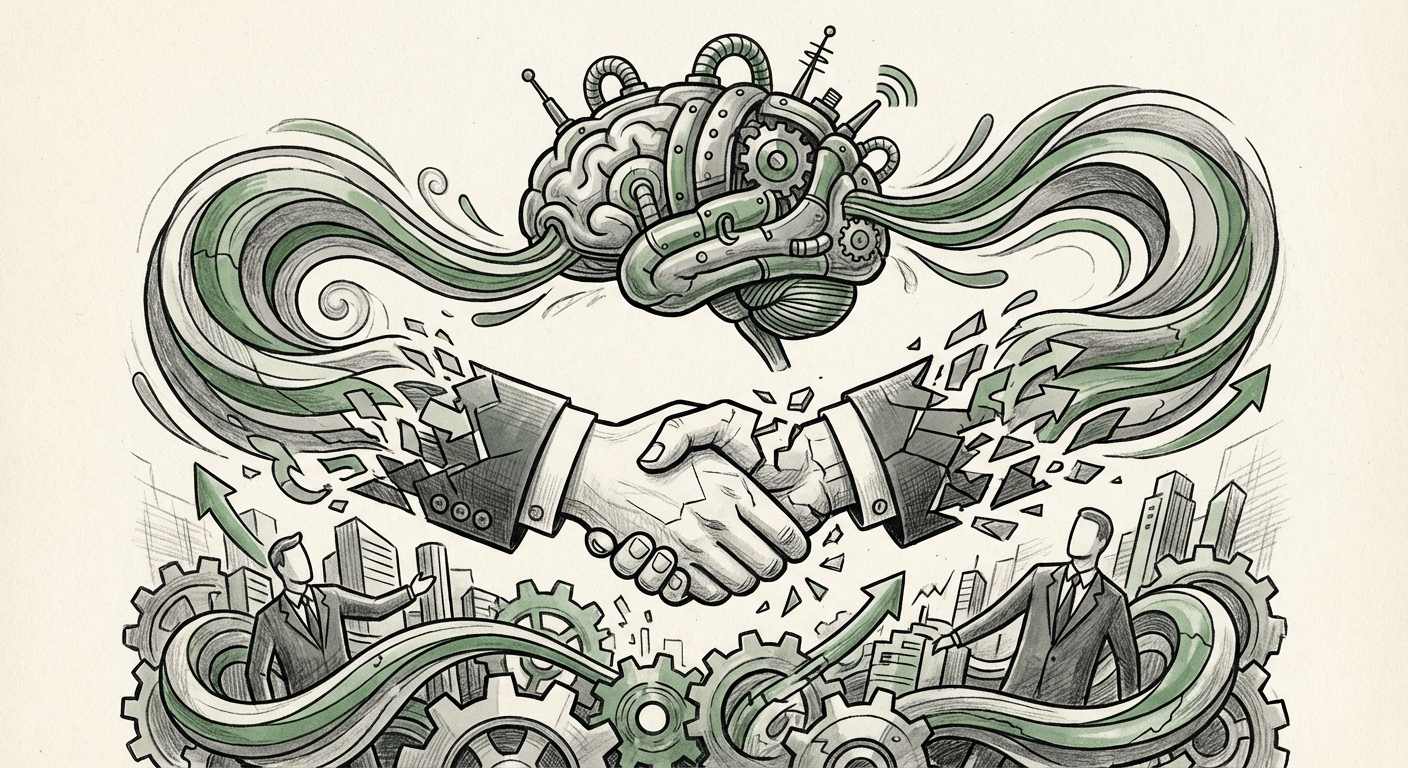
But here's the crucial insight from this year's Pulitzer news: the winners didn't replace human skill with AI. They combined the two. AI helped with heavy lifting, the research, the organizing, the early drafts, the endless formatting. Humans provided the judgment, the curiosity, the ethics, and the final voice.
Call it the "human plus machine" model. It means:
- AI handles speed and volume. Humans handle meaning and accuracy.
- AI suggests. Humans decide.
- AI drafts. Humans refine and take responsibility.
This is the future of AI in every field, not just journalism. The winners of tomorrow will not be the people who refuse to use AI. They will be the people who use it brilliantly and honestly. The award-winning question will change from "Did you use AI?" to "How did you use AI to make your work better?"
What This Means for Businesses
If Pulitzer-winning journalists use AI openly, your business can and should too. The lesson is not "AI does all the work." The lesson is that AI is now a standard part of excellent professional work. Here is what smart organizations should do right now.
1. Write clear AI policies
Every team needs to know what is allowed and what must be disclosed. Do you tell clients when AI helped write a report? Do you label AI-generated images? The Pulitzer winners set the standard: when in doubt, share the truth. Your company policy should make that easy, not scary.
2. Invest in training, not just tools
Buying AI software is not enough. Your people need to learn how to use it well, and how to talk about it honestly. Training should cover prompting, fact-checking, privacy, and disclosure. The companies that train their teams now will be the ones winning their own "Pulitzers" in a few years.
3. Keep humans accountable
Never let AI be the final decision-maker. The most important rule for any business: a human must review, verify, and own every important output. Tools can help us move faster, but responsibility is still a human job.
4. Make verification a habit
AI is powerful, but it can be wrong. The best users treat AI as a brilliant assistant who still needs a careful editor. Build a verification step into every workflow. One extra check can protect your reputation for years.
What This Means for Society
The bigger story here is about trust in the information we consume every day. We live in a world of deepfakes, fake reviews, and manufactured headlines. In that world, honesty about AI use is not a weakness, it is a form of respect for the reader.
This year's Pulitzer news teaches us three things about society:
First, media literacy is now a survival skill. Everyone should get into the habit of asking where information came from and whether AI was involved. That question is no longer a conspiracy theory. It's a normal part of being an informed person.
Second, standards are emerging. When the most famous awards in the world accept AI-disclosure as normal, other industries follow. Expect to see clearer labels, guidelines, and rules across news, publishing, marketing, and education in the coming years.
Third, human creativity is still the star. The Pulitzer winners did not hand their awards to an algorithm. They used AI as a partner while the original ideas, the passion, and the courage to tell the truth came from people. That will always be true. AI can help us tell more stories and tell them faster. But the stories themselves come from human experience.
Actionable Insights You Can Use Today
Whether you are a journalist, a business owner, a marketer, or a student, this moment offers practical lessons you can apply right away:
- Disclose early and proudly. If you use AI in your work, say so. Transparency protects your reputation and builds trust.
- Define your own rules. Decide which tasks are fine for AI and which must always be fully human. Write those rules down.
- Use AI for the boring stuff. Let it handle research, summaries, outlines, and wording fixes. Save your brain for judgment and creativity.
- Verify everything that matters. Check the facts. Read the final version. AI is a tool, not a source of truth.
- Track how you use AI. Keep simple notes on where AI helped. This makes future disclosure effortless and honest.
- Keep learning. AI tools change fast. The winners you read about this year are already learning the next generation of tools. Stay curious.
The Bottom Line: Honesty Is the New Competitive Edge
This year's Pulitzer Prizes gave us a perfect snapshot of the future of AI. The future is not robots replacing humans. The future is humans using the best tools available, and being honest about it. A record number of winners showed that AI can help produce world-class work, and that transparency about that help is now a mark of professionalism, not a reason for shame.
Businesses, creators, and everyday professionals should take the same approach. Use AI boldly. Use it carefully. And never be afraid to say you used it. The people and organizations that master this balance between power and honesty will be the ones winning the world's respect in the years ahead.