Microsoft's AI Revenue Depends on OpenAI for 70% — Here's Why That Should Worry Everyone
The most important number in artificial intelligence right now may not be a benchmark score or a model's parameter count. It may be a single percentage: 70 percent.
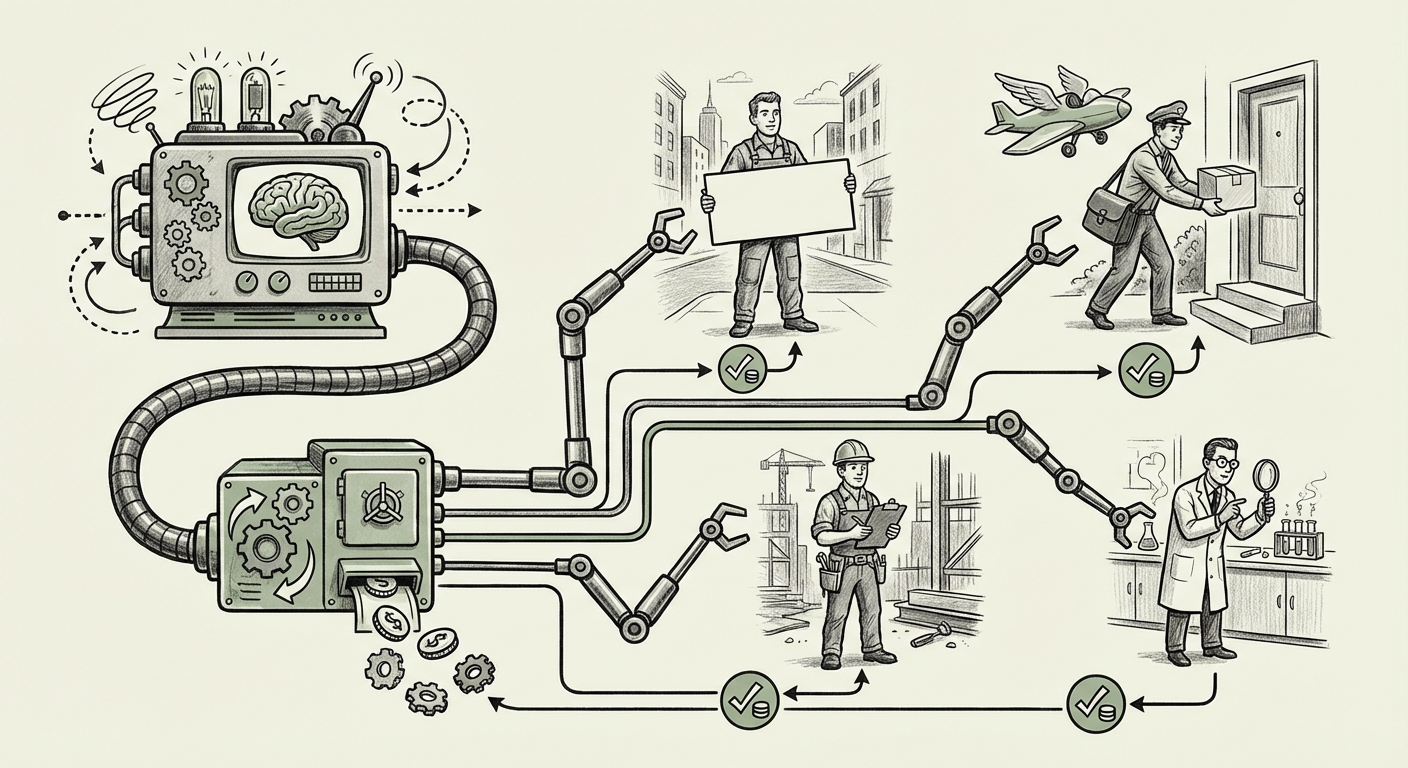
Microsoft's AI revenue reportedly depends on OpenAI for 70 percent of its total. That one statistic tells the story of how generative AI turned into a real business — and how fragile that business may be. The partnership between the two companies has become one of the defining alliances of the AI era. Microsoft supplies enormous cloud computing power, the kind that AI models need to train and run. OpenAI supplies the models that power products used by millions of people every day.
On paper, it looks like a perfect arrangement. But the 70 percent figure reveals something deeper: one of the most powerful technology companies in the world has built a huge slice of its AI future on a single partner. Understanding what that means — and what might happen next — is essential for anyone who uses AI, builds with AI, or invests in it.
What the 70 Percent Figure Actually Means
Let's be clear about what 70 percent dependence really says. It means that a very large chunk of Microsoft's AI revenue flows from one relationship. If OpenAI's models remain essential, Microsoft's AI business thrives. If anything changes — if OpenAI shifts strategy, if a rival produces better models, or if regulators force the two companies to restructure their ties — the impact on Microsoft's revenue would be massive.
Dependence is not automatically bad. Partnerships exist to create value, and this one has created enormous value on both sides. But when one partner accounts for 70 percent of an entire revenue stream, the relationship stops being optional. It becomes structural. The two companies are no longer just business partners; in a very practical sense, their fortunes are tied together.
The number also reveals something about the broader AI market. Generative AI may look like a fast-moving race between many players, but underneath, its economic engine is highly concentrated. A handful of deep alliances carries most of the weight.
How the AI Partnership Era Began
To appreciate the 70 percent figure, it helps to understand why these partnerships formed in the first place. Training frontier AI models requires computing power on a staggering scale. Very few organizations on Earth can afford to build and run that kind of infrastructure. Meanwhile, the companies that do own that infrastructure — the cloud giants — found themselves with the data centers, the chips, and the distribution channels that AI products need to reach real users.
The result was natural: AI labs and technology giants combined forces. The AI lab gets the compute it needs to push the limits of research. The technology company gets to embed frontier AI into its most popular products — productivity software, cloud platforms, developer tools, and operating systems. This arrangement is how generative AI moved out of research papers and into everyday workplaces.
For Microsoft, the strategy paid off rapidly. AI features integrated into widely used products created a fast-growing revenue stream almost overnight. But that success came with a hidden cost: the more revenue the partnership generated, the more the company became exposed to a single point of failure. The 70 percent figure is the dollar sign attached to that exposure.
The Hidden Risks of Concentration
Why does a 70 percent dependence matter so much? Because concentration creates several distinct risks at once.
Strategic Risk
Microsoft and OpenAI do not share the same long-term incentives forever. As both companies grow, their ambitions may pull in different directions. A single decision — a change in pricing, a change in product direction, a change in who gets access to the best models first — could ripple through the entire revenue base.
Innovation Risk
If a company knows it can rely on a partner's models, it may invest less in building alternatives of its own. That is comfortable in the short term but dangerous in the long term. The company becomes a passenger on someone else's research roadmap, betting that the partner will keep delivering breakthroughs year after year.
Regulatory Risk
Governments around the world are paying close attention to AI partnerships. Competition authorities have already begun asking hard questions about these alliances. They are looking at whether one company has too much power over another, or whether the AI market is being carved up between a few dominant pairs. If regulations change, the economics of the partnership could change with them.
Market Risk
Customers are not blind. If enterprises begin to worry that a vendor is too dependent on one model provider, they may start hedging their own bets. They may choose multi-provider strategies, hold back on big commitments, or demand more flexibility. That hesitation alone can slow growth, even if nothing goes wrong technically.
What This Means for the Future of AI
The 70 percent figure is not just a warning about one company. It is a preview of how the entire AI industry will evolve. The biggest takeaway is this: the future of AI will be a multi-model world.
No serious enterprise will want to repeat this level of dependence for itself. Instead of betting everything on one vendor, companies will build AI systems that can draw on many models from many providers. They will route each task to the model that does the job best — balancing quality, speed, cost, and safety. This approach, often called a model portfolio strategy, is quickly becoming the default way to think about enterprise AI.
The 70 percent figure will also push AI providers to diversify in the other direction. Cloud companies that feel over-reliant on a single lab will invest in their own models or partner with multiple research organizations. AI labs, in turn, may work to reduce their dependence on any single cloud provider. The result is a market that should become more balanced over time, with more options for customers rather than fewer.
This does not mean the era of big partnerships is over. Rather, it means the era of exclusive partnerships is ending. The winners in the next phase of AI will not be the companies that lock customers in. They will be the companies that give customers genuine choice, genuine portability, and genuine flexibility to change direction as the technology evolves.
Actionable Insights for Business Leaders
For businesses building on AI, this story is not just interesting gossip. It is a practical warning with very practical lessons. Here is how to respond.
- Know your own concentration numbers. Ask yourself the same question being asked of Microsoft: what percentage of your AI capabilities comes from a single vendor? If the number is high, that is a risk you should name, measure, and manage.
- Build provider-agnostic architecture. Design your systems so that switching from one AI provider to another is a configuration change, not a rewrite. Use abstraction layers, open standards, and well-defined interfaces between your applications and the models underneath.
- Invest in evaluation, not just integration. One reason companies stay locked in is because they cannot compare alternatives. Build a consistent way to test models for quality, cost, speed, and safety — for every task you care about. If you can measure, you can switch.
- Negotiate flexibility into your contracts. Look for terms that let you use multiple providers, protect your data rights, and give you clear exit paths. Treat AI vendors like any critical supplier: the stronger your rights, the weaker your risk.
- Build internal AI skills. The more your own team understands how models work, the less dependent you will be on any vendor's roadmap. Internal talent is the ultimate hedge against external dependency.
- Stress-test your assumptions. Ask what would happen to your business if your primary AI provider suddenly changed its pricing, its models, or its availability. Then build a plan for that scenario — before it happens.
What It Means for Society
Concentration risk in AI is not only a boardroom problem. It is a societal problem. When a small number of powerful partnerships controls the most advanced AI capability in the world, the entire economy inherits their fragility. A disruption in one relationship could affect millions of users and thousands of businesses that never signed a single contract with either company.
There are also real competitive concerns. AI is likely to become as important as electricity or the internet. If its foundations are controlled by a few overlapping alliances, innovation can be squeezed. New ideas may struggle to reach the market unless they fit into the commercial plans of a dominant pair. This is why regulators worldwide are looking closely at these relationships — not because they assume wrongdoing, but because they understand that some technologies are too important to be left overly concentrated.
On the positive side, the attention being paid to this 70 percent figure is itself a sign of health. The more we understand how AI money flows, the better equipped we are to shape the technology's future. Transparency is the first step toward resilience.
A Wake-Up Call, Not a Verdict
It is important to say what this story is not. The 70 percent figure is not proof that the Microsoft-OpenAI partnership is failing. On the contrary, it is proof of extraordinary success. Reaching that level of revenue dependence takes years of building trust, delivering results, and creating products people actually use.
But success creates its own challenges. The very size of the relationship now demands that both companies — and everyone who depends on them — plan for a future that is more diverse, more flexible, and more resilient.
The lesson of the 70 percent figure will echo through the AI industry for years. The companies that thrive will treat AI like any other critical resource: they will diversify their sources, measure their exposure, and build systems that can adapt when the landscape shifts. The future of AI belongs not to the most powerful partnerships, but to the most resilient ones.
For the rest of us, the takeaway is clear. Do not tie your strategy to a single bet. Keep your options open, keep your skills sharp, and keep asking the same question that brought this story to light: how much of what you rely on depends on one thing going right?