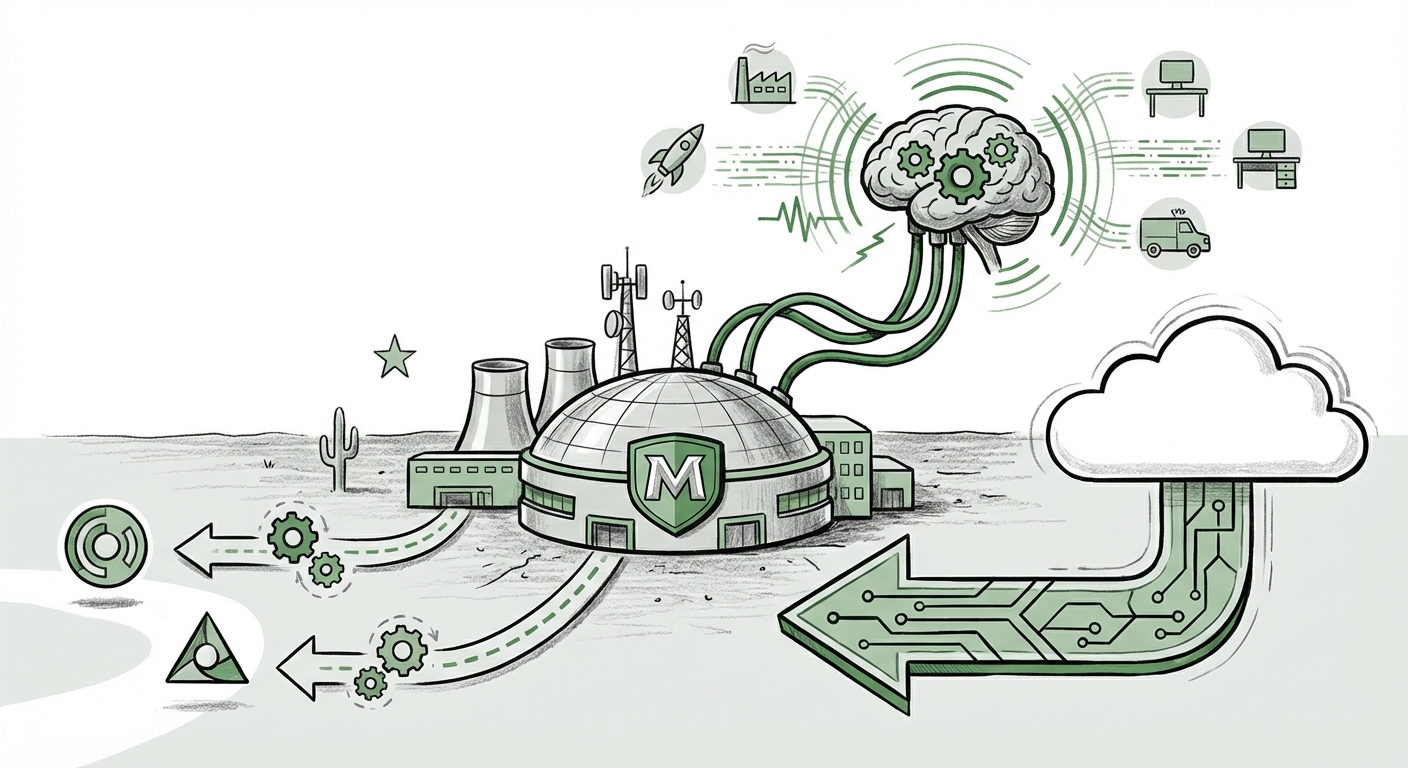
Open Weights Changed AI Forever. Now the Pioneer Is Fighting a Price War — What That Means for the Future of AI
A big deal just happened in artificial intelligence — even though it made almost no noise. The company that made open-weight AI models mainstream has changed its strategy. Instead of competing by saying, "we are open and different," it is now competing with discounts and lower prices. On the surface, this looks like a routine business decision. In reality, it is one of the clearest signals yet about where the AI industry is headed. If you use AI, build with AI, or invest in AI, you should care about what this shift means for the future.
The Open-Weight Era, Explained Simply
To understand why this matters, you first need to understand what open weights are and why they changed everything.
Think of an AI model like a chef who has trained for years. In the early days of modern AI, you could not hire that chef. You could only call a hotline and ask questions. The chef stayed in a locked kitchen owned by someone else. You paid per question. You never saw the recipe book. You had no control over how your meal was prepared.
Open-weight models changed that completely. An open-weight model is an AI whose "brain" — its trained weights — is released to the public. Anyone can download it, run it on their own computers, and even study how it works. It is like the chef coming to work in your kitchen, recipe book included. You own the result. You decide what to do with it.
The pioneer of this movement made open weights feel normal. Before this company came along, releasing top-tier models openly was rare. Afterward, it became expected. Businesses suddenly had real choices. They could pay for a closed API, where the model stays hidden behind a paywall, or they could download an open model and run it themselves on their own servers.
That choice created big practical benefits. Privacy-focused companies could keep their data on-site instead of sending it to a third party. Developers could fine-tune models for niche jobs, teaching them company-specific language or industry rules. Researchers could inspect the model to find bias, errors, or safety issues. And startups could build products without paying a toll for every single request.
Openness became more than a feature. It became a philosophy — and it shaped the entire direction of the AI industry. Now, that very same company is changing its talk. The new message is not about openness. The new message is about price.
When a Pioneer Starts Discounting, Listen
In business, pricing tells you more than press releases. When the leader of a new category suddenly starts offering discounts, it is usually a sign that the old differentiator no longer works.
That is exactly what is happening. Openness was this pioneer's identity. Now it is competing on discounts. The reason is simple: openness has become table stakes. Dozens of companies now release open-weight models. The thing that made this company special — the open weights themselves — no longer sets it apart. When everyone is open, being open is no longer a reason to choose anyone.
So the battle moves to price. Competing on discounts means the company believes the best way to win new customers and keep old ones is to be cheaper than rivals. That is a classic commodity-market move: lower the price, grab the volume, and make up the difference in scale.
This does not mean the models are getting worse. It means the market has matured. For years, the AI story was magical: look at what these models can do! Now the story is more practical: what does this cost? We have reached the moment where a leading AI company believes the smartest strategy is to win on value for money.
And when a pioneer of an entire movement starts playing the discount game, it sends ripples through the whole industry. Competitors must answer with their own price cuts. Customers suddenly hold more power. And the economics of AI shift beneath everyone's feet.
What This Means for the Future of AI
This shift to discounts is not a bad thing. In fact, it is a normal — and healthy — sign of an industry growing up. Here are three important trends it reveals about the future.
1. AI Is Becoming a Utility
Think about electricity. We do not ask who invented the light bulb; we simply shop for the lowest rate. When a leading AI company starts competing on price, it signals that AI models are turning into a commodity — like power, water, or cloud storage. Utilities are not glamorous. But they change the world, because everyone can afford them. The future of AI is not about exclusive access for the lucky few. It is about cheap, reliable intelligence available to anyone with an internet connection.
2. Value Is Moving Up the Stack
When the model itself becomes cheap, the money shifts to the things built around it: the data, the software, the workflow, the user experience, and the integration. The model is becoming the engine. The application is becoming the car. Businesses that only lease engines will find themselves stuck in a price race. Businesses that build great cars — products people actually love to use — will capture the real value. The discount war is a warning: if your entire business is just reselling a model, your margins will vanish.
3. Cheaper Models Mean More AI Everywhere
When the cost per task drops, developers stop asking, "Is AI worth it?" and start asking, "Where can we put AI next?" Discounts accelerate adoption in places that were previously too expensive to consider. A small clinic can afford an AI assistant to handle paperwork. A local shop can use AI to write product descriptions. An app developer can add translation features without worrying about runaway bills. Lower prices do not shrink AI's reach — they explode it.
Practical Implications for Businesses
If you run a business, this trend is mostly good news. The AI you use today will likely cost less next year. But the trend also rewards smart behavior. Here is what the shift means in practice.
Cheaper models lower your risk. Pilots and experiments that were once too costly suddenly make sense. The cost of failure drops, which encourages innovation. If a pilot project flops, you have not wasted a fortune. You have paid a small tuition fee for real learning. In the discount era, experimentation becomes cheaper than standing still.
But do not rush to lock in. If prices are falling, the worst thing you can do is sign a long, fixed-price contract that assumes today's rates. AI pricing is trending down. Keep your agreements flexible and short where possible. You want to ride the discount wave, not pay the pre-war rates.
Re-read your bills. If you are still paying rates from a year ago, you are probably overpaying. The discount era is full of savings for people who simply ask. Vendors rarely lower prices automatically. They lower prices when customers negotiate. A single phone call could save you more than any internal optimization project.
Keep your options open. The less dependent you are on one provider, the better your negotiating position. Build your software so it can talk to multiple AI models. Then you can switch — or threaten to switch — when a better deal appears. Locked-in customers are the ones who end up paying the old prices.
Focus on the outcome, not the model. The discount war might tempt you to chase the cheapest model. That would be a mistake. Your goal is not to buy the cheapest AI. Your goal is to solve a business problem at the lowest total cost. A slightly more expensive model that needs less human fixing is usually the better deal. Price per token is not the same as value delivered.
Broader Implications for Society
Beyond business, there are larger forces at work — and society as a whole is being reshaped by this shift.
Democratization gets a serious boost. Cheap, open AI means more people can build with it: students, teachers, nonprofits, small-town clinics, and independent developers. When intelligence starts to function like a public utility, the gap between big tech and everyone else can shrink. That is a genuinely hopeful future.
Transparency gets easier. Open weights make it possible for independent researchers to test models for bias, errors, and safety gaps. In a world where AI increasingly influences hiring, health advice, and financial decisions, the ability to look inside the machine is a social good. Discounts make those open models even more accessible, spreading trust and scrutiny more widely.
But risks remain. The same model that runs a helpful tutoring bot can be misused in harmful ways. Openness and safety will always pull in opposite directions. Society needs sensible rules and guardrails that encourage openness while discouraging harm.
There is also a warning sign. Training frontier AI models costs enormous sums of money. If the pioneer is forced to compete purely on price, we have to ask: who can afford to keep building? A brutal price war could push smaller players out of the market, leaving only a handful of giants who can win by losing money for years. The final shape of the market is not guaranteed. But one thing is certain: the era of AI as a luxury product is over.
Actionable Insights — What You Should Do Now
Here is a practical checklist for navigating the discount era with confidence.
- Renegotiate now. Prices are falling. Contact your current vendors, ask about new rates, and compare quotes from competitors. You will likely be surprised by what is available.
- Benchmark honestly. Run your own real workloads — not marketing numbers — to see which model gives the best results per dollar. Generic benchmarks do not tell you how a model performs on your specific data.
- Build portability. Design applications with a layer between your code and the model, so switching providers is cheap and fast. Flexibility is your most valuable negotiating chip.
- Self-host where it matters. For sensitive data or steady, high-volume work, an open-weight model on your own infrastructure can beat any paid API on cost. Do the math for your own workloads.
- Measure outcomes, not tokens. Track the business result: time saved, revenue gained, error rate reduced. Then choose the model that maximizes that result, not the one with the cheapest price tag.
- Stay flexible and keep learning. The discount war is not finished. What looks like the best deal today may be beaten tomorrow. Keep contracts short, skills current, and strategies adaptable.
The Bottom Line
We are watching AI cross a threshold. For years, the story was about models getting smarter. Now the story is about models getting cheaper. The company that made open weights mainstream has started competing on discounts — and that simple sentence carries an enormous amount of information about the future.
It tells us that openness has become the baseline, not a bonus. It tells us AI is becoming a utility that everyone can afford. It tells us the value in the industry is moving from the model itself to the products and services built around it. And it tells us that agility — the ability to renegotiate, switch, and adapt quickly — is the new superpower in business.
For businesses, the smart move is simple: do not panic about which model to pick. Invest in your measurement, your flexibility, and your people. Let the pioneers fight over pennies. You take the savings, lower your risk, and build something your customers actually love. The price war is not a threat. It is an invitation to build more boldly than ever before.