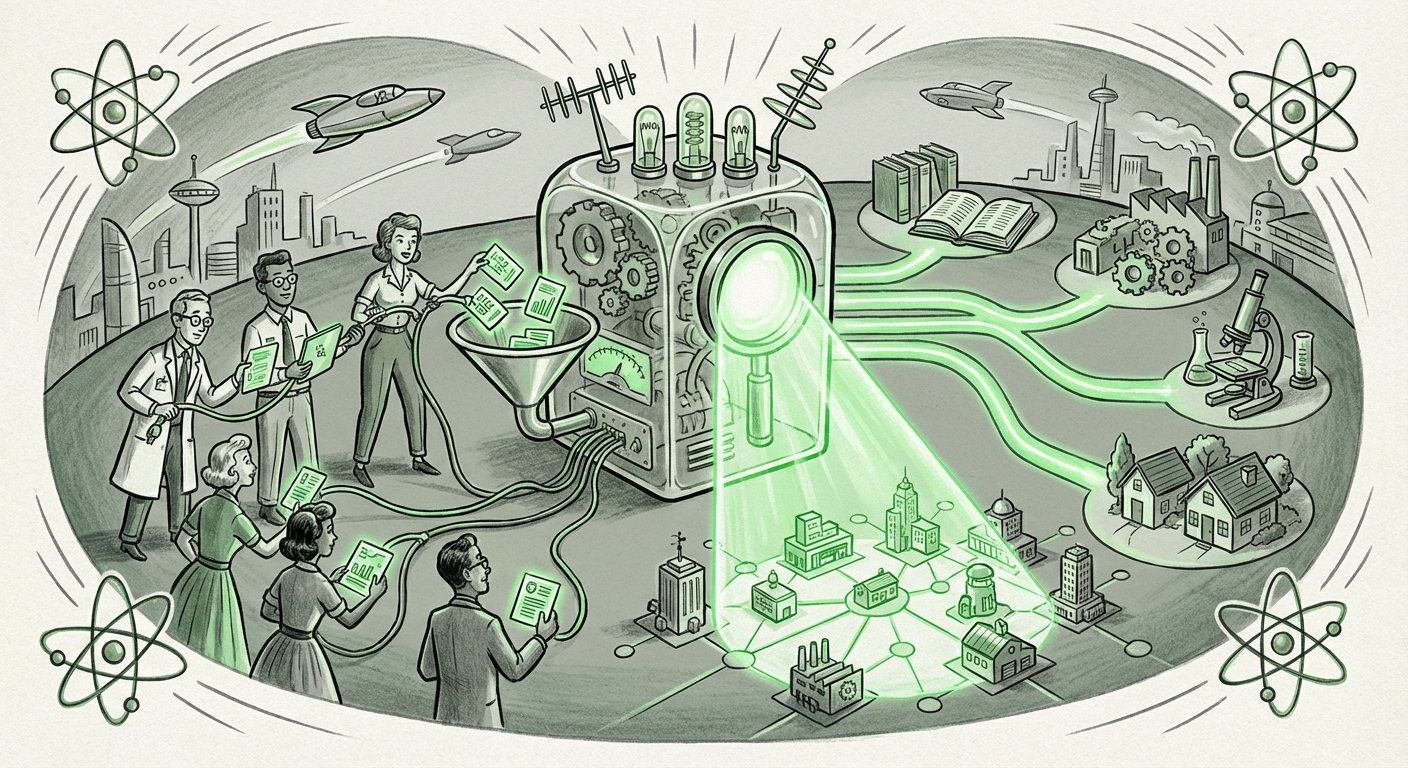
Return on Token: The New Economics Defining AI-Native Engineering
There is a new measure of value taking shape in the world of software. It is not return on investment, though that still matters. It is not lines of code, developer hours, or velocity charts, though those still appear in reports. The new measure is return on token: the value a team gets back for every token it spends on artificial intelligence. This idea sits at the heart of AI-native engineering, and it is reshaping how companies budget, how engineers build, and how the next generation of AI will be used. Understanding it now is not optional. It is quickly becoming the difference between teams that surge ahead and teams that stall.
What Is a Token, Really?
To understand return on token, start with the token itself. AI systems do not read and write the way people do. They process language in small chunks called tokens. A token can be part of a word, a whole word, or even a piece of punctuation. When you ask an AI to write a function, debug an error, or explain an architecture, your request is broken into tokens. The AI's response is also counted in tokens.
Every token represents compute. Every unit of compute has a cost. And every cost needs a justification. In traditional software work, the conversation was about time and salary. In AI-native work, the conversation expands to include tokens: how many you use, how efficiently, and what value they create.
Think of tokens as fuel. A car cannot move without fuel, but two drivers can reach the same destination using very different amounts. One might take a route that burns three times as much fuel. The same is true with AI. Two engineers can solve the same problem, and one may use ten times more tokens to do it. The output might look identical. The economics are not.
The Old Economics: Human Time as the Unit of Value
For decades, the economics of engineering were built on a single scarce resource: human time. Companies estimated projects in person-months. They measured productivity in output per developer. They hired more people when they wanted more results. The cost of an engineering team was mostly fixed: salaries, benefits, infrastructure, and office space. Once the team was in place, writing one more feature mostly cost time.
This model created whole industries. Project management software, time tracking tools, and agile methods all grew up around the idea that time is the fundamental currency of engineering. For a long time, that made sense. The bottleneck was human attention.
Then AI became a practical tool for developers. A coder could generate in seconds what used to take hours. The old bottleneck started to shift. Human time still matters. But it is no longer the only thing that matters. Token consumption is now a direct cost, just like cloud computing or data storage.
The New Economics: Tokens as a Currency
Here is the core idea: in an AI-native world, tokens become a currency of their own. Every prompt is a micro-transaction. Every AI-generated response carries a cost, even if it is only a fraction of a cent. Across a large organization, those fractions add up quickly.
This changes engineering from a mostly fixed-cost business to a variable-cost business. A team that uses AI well can scale output without scaling headcount. But it also carries a new kind of risk: runaway token spend. Just as a cloud bill can explode when systems are misconfigured, a token bill can explode when teams use AI carelessly.
Return on token is the metric that keeps this new system honest. It asks a direct question: for every token you spend, what do you get back? Consider two teams. One uses 100,000 tokens to ship a feature that saves 40 engineering hours. The other uses 500,000 tokens for the same feature. The output looks the same. The return on token is very different.
What "AI-Native" Really Means
The phrase "AI-native engineering" gets thrown around a lot. Let's be clear about what it means. A team is not AI-native just because its developers use an AI tool once in a while. AI-native means AI is woven into the entire workflow: design, code generation, testing, debugging, code review, documentation, and deployment. The AI is not a side tool. It is a core partner.
In an AI-native workflow, an engineer describes what they want, supplies context and constraints, and the AI produces a draft. The engineer then reviews, tests, and refines. That changes the job in a fundamental way. Writing code from scratch is no longer the main act. Directing, evaluating, and integrating AI output is.
This shift changes which skills matter. Knowing syntax by heart matters less. Clear communication matters more. The ability to judge whether an AI's answer is correct matters more. Systems thinking matters more. In short, the best engineers are becoming great directors of intelligent machines rather than great typists.
Why Return on Token Matters for Business Leaders
For CFOs and CEOs, return on token is not a technical curiosity. It is a new lens for viewing the entire technology budget.
First, it changes cost forecasting. Traditional budgets predict salaries and infrastructure. AI-native budgets also have to predict token consumption, which varies with usage and can spike in unexpected ways. Leaders need visibility into token spend, the same way they have visibility into cloud spend. That means dashboards, alerts, and clear ownership of AI costs.
Second, it changes productivity measurement. Measuring an AI-native team by hours worked makes little sense. What matters is outcomes: features shipped, bugs fixed, systems improved, and the token cost of achieving those outcomes. The teams that win are not necessarily the ones with the biggest AI budgets. They are the ones with the best return on token.
Third, it changes competition. AI-native teams can move faster and cheaper than teams that depend only on manual coding. But the advantage is not automatic. It comes from optimizing the whole pipeline around token efficiency. Companies that build this skill early will shape their industries. Companies that ignore it will struggle, not because they lack talent or money, but because their cost per outcome stays too high.
The Changing Role of the Engineer
For individual engineers, the rise of return on token brings both risk and opportunity. The risk is clear: some tasks that used to need a human now need only a prompt. The opportunity is bigger: the person who can direct AI well becomes far more productive.
The new engineer needs a blend of skills. First, communication. A precise prompt with good context saves thousands of tokens and produces better results than a vague one. Second, evaluation. AI output can look perfect and still be wrong. Engineers must verify, test, and question. Third, architecture. AI can generate code, but humans still have to design the systems that hold that code: where data lives, where boundaries sit, and where risk hides.
In this world, the "10x engineer" gets a new definition. It is not the person who writes ten times more code. It is the person who creates ten times more value per token, and helps the whole organization do the same.
Practical Steps to Boost Your Return on Token
Here is how to make it concrete. Organizations and individuals can improve their return on token starting today.
- Measure before you optimize. Track token use by team, project, and outcome. You cannot improve what you do not measure.
- Invest in prompt craft. Clear instructions, useful examples, and explicit limits produce better output with less wasted compute.
- Build reusable context. Instead of repeating the same background in every prompt, create shared context that gives the AI reliable information every time.
- Let people do the judging. AI can draft; people must decide. Keep senior engineers focused on reviewing important work and setting direction.
- Cut repetitive work. If the same AI request runs over and over, that is a sign of waste. Look for patterns and handle them once.
- Set token budgets like compute budgets. Give each team a clear spending envelope and review it regularly.
- Train for judgment, not memorization. Update hiring and training to reward critical review of AI output, system design, and clear communication.
What This Means for the Future of AI
Zoom out and the bigger picture comes into focus. The economics of tokens are not just changing engineering. They are changing how AI itself will evolve.
As the cost of tokens changes over time, the return on token improves for more and more tasks. Work that was too expensive to automate yesterday becomes worth automating today. This creates a powerful cycle: more automation leads to more demand, more demand leads to more investment, and more investment leads to still better and cheaper AI.
AI-native engineering is the place where this cycle is easiest to see. But it will not stop there. The same logic will spread to marketing, legal work, design, and every field where language and reasoning create value.
There is also a caution. If tokens are the new currency, the organizations that control the systems producing tokens hold great power over the future economy. Transparency, fair pricing, and broad access will matter for everyone, not just engineers.
And there is a human point that should not be lost. A narrow focus on return on token could reduce complex work to a simple efficiency score. That would miss the point. The best return on token is not the cheapest output. It is the output that creates lasting value: reliable systems, useful products, and organizations that keep learning. Tokens are a means. Value is the end. The new economics of AI-native engineering do not change that. They just give us a clearer way to see it.
Conclusion
Return on token is more than a clever phrase. It is a practical tool for navigating one of the largest shifts in software since the internet. Teams and companies that understand this new economics will make smarter decisions, spend more wisely, and build faster. Those that hold on to old assumptions about time and headcount will wonder why their competitors keep pulling ahead. The fuel of AI is cheap in small doses and expensive at scale. The winners will be the ones who learn, right now, to get more value from every single token they spend.