Claude Code Auto Mode by Default: What It Means for the Future of AI Development
Every day, developers around the world click a small button dozens of times. The button says "approve." A change has been suggested by an AI coding tool. The code looks fine. The tests pass. So the developer clicks, moves on, and never thinks about it again.
Most of the time, nothing goes wrong. But sometimes it does. A subtle security flaw slips in. A bug hides in an edge case. A developer has approved something they did not fully read, let alone fully understand.
This is the problem of the "bad approval." And it has quietly become one of the biggest hidden risks in modern software development.
That is the problem Anthropic says it is trying to solve. In early August, the company announced that Claude Code, its AI-powered coding assistant, now uses Auto Mode by default. Instead of stopping to ask for human approval at every step, the assistant can carry out its work on its own.
Why would giving AI more freedom reduce risk? Because in many cases, the human approval being removed was never real safety in the first place. It was just a formality.
The Slow, Dangerous Death of Careful Review
Behavioral researchers have long known a simple pattern: when a task repeats too often, the mind tunes out. Signals that once caught a person's attention stop registering. For programmers, this is known as review fatigue, alert fatigue, or just "click fatigue." Every extra approval request makes the next one a little weaker.
Consider what a typical developer faces. An AI assistant proposes a small fix here, a refactor there, a documentation update somewhere else. Each proposal arrives with its own approve button. Most suggestions are genuinely good. A few are harmless. And a tiny number are quietly dangerous, the kind of problems a careful human reviewer might catch, but a busy, distracted one almost never will.
The dangerous part is the false comfort. An approval button creates the feeling of safety without providing real safety. When people click approve a hundred times a day, the click becomes a reflex, not a judgment. The human review becomes a ritual rather than a control.
There is also a hidden cost that most teams underestimate: interruptions. Every approval request is a context switch. Every context switch pulls a developer out of deep focus. It might cost ten seconds to click approve, but it can cost ten minutes to rebuild the mental model of what they were working on. Multiply that by dozens of interruptions a day, and a team loses hours of real thinking time. The approval button does not just fail to protect code. It actively damages developer productivity.
An approval is only as good as the attention behind it. A tired developer scanning their tenth review of the day is not a quality gate. They are a speed bump.
What Auto Mode Really Changes
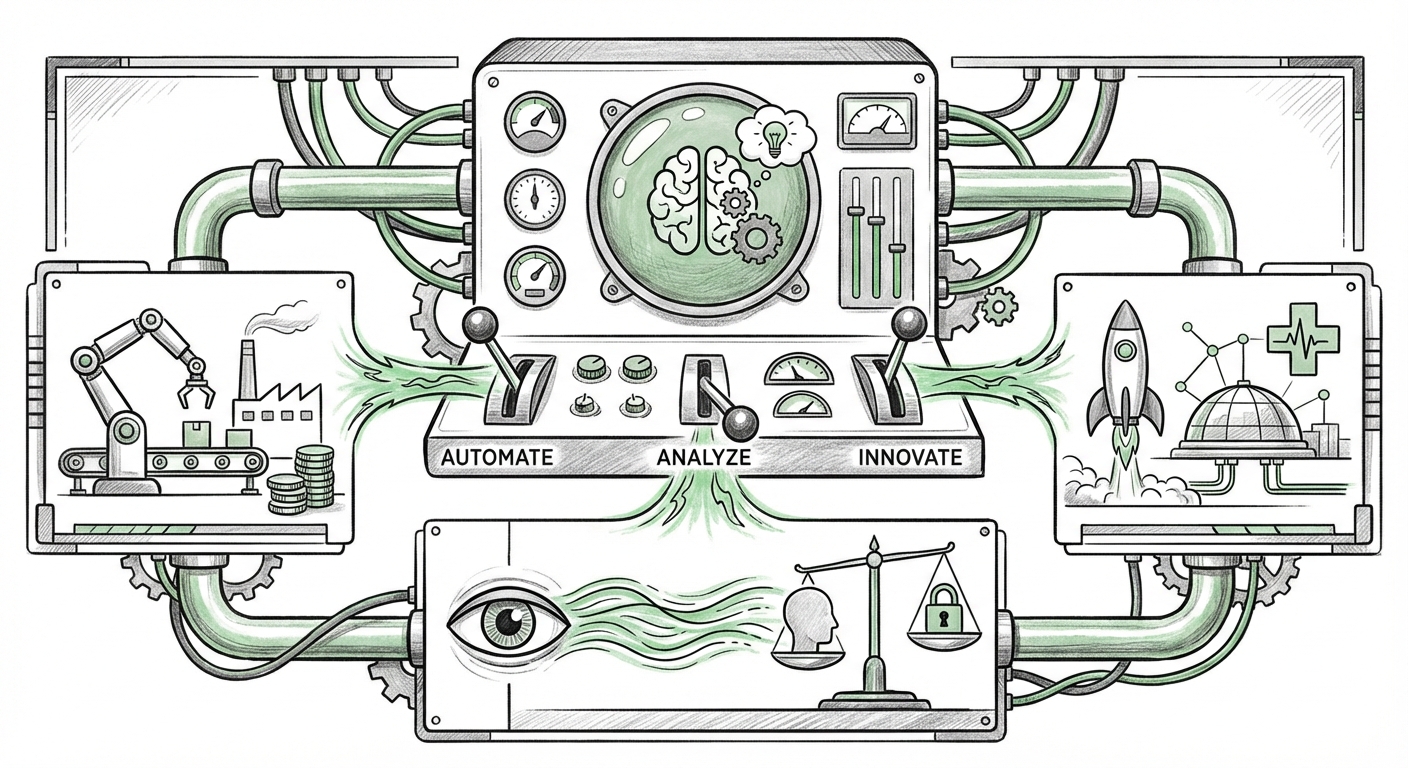
Auto Mode flips the relationship between human and machine. In traditional coding assistants, the human is the driver and the AI is the passenger offering suggestions. The human decides which suggestions to accept. In Auto Mode, the AI does more of the driving. It can execute multi-step tasks on its own, while the human sets the destination, defines the boundaries, and watches the road.
Anthropic's stated reason is direct and a little surprising: it wants to protect developers from making bad approvals. The logic is simple. The tool should not put a tired human in a position where they are asked to make careful judgments dozens of times a day. Instead, the system itself should handle routine work reliably, and humans should step in where judgment truly matters.
The "by default" part is just as important as the "auto" part. When a setting is a default, you do not need to be an early adopter or a power user to benefit from it. It simply becomes the way the tool works for everyone who does not go digging through the settings menu. And history shows that most people never change their defaults.
Why Defaults Beat Rules
Changing a default changes behavior more than any memo, policy, or mandatory training session. Defaults are the quiet architecture of choice. When a company flips a default, it is not just changing software. It is setting the standard behavior of thousands of teams at once.
Think about how this works in everyday life. People keep the privacy settings they are given. They stick with the pre-selected option in a sign-up form. They accept the factory settings on their devices. Not because those choices are always best, but because choosing takes effort and the default feels like a silent recommendation from the maker.
By making Auto Mode the default, Anthropic is making a strong claim: the ideal behavior of an AI coding tool is no longer to ask permission constantly. It is to act competently within defined guardrails, and to reserve human input for the moments that truly deserve it.
Defaults also send a signal to the rest of the industry. When one major AI company sets its flagship coding tool to autonomous mode by default, competitors pay attention. Developers begin to expect it. Businesses start planning for it. A single settings change can reshape the direction of an entire ecosystem, and that is exactly what this one is likely to do.
A Better Division of Labor
The approval button was never the real safety mechanism. Real safety comes from automated tests, sandboxes, code review by fresh eyes, and checks built into the development pipeline. Those are consistent. They do not get tired. They do not get distracted at 4:00 p.m. on a Friday.
The shift to Auto Mode is really a move toward a smarter division of labor. Control moves up the chain. Human engineers focus on the plan: what should be built, what risks are acceptable, and which parts of the system are too sensitive for autonomous action. The AI handles the routine execution. At the end, the human reviews the outcome rather than every intermediate step.
Think of it this way. Passengers on a bus do not approve every turn. They trust the driver, the rules of the road, and the vehicle's safety systems. The driver is trained and monitored, and the route is known in advance. In the same way, coding agents that follow explicit policies can take over the routine journey, while human engineers decide the destination and step in when the road gets tricky.
This is not about removing humans from the loop. It is about putting them at a higher level of the loop, where their judgment is actually useful.
What This Means for Businesses
For software teams, the implications are significant. Companies that adopt agentic workflows will likely ship faster, because their engineers will spend less time clicking approve and more time building. They will also face new challenges that most organizations are not ready for.
The first challenge is governance. Teams will need an "autonomy policy" that answers a simple set of questions: Which tasks can an AI do alone? Which require a human review before action? Which are completely off-limits? Without clear answers, some teams will over-restrict the AI and lose the productivity benefits, while others will over-trust it and invite serious mistakes.
The second challenge is visibility. When an AI acts on its own, you need to know what it did, when it did it, and why. That means audit trails, logs, and dashboards that show AI actions clearly. Enterprises that cannot explain how a piece of code was produced will struggle to meet their own compliance requirements, not to mention the questions of regulators.
The third challenge is culture. Developers are used to being the ones who write and approve every line of code. Moving to a model where they supervise an autonomous agent is a genuine identity shift. Some developers will love it. Others will resist it. Teams that manage this transition with training, clear expectations, and psychological safety will adapt far better than those that simply flip a switch and hope for the best.
There is also a competitive dimension. Teams that learn to work with autonomous coding agents will build software faster than teams that still require human sign-off for every change. Over time, the approval-heavy process will become a competitive disadvantage. The companies that figure out safe autonomy now will have a significant edge.
Actionable Steps for Engineering Leaders
If you lead a software team, this news is a prompt to act. Here are practical steps to prepare for the era of default autonomy.
- Review your defaults. Do not assume the factory settings are right for your risk level. Understand what Auto Mode does in your tools, and adjust the boundaries to match the sensitivity of the code you work on.
- Move approvals up the stack. Replace micro-approvals with strong automated checks in your build and deployment pipeline. Let machines verify the boring details so humans can focus on the big picture.
- Demand visibility. Before you grant AI tools autonomy, make sure they provide clear logs of their actions. You cannot manage what you cannot see.
- Start with low-risk, high-volume tasks. Let autonomous agents handle tests, refactoring, documentation, and small fixes. Keep tighter control over production code, security-sensitive changes, and anything that touches customer data.
- Redefine the human role. Train developers to review plans and outcomes instead of scrutinizing every character. A reviewer of intent is more valuable than an inspector of keystrokes.
- Plan for rollback. Any system that can act quickly can also fail quickly. Make sure you have sandboxes, feature flags, and rollback mechanisms in place before you let agents run at full speed.
- Watch the signals. When tools change their defaults, behavior follows. Check what your team is actually doing, not just what the policy says they should do.
The Road Ahead: From Copilot to Colleague
This change is one small switch in one product, but it marks a milestone. The AI industry spent its early years selling assistance, tools that wait for you, suggest to you, and ask before acting. The next decade will be about autonomy, tools that get on with the work, safely, while humans provide direction and oversight.
Expect other AI coding tools to follow with similar defaults. Expect conversations about AI safety to shift from "did a human approve this?" to "was the system designed so that failure is caught quickly and safely?" That is a profound change in how we think about trust in software.
Most importantly, this is a test of a broader principle: the future of AI safety will not come mainly from human checkpoints. It will come from better system design, better evaluations, and better defaults. When a tired human is the last line of defense, you do not have a safety system. You have a false sense of one.
By making Auto Mode the default, Anthropic is putting that principle into practice. It is betting that well-designed automation, with clear boundaries and strong guardrails, can protect developers from their own limitations far better than a thousand small approval buttons ever could.
That bet is likely to reshape not just how code is written, but how the entire industry thinks about the balance between human control and machine autonomy.
Changing a default looks like a small thing. It is not. When Anthropic set Claude Code to Auto Mode by default, it made a quiet bet on the future: that AI should be given room to work, and that humans should be freed from the illusion of control. The approval button will not disappear. But it will become rare, deliberate, and meaningful, reserved for important decisions instead of rubber-stamping routine ones. For developers, that means less clicking and more thinking. For the industry, it is the clearest sign yet that the age of AI assistance is giving way to the age of responsible AI autonomy.