Backflip AI: Turning 3D Scans Into Editable CAD Models in Minutes Instead of Hours
One of the oldest frustrations in design and manufacturing is the gap between the physical world and the digital world. You can hold a real object in your hands—a broken gear, a vintage car part, a custom pipe fitting—but getting that object into a computer as a usable 3D model is a completely different story. For years, that process has been slow, expensive, and deeply technical. Backflip AI is emerging as a major force in changing that. Its new approach turns 3D scans into editable CAD models in minutes instead of hours, and the ripple effects could reshape how products are designed, repaired, and manufactured for years to come.
CAD, or computer-aided design, is the software that engineers and designers use to create precise digital models of physical objects. These models are not just pictures. They contain exact measurements, surfaces, and features that machines can use to make real parts. CAD files are the language of modern manufacturing. The problem is that creating them from scratch—or from a scan of an existing object—has always been painfully slow. That is exactly the problem Backflip AI is solving, and the timing could not be more important.
The Slow, Painful Work of Traditional CAD Modeling
To understand why this matters, you first need to understand how things usually work. Imagine a factory needs to replace a broken machine part that is no longer made. The part is decades old. There are no design files for it anywhere. Someone has to measure the physical part, recreate its geometry in CAD software, and turn that into a file modern machines can use. This process is called reverse engineering, and it is one of the most tedious jobs in engineering.
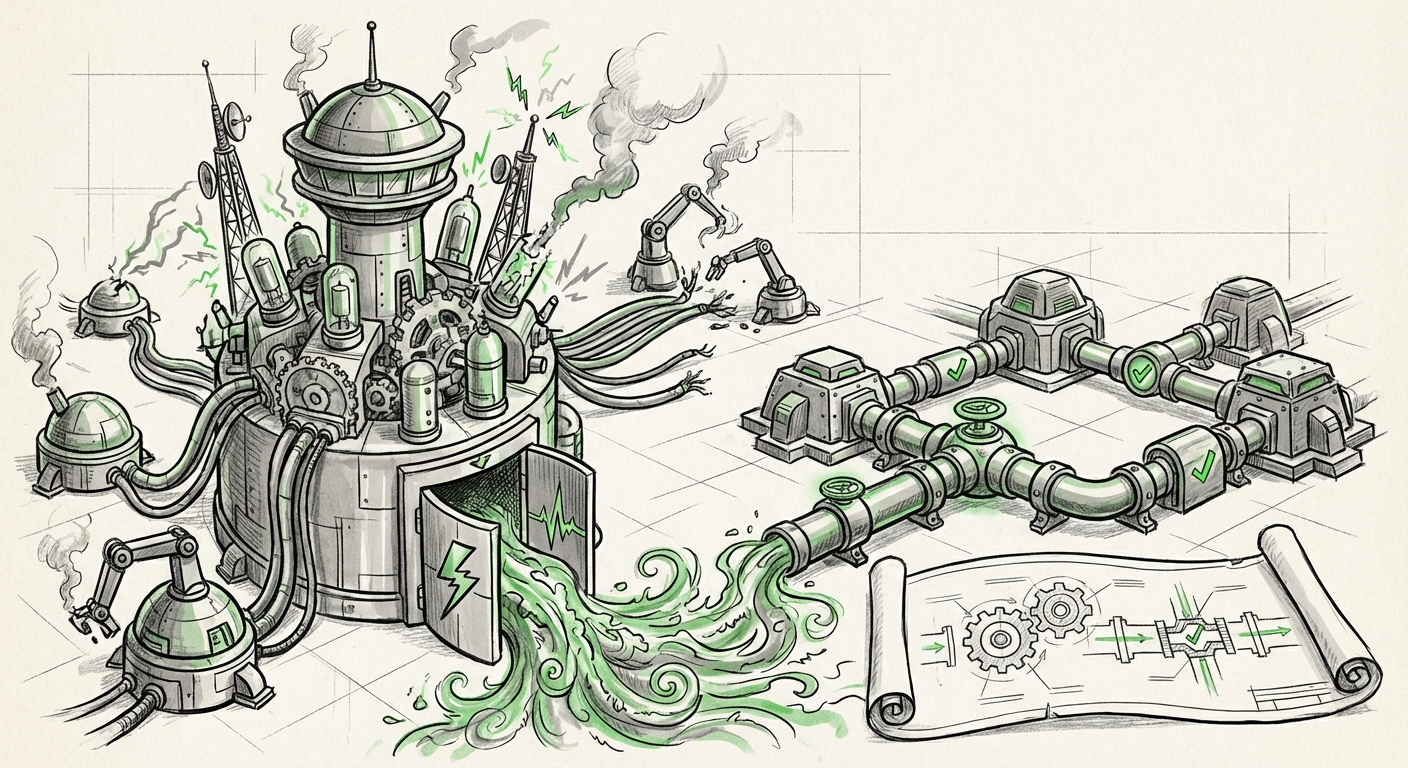
Modern 3D scanners make the first step easy. A scanner can capture the shape of an object in minutes, creating a digital replica called a mesh. A mesh is a dense web of thousands or millions of tiny triangles. It looks like the object on a screen, but it behaves nothing like a real CAD model. A mesh is heavy, difficult to edit, and often unusable for manufacturing. To make the mesh useful, a skilled engineer must manually redraw the object's surfaces, rebuild its features, and recreate its exact dimensions inside CAD software. This is slow, skilled work that demands patience and expertise.
The cost of this slowness adds up quickly. Every hour an engineer spends rebuilding a model is an hour not spent on new designs. Every day lost to reverse engineering is a day a production line sits idle waiting for a replacement part. For small businesses, hiring specialists to do this work can be too expensive. For large companies, thousands of hours disappear into manual modeling every year. The bottleneck has never been scanning—it has always been the conversion from scan to usable CAD.
The Big Breakthrough: Scans You Can Actually Edit
Backflip AI's breakthrough is attacking that exact bottleneck. Instead of requiring an engineer to manually rebuild geometry from a scan, the technology uses artificial intelligence to interpret the scan and generate a proper CAD model automatically. What used to take hours of human labor now happens in minutes. The result is a model that behaves like a true CAD file: it has clean surfaces, adjustable dimensions, and editable features, rather than a messy cloud of triangles.
The difference between a mesh and an editable CAD model is like the difference between a photograph of a chair and a set of building plans for it. A photograph tells you what the chair looks like. The plans tell you how it is put together, how to change its size, and how to build another one. Backflip AI is essentially teaching computers to write the plans automatically from the photograph—and doing it far faster than a human ever could.
This kind of leap does not come from a single clever trick. It comes from training AI systems on enormous amounts of design data, teaching them to recognize the difference between a random surface and a meaningful engineering feature. The AI learns to spot holes, edges, curves, and flat surfaces, then reconstructs them in a way that fits the rules of CAD. That is what turns a raw scan into something an engineer can actually work with.
Why "Editable" Is the Magic Word
The word editable is the heart of this story. Plenty of tools can create a pretty 3D replica of an object. Very few can create a model that an engineer can modify, resize, and reuse. An editable CAD model unlocks a whole world of possibilities:
- Changing dimensions: Need a part that is 10 percent bigger? With an editable model, you just change a number. With a mesh, you essentially have to start over.
- Improving designs: Engineers can take an old part and add modern improvements, like stronger ribs or lighter cutouts, without redrawing everything from scratch.
- Fitting into larger assemblies: Real products are made of many parts that must fit together. Editable models let engineers drop a scanned part into a full assembly and see how it connects with everything else.
- Manufacturing readiness: CAD files can be sent directly to machines, 3D printers, and manufacturing tools. Meshes often cannot.
This is why the shift from hours to minutes matters so much. The faster a scan becomes an editable model, the more often engineers will do it. What was once a last-resort process becomes a routine tool. That changes the economics of reverse engineering entirely.
From Hours to Minutes: A Workflow Revolution
When a task drops from hours to minutes, it stops being a special event and becomes an everyday habit. That is what makes Backflip AI so significant. Engineers will no longer need to ask, "Is it worth the time to model this part?" They will simply scan it and let the AI handle the heavy lifting.
Think about how often that kind of speed changes behavior. When calculators became instant, people did more math. When GPS became instant, people stopped printing directions. When translation became instant, people communicated across languages freely. The same principle applies here. When converting a scan to a CAD model takes minutes, businesses will scan far more objects, capture far more of their physical assets, and build far larger libraries of digital parts.
This also enables faster iteration. Designers can test a physical prototype, scan it, tweak it digitally, and print a new version all in a single day. That kind of cycle used to take a week or more. Faster iteration means more experiments, more improvements, and ultimately better products.
What This Means for Businesses
The practical implications for businesses are enormous, especially in industries that depend on physical objects. Here is where the impact will be felt most:
Spare parts and repairs. Many industries—from aviation to farming to home appliances—struggle with obsolete parts that no one makes anymore. Instead of throwing away an expensive machine because one component is unavailable, businesses can scan the broken part, convert it to CAD, and manufacture a replacement on demand. This extends the life of equipment and saves serious money.
Faster product development. Companies that make physical products can scan existing items, modify them digitally, and turn them into new products in record time. The line between "copying an existing part" and "designing something new" will blur, and that is a good thing for innovation.
Lower barriers for small businesses. Traditionally, CAD modeling required expensive software and highly trained specialists. AI-powered conversion tools lower that barrier. A small shop with a 3D scanner and the right software can now do work that once required a full engineering team.
Better digital inventories. If a company has thousands of physical parts but no digital files for them, that is a hidden risk. If a fire, flood, or supplier failure destroys the physical part, the company has no way to remake it. Converting physical inventory into editable digital models is a form of insurance.
The Bigger Picture: AI Meets the Physical World
Stepping back, Backflip AI is part of a much larger trend: artificial intelligence bridging the gap between the digital and physical worlds. For the past decade, AI has lived mostly in the digital realm—writing text, generating images, analyzing data. But the physical world has always been harder. Computers cannot simply "look" at an object and understand it the way a human machinist does. This technology changes that.
In the future, we will likely see a complete pipeline from physical object to finished product that is almost entirely automated. Scan an object, convert it to CAD with AI, improve it with generative design tools, and print it with a 3D printer. Each step is already getting faster and smarter. Backflip AI is a crucial piece of that pipeline because it sits right at the very beginning—turning real-world objects into the digital language that every other tool understands.
There is also a bigger opportunity in digital twins. A digital twin is a virtual copy of a physical asset that can be monitored, simulated, and analyzed. Until now, creating digital twins of existing equipment was so expensive that only the most valuable assets got them. If converting physical objects to editable models becomes fast and cheap, digital twins could become routine for all kinds of machinery, buildings, and infrastructure.
And then there is personalization. When capturing and editing physical objects becomes easy, custom products become more practical. A designer could scan a standard chair, adjust it to fit a specific person's body, and manufacture a one-off version. The same logic applies to prosthetics, tools, automotive parts, and countless other products. The future of manufacturing looks increasingly customized, and AI-powered scanning is what makes it possible.
Challenges and Honest Caveats
As exciting as this is, it would be a mistake to pretend there are no challenges. AI-generated CAD models still need human review, especially for critical applications. If an airplane part or a medical device is made from an AI-generated model, engineers will want to verify every dimension carefully. Trust will need to be built over time.
Accuracy is another consideration. Scans can miss fine details, especially on shiny surfaces, dark materials, or complex internal cavities. If the input scan is poor, the output model will be poor too. Backflip AI cannot magically capture information that the scanner never recorded. In many cases, the old rules still apply: good input leads to good output.
Integration also takes work. Companies cannot simply install new software and expect everything to change overnight. Existing workflows, quality standards, and employee skills all need to adapt. The best AI tool in the world is useless if the people operating it do not trust or understand it. Training and change management will be essential parts of adoption.
Finally, there is the human question. Does this mean engineers will lose their jobs? History suggests the opposite. When spreadsheets replaced manual calculation, accountants did not disappear—they focused on more valuable analysis. When AI makes the tedious work of CAD conversion automatic, engineers will spend more time on creative design, problem-solving, and innovation. The role will change, but it will not vanish.
What Should You Do Next?
If you work in manufacturing, product design, or any field that handles physical objects, this technology deserves your attention. Here are a few practical steps to help you prepare:
Start scanning today. You do not need a million-dollar scanner to begin. Many modern phones and tablets can capture decent 3D scans of objects. Build a habit of scanning important parts and storing the data. The raw scans will only become more valuable as AI conversion tools improve.
Test the tools yourself. Do not just read about this technology from a distance. Pick a simple part, scan it, and see what comes out. You will learn far more from ten minutes of hands-on experimentation than from hours of reading.
Evaluate quality carefully. Run AI-generated models through your normal design and quality processes. Compare the results to manually created models. Understand where the AI excels and where it struggles. That knowledge will help you decide where to apply it first.
Train your team. The engineers who adapt earliest will become your biggest advantage. Invest in training so your team knows how to combine AI tools with their existing skills.
Think about your part library. Almost every company has a drawer of obsolete parts, legacy components, and undocumented hardware. Imagine converting all of it into editable digital files. That library would become a strategic asset that never wears out, never gets lost, and can be used anywhere.
Final Thoughts
We are watching the walls between the physical and digital worlds come down. For years, the only way to get a real-world object into a computer as a usable design file was to spend hours of human effort rebuilding it by hand. Backflip AI is proving that the future can be different. When a 3D scan turns into an editable CAD model in minutes instead of hours, the meaning of reverse engineering changes. It becomes fast, accessible, and routine. And that unlocks a cascade of possibilities: faster repairs, better products, lower costs, and new levels of innovation.
The lesson for all of us is simple. When AI removes a bottleneck, it does not just make one task faster—it changes the entire system around it. Designers design more. Manufacturers manufacture more. Repairs become more affordable. Customization becomes more common. The hours saved are not the real story. The real story is what companies will do with all that reclaimed time. If you work in any industry where physical objects matter, the question is no longer whether AI will change your workflows. The question is how quickly you will adapt.