AI Is Flooding Britain's Employment Courts with Lawsuits — What It Means for the Future of Work
Artificial intelligence was supposed to make work easier, faster, and smarter. Instead, it is now doing something few people predicted: drowning Britain's employment courts in lawsuits.
The story is simple to understand. AI tools now let anyone create a formal legal claim in minutes. A worker who believes they were treated unfairly can describe their situation to a chatbot and receive a polished, legal-sounding document, ready to file. No lawyer. No legal degree. No expensive consultation. Just a prompt and a click. The result is a wave of legal action that is reshaping the justice system, keeping employers on edge, and forcing society to ask hard questions about the future of AI.
How Did We Get Here?
For most of history, the law was a wall. If you wanted to challenge an employer, you had to climb over confusing forms, legal jargon, and deadlines that made no sense to ordinary people. Most simply gave up. Lawyers were too expensive, and the process was too intimidating.
AI has demolished that wall. Legal chatbots and automation tools are now part of everyday life. They can turn your story into legal language, identify possible grounds for a claim such as unfair dismissal, discrimination, or unpaid wages, and format the paperwork correctly. The effort needed to start a lawsuit has dropped dramatically.
This is often called the democratization of the law, and it is genuinely powerful. People who once had no voice now have a path to justice. But there is a catch: when something becomes free, easy, and instant, people do much more of it. And when that something is a lawsuit, the entire court system feels the pressure.
A System Not Built for Speed
Britain's employment courts are where workplace disputes are officially settled. They were designed for a slower world. A world where filings arrived by post, claims were rare, and every case received careful human attention.
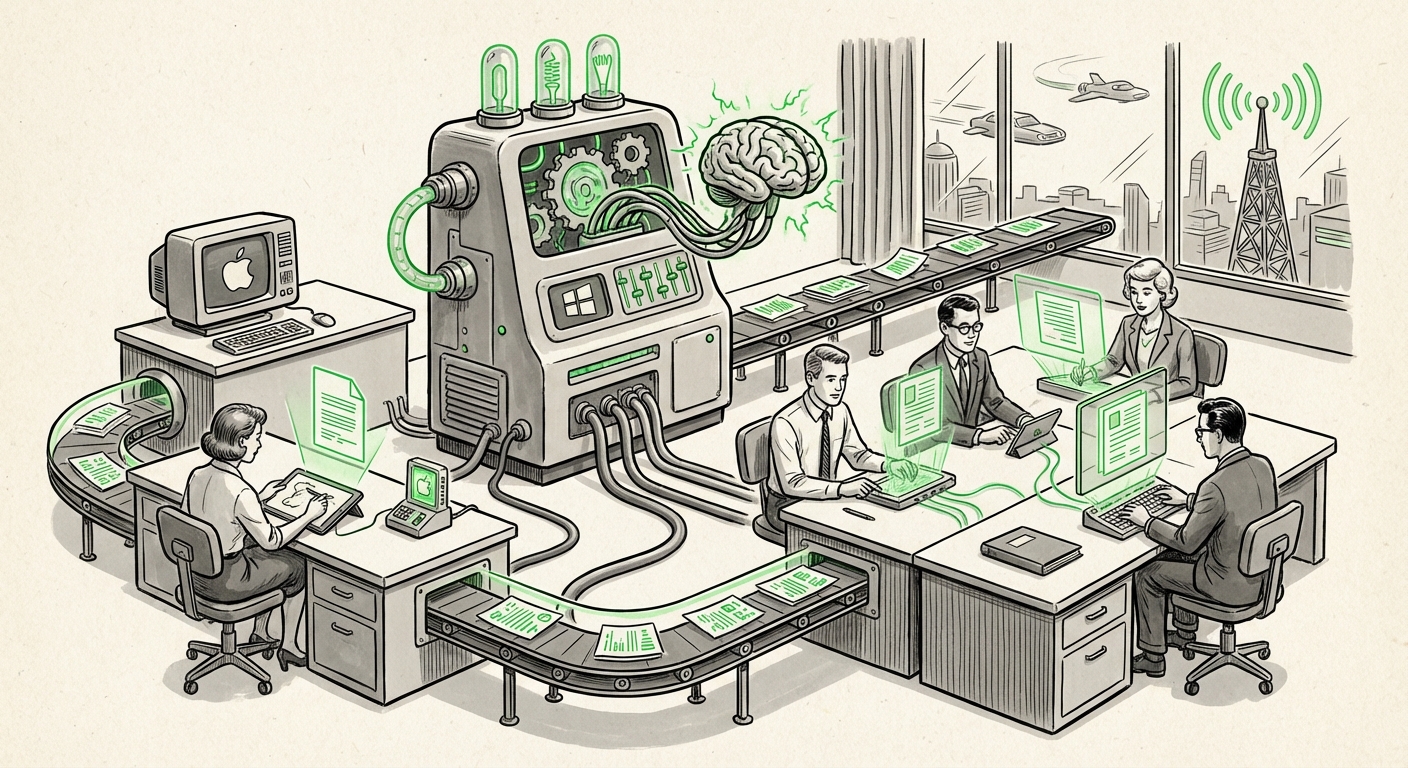
That world is gone. The courts are now facing a flood of AI-generated claims, and they are struggling to keep up. Every claim—even a weak or confusing one—must be opened, read, and processed. Legal staff spend hours sorting through documents that look professionally formatted but are often legally empty. Some AI tools even invent laws and case names that do not exist, a well-known flaw called hallucination. That adds even more confusion to an already overloaded system.
The human cost is real. Genuine victims of discrimination and unfair treatment now wait longer, stuck behind a mountain of automated filings. Justice delayed is justice denied, and the delay is growing.
What This Means for Businesses
For employers, this changes the risk calculation overnight. In the past, most workers never filed claims because they could not afford to. Now they can. Even a weak claim that will eventually be thrown out costs a business time, money, and stress.
Smart businesses are responding by treating employment claims like a predictable part of modern operations. Here is what that looks like in practice:
- Document everything. Performance reviews, warnings, pay decisions, and terminations should all have a clear written record. AI-generated claims are easy to file, but they are hard to win without evidence. Your records are your best defense.
- Audit for bias before problems appear. The same AI that helps workers file claims can help employers find risks. Analyze your hiring, promotion, and pay data for patterns that could look like discrimination.
- Take complaints seriously early. Many disputes start small. A quick, fair response can prevent a lawsuit. Once a claim is filed, it becomes harder and more expensive to resolve.
- Train your managers. Most employment claims begin with a single bad decision or conversation. Consistent, respectful management is not just good practice—it is legal protection.
- Review your insurance. Coverage for employment-related claims may soon become essential rather than optional.
The message is simple: the cost of unfair treatment has gone up, and the effort required to hold businesses accountable has gone down. That is a permanent change, not a passing trend.
The Double-Edged Sword of Justice
We should pause before calling this flood entirely bad. Access to justice is one of the oldest problems in law. For decades, the system favored those who could pay. AI is beginning to change that.
A minimum-wage worker who is exploited or discriminated against now has a realistic way to push back. That is progress. That is the system working the way it was meant to work.
But the same tool is available to people filing speculative, exaggerated, or completely fabricated claims. Some may be hoping for a quick settlement. Others may simply misunderstand what a valid claim looks like. A court can only handle so much noise before it struggles to hear the real signal.
There is also an uncomfortable fairness question. AI is not equally useful to everyone. People with strong writing skills and technical confidence can create far more convincing claims than others. So AI does not truly level the playing field—it tilts it in a new direction.
Can AI Fix the Mess It Created?
The most hopeful part of this story is that the solution looks a lot like the problem. The same artificial intelligence that created the flood can help manage it.
Imagine an AI triage system that reads every incoming claim and sorts it by seriousness. Obvious errors are flagged. Missing information is caught. Human staff focus only on the cases that truly matter. That is not science fiction. It is software we can build today.
Then imagine online dispute resolution. Many employment conflicts are really communication failures between two people who stopped listening to each other. An AI mediator could guide both sides through a structured conversation, helping them reach an agreement without ever stepping into a courtroom. Similar approaches are already being tested around the world, and the pressure of this flood will speed them up.
Even the hallucination problem has a technical answer. Courts can run submitted claims through verification tools that check every cited law and legal case against official records. If something is invented, the system catches it instantly.
The lesson here is clear: AI is not just a tool for making claims. It is a tool for running institutions. Courts that embrace it will become faster, cheaper, and fairer. Courts that resist it will drown.
The Rules We Need
Technology moves faster than law, but law must eventually catch up. Policymakers now face a short list of urgent decisions.
- Should AI-generated claims be labeled? Requiring users to state that AI helped draft a claim would give courts early warning about what they are dealing with.
- Who is responsible for bad advice? If an AI tool encourages a worker to file a hopeless claim, is the worker, the tool maker, or the algorithm accountable? The law has no clear answer yet.
- How do we punish abuse? There must be real consequences for filing fabricated claims, whether created by humans or machines.
- How do we fund courts for the digital age? Paper-based systems cannot process AI-scale volume. Investment in digital infrastructure is no longer optional—it is essential.
These choices will shape not just the employment system, but the entire relationship between AI and justice. Get them right, and AI becomes a powerful tool for fairness. Get them wrong, and the courts collapse under their own workload.
Actionable Insights for Everyone
Whether you are a business leader, a worker, or simply someone watching from the sidelines, this story has practical lessons.
For business leaders, treat employment risk like cybersecurity. It is a permanent part of running an organization. Use AI to find and fix unfair patterns before they become lawsuits. Keep honest, complete records. And remember that a fair workplace is now also a cost-efficient one.
For workers, use AI as a starting point, not a final answer. Check what the tool tells you. Make sure every fact in your claim is true and backed by evidence. A well-founded claim is powerful. A fabricated one will backfire.
For everyone, understand that this is a preview. Britain is not alone. Every country with affordable AI and an accessible legal system will eventually face the same wave. The countries that prepare will manage it. The ones that ignore it will be overwhelmed.
Conclusion: Riding the AI Wave
The flood of AI-generated lawsuits in Britain's employment courts is not just a story about legal paperwork. It is a story about what happens when powerful technology meets everyday life.
AI has taken one of society's most intimidating institutions—the law—and made it instantly usable. That is both thrilling and terrifying. It gives a voice to the voiceless, but it also threatens to overwhelm the systems we rely on.
The future will be shaped by how we respond. Businesses that embrace fairness and documentation will survive the flood. Courts that adopt AI will process it. Countries that write wise rules will keep their justice systems healthy. And all of us will need to learn the same lesson: AI does not just automate tasks. It changes behavior at massive scale. We are only beginning to understand what that means—and Britain's employment courts are showing us right now.