Google Dismantles DeepMind and Hassabis Exits: What This "Fresh Start" Means for the Future of AI
The artificial intelligence world just hit one of its biggest turning points yet. Google is dismantling DeepMind, the legendary lab behind some of the most famous AI breakthroughs of the past decade. At the same time, Demis Hassabis — the co-founder who built it into a global research powerhouse — is heading for the exit. Google's response is striking: instead of patching things up, it is betting everything on a fresh start.
This is not just a corporate reorganization. It is a signal about where artificial intelligence is heading and how it will be used by businesses, governments, and everyday people. For anyone who builds products with AI, invests in AI companies, or simply uses AI tools at work, this moment deserves careful attention. The age of the independent AI research lab is ending. A new era — faster, more practical, and more deeply woven into everyday products — is beginning.
A Shock That Was a Long Time Coming
On the surface, the news looks sudden. One of the world's most respected AI organizations is being taken apart. Teams that once enjoyed remarkable freedom are being folded into the wider machinery of the company. The person most associated with DeepMind's identity is walking away. But for anyone watching the industry closely, this moment was always likely.
DeepMind was built as something special: a research-first institution where brilliant scientists could chase grand questions about intelligence itself. For years, that arrangement produced astonishing results. But it also created tension. A world-class research lab moves at the speed of curiosity. A global technology company moves at the speed of the market. Those two speeds were never going to match forever.
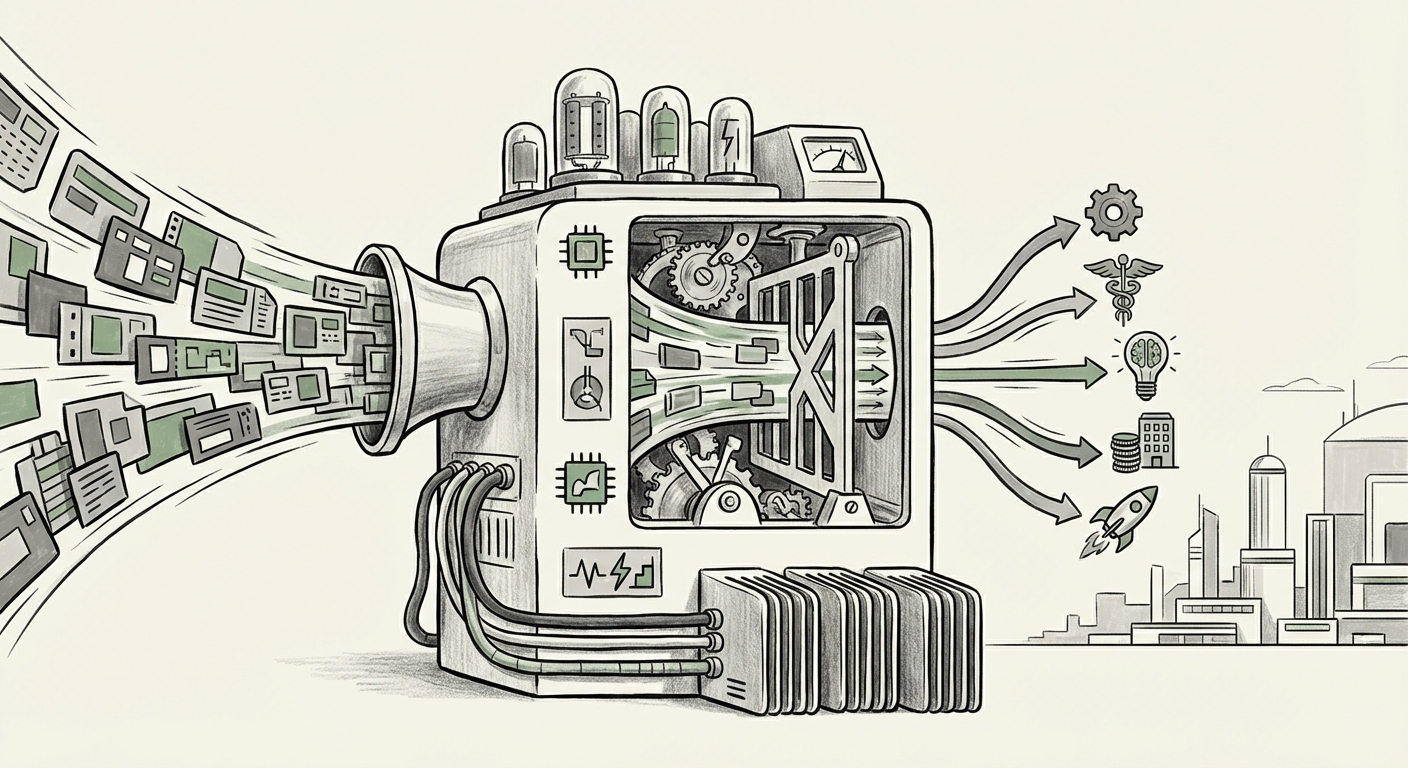
The "fresh start" that Google is betting on appears to be a full reimagining of how AI work gets organized. Instead of a famous lab standing apart from the rest of the company, artificial intelligence will likely be built directly inside the products and services people already use. The question is no longer whether Google believes in AI. The question is how it wants to organize everything around it.
What Made DeepMind So Special
To understand why this matters, it helps to remember what DeepMind actually did. This was the lab that produced AlphaGo, the system that mastered the ancient board game of Go — a challenge once thought to be decades away from being solved. It was the lab that created AlphaFold, which cracked the protein-folding problem and opened up entirely new possibilities in biology and medicine.
These were not incremental improvements. They were moments that changed how scientists, investors, and the public thought about artificial intelligence. DeepMind proved that a small group of extremely focused researchers, given enough computing power and the freedom to explore big questions, could move the entire field forward. It was the clearest demonstration that AI was not just a better search algorithm — it was a fundamental tool for scientific discovery.
That legacy will not disappear. But the structure that made it possible is being dismantled. And that raises an uncomfortable question for the entire industry: if a lab as successful as DeepMind cannot survive as an independent institution, can any research lab?
The End of the Standalone Lab Era
The dismantling of DeepMind is part of a broader shift across the AI landscape. In the early days of modern AI, research labs were the center of gravity. Companies wanted smart people more than they wanted products. Brilliant papers were treated as the ultimate currency. The lab was the star.
That era is coming to an end. Artificial intelligence has moved from being a pure research problem to being an infrastructure, product, and logistics problem. The winners of the next decade will not be the organizations that publish the most impressive research. They will be the ones that can deliver reliable, useful AI to billions of users, at scale, quickly, and profitably.
In that world, a standalone lab can look like a luxury. It demands massive investment, tolerates long timelines, and produces results that may never reach a product. Integrating research directly into product teams is faster and more efficient. But it also carries risk. Research culture is fragile. When scientists are pushed to ship features instead of explore ideas, breakthroughs can slow down. The future of AI depends on getting that balance just right.
What "Fresh Start" Really Means
When a giant company like Google says it is betting on a fresh start, it usually means three things. First, it wants to remove old structures that slow things down. Second, it wants new leadership with a different approach. Third, it wants to invest in a new direction without being weighed down by past commitments.
For AI, a fresh start likely means tighter connections between research and the real world. Expect AI capabilities to be embedded more deeply into search, cloud computing, mobile devices, and workplace software. The distance between a breakthrough and a launched product should shrink dramatically. That is good news for users, who will see AI show up in more helpful places, and good news for businesses that want to apply AI without needing a team of PhDs to understand it.
But a fresh start also comes with unknowns. New organizational charts do not automatically produce better AI. The talent that made DeepMind exceptional will scatter across the industry. Some will stay inside the new structure. Some will join other companies. Some may start new ventures. Where those people go matters enormously for the next wave of innovation, because AI talent is the scarcest resource in the entire field.
How This Changes the Future of AI and Its Use
Looking ahead, the dismantling of DeepMind points to several clear shifts in how artificial intelligence will be developed and used.
1. Practical Use Will Outrank Pure Research
The era of glossy demonstrations is fading. The future belongs to AI that quietly improves everyday workflows: better search results, smarter email drafting, more accurate medical insights, stronger code suggestions. Businesses should expect AI to become a utility, like electricity or internet access, rather than a mysterious competitive weapon.
2. AI Will Be Embedded Everywhere
When research teams are folded directly into product organizations, AI stops being something you "visit." It becomes part of the tools people use every day. This is the transition from AI as a demo to AI as default infrastructure. For non-technical businesses, this is excellent news: the barrier to using advanced AI will keep falling.
3. Speed Will Beat Spectacle
Standalone labs can afford to work on five-year timelines. Product teams cannot. The industry is shifting toward faster iteration cycles. Models will improve in steady, incremental ways rather than through rare, dramatic leaps. Businesses that build flexible systems for adopting AI will outperform those waiting for the next revolutionary breakthrough.
4. Safety and Ethics Face New Risks
DeepMind was known for taking AI safety seriously. That culture was easier to maintain inside a semi-independent lab. When teams are merged into a larger corporate structure, safety processes can become diluted, or they can become deeply embedded into every product. It could go either way. This is one of the most important things to watch in the coming months.
What This Means for Your Business
If you run a business, this news is not just an interesting headline. It changes your planning assumptions. Here is what to do about it.
Do not anchor your entire AI strategy to any single company. The AI landscape is shifting rapidly. A competitor that leads today could be dismantled tomorrow. Build your strategy around use cases and outcomes, not around loyalty to a specific tool or vendor.
Watch the talent market carefully. When a flagship lab dissolves, world-class researchers become available. This is a rare opportunity to hire people who have worked on frontier AI problems. Even if you are not hiring scientists, the reshuffling will create new consulting firms, startups, and specialist vendors that can help your business.
Focus on integration, not just access. The real advantage will come from how well AI is woven into your daily operations. Ask yourself: which of our repetitive tasks can be automated? Which decisions can be improved with better predictions? The answer to those questions matters more than which AI model you pick.
Prepare for organizational churn. If the biggest AI company in the world is reorganizing, smaller companies should too. That does not mean constant restructuring. It means designing your teams so they can adapt quickly as AI capabilities evolve.
What Society Should Watch For
Beyond business, this moment raises questions for all of society. The concentration of AI power into a few massive companies was already a concern. When independent labs disappear, their capabilities become even more embedded inside commercial products. That can make AI more accessible, but it also concentrates enormous influence in very few hands.
There is also the question of scientific openness. Independent labs tend to publish research openly. Product-focused teams share less. If the future of AI research happens inside corporate structures, the public may learn less about what these systems can do, how they are built, and where they fail. That has real consequences for accountability and trust.
At the same time, there are reasons for optimism. AI integrated into products can deliver benefits faster to more people — better healthcare tools, smarter energy systems, more efficient education. The technology that comes out of a "fresh start" may be less flashy but far more useful to ordinary people.
What to Watch Next
The next few months will reveal a great deal. Pay attention to who leads Google's reorganized AI efforts, because leadership style will shape everything from research priorities to workplace culture. Watch where former DeepMind researchers land; their choices will define the next generation of AI companies. And watch whether the pace of major research breakthroughs slows down or accelerates. If progress continues, the new structure will be seen as the right call. If it stalls, the dismantling of DeepMind will be remembered as a costly mistake.
Most of all, watch how AI shows up in the products you already use. That is the real proof of whether this fresh start is working. The most important AI revolution will not be announced with a flashy demo. It will simply arrive, quietly, inside the tools of everyday life.
The Bottom Line
The dismantling of DeepMind is not a sign that AI has failed. It is a sign that AI has grown up. The science-project phase is ending. The product phase is beginning. Google's bet on a fresh start is really a bet that the future belongs to organizations that can move quickly, integrate deeply, and deliver real value to users. Every company, from a global enterprise to a small shop, should make the same bet: do not fall in love with a single lab, a single model, or a single strategy. Stay flexible, stay curious, and build your future on results rather than on names.