Nvidia Nemotron 3.5 Lightning: Why Speed Now Beats Maximum Intelligence
For years, the race in artificial intelligence was simple: build the smartest model. Companies competed to make AIs that could score higher on tests, write more complex code, and solve harder math problems. But a new release from Nvidia may mark a turning point in that race. The new Nemotron 3.5 Lightning is an open-weight AI model that actually chooses speed over maximum intelligence. It is not trying to be the smartest model on the block. Instead, it is trying to be the fastest, the most practical, and the most useful for real-world tasks. This move says a lot about where AI is heading next.
What Does "Open-Weight" Really Mean?
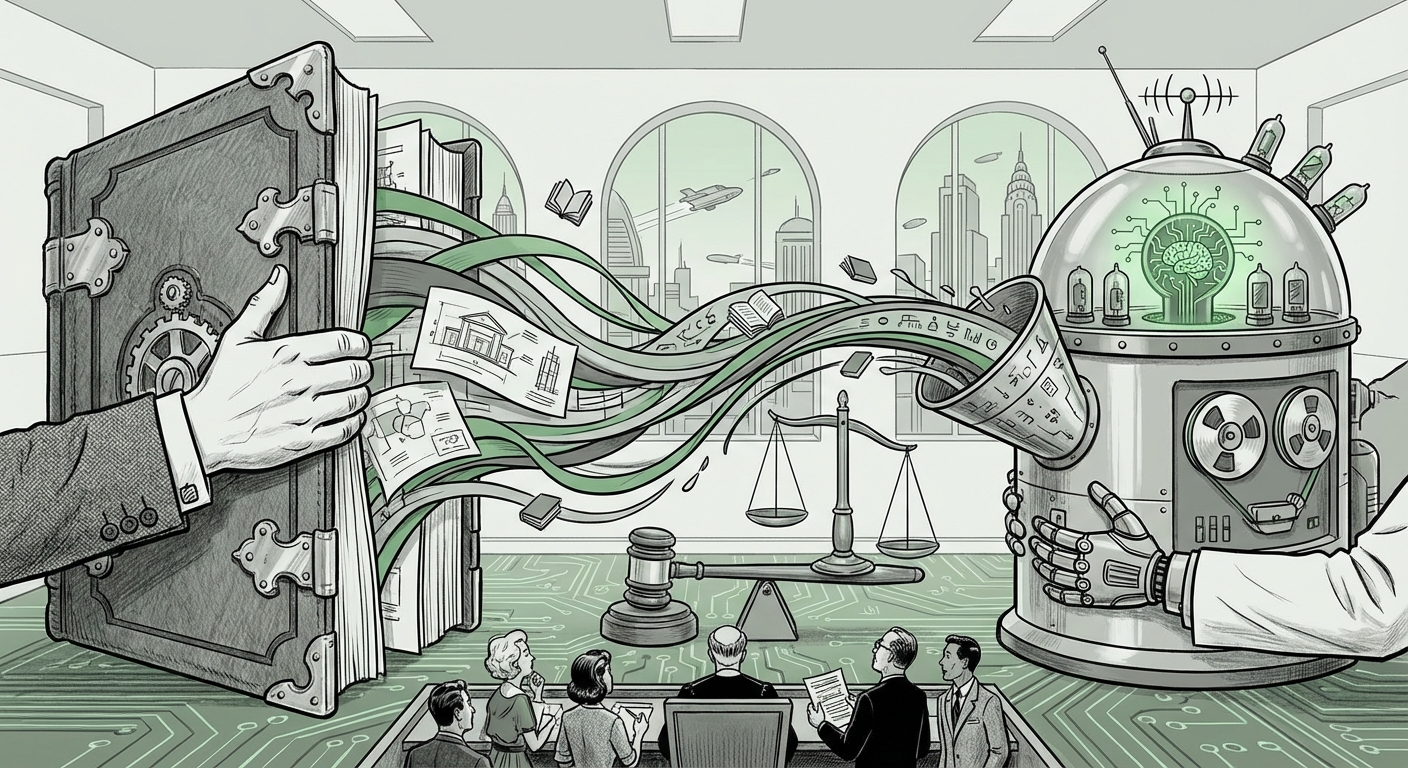
Before we dive in, let us explain an important term. Open-weight means that the numbers inside the AI model, called "weights," are shared with the public. These weights are the part of the AI that actually makes decisions. When a company releases an open-weight model, developers, businesses, and researchers can download it, run it on their own computers, and adapt it for their own tasks.
This is different from a closed model, where users can only access the AI through a paid app or website. Closed models are like restaurant kitchens: you can order the food, but you cannot see the recipe. Open-weight models are more like open cookbooks: you can take the recipe, change the ingredients, and bake your own version at home. Nvidia has chosen to share its new Nemotron 3.5 Lightning model in this open way, which is a big deal for businesses that want more control over their AI tools.
The Big Shift: Speed Is a Feature, Not a Compromise
Most AI discussions focus on "intelligence." That usually means how well a model answers questions, follows instructions, and avoids mistakes. But there is another side to AI performance that everyday users feel immediately: speed. If you ask a chatbot a question and it takes thirty seconds to respond, you get frustrated. If a customer-service AI takes too long, customers hang up. If an autonomous robot pauses too long at a decision, it becomes useless. Speed is not just a nice extra; it is often the difference between an AI that gets used and an AI that gets uninstalled.
The Nvidia Nemotron 3.5 Lightning model is designed with this insight front and center. It deliberately trades some "maximum intelligence" for low latency, which means faster response times. In other words, Nvidia is saying: "We can give you a model that is almost as smart, but much faster." That trade-off can be worth a lot in the real world.
Think about a live translation device. A traveler speaks into a microphone, and the AI must translate the words in real time. If the translation is perfect but takes five seconds, the conversation feels broken. If the translation is 95% accurate but comes back instantly, people can talk naturally. For many tasks, slightly less intelligence plus much more speed equals a better product.
Why Nvidia Made This Choice
Nvidia is best known for making the computer chips that power most AI models. They design the graphics processing units, or GPUs, that train and run these systems. So Nvidia has a unique view into how AI models behave in the real world. By releasing the Nemotron 3.5 Lightning, they are sending a clear message to the industry: not every AI needs to be the biggest brain in the room.
There are several reasons a company like Nvidia would push a speed-first model:
- Cost: Faster models use less computing time. Less computing time means lower energy bills and lower costs for businesses.
- Practicality: Many businesses need AI to make split-second decisions, like approving a transaction or recommending a product.
- Scale: If an AI answers in 0.5 seconds instead of 2 seconds, you can handle four times as many users with the same hardware.
- Different needs: Some tasks, like writing an essay, can wait a few seconds. Other tasks, like voice assistants, cannot wait at all.
Nvidia clearly believes that the future of AI is not one giant supermodel serving everyone. Instead, the future is a mix of models, each built for a specific job. The Nemotron 3.5 Lightning fits into that world as a fast, efficient worker.
The Trade-Off: When Is Slower and Smarter Better?
This does not mean intelligence no longer matters. There are still plenty of tasks where maximum smarts are essential. For example, a doctor using AI to review medical research would prefer a slower, more careful model. An engineer writing safety-critical code wants the most accurate AI, even if it takes a little longer. The people who design bridges, medicines, and financial models will still reach for the "smartest" AI they can find.
The genius of the new approach is that we no longer have to choose one model for everything. In the past, developers had to force a big, slow, smart model to do simple tasks like "summarize this email." That was wasteful. Now, with models like Nemotron 3.5 Lightning, developers can match the tool to the job. Need a fast response? Use the Lightning model. Need deep reasoning? Use the slower, smarter model. This is called model routing, and it is becoming one of the hottest ideas in AI engineering.
What This Means for Businesses
For business leaders, the arrival of a fast, open-weight model like Nemotron 3.5 Lightning is a practical gift. It means you no longer have to pay premium prices for maximum intelligence when your use case only needs solid, speedy answers. Let us look at some of the most common business tasks that would benefit:
- Customer support chatbots: Nobody wants to wait ten seconds for a bot to answer "What time do you close?" A fast model instantly improves customer experience.
- Email sorting and drafting: AI can suggest quick replies, categorize incoming messages, and flag important tasks without slowing down your team.
- Search and recommendations: Retail websites that recommend products in real time need models that can compute within milliseconds.
- Data summarization: Pulling the key facts from a meeting transcript, a contract, or a news article is a common task that does not require a PhD-level AI brain.
- Voice assistants: Any AI that talks, like a car assistant or a smart speaker, needs to respond with almost no delay.
Because the model is open-weight, companies can also run it on their own servers. This is huge for privacy. Instead of sending customer data to an outside AI company, a business can keep everything inside its own walls. Hospitals, banks, and law firms all have strict rules about data privacy. An open-weight, fast model lets them use AI while staying compliant.
The Role of Nvidia: Beyond Chips
There is another layer to this story. Nvidia does not just make chips; they also build software and now models. By releasing their own model, Nvidia is showing developers how to get the most out of their hardware. The Nemotron 3.5 Lightning is like a demonstration of "you do not need to build the biggest model to get great results on Nvidia machines." It is a way to attract developers to the Nvidia ecosystem and to show off their latest technology.
This is smart business. If developers like using Nvidia models, they will keep buying Nvidia chips. It also keeps Nvidia at the center of the AI conversation. They are not only selling shovels in a gold rush; they are also showing how to dig.
Societal and Environmental Implications
Speed-first models also have a positive side effect for the planet. The biggest AI models use enormous amounts of electricity when they are running. Every time you ask a giant model a question, it requires serious computing power. If companies switch to smaller, faster models for routine tasks, the total energy consumption of AI could drop significantly.
This matters because AI is growing quickly. As more businesses adopt AI, the energy demand grows. Nvidia's decision to emphasize speed is also a decision to emphasize efficiency. A model that finishes its work in half the time uses less energy. For a company running thousands of AI queries per second, that difference adds up to real savings and a smaller carbon footprint.
There is also a democratization angle. Smaller and faster models are cheaper to run. That means smaller companies, schools, and even nonprofits can afford to deploy AI. They no longer need millions of dollars to access cutting-edge technology. Open-weight models with a speed-first design lower the barrier to entry. This is a huge win for innovation because it allows many more people to build things with AI.
The Future: A World of Many Models
So what does the Nemotron 3.5 Lightning tell us about the future of AI? It tells us that the "one model to rule them all" era is ending. We are entering a phase where AI becomes a portfolio of specialized tools.
In the future, a company might use a mix of models in a single application:
- A fast model for the first level of customer interaction.
- A medium model for analyzing documents.
- A super-smart model for handling rare and complex cases.
This is similar to how a hospital has emergency doctors, general practitioners, and specialists. You do not send everyone to the brain surgeon, because that would be expensive and slow. You send people to the right doctor for the job. AI will follow the same pattern.
The word "Lightning" in the name is not just marketing. It tells software developers this model is built for real-time applications. We should expect more models like this in the coming months. The competition in AI is no longer just about benchmarks; it is about response time, cost per query, and the ability to run on ordinary hardware.
Practical Advice for Adopting AI
For businesses that want to stay ahead, here are a few actionable steps:
- Audit your AI workloads: Look at every task your business uses AI for. Ask whether it truly needs maximum intelligence or whether speed would be more valuable.
- Start with open-weight models: You gain full control, avoid lock-in, and protect your data. Try a fast open-weight model like the Nemotron 3.5 Lightning on simple tasks first.
- Think about latency: A one-second delay can reduce user engagement. Measure how long your current AI takes to respond, then compare with a speed-first model.
- Build a router: Use software that sends simple or time-sensitive questions to a fast model and complicated questions to a smarter model. This saves money and boosts performance.
- Measure total cost, not just accuracy: A slightly less accurate model that is much faster and much cheaper might be the right business decision.
These steps are not just for technology companies. Every industry, from retail to healthcare to logistics, can benefit from thinking about speed as a core AI feature.
The Bottom Line
Nvidia's Nemotron 3.5 Lightning represents a philosophical shift. For years, AI developers chased the biggest, most intelligent models. Now, Nvidia is reminding the world that fast AI is its own kind of intelligence. In a world where users expect instant answers, speed is the bridge between a powerful AI and a practical one.
This release tells us that the future of AI will not be a single superbrain in the cloud. Instead, it will be a family of models working together, each doing what it does best. Some will be deep thinkers. Others, like the Nemotron 3.5 Lightning, will be quick responders. The companies that learn to use both will have an advantage.
As open-weight models become more common and more efficient, AI will move out of the hands of a few giant corporations and into the hands of everyone. That is exciting. It means more innovation, more competition, and more real-world applications that make our daily tools faster and smarter. The AI race is still on, but it is no longer just about who has the biggest brain. It is now also about who reacts the fastest.
Nvidia has placed a bold bet on that vision. And for businesses, developers, and everyday users, the payoff could be an AI future that is not only more intelligent, but also more useful, more affordable, and more widely available.