Microsoft's MAI Code 1.1 Flash Just Got Crushed by DeepSeek, Here's What It Means for AI's Future
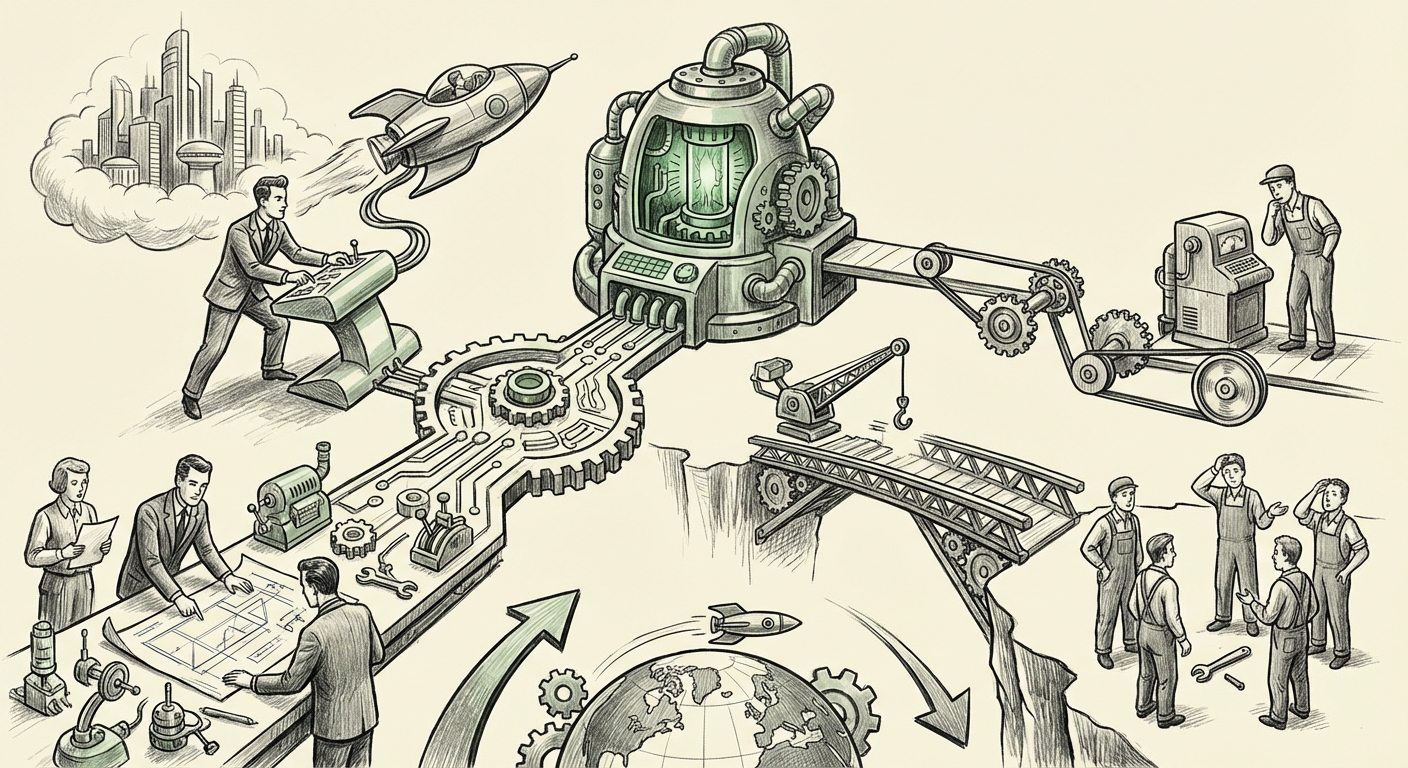
Microsoft just received a reality check. Its new coding model, MAI Code 1.1 Flash, has been beaten by DeepSeek on both price and performance. For years, many people assumed the biggest tech companies would control the future of AI. This result, from August 2026, shows that assumption is wrong.
The AI race is no longer only about who has the most money or the biggest brand. It is about who delivers the best value at the best price. That shift matters to every developer, every business owner, and every person who uses AI tools at work.
Here is what happened, why it matters, and where this is all heading.
What Is MAI Code 1.1 Flash?
Microsoft has spent years building its own family of AI models. MAI Code is the company's line of models designed for software development. These models act like expert helpers for programmers. They can write new code, explain confusing code, catch bugs, and handle repetitive tasks that used to eat up hours of a developer's day.
The new version, MAI Code 1.1 Flash, is built to be fast and affordable. In the AI world, models with "Flash" in their name are the lighter, speed-focused options. They do not have the full muscle of the biggest models, but they respond quickly and cost less to run. That makes them a natural fit for everyday developer work.
Microsoft also holds some of the strongest cards in the industry. It owns GitHub, the world's largest home for code. It owns Visual Studio Code, a tool used by millions of programmers. And it runs Azure, one of the largest cloud networks on the planet. Many people expected Microsoft to dominate developer AI simply by controlling the software developers already use.
That is what makes this result so surprising. Despite all those advantages, DeepSeek, a fast-rising challenger in the AI world, beat Microsoft at the two things that mattered most.
DeepSeek's model costs less. It also performs better. The result was described in blunt terms: Microsoft's model got crushed. And the message is hard to ignore: no one is safe in this market.
Why Price Is Suddenly the Battlefield
The price of AI models has been falling for years, and this matchup shows the trend is far from over. Here is how pricing works. AI models read text in small pieces called tokens. Every request you send to a model uses tokens, and every response uses tokens. When a company runs an AI coding tool for thousands of developers, it can burn through billions of tokens in a single day. That is why even a tiny price difference per token turns into real money fast.
DeepSeek winning on price is a big deal because it wins the "cost per job done" game. For startups, cheaper AI is not just nice to have; it is necessary. A young company cannot spend a fortune on model calls. When a cheaper model does the work just as well, the startup can spend its savings on hiring, marketing, or building new features.
For large companies, the numbers are even bigger. A business with one thousand developers making AI calls all day can see enormous monthly bills. A major price drop gets the attention of finance leaders everywhere. When the cheaper option also performs better, the business case for switching becomes almost impossible to ignore.
Performance Still Comes First
Price only matters if the model is actually good. That is why DeepSeek winning on performance is the second half of the story.
In coding, performance is about getting things right. A model's answer might look great, but fail when the developer hits run. It might introduce security problems. It might fix one bug and create two new ones. Good performance means fewer errors, fewer rewrites, and fewer headaches.
DeepSeek beating Microsoft on performance takes away the old excuse. In the past, a team could say, "Sure, the Microsoft model costs more, but it is better." This result flips that logic. If the cheaper model is also the stronger one, why keep paying extra?
Performance also builds trust. Developers depend on their tools being correct. A model that makes mistakes wastes money and time. A model that gets it right the first time becomes a genuine partner. DeepSeek's win suggests it has earned that kind of trust, and at a lower price.
What This Means for the Future of AI
This one matchup is a window into the future of the entire industry. Several big lessons are already clear.
- Model intelligence is becoming a commodity. When competitors can build models this good, raw intelligence is no longer rare. Like electricity or internet bandwidth, AI is becoming a service you buy rather than a secret superpower. The advantage goes to the people who use it well.
- Value is moving up the stack. If the model itself is cheap and strong, then the real money is in what you build on top of it: apps, agents, automated workflows, and great user experiences. The company that helps you get work done will win, not just the company with the smartest brain in a box.
- Distribution still matters, but less. Microsoft still has GitHub, Visual Studio Code, and Azure. Even a losing model can keep users if the experience around it is smooth. But that grip is looser now. Customers can switch to a better model within minutes. That new freedom is a powerful force for change.
- Leadership in AI is never permanent. The model that wins this month can be outdated next month. Companies cannot rest on past victories. They must keep testing, keep improving, and keep listening to what users actually need.
What This Means for Your Business
Whether you build software or simply buy it, this news changes your options.
You have leverage. When suppliers fight hard on price and performance, buyers win. Do not commit to one AI model out of habit. Run your own tests. Your work is special, so test with your real tasks, not just a generic list of questions.
Focus on total cost, not sticker price. The advertised price per token is not the whole story. A model that costs a little more could still be cheaper overall if it makes fewer mistakes, since developer time is expensive. Compare the full cost of finishing a job, not just the cost of one request.
Plan for a world of cheap AI. Falling prices will unlock new uses that made no sense before. Think about what you could automate if AI became ten times cheaper. Or a hundred times cheaper. That world is clearly on the way, and the businesses that prepare for it will have a huge advantage.
What Society Should Watch
Cheaper, better AI is mostly good news. Small businesses get access to tools that were once only available to rich companies. Schools, nonprofits, and governments can do more with less. Software gets built faster, and new tools reach people sooner.
But there is a cost side too. Coding assistants are already changing developer jobs. As these tools get better, some entry-level tasks may disappear. Teams may need fewer people to build the same software. Society will need to think seriously about education and retraining.
Also, when AI becomes cheap, it spreads faster. That makes safety and oversight more important than ever. The same abilities that help a developer clean up code can be misused in other ways. A world of cheap AI is a world where smart safeguards are essential.
The Takeaway
The battle between Microsoft's MAI Code 1.1 Flash and DeepSeek is more than a one-time product comparison. It is a signal for the whole industry. The future of AI will not belong to whoever has the biggest name. It will belong to whoever delivers the most value, which means the best results for the lowest cost.
For developers, the message is encouraging: your tools are getting better and cheaper every day. For business leaders, the message is urgent: stay flexible, keep testing, and do not assume the leaderboard will look the same next month. For everyone else, the AI era is just beginning, and it is arriving faster and cheaper than almost anyone expected.