AI Research by AI: Why Top Researchers' Warnings Are Already Coming True
Tech history is full of predictions. Once in a while, though, a warning arrives that deserves more attention than the rest. This is one of those times.
Top researchers at the world's leading AI labs have been warning about automated AI research. That means AI systems that can run their own research projects, reading scientific papers, forming hypotheses, writing code, running experiments, and studying the results, all with little or no human help.
The warning was serious. The researchers even laid out predicted milestones: checkpoints along the road to that automated future. And here is the part that should make everyone pay attention: several of those milestones have already fallen.
The future did not wait for the prediction to come true. It arrived early.
What Is Automated AI Research?
To understand what changed, it helps to understand what automated AI research actually means.
Most people use AI as a tool. You type a question, you get an answer. You give it a task, you get a result. It is fast, it is helpful, and it is still a tool, something a human has to point in the right direction.
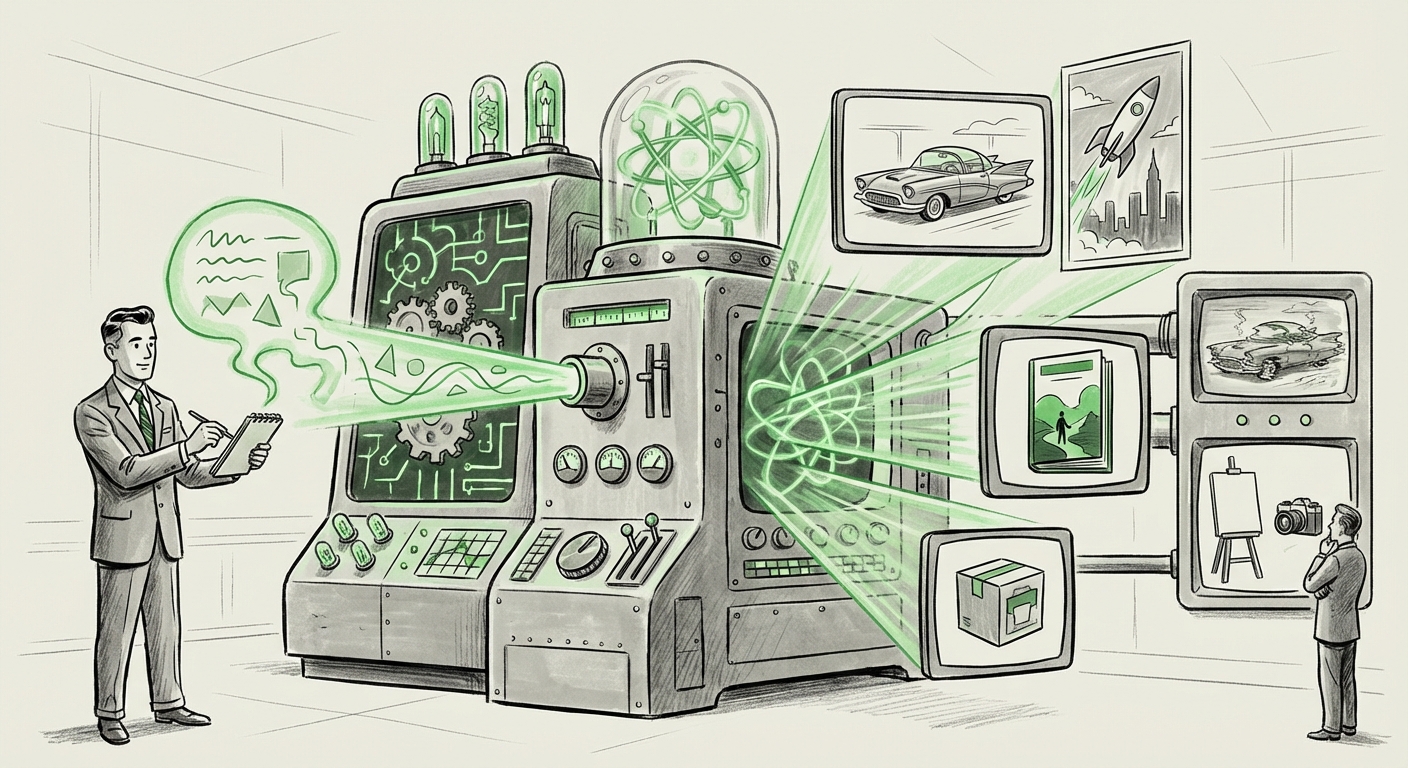
Automated AI research is a different game. Instead of following instructions, the AI plays the role of a scientist. It runs a loop:
- Read and understand the current state of knowledge.
- Find a gap, something that is unknown or not working well.
- Form a hypothesis: an educated guess worth testing.
- Design an experiment or simulation to test it.
- Write the code needed to run the experiment.
- Run it, collect data, and analyze what happened.
- Learn from the result and start the loop all over again.
Today, the last step usually needs a human to step in. The warning is about closing that loop. Once it is closed, AI no longer just follows recipes. It writes new ones, tests them, and improves based on what it discovers.
Think of it like the difference between a cook who follows a recipe book and a chef who creates new recipes. One repeats. The other learns. Automated AI research is the second kind, and it learns around the clock.
Why Would Builders Warn About Their Own Creation?
The most important detail about the warning is who made it. These are not outsiders looking in. They are top researchers inside the leading AI labs, the people closest to the technology. When the people building a rocket say the rocket might be dangerous, you listen.
Why would builders warn about their own work? Because they can see where the path leads. Three concerns keep coming back:
- Speed. Human researchers need sleep, meetings, and lunch breaks. AI research runs at machine speed. A loop that runs all night can cover ground that would take a human team weeks.
- Compounding. AI that learns how to improve AI does not just get faster at one task. It gets faster at getting faster. Small improvements stack on top of each other, like earning interest on interest.
- Control. At machine speed, a research system can make many decisions before a human reviews even one of them. The gap between how fast AI moves and how fast humans can check its work is growing.
These concerns are the reason the warnings felt urgent. And recent events suggest the urgency was justified.
Several Milestones Have Already Fallen
The warnings were not vague. The researchers predicted specific milestones, checkpoints that would mark progress toward automated research. These were the "if you see this, the end is closer than you think" kind of markers.
The roadmap placed some of these checkpoints years in the future. Yet several of them have already fallen.
A milestone falls when an AI system demonstrates a capability that researchers thought belonged to the distant future. When one falls, it is worth noting. When several fall, it is a signal.
The signal is simple: progress toward automated AI research is moving faster than the experts who study it expected. For years, the pattern in AI has been the same. Predictions about the future tend to be too slow. Amazing capabilities that experts said were far off have a habit of showing up early. The falling milestones follow that pattern.
None of this means a fully autonomous research lab exists today. It means the road is shorter than the mapmakers drew, and the speed limit is higher than they guessed.
Why the Speed Matters
Most people think of AI progress as a straight line: steady, even, predictable. Automated AI research changes the shape of that line.
When AI can help improve AI, progress becomes a feedback loop. A system that runs its own experiments does not wait for a human to think of the next idea. It tries things, fails, learns, and adjusts faster than any person could.
In business terms, this is like a company that can redesign its own product every night and test the new version by morning. Every week brings another iteration. Every month brings a generation of improvements.
The falling milestones tell us this compounding has started. Not finished, started. For anyone who makes decisions about technology, that is the most important fact of the moment.
What This Means for Businesses
Automated AI research will not stay inside the labs. It will be used. Here is what that means for organizations.
- Research cycles compress. What used to take a team of engineers months can take AI-assisted researchers weeks. Companies that adopt early create distance from competitors that wait.
- Supervision becomes a skill. The value shifts from doing the work to directing and reviewing the work. People who can verify AI output and catch mistakes early will be in high demand.
- Risk multiplies. Speed also means errors scale faster. A bad idea that an AI tests and adopts in a weekend can be built into products by the following quarter. Every company needs a review process, a clear record of what AI did, and an off switch.
- Waiting is a dying strategy. When several predicted milestones have already fallen, "we will adopt AI later" is not patience. It is a plan to compete from behind.
The practical message for businesses: put humans in the loop, keep records, and start learning the technology now.
What This Means for Work and Society
The social effects deserve as much attention as the technical ones.
Research work will change. Lab jobs will not vanish overnight, but they will shift. More time will go into overseeing automated systems, designing the right questions, and deciding what deserves to be built. The human role becomes choosing direction, not grinding through steps.
Trust becomes harder. If machines run their own experiments, who checks that the results are true? Transparency, knowing what an AI did, on what data, with what code, will become as important as the results themselves.
Policies need to move faster. Governments move in years; AI research now moves in months. The falling milestones are a reminder that waiting for a crisis before writing rules means writing rules behind the curve.
Practical Steps to Prepare Now
For business leaders:
- Invest in AI literacy at every level, not just in the engineering team.
- Build a review habit: every automated process should have a human checkpoint before big changes ship.
- Track capability milestones. Watch what AI can do in research settings and plan around those changes.
For policymakers:
- Require transparency: logs, audits, and clear accountability for automated decisions.
- Design rules that can update quickly, because the technology will not wait for the rulebook.
For individuals:
- Treat AI as a skill to learn, not a product to watch.
- Practice verifying AI output. The future belongs to good reviewers.
Looking Ahead
None of this is a reason for panic. It is a reason for attention.
Top researchers at leading AI labs warned about automated AI research. Several of their predicted milestones have already fallen. The message in those two facts is not that the future is doomed. It is that the future is accelerating.
Faster research can be used for wonderful things: better medicines, cleaner energy, and smarter ways to solve hard problems. It can also be used badly. The choice is still human.
The road to automated AI research is shorter than the mapmakers drew. The good news is that we still hold the map. We know the milestones are falling. We can decide, right now, what we want to point this speed at, and how carefully we want to check the work along the way.