Claude Cowork Hits Chrome: What Anthropic's Browser Skills and Plugins Tell Us About the Future of AI Work
There is big news in the world of AI: Anthropic has brought Claude Cowork to its Chrome extension, adding skills and plugins to the browser. At first glance, this might look like a small product update. It isn't. It is one of those quiet changes that points to a much larger shift in how we will use artificial intelligence in the years ahead.
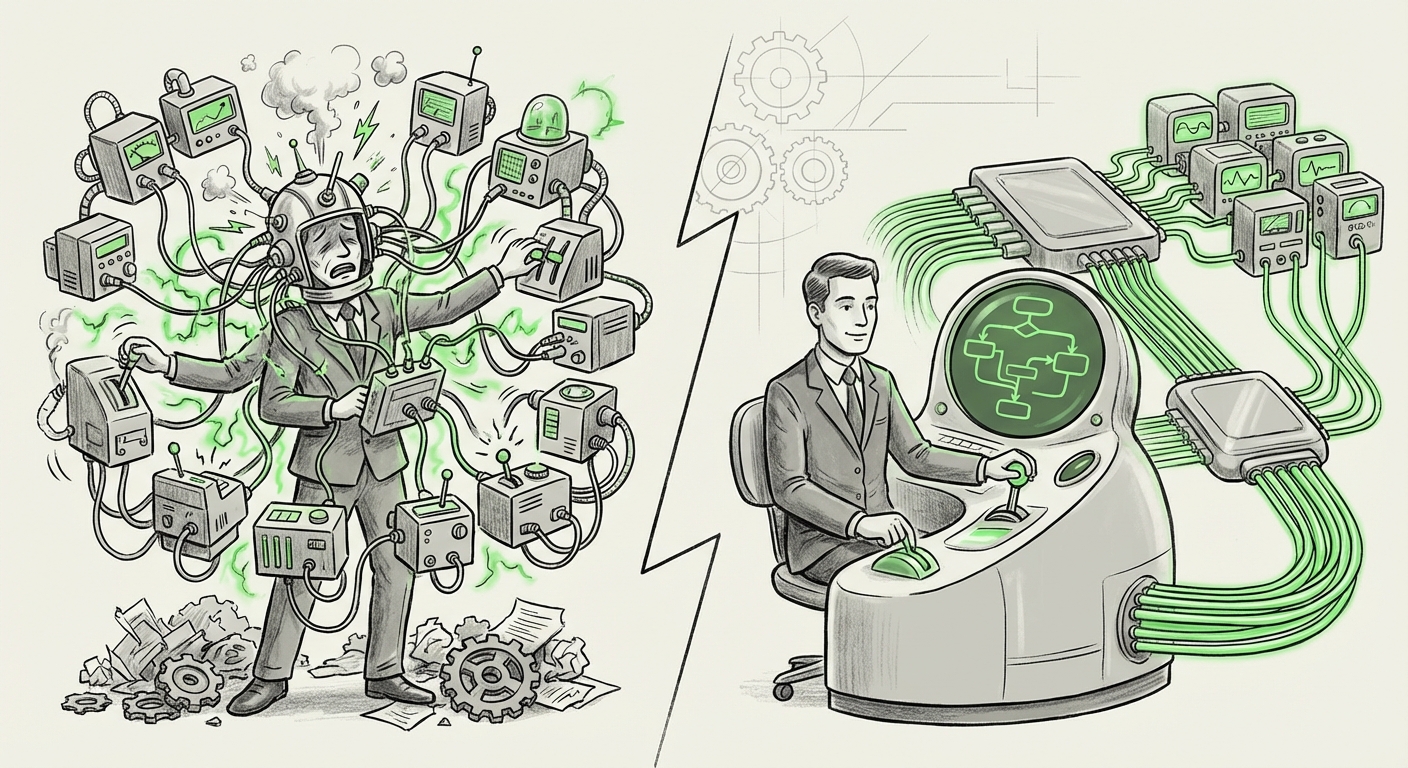
For a long time, we talked to AI inside chat boxes. We typed a question. We got an answer. And then we went back to our real work. The AI stayed in its own little corner of the screen. The name Claude Cowork tells you that era is ending. This is not a chatbot waiting for instructions. This is a teammate that can work inside the browser, right next to you, while you do your job. In this article, I'll break down what this move really means, why the browser is becoming the most important place in AI, and what individuals and businesses should do about it.
From Chatbot to Coworker: A Big Shift
To understand why this matters, look at how AI has grown up. The first wave was the basic chatbot. Ask a question, get an answer. Useful, but limited. The second wave was the smart assistant. Give it a file, ask for a summary, and it would produce a decent draft. That was a big step forward, but the assistant still lived in a separate window, disconnected from your daily workflow.
The third wave is what we are entering now. This is the wave of agents and coworkers. Instead of just producing words, the AI can take actions. Instead of living in a separate app, it lives where the work actually happens. Claude Cowork coming to the Chrome extension is a clear step into this third wave.
And the timing makes sense. The browser is where most of us already spend our digital lives. Email lives in a tab. Documents live in a tab. Spreadsheets, project trackers, customer databases, calendars — they are all sitting there, one click away. Putting Claude Cowork inside Chrome means the AI is not a detour anymore. It is part of the flow. This matters because context is the secret sauce of AI. The more useful context an AI has, the better its output. And the browser is packed with context.
Skills and Plugins: The Building Blocks of an AI Platform
The two most interesting words in this announcement are skills and plugins. These two words tell us that Anthropic is building Claude Cowork as a platform, not just a simple tool.
Think of skills as new abilities. They are like modules that let the AI perform specific jobs. Maybe one skill helps it organize research. Another helps it fill out forms. Another helps it compare products across websites. Whatever the list, the key idea is the same: the AI can learn new capabilities without being rebuilt from scratch.
Plugins are connectors. They let the AI reach outside the browser to other services, apps, and databases. A plugin might connect the AI to your accounting software, your customer support desk, or your document storage system. Plugins give the AI both eyes and hands in the digital world.
Why is this such a big deal? Because no single company can build everything. The smartphone won because anyone could build an app for it. AI is about to follow the same path. If developers can create skills and plugins for Claude Cowork, the range of tasks it can handle grows far beyond what Anthropic could ever build alone. This is the app-store moment for artificial intelligence.
It also changes the economics. Right now, most AI value is locked inside a few giant models. With skills and plugins, value spreads across an entire ecosystem. Small companies and independent developers can build tools that make the AI more useful — and share in the value they create. That is a profound change.
Why the Browser Is the New Frontline
There is a reason Anthropic chose Chrome rather than building a standalone desktop app or pushing people to a website. The browser has quietly become the operating system of modern work. For millions of people, the workday is a collection of browser tabs.
An AI inside the browser has a unique advantage: proximity. It can see the page you are currently looking at. It can pull details from several open tabs at once. It can connect pieces of information that the human eye might miss. And with the right permissions, it can act — clicking buttons, submitting forms, and moving data from one place to another.
In other words, the browser gives an AI both eyes and hands. That combination is what turns an assistant into a coworker. An assistant tells you things. A coworker does things.
This also makes AI more accessible than ever. No special hardware. No complicated setup. A browser is something every worker already has. That lowers the barrier to entry for businesses of every size, from a solo freelancer to a global corporation.
What This Means for the Future of AI
If you step back, this single announcement points to several clear trends that will shape the next decade of AI.
1. AI Is Moving from Conversation to Action
Asking questions will always be useful. But the real value is shifting to doing tasks: collecting data, organizing files, checking details, drafting responses, and completing multi-step jobs. The coworker model is built around action, not just words.
2. AI Is Becoming Ambient Rather Than Destination-Based
In the future, you won't go to an AI website to start your day. The AI will be in the places you already are. Your browser. Your email. Your documents. The best AI will be the one you barely notice because it is woven into your existing tools.
3. Ecosystems Will Beat Single Products
An AI you can extend and customize will beat an AI that is frozen in place. Skills and plugins are the fuel for that ecosystem. The winners in AI will be the companies that let others build on top of them.
4. Trust and Permission Become Essential
Here is the flip side. The more actions an AI can take, the more important it becomes to control what it is allowed to do. Skills and plugins raise the stakes. An AI with a plugin connected to your invoicing system is powerful. The same AI without proper safeguards is risky. So the future of AI is not just about smarter models. It is about smarter structures: who gets to build skills, who approves plugins, how actions are logged, and how mistakes are fixed.
What This Means for Businesses
For business leaders, the most important takeaway is simple: start thinking of AI as a coworker, not a tool.
That small change in mindset leads to a completely different set of questions. Instead of asking "where can we add AI to save money?", ask "which boring, repeated browser tasks could a coworker handle for us?" That reframe changes everything.
Look for the digital chores that eat up your team's time. Copying data between systems. Filling out the same forms again and again. Drafting replies to similar customer questions. Gathering research from multiple websites. Organizing files. These tasks occupy enormous amounts of human hours. A browser-based AI with skills and plugins is well positioned to take them over.
But there is a catch: governance must come early. Decide which plugins are allowed and which are not. Set clear rules for what the AI may do without a human checking first. Create logs and review trails. The companies that do this well will get productivity gains without chaos. The ones that skip it will learn painful lessons.
There is also a competitive urgency here. This technology is new, and the playing field is level. Teams that build the habit of delegating to AI now will have a real advantage in a few years. This feels a lot like the early days of email or spreadsheets. The people who learned early never looked back.
Actionable Insights: What You Can Do Now
So what should you actually do this week? Here are six practical steps, no matter your role or industry.
- Experiment early. Try Claude Cowork in your Chrome browser on a simple but real task. Don't wait for the perfect use case. Learning by doing is the fastest path.
- Audit your own workflow. List the steps you repeat every day in the browser. These repetitive tasks are prime targets for delegation to an AI coworker.
- Write clear instructions. The quality of AI output depends heavily on how well you define the task. Treat prompt writing as a professional skill, like writing a good email or a clear brief.
- Design for oversight. Make sure a human reviews any AI action that touches money, customers, or legal commitments. AI can draft and prepare, but certain decisions deserve human eyes.
- Watch the plugin ecosystem. New skills and plugins will appear quickly. Pick the ones that match your actual work rather than chasing every shiny option.
- Train your team. The companies that win will be the ones whose people know how to direct AI, not just use it. Invest in training early.
The goal is not to replace your workforce. The goal is to remove the boring parts so people can focus on the thinking parts — judgment, creativity, and relationships.
The Bigger Picture for Society
There is a deeper story here about the changing definition of work itself. When AI becomes a coworker, the human role shifts from doing tasks to directing tasks. That can be liberating. Many people spend huge chunks of their week on soul-crushing, repetitive screen work. Handing that to an AI could free up time for more meaningful contributions.
But it also raises hard questions. What happens to jobs built entirely around routine browser work? How do we handle mistakes when an AI acts on our behalf? Who is accountable when something goes wrong? And how do we keep genuine human judgment in the loop?
These questions are not new, but they become urgent when AI has hands inside the browser. The encouraging part is that this is all happening in the open. Browsers, skills, and plugins are visible, controllable, and improvable. That gives society a real chance to shape the rules while the technology is still young.
The best possible outcome — and the one an AI optimist can genuinely hope for — is a future where humans focus on meaning, judgment, and creativity while AI handles the click-and-drag grunt work that nobody will miss.
Final Thoughts
Anthropic bringing Claude Cowork to its Chrome extension with skills and plugins is more than a product update. It is a strategic signal about where artificial intelligence is heading. The future of AI is not a chatbot sitting on a website. It is a coworker living in your browser, connected to the tools you already use, extended by a growing ecosystem, and ready to help the moment you open a new tab.
This change will not happen overnight, but the direction is unmistakable. To thrive in this future, individuals should learn to delegate well, and businesses should design work around a simple formula: human judgment plus AI action. That combination is the real competitive advantage of the coming era.
The window for early advantage is open right now. The best time to start treating AI as a coworker was yesterday. The second-best time is today.