Open Weights, Open Future: Why Alibaba Releasing Qwen 3.8 Is a Turning Point for AI
Something big happened in the AI world on August 14, 2026. Alibaba's Qwen team released Qwen 3.8, its newest family of AI models, with open weights. And it did so under the Apache 2.0 license, one of the most open and business-friendly licenses in software history.
On the surface, this looks like just another model drop in a busy AI news cycle. But it is much more than that. This release is a turning point. It changes who can use powerful AI, where it can run, and who controls it.
To put it simply: the "brain" of Qwen 3.8 is now public. Anyone can download it, inspect it, fine-tune it, and build commercial products on top of it. There is no paywall. No waiting list. No permission required.
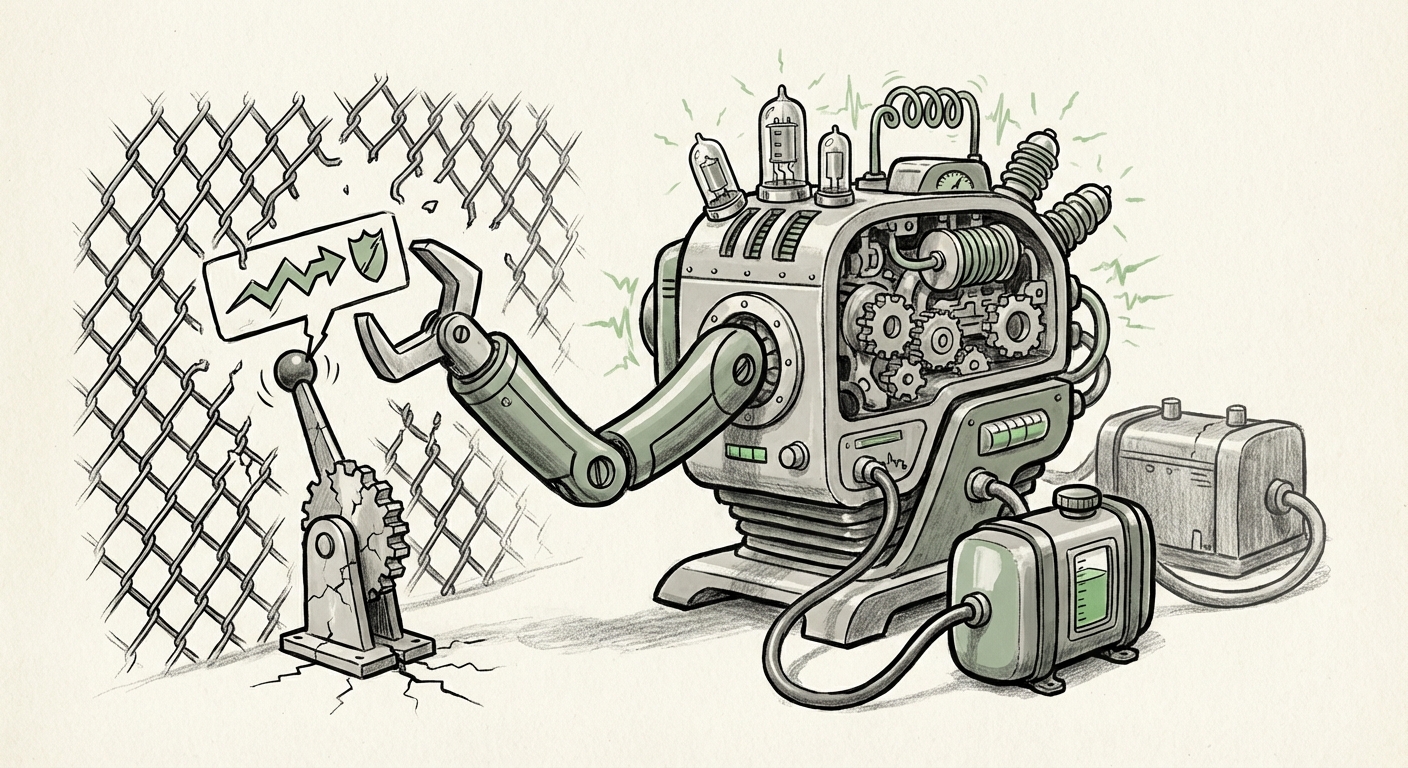
For years, the most powerful AI models were locked inside company servers. You could use them through an app or an interface, but you could never own them. Qwen 3.8 flips that idea. It treats advanced AI as shared infrastructure, something the whole world can build on. That one decision carries major consequences. Let's break them down.
What Just Happened: The Qwen 3.8 Release
Qwen is one of the most closely followed AI model families on the planet. Every release draws attention from researchers, startups, and global enterprises. With Qwen 3.8, the team went further than a typical launch: it handed the model weights over to the public.
Model weights are the trained mathematical patterns inside an AI. They are the result of enormous amounts of computing power and data. They are what make the model "smart." When weights are open, the model stops being a secret and becomes a tool that anyone can operate.
This matters because of what the model represents. Qwen 3.8 is not a toy or a research curiosity. It is a serious, powerful system built for real work, from writing and coding to data analysis and customer service. And now it belongs to the world.
Why Open Weights Matter
Open weights change the relationship between people and AI in three important ways.
First: control. With a closed model, you rent intelligence. With open weights, you own it. You decide where it runs, when it runs, and how it is used. No company can change the rules on you later.
Second: transparency. Open weights let researchers look inside the model. They can test for biases, check for safety issues, and understand its behavior. Closed models hide all of this. Open models invite inspection, and inspection is what makes AI safer over time.
Third: durability. The AI world changes fast. Products shut down. Prices change. Features vanish. If your AI is just a remote service, you are at the mercy of someone else's decisions. If you have the weights, your technology stays yours, forever.
There is also a fairness angle. Open-weight releases give smaller organizations access to tools that were once reserved for the wealthiest companies. A university, a nonprofit, or a startup in almost any country can now build on the same foundation as the giants of the industry.
The Apache 2.0 Advantage
A model can be "open" in many ways. Some open licenses come with heavy strings attached. Apache 2.0 does the opposite. It is one of the most permissive licenses in software. Under Apache 2.0, you are free to:
- Use the model for almost any purpose
- Modify it to fit your needs
- Share it with others
- Build commercial products on top of it
- Keep your own changes private
That last point is vital for business. An Apache 2.0 license does not force you to open source what you build. If you take Qwen 3.8 and fine-tune it into a specialized tool for your industry, you can keep that work proprietary. Your competitive advantage stays yours.
Apache 2.0 also comes with clear patent protections. By releasing under this license, the team grants people who use the model protection from patent claims. That lowers legal risk for companies and makes adoption much easier. For legal teams used to cautious, complicated deals, this is a huge comfort.
In short, the license matters as much as the technology. It tells the world: we want maximum adoption, not maximum control.
A Bigger Shift: AI Is Becoming Shared Infrastructure
Qwen 3.8 is not happening in a vacuum. It is part of a long-term move toward open AI ecosystems. Step by step, the industry has been leaving behind the idea that AI must be locked behind walls.
Why is this the future? Because openness feeds innovation. When many people can touch a technology, they find new uses for it. They build tools around it. They improve it. They bring it to places the original creators never imagined.
Open releases also create pressure on the rest of the market. When anyone can get high-quality open models, closed providers must earn their fees through better service, support, and features. Competition improves everything.
And open models keep improving. They become platforms, like the web or Linux, that support entire industries. This is the exact direction the AI world is heading, and Qwen 3.8 is one of the clearest milestones yet.
What This Means for Businesses
For companies, this release is practical, not just philosophical. Here is how it changes the game.
Cost flexibility. Instead of paying per token or per seat, businesses can run the model on their own hardware. The accounting shifts from "renting" to "owning."
Data privacy. Many industries, healthcare, finance, government, cannot send sensitive data to outside providers. Open weights let them run AI inside their own walls. Data never leaves the building. That solves a huge compliance headache.
Customization. A retailer can teach the model about its products. A hospital can train it on medical language. A manufacturer can feed it technical manuals. The ability to fine-tune is where real business value gets created.
Vendor independence. Companies can diversify across providers, run models on their own cloud, or change strategies entirely. No more lock-in. That shift in power is incredibly valuable.
Of course, open weights do not remove every barrier. You still need computing power, technical skills, and good data. But for organizations willing to invest in those things, the payoff can be enormous.
What This Means for Developers and Society
Developers get a new kind of freedom. Instead of being limited to what a remote API will let them do, they can shape the model itself. They can compress it for phones. They can embed it in products. They can build local tools that work without an internet connection. This is a different, and far more creative, way to work.
Society gains too. Open weights support what experts call AI sovereignty. Countries can host models in their own data centers, protecting national data and supporting local languages. Universities can teach real model science instead of just prompting tricks. Nonprofits can build services for communities that big companies ignore.
There are risks, of course. Any powerful tool can be misused. But openness also brings accountability. When thousands of researchers can examine a model, problems are more likely to be found and fixed. The answer to AI risk is understanding, and understanding starts with access.
Education changes as well. Students can now take apart a serious, modern AI and see how it works. The next generation of AI talent will be built on this kind of openness.
Actionable Insights: What Should You Do Now?
So what should you do with this news? Here are five practical steps for individuals and organizations.
- Test the model for yourself. Download the weights and run it on your own data. See how it handles your documents, your questions, and your workflows.
- Build a fine-tuning pipeline. The biggest wins come from customization. Start small: pick one narrow task, curate excellent data, and fine-tune the model to do that one thing extremely well.
- Review your AI contracts. The arrival of strong open alternatives gives you leverage. Ask your providers why you are paying a premium when an open option is available.
- Create governance rules. Open weights are powerful. Set clear policies about when and how your team can use them, especially around sensitive data.
- Watch the ecosystem. New tools, plugins, and services are about to sprout around Qwen 3.8. Early adopters will be ready when the ecosystem matures.
The Road Ahead
Expect more models to follow this path. The pressure is now on every major lab to explain why its best work should stay closed when a powerful open alternative has just shipped.
The real shift, though, is deeper. Models are becoming commodities. The lasting value will live in the data used to fine-tune them, the interfaces built around them, and the expertise of the people using them. That means the future of AI belongs less to the labs and more to the communities that build with the models.
For everyone on the sidelines, the message is simple. The era of waiting for AI access is ending. The era of building is here.
Conclusion: A More Open Future
The release of Qwen 3.8 with open weights under the Apache 2.0 license is a fact. But the deeper meaning is a vision: the future of AI is shared. This release removes artificial walls between advanced technology and the people who want to use it.
It empowers businesses to build without lock-in. It gives developers room to invent. It hands communities the tools to shape AI for their own languages, cultures, and needs. It will not solve every challenge in AI, but it points the entire industry in a better direction.
The gatekeeping era of AI is over. What we build with open tools like Qwen 3.8 is now up to us.