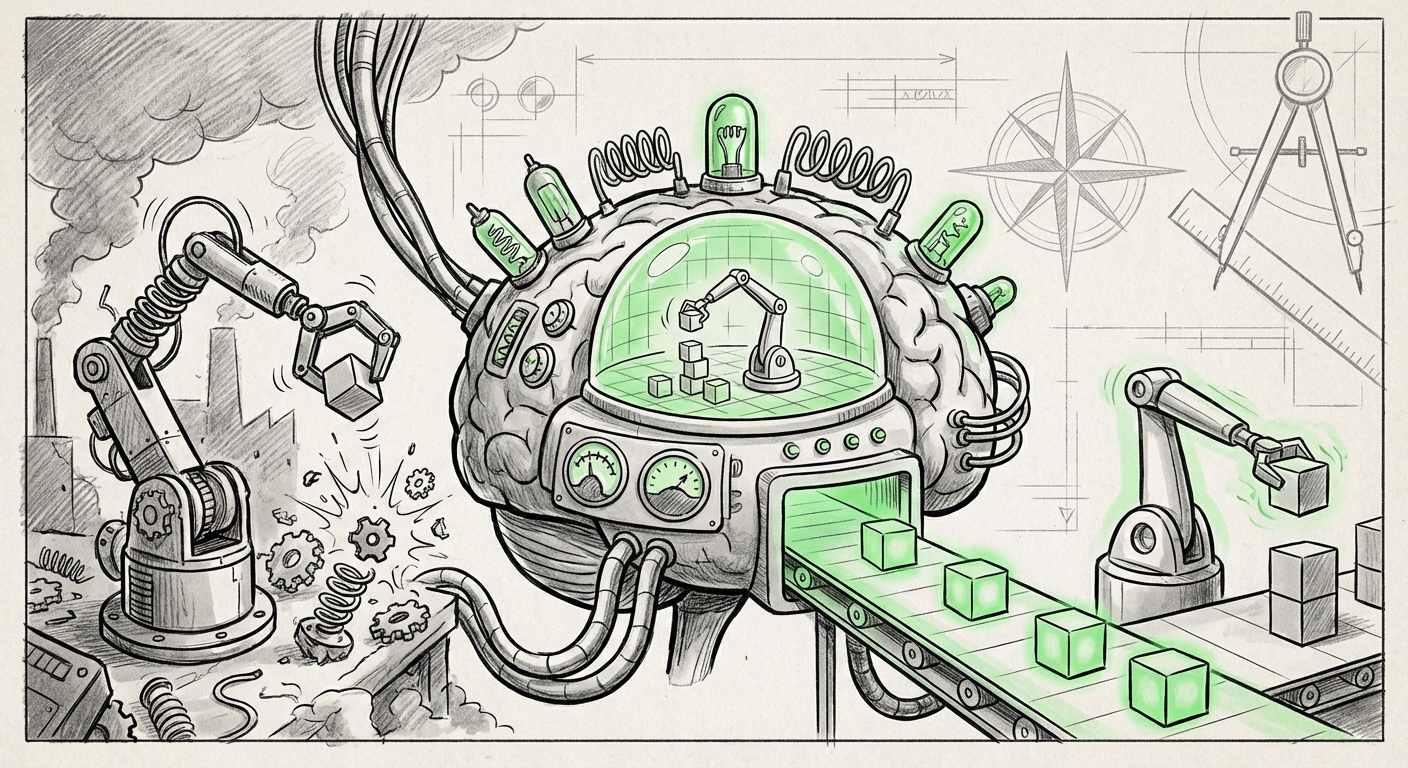
AI-Generated Books Are Flooding Amazon and Crushing Human Authors — What This Means for the Future of Publishing
If you have published a book in the last year, you may have noticed something strange happening to your sales. They were steady. Maybe even growing. Then, overnight, they started to slide. You check the bestseller list for your category and scroll down: page after page of titles you have never seen before, with generic covers, suspiciously similar descriptions, and author names that sound like an algorithm spit them out. That is because an algorithm likely did.
AI-generated books are flooding Amazon and tanking sales for human authors. The marketplace that once offered a lifeline to independent writers has become a battleground between people who pour months into a manuscript and software that can generate a whole book in an afternoon. This is not a niche problem. It is a structural shift in one of the world's largest creative industries, and it is happening right now.
In this article, we break down what is actually going on, why AI-generated books have become so hard to escape, and what this flood means for the future of AI and the people who make a living from words. More importantly, we will give you practical, actionable ways to respond — whether you are an author, a publisher, a platform, or a reader who simply wants to find a good book again.
The New Flood: How AI Inundated the Book Market
The mechanics are simple. Modern large language models can write fiction, nonfiction, children's books, cookbooks, self-help guides, and even poetry. With the right prompts, the same tools can generate a title, a table of contents, and thousands of words of text within hours. It takes much longer to design a cover, format the interior, and upload the file to a store — but even those steps are now assisted by AI.
The result is an unprecedented volume of newly published books. What used to require years of craft, an agent, and a publisher can now be produced by anyone with an internet connection and a paid subscription. When the cost of production approaches zero, the quantity of output explodes. That is exactly what we are seeing: a flood of AI-generated titles washing onto Amazon's virtual shelves every single day.
At first glance, more choices should be good for readers. But the reality is far less pleasant. Many of these AI-generated books are low quality. They repeat themselves. They rely on clichés. They contain factual errors or outright confabulations. In technical fields, they are dangerous. In children's books, they are confusing. In fiction, they are hollow — a chain of sentences that mimic storytelling without ever delivering the emotional resonance that makes a reader fall in love with a book.
Perhaps most insidiously, AI-generated books are often indistinguishable from human writing at a quick glance. A potential buyer lands on a product page, sees a professional cover, reads a compelling blurb, and clicks buy. Only later, when the book arrives, does the disappointment sink in. Once burned, readers become cautious. And when readers become cautious, they buy fewer books in that category — including the good ones written by human hands.
The Human Cost: Sales, Discovery, and Living Wages
The damage is not just aesthetic. It is financial. Human authors rely on sales rank, reviews, and visibility to earn a living. Amazon's algorithm increasingly serves customers the titles they are most likely to buy, and AI-generated books are often priced so low that they win the price war. A human author who researched a topic for a year and spent six months writing cannot compete with a 500-page AI-generated book selling at $0.99 — especially when the AI book is also cheaper to ship, since digital downloads have no printing costs at all.
This price undercutting has a cascading effect. Lower-priced AI books pull down the average price readers expect to pay. Decreased sales for human authors mean fewer resources to invest in editing, professional cover design, and marketing. As revenues drop, talented writers leave the profession or move to other formats. Voices that deserve to be heard are simply drowned out by the sheer volume of synthetic content.
Discovery on marketplaces is also turning into a war of attrition. With thousands of new AI-generated titles entering the ecosystem every day, human authors find it harder and harder to get their books in front of readers. They are buried under pages of results. Reviews become untrustworthy, as some AI content producers deploy armies of bots to post five-star ratings. Even Amazon's own recommendation engine cannot distinguish between a thoughtful memoir and a patchwork of scraped paragraphs — because, at the surface level, both look like published books.
The human cost goes beyond money. There is a psychological toll in watching your craft be commodified. Many authors describe the feeling as "devaluation." They are not just losing sales; they are losing the respect that comes with creating original work. When readers cannot tell the difference between a human story and a machine-made product, the act of authorship itself is diminished.
Why This Is a Turning Point for AI
The Amazon book flood matters far beyond the book industry. It is a preview of what happens when generative AI is released into any market with low barrier to entry and no quality gatekeeper. Let's think about that: books are one of the few creative products that can be produced and distributed entirely by one person with no approval from a curator. That openness is beautiful when it supports independent voices. But it becomes a liability when it supports indiscriminate scale.
The same pattern will play out in many other domains. Music. Stock photography. Code repositories. News articles. Marketing copy. Legal filings. Anywhere that production cost collapses, we will see a flood of AI-generated content competing with human work. The book marketplace is simply the first industry to feel the shock.
This is also a turning point because it forces us to confront a fundamental question: what do we actually value when we read a book? We tell ourselves that we value stories, ideas, and information. But if AI can generate all of those convincingly, then perhaps we value something more subtle — a connection with a fellow human being. That connection may be the thing AI cannot replicate, and it may be the thing readers are searching for when they pick up a book. As AI-generated content swamps the market, human longing for authenticity will intensify rather than fade.
The economic signal is equally important. When supply becomes infinite, the scarce resource is not the product but the attention and trust of the consumer. For the future of AI, that means the most valuable applications are not those that generate huge volumes of content — they are those that help us curate, verify, and elevate the content that matters. The winners in the next phase of AI will be the platforms and tools that embrace curation, provenance, and transparency.
What Businesses and Authors Should Do Right Now
If you are an author, a publisher, or a business that relies on written content, you cannot simply wait for the platforms to fix this. You need a strategy. Here are actionable steps you can take today.
1. Stop competing on volume — compete on trust
You will never out-produce an algorithm. Do not try. Instead, build trust in ways AI cannot fake. Share your research process. Talk about your writing rituals on social media. Show unfinished drafts, early sketches, and the messy human journey of creating. Readers increasingly value influencers and authors who are transparent about how they work. A verifiable human behind a book is now a competitive advantage.
2. Use AI strategically, not instead of yourself
AI is not the enemy; thoughtless AI use is the enemy. Use AI for brainstorming, outlining, research summarization, and grammar polishing. Use it to help you market your book or generate variations for ad copy. But keep the core voice, the perspective, and the final editorial decisions in your own hands. Think of AI as your assistant, not your ghostwriter.
3. Build a community that follows you, not the algorithm
The best defense against a flooded marketplace is a direct relationship with your readers. Start a newsletter. Build a small online community. Offer exclusive content, signed editions, or early access. When an algorithm burying your book does not matter because your readers hear about your next release from you, you have escaped the flood zone.
4. Use proven protection techniques
Be meticulous about documenting your authorship process. Keep dated notes, outlines, and multiple drafts. Some authors register their manuscripts with official copyright offices in addition to the publishers' procedures. While copyright law in the age of AI is still evolving, a clear trail of human authorship can be crucial if you need to file a takedown or dispute a copyright claim.
5. Diversify your income streams
A single marketplace is a fragile home for your career. Seek other distribution channels: direct sales through your own website, independent bookstores, library distribution, and crowdfunding platforms. Consider offering paperbacks, hardcovers, audiobooks, courses, or exclusive extras. The more income streams you have, the less vulnerable you are to a single platform's AI problem.
What Platform Owners and Policymakers Must Consider
Amazon and other large marketplaces have the power to solve the AI book flood — if they have the will. The most obvious step is requiring clear disclosure when a book is generated by AI. Many readers would choose a human-authored book if given the label, just as shoppers choose organic produce when it is clearly marked. Transparency is the most effective filter available.
Platforms can also implement stronger content verification systems. Digital watermarks and provenance metadata, such as the C2PA standard used in some industries, can help trace the origin of a book's text. When a product page displays a "verified human author" badge, it becomes a trust signal that rewards the authors who are investing in the craft.
Policymakers should look closely at the impact of AI-generated goods on consumer protection. A book that poses as the work of an expert but contains fabricated information can cause serious harm. The same applies to AI-generated travel guides, health advice, legal manuals, and educational materials. Labeling requirements, anti-fraud measures, and clear liability for false advertising are all policy tools worth exploring.
At the same time, we must avoid overcorrection. AI is a powerful tool for disabled writers, for non-native speakers, and for anyone who has ideas but struggles with language. A blanket ban on AI-generated books would silence legitimate voices. The goal should not be to forbid but to inform. Disclosure empowers readers to decide what kind of art and information they want to support.
What readers can do
As a reader, you hold real power. When you intentionally buy from authors who are transparent about their process, you are voting with your wallet. Look for books that identify the actual human behind the words. Support independent bookstores and libraries. Share your favorite human-authored books on social media. Tell your friends when you find something special. Your attention is the most valuable currency in publishing — spend it wisely.
The Road Ahead: A Hybrid Future for Reading
Looking to the future, we can expect a split in the book market. On one side, there will be a massive commodity layer: AI-generated summaries, formulaic genre fiction, personalized bedtime stories, and quick-reference guides. These will be cheap, plentiful, and useful in the same way fast food is useful — it fills you up, but it does not nourish you for long.
On the other side, there will be a premium layer of human-authored books. These will be defined not by their absence of AI, but by their presence of genuine human insight, lived experience, unique voice, and meticulous craft. They will carry badges, personal brands, and intimate connections with readers. The cost of these books may rise as their relative scarcity increases, and readers who truly care about ideas will be willing to pay more for a reliable, meaningful read.
The future is not a simple war between humans and AI. It is a partnership that needs boundaries. The most successful authors will use AI to increase their research speed, improve their editing, and expand their marketing reach. But they will keep the soul of the process human. The best AI tools of tomorrow will not be those that replace writers; they will be those that amplify the human capacity for empathy, analysis, and communication.
The flood of AI-generated books is a signal. It tells us that the cost of producing raw text is rapidly approaching zero. In such a world, the value is not in the text; it is in the relationship — between author and reader, between story and soul, between trust and truth. These are the things that cannot be generated by a model. They can only be grown, slowly, by human beings who are willing to show up with their full selves.
Conclusion
The AI book flood is not a passing nuisance. It is the first major test of how our society will handle a world where AI can out-produce us at every turn. The answer is not to fear AI, and it is not to pretend it does not exist. The answer is to make transparency and curation the pillars of our digital lives.
For human authors, the message is hopeful: your humanity is your superpower. It cannot be mass-produced. It cannot be scaled. It cannot be plagiarized from a dataset. The flood of AI-generated books may temporarily sink your sales, but it cannot sink your voice. Keep writing. Keep connecting. Keep showing the world that the person behind the book is exactly why the book is worth reading.
The future of publishing will be built by the authors, publishers, platforms, and readers who decide that authenticity still matters. That future is not written yet — and there is only one species that can decide its ink.