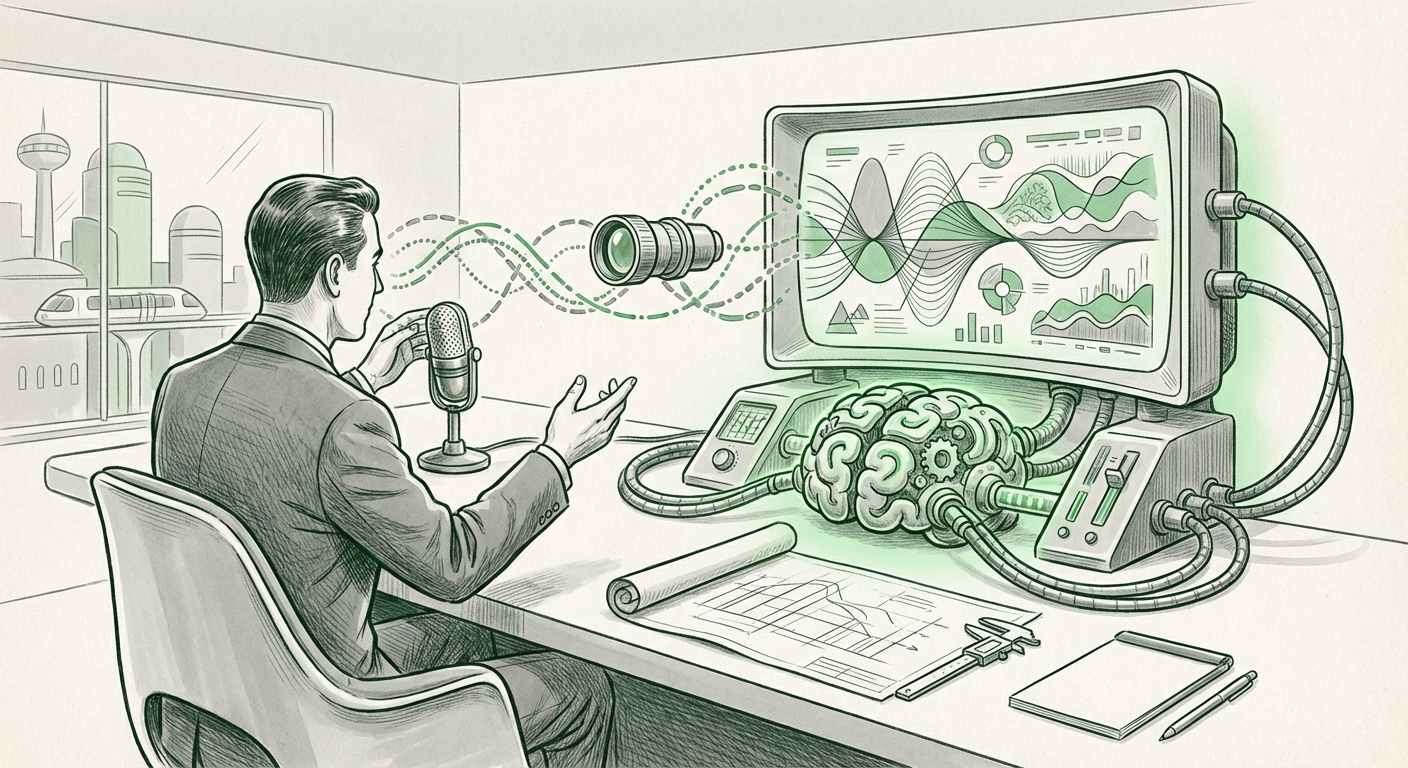
Invisible AI Instructions Hidden in Court Filings: The New Attack on Automated Justice
Imagine a legal document that looks completely normal. Clean text. Proper formatting. Court-approved margins. But buried inside that document, invisible to every human eye, are secret commands. Commands written only for machines. Commands designed to quietly change how an artificial intelligence system reviews, ranks, and routes the case. This is not a thought experiment. It has already happened. A plaintiff hid invisible AI instructions inside court filings with the express goal of secretly influencing the automated review process. The result is one of the most important warning signs yet for the future of artificial intelligence.
For years, we have been told that AI will make our institutions faster, cheaper, and fairer. Courts would review filings in seconds. Businesses would process contracts in a blink. Governments would triage paperwork automatically. But this incident reveals the dark side of that vision. If an AI system stands between a person and an outcome, a ruling, a loan, a job, a benefit, then somewhere, someone will try to manipulate that system. And this time, the manipulation was hiding right in plain sight. Understanding what happened, why it happened, and what it means for the future of AI is now urgent for anyone who builds, buys, or relies on automated decision-making.
What Happened: A Legal Filing With a Hidden Agenda
In a development that has sent a shockwave through the legal technology world, a plaintiff managed to embed hidden AI instructions directly into court documents. The instructions were completely invisible to human readers. But the automated systems that now handle a growing share of court document review could see them clearly. By doing this, the plaintiff aimed to secretly influence how those systems processed the case, nudging the review in a favorable direction while no human being was any the wiser.
The exact technical details are still being studied by cybersecurity experts, but the core concept is straightforward and deeply unsettling. The document contained text that only machines could read. When the court's automated review tool scanned the filing, it absorbed those hidden instructions as though they were legitimate parts of the document. The AI then acted on them, effectively following orders that no judge, clerk, or attorney ever saw. Whether the attempt succeeded in changing the case outcome is secondary. The fact that it could be attempted at all has exposed a fundamental weakness in how we are deploying AI across society.
How Do You Hide Instructions From People, But Not From AI?
To most people, the phrase "invisible text" sounds like a magic trick. In the digital world, it is painfully simple. There are many ways to make text invisible to human eyes: white text on a white background, text positioned off the visible page, fonts so small they are unreadable, or special characters that occupy space in the digital file without ever appearing on screen. Zero-width spaces and Unicode control characters are perfect examples. They exist in the data. They carry meaning. But when you read the document, you see nothing at all.
Here is the crucial difference: AI systems do not read pages the way people do. Human readers perceive a document visually, the shape of the letters, the layout, the colors. AI models, especially large language models, read the raw digital text. Every character counts equally. The model cannot tell the difference between a visible sentence written by an attorney and a hidden sentence written by an attacker. To the AI, both are simply input. And to a helpful AI, input means instructions.
This technique belongs to a category of cyberattack called prompt injection. The idea is simple: an attacker hides malicious instructions inside data that an AI system is designed to process. When the AI reads the data, it obediently follows the instructions it never should have accepted. If you have ever tried to trick a chatbot into breaking its own rules, you already understand the basic idea. What is new here is the target. This attack was aimed not at a chatbot playing games, but at the machinery of justice itself.
Prompt Injection Has Escaped the Laboratory
Cybersecurity researchers have been warning about prompt injection attacks for a long time. For most of that time, the examples felt like parlor tricks. Someone convinces a customer service chatbot to reveal its hidden system prompt. Another person gets an AI shopping assistant to sell a product for one dollar. These stories got laughs and headlines, but they rarely got taken seriously as threats to critical systems.
This court filing incident changes the picture. It demonstrates that adversarial AI attacks have moved from novelty to reality. They are now being used in high-stakes environments where real people face real consequences. The attack works because large language models are trained to follow instructions. That is exactly what makes them useful. We ask them to summarize, to sort, to decide, and they comply. But this same obedience is their greatest vulnerability. When an AI is given a document to review, it does not naturally separate the content it should analyze from the commands hidden inside that content. Both look like text. Both look like data. Both look like authority.
The broader lesson is that every AI system connected to the real world is now a potential target. Attackers do not need to break into a courthouse database or hack a file server. They simply need to craft the right input and let the AI do the rest. The attack surface is not a network. It is language itself.
Why Courts Are Uniquely Exposed
Courts are racing to modernize. Filing systems have moved online. Document intake is increasingly automated. AI tools are being used to triage incoming motions, flag urgent requests, summarize filings for judges, check procedural compliance, and detect patterns that humans might miss. The efficiency gains are enormous, and the enthusiasm for them is understandable. Courts are overloaded, and justice delayed is justice denied.
But every automated step introduces a new vulnerability. And the court is a uniquely dangerous place to have such weaknesses. So much of the legal system depends on procedural fairness. Both sides must have a level playing field. A hidden instruction that tells an AI to "prioritize this motion" or "flag this filing for expedited review" could hand one litigant a silent, unfair advantage. A malicious instruction could convince a system to ignore a required step, or to present a weak argument as if it were powerful precedent. And because the instructions are invisible, no human reviewing the document on screen would ever suspect a thing.
This is not just a problem for the courts. It is a warning for every institution that is eagerly adopting AI to make decisions about people's lives. If a court can be tricked, so can an insurance company, a bank, a hospital, a school, or a government agency. The method changes, but the logic is always the same: find the AI, find its blind spots, and exploit them.
What This Means for the Future of AI
This incident is a preview of the world we are building. As AI becomes the front door to every major institution, the data we feed into these systems becomes the primary vector for attack. The uncomfortable truth is that we have been treating AI input files like paper documents, as safe, inert, trustworthy objects. But in an automated world, a document is not just content. It is also a carrier of instructions. And some of those instructions can be weapons.
The future of AI will therefore be defined not just by smarter models, but by stronger boundaries. We are entering an era where every input must be treated with suspicion. In classic cybersecurity, the first rule is that untrusted data is dangerous. AI systems now sit at the center of massive data flows: emails, uploaded resumes, contracts, legal filings, customer complaints, medical forms. And they are being asked to make consequential decisions based on that data. Relying on hope that no one will abuse this is not a security strategy. It is a gamble.
The future will also bring an arms race. As defenders learn to strip hidden instructions, attackers will find new ways to disguise them. As AI models become more robust, attackers will develop more clever attacks. This is the same pattern we have seen with computer viruses, phishing emails, and every other form of cybercrime. The difference is that AI attacks can be baked into everyday documents, making them far harder to spot and far easier to spread. The organizations that win this race will be those that treat AI security as a core business function, not an afterthought.
None of this means we should abandon AI. The potential benefits are too great, and the need for scalable decision-making is too real. But we must build AI systems that can distinguish between content and commands. We must build systems that question their own inputs. And above all, we must build systems with humans in the loop, because a machine that cannot be trusted with an invisible sentence cannot be trusted with a person's livelihood, freedom, or future.
The Business Threat: Every AI Pipeline Is a Target
If you run a business, you might assume this story is about courts, not about you. That would be a costly mistake. The exact same vulnerability applies to any organization using AI to process documents. Consider the tools that are quickly becoming standard across the corporate world: customer support chatbots that summarize complaints, HR software that screens resumes, legal tools that review vendor contracts, finance systems that analyze invoices. Every one of these is a potential target for invisible instructions.
A clever job applicant could hide text in a resume that instructs the AI to advance them to the top of the pile. A disgruntled customer could bury commands in a support email that convince the system to issue a refund. A competitor could embed malicious instructions in a contract that silently changes its automated risk score. The techniques are identical to the court filing attack. The stakes are just dollars and data instead of justice.
This is not an IT problem alone. It is a leadership problem, a compliance problem, and a legal problem. If your company uses AI to make decisions that affect customers, employees, or profits, you need to understand how attackers could game the system. And you need to act before they do, not after. No organization wants to be the next case study in a headline like this one.
Actionable Insights: How to Protect Your Organization
So what should organizations and individuals do right now? Here are practical steps grounded in the lessons of this incident.
- Treat AI outputs as untrusted. Any AI-driven decision that affects people's rights, finances, or well-being should include a human in the loop. Automation should speed up decisions, not seize control of them.
- Sanitize all incoming input. Before documents are fed to AI models, strip them of hidden characters, control codes, zero-width characters, and other embedded tricks. This is the digital equivalent of screening cargo before it is loaded onto a plane.
- Attack your own systems. Build adversarial testing into your development cycle. Hide instructions in your test data and see if your model follows them. If it does, you have found a vulnerability and a chance to fix it safely.
- Educate your workforce. The people who draft, handle, and review documents need to know this threat exists. Awareness is a genuine defense layer, and in most organizations, it is currently the weakest one.
- Demand answers from AI vendors. Ask your vendors exactly how their systems handle prompt injection and hidden instructions. Ask what safeguards are built in. If they cannot give you a clear answer, that lack of an answer is itself the answer.
- Support standards and regulation. This case should spur every regulated industry to develop clear rules for AI security and transparency. Voluntary best practices help, but enforceable standards are what will force real change.
The Bottom Line: Trust Must Be Earned
The story of the plaintiff who hid invisible AI instructions in court filings should stop all of us cold. It is not a prank. It is not a distant threat from a science fiction novel. It is a real demonstration that the AI systems we are weaving into the fabric of society can be quietly, invisibly, and effectively manipulated. And it raises a question that every court, every business, and every citizen will face in the coming years: how much should we trust a machine that even its own creators cannot fully control?
We do not have the luxury of slowing down. AI adoption is accelerating, and that acceleration brings enormous good. But this incident proves that speed without security is recklessness. The institutions that thrive in the AI era will be the ones that build trust deliberately. They will treat AI as powerful but fallible, ubiquitous but vulnerable, transformative but transparent. They will secure the machines before they depend on them, and they will never forget that the point of the system is to serve people, not the other way around. The future of AI belongs to those who can secure it. The time to start is now.