One Real Task, Thousands of Simulated Worlds: How World Labs Is Transforming Robot Training
Teaching a robot to do something simple, like picking up a cup, is actually one of the hardest problems in technology today. In the real world, a robot must handle an endless list of surprises: different lighting, different cup colors, a cluttered table, a moving hand reaching for the same object, or a slight change in angle. One wrong guess and the robot fumbles. For years, the fix has been painfully slow: run the robot in the real world again and again, record what happens, and hope it learns. That process costs money, burns through hardware, and takes forever.
A powerful new approach from World Labs is attacking this problem from a completely different angle. Instead of repeating the same task in the real world hundreds or thousands of times, World Labs is turning one real-world robot task into thousands of simulated variations for training. This single idea could reshape how robots learn, how quickly they improve, and how soon they show up in warehouses, hospitals, restaurants, and homes. Here is what is happening, why it matters, and what it means for the future of AI.
The Huge Bottleneck Nobody Likes to Talk About
Artificial intelligence made an enormous leap in the last decade, but most of that progress happened in the digital world. Language models learned from billions of pages of text. Image systems learned from billions of photos. Robots, however, do not have that luxury. There is no massive "internet of robot actions" sitting around waiting to be downloaded.
Real-world robot data is expensive and scarce. Every hour of robot time requires physical hardware, careful human supervision, electricity, maintenance, and safety precautions. If a robot breaks something, that is a problem. If a robot injures someone, that is a disaster. As a result, the amount of experience a robot can collect in a year is tiny compared to what an AI model can absorb from the internet in a single day.
This creates what researchers call a data bottleneck. A robot that has only seen one kitchen, one set of cups, and one type of lighting may perform beautifully in that exact setup and then fail miserably anywhere else. It has memorized the test, not learned the skill. The field has long known the answer: robots need more varied experience. The question was always how to get it cheaply, quickly, and safely.
The World Labs Approach: Simulation as a Data Multiplier
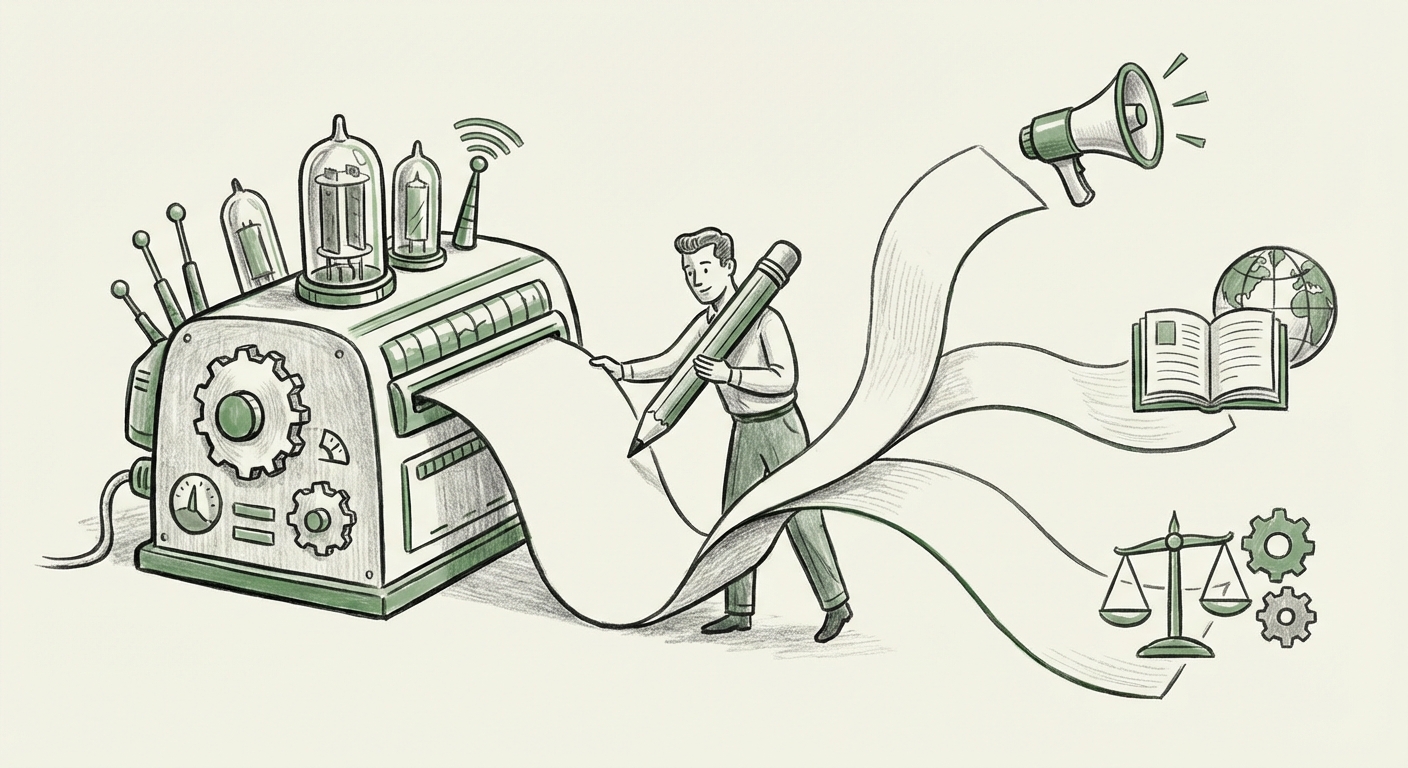
World Labs is betting on simulation as the great multiplier. The core idea behind the new approach is elegantly simple: take a single demonstration of a real-world task and use it as the seed to generate thousands of simulated variations for training. One task becomes a whole universe of practice scenarios.
Imagine a robot learning to pour water from a bottle into a glass. A human demonstrates the task once in the real world. That single demonstration is then transplanted into a simulated environment, and the system begins generating variations. The bottle changes color. The glass changes size. The lighting shifts from bright morning sun to dim evening shadow. The table gets cluttered. The starting position moves. The camera angle changes. Small errors are added, like a slightly tilted bottle or a shaky hand motion.
Each variation is a fresh training example. Instead of one demonstration, the robot now has thousands of different ways to see the same task. This is not just about quantity; it is about diversity of experience, which is exactly what robots need to become flexible, reliable, and useful in the messy real world.
Why Thousands of Variations Beat One Perfect Demonstration
To understand why this matters, think about how a basketball player trains for a free throw. If the player only ever practices in one quiet gym with the same ball and the same lighting, they may shoot brilliantly there. But put them in a loud arena, with bright lights, a slippery court, and a roaring crowd, and their performance may collapse. They have practiced the motion, but not the environment.
Robots have exactly the same problem. A robot trained on a single narrow set of conditions has learned a trick, not a skill. When the conditions shift, the trick stops working. Engineers call this overfitting, the robot becomes "too good" at the specific training setup and terrible at everything else.
Thousands of simulated variations break that pattern. By forcing the robot to succeed across many different lighting conditions, object shapes, backgrounds, and motion paths, the training pushes the system to learn the underlying essence of the task: grip the bottle, tilt it, pour until the glass is full. The surface details stop mattering as much. This is how you get a robot that can walk into a brand-new kitchen and still do the job.
The Bigger Trend: The Rise of Simulation in AI
World Labs is far from the only group exploring simulation, but its approach represents something important: a shift from treating simulation as a nice extra to treating it as the core engine of robot learning.
For years, simulation felt like a compromise. Simulated worlds were too neat, too perfect, and too different from reality. Robot systems trained in simulation would often behave beautifully in the virtual world and then stumble in the real one. This gap became known as the sim-to-real problem.
The new wave of techniques is closing that gap by adding what researchers call domain randomization, intentionally making the simulation messy, varied, and even ugly. The more the simulation varies, the more the robot learns to ignore irrelevant details and focus on what really matters. World Labs is applying this logic in a powerful way by grounding the simulated variations in a real task. The simulation is not a fantasy; it is reality, stretched and recombined into thousands of useful shapes.
This is part of a much larger pattern across AI. Autonomous vehicles train in thousands of virtual cities before touching a real road. Warehouse robots rehearse millions of picks and placements in digital warehouses. Surgeons practice on virtual patients. Simulation is becoming the safest, cheapest, and fastest way to give machines experience. World Labs is adding a critical piece: automatically generating rich variations from a single real-world example, rather than hand-building every simulation from scratch.
What This Means for the Future of AI
The implications of this approach go far beyond a single robot learning to pour water. If one real-world task can become thousands of simulated training variations, then the cost of teaching robots new skills drops dramatically. Here is what that could unlock.
General-Purpose Robots Become Realistic
Today, most robots are specialists. They do one job, in one place, incredibly well, but they cannot adapt. The reason is simple: training them to adapt has been too expensive. If simulation can multiply every real demonstration into thousands of lessons, then teaching a robot five, ten, or fifty different skills becomes feasible. The dream of a general-purpose helper robot, one that can clean, organize, cook, and assist, moves from science fiction toward engineering reality.
AI Learns the Physical World
Most modern AI has been trained on text and images, the digital world. But the real world is physical. It has gravity, friction, weight, and time. World Labs' work is part of a broader push toward spatial intelligence: building AI that genuinely understands three-dimensional space, objects, and interactions. Training in thousands of varied simulated environments is one of the fastest ways to give AI that physical understanding. This could eventually power everything from smarter augmented reality glasses to robots that navigate disaster zones.
Faster, Safer Progress
Simulation training can run much faster than real time. A robot can practice an hour of task performance in seconds of simulated time. It can practice dangerous scenarios, a falling object, a slippery floor, a sudden obstacle, with zero risk of injury. This compresses years of learning into weeks. That acceleration is not incremental. It is transformational.
What This Means for Businesses
For business leaders, the rise of simulated robot training is not an abstract research topic. It is a signal about the future of work, automation, and competition. Here is what to watch and what to do.
Automation Gets Faster and Cheaper
Currently, deploying a robot in a new facility can take months of tuning, testing, and data collection. If training can be generated in simulation from just a few real demonstrations, deployment timelines could shrink to days. That changes the economics of automation. Smaller factories, family restaurants, and independent farms could start using robots that were previously affordable only for giant corporations.
The Most Valuable Tasks Are Repetitive and Physical
Businesses should look closely at their physical, repetitive tasks, sorting, packing, stocking, inspecting, cleaning, assembling. These are precisely the tasks that benefit most from simulation-driven robot training. The cost of automating them will fall, and the quality of automation will rise. If a task can be described and demonstrated once, it may soon be trainable on a large scale.
Actionable Insights for Leaders
- Identify your repetitive tasks now. The first automated tasks in your industry will be the most repetitive and the most physically demanding. Map them out before your competitors do.
- Start small with a pilot. Choose one narrow task, test how simulation-based training performs, measure the results, and learn before scaling up. Small pilots create internal expertise and confidence.
- Invest in data culture. Even with simulation, high-quality real demonstrations are the starting point. Companies that document their workflows, record good demonstrations, and organize their processes will be best positioned.
- Plan for workforce shifts. Automation will change roles rather than simply erase them. Workers will be needed to supervise robots, handle exceptions, and fix problems. Start planning reskilling programs now, not after the robots arrive.
- Watch the technology curve. The cost of robot training is about to drop sharply. That means the right decision today may be to wait a little and prepare, rather than lock in an expensive, rigid solution.
Challenges That Still Remain
It would be a mistake to pretend simulation is magic. The sim-to-real gap still exists, even if it is narrowing. A simulation is only as good as its ability to model the physical world. Friction, soft materials, flexible objects like cloth or cables, and quirky human behavior remain difficult to simulate perfectly. A robot trained on thousands of simulated variations still needs real-world validation before it can be trusted with important jobs.
There are also costs to building and running high-quality simulations. Generating thousands of variations requires serious computing power. And someone has to design the simulation environments in the first place. The companies that invest in simulation engineering, building virtual worlds that are both rich and realistic, will have a major advantage.
On the societal side, faster robot training raises familiar questions about jobs. History suggests that automation tends to create new roles even as it replaces old ones, but the transition is rarely smooth. Jobs that require physical dexterity, judgment, and adaptability may shift from being done by humans to being supervised by them. Preparation matters. Education systems, workforce training, and corporate reskilling programs will all need to respond.
An Exciting Future Takes Shape
The most exciting part of this development is how it changes the pace of progress. For years, robot development crawled along because real-world data was painfully scarce. By converting one real-world task into thousands of simulated variations, World Labs is attacking that scarcity directly. The idea is simple, but its consequences are enormous.
Think about what it means when every robot skill can be rehearsed thousands of times in a thousand different worlds before it is ever deployed. Robots will be more capable on their first day of work. They will adapt more quickly to new environments. Their failures will happen in simulation, where nobody gets hurt and nothing gets broken. And the lessons learned will keep compounding, making the next skill easier to learn than the last one.
The robots of tomorrow will not be the products of endless, exhausting physical trials. They will be shaped in vast virtual worlds where every variation is a teacher. That shift, from teaching robots by repetition in reality to teaching them by variation in simulation, is one of the most important stories in AI today. It is a story about abundance displacing scarcity, and the future of robotics is brighter because of it.