1 in 5 US Workers Now Delegates Tasks to AI Instead of Colleagues, What This Means for the Future of Work
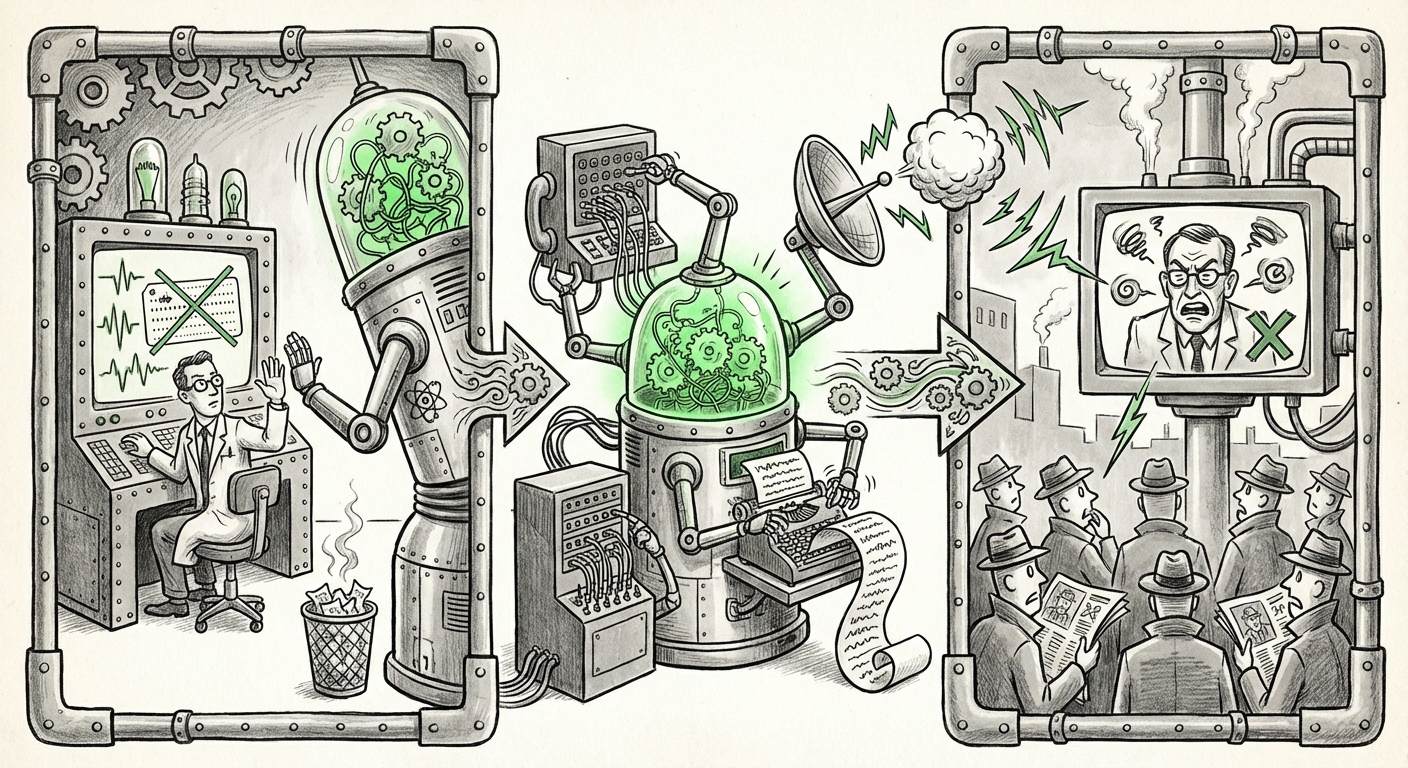
A quiet shift is happening inside American offices, and most companies have not fully noticed it yet. According to a new survey, one in five US workers now delegates at least some of their tasks to artificial intelligence instead of passing them to a human colleague. That single statistic marks a turning point. This is no longer just about which tools people use. It is about who, or what, people now consider a dependable teammate.
The change did not come with a big announcement. It happened one request at a time. And now that roughly 20 percent of workers have crossed the line from using AI as a helper to treating it as a delegate, the workplace will never be quite the same.
The New Office Dynamic: When the Teammate Is a Machine
The phrase "delegating to AI" sounds futuristic, but in practice it is remarkably ordinary. It looks like an employee asking an AI assistant to draft a status update for a project manager instead of asking a coworker to write it. It looks like a customer support representative using AI to summarize a long complaint thread rather than forwarding it to a teammate who handles escalations. It looks like a junior analyst asking a chatbot to explain a confusing spreadsheet formula instead of interrupting a senior colleague for help.
What these moments share is that they used to be human-to-human interactions. The request. The favor. The quick question. The "can you take a look at this?" These small exchanges are the connective tissue of teamwork. Now, for one in every five workers, that connective tissue is increasingly made of software.
Survey data only captures what people admit to, which means the real number could easily be higher. Some workers may not even think of their AI use as "delegation." They might call it "getting help" or "using a tool." But the behavior is unmistakable. When a task moves to an AI instead of a person, something fundamental about the way work happens has changed.
Why Workers Are Choosing Machines Over Human Teammates
The reasons workers give for preferring AI are rarely about disliking their colleagues. More often, they come down to speed, control, and the psychology of asking.
First, speed. An AI response arrives in seconds. A human response arrives whenever that person gets around to it. In a busy workday, that gap is enormous. A task that used to depend on someone else's calendar now depends on nothing but a prompt.
Second, control. When you ask a human for help, you often get opinions, suggestions for doing things differently, follow-up questions, and occasionally pushback. When you delegate to AI, you stay in the driver's seat. The output can be edited, adjusted, or regenerated without the awkwardness of rejecting someone's effort.
Third, there is the invisible social cost of asking. Humans are wired to feel the weight of a favor. Every request to a colleague builds a kind of social debt. Over time, people hesitate to ask for help because they do not want to seem incompetent, needy, or demanding. AI carries no such emotional transaction. You can ask it anything, at any hour, without fear of judgment and without the obligation to return the favor later.
This is a deeply human reason for a seemingly technological shift. The rise of AI delegation is not just an efficiency story. It is also a story about how exhausting workplace relationships can feel, and how appealing it can be to quietly opt out of them.
A Productivity Win or a Hidden Risk?
On the surface, workers delegating routine tasks to AI sounds like a productivity dream. Repetitive work gets done faster. People focus on higher-value activities. Bottlenecks shrink. In many ways, this is exactly the future that AI advocates promised.
But real risks hide beneath the surface.
One risk is skill decay. If a worker delegates every writing task, every data analysis, and every tricky calculation to AI, their own abilities in those areas will gradually fade. The brain is a muscle; skills that are not exercised weaken over time. This is the "use it or lose it" problem, and it is one of the most underrated dangers of heavy AI reliance.
Another risk is lost shared understanding. When a junior employee asks a senior colleague for help, they do not just get an answer. They get context, judgment, war stories, and the unwritten rules of the business. None of that transfers when the answer comes from an AI. The task gets done, but the learning does not happen.
And then there is the collaboration paradox. Teams that stop asking each other for help begin to feel less like teams. Trust is built through small interactions. Over time, a workplace where people only interact at formal meetings becomes isolating, no matter how productive it looks on a dashboard.
What This Means for Team Culture and Management
The one-in-five statistic should be a wake-up call for managers. The workplace has quietly become a mixed ecosystem of humans and machines, and most management training has not caught up.
Leaders need to ask uncomfortable questions. Are employees delegating to AI because the tools are genuinely better, or because they do not feel safe asking a human for help? Is the organization optimizing for individual output at the expense of collective learning? Are new hires getting the mentorship they need, or are they just getting AI answers?
There is also a question of visibility. When someone delegates to a colleague, everyone sees it. The request appears in emails, messages, and meetings. When someone delegates to AI, it is often invisible. No one sees the prompt, the output, or the judgment involved. That invisibility creates a blind spot for leaders trying to understand how work actually gets done.
None of this means AI delegation is bad. It means organizations need to be intentional. The goal should be to use AI for what it is genuinely good at, speed, scale, repetitive tasks, and information retrieval, while deliberately protecting the human interactions that build culture, trust, and institutional knowledge.
Three Practical Steps for Businesses Right Now
So what should an organization actually do about this shift? Here are three concrete moves:
- Measure before you manage. Companies should ask employees about their AI usage in surveys, interviews, and one-on-ones. Not to police it, but to understand it. Which tasks are being delegated? Which teams rely on it most? Where is it creating value, and where is it silently replacing valuable human collaboration?
- Establish human-first routing for important work. Some tasks simply should not be delegated to AI. Performance reviews, sensitive feedback, creative brainstorming, conflict resolution, and complex negotiations require human judgment, emotional intelligence, and accountability. Companies should be explicit about which tasks need human-to-human connection, even when AI could technically handle them.
- Invest in AI literacy for everyone, not just technical staff. Workers at every level need to understand what AI can and cannot do, how to review AI output critically, and when to escalate to a human expert. This is not just an IT initiative. It is a management and culture initiative.
The Bigger Picture: Where AI Is Headed Next
It is easy to read this survey as a story about today's workplace tools. But the bigger story is what it foreshadows.
Delegation is a stepping stone. Right now, workers are learning to hand tasks to AI and trust the results. That is the first phase. The next phase is agency, AI systems that do not just complete a single task on command, but plan, manage, and execute entire processes with limited supervision. Instead of asking AI to draft one email, workers will ask AI to "manage the inbox, draft responses where appropriate, flag anything sensitive, and brief me at the end of the day."
When that happens, the word "delegation" takes on a bigger meaning. Workers will not just be assigning individual tasks. They will be managing a workforce of digital agents. The skill that matters most will shift from doing the work to directing the work, writing clear instructions, setting boundaries, reviewing outputs, and knowing when to intervene.
This transformation also redefines management itself. If every employee becomes a manager of machines, then management becomes a universal skill. The ability to communicate intent clearly, set priorities, evaluate quality, and hold a system accountable will become core competencies for nearly every role.
In other words, the one-in-five survey is not just about what is happening now. It is an early signal of a future where every worker leads a hybrid team of humans and machines, and where the line between "tool" and "teammate" gets blurrier every year.
Actionable Insights for Workers and Leaders
For individual workers, the message is simple: use AI strategically, but do not stop practicing your craft. Delegate the repetitive, the tedious, and the well-defined. Keep doing the work that builds your skills, your judgment, and your relationships. Ask AI for speed. Ask humans for wisdom.
For leaders, the message is: pay attention to the invisible shifts. The fact that one in five employees now delegates to AI means the actual flow of work has changed, even if the org chart has not. Update your assumptions about how teams collaborate. Create policies that encourage smart AI use while protecting the human interactions that hold organizations together.
For society, the message is even bigger. When a fifth of the workforce begins treating machines as colleagues, education, training, and workplace norms all need to evolve. The future does not belong to people who can beat AI at its own game. It belongs to people who know how to work with it, direct it, and, just as importantly, know when it should not be used at all.
Conclusion: The Task Is Easy; the Team Is the Hard Part
One in five US workers delegating tasks to AI instead of colleagues is not a passing curiosity. It is a structural shift in how work gets done. The technology provided the spark, but the deeper driver is profoundly human, the desire for speed, the fear of judgment, and the exhaustion of constant social negotiation.
The organizations that thrive in this new era will not be the ones that maximize AI usage. They will be the ones that balance machine efficiency with human connection. They will understand that AI can handle the task, but only people can build the team. The future of work is not a choice between humans and machines. It is a question of how intelligently we combine the two.