Why AI Benchmarks Fail Real Businesses, and How Optima Lets You Test Models on Your Own Data
Every few months, a new AI model arrives with stunning test scores. It claims to be smarter, faster, and more capable than everything that came before it. Companies rush to try it. Then reality sets in. The model that aced its public exams stumbles on the boring, messy, everyday tasks that actually keep a business running.
This gap between test scores and real-world usefulness has quietly become AI benchmarking's biggest flaw. And now, a new approach from Optima is tackling that flaw directly, by letting users test AI models against their own data, not someone else's.
It sounds simple. In practice, it's a quiet revolution in how we judge artificial intelligence. Here's why it matters, what it means for the future of AI, and how you can start putting it to work today.
The Dirty Secret of AI Benchmarks
For years, the AI industry has measured progress the same way schools measure students: standardized tests. A model is given a large set of questions with known answers. It earns a percentage score. That score gets published, compared, and celebrated in headlines.
These tests have played a huge role in pushing the field forward. They give researchers a common yardstick to measure improvement. They give buyers a shorthand way to compare options. They create healthy competition.
But they have a serious weakness: they measure how well a model performs on a test, not how well it performs on your work.
Think about it this way. A student can study for a specific exam and ace it, yet still struggle to apply that knowledge in a real job. AI models have the same problem, only worse. Many benchmark questions are publicly available. Models can be trained on them, tuned for them, and essentially "study" for the test in ways that inflate their scores without improving their true abilities.
Even when there's no cheating involved, there's a deeper issue. Benchmark tests are built from generic data. They contain general knowledge questions, common scenarios, and clean, tidy examples. Real business data is none of those things. It's full of typos, missing fields, industry jargon, unusual formats, and edge cases that no generic test could ever anticipate.
The result is a fundamental mismatch: a model can score brilliantly on a benchmark while failing at your specific task. And too many companies have learned this lesson the expensive way, after signing a contract, integrating the model, and watching it underperform.
How Optima Is Rewriting the Rules
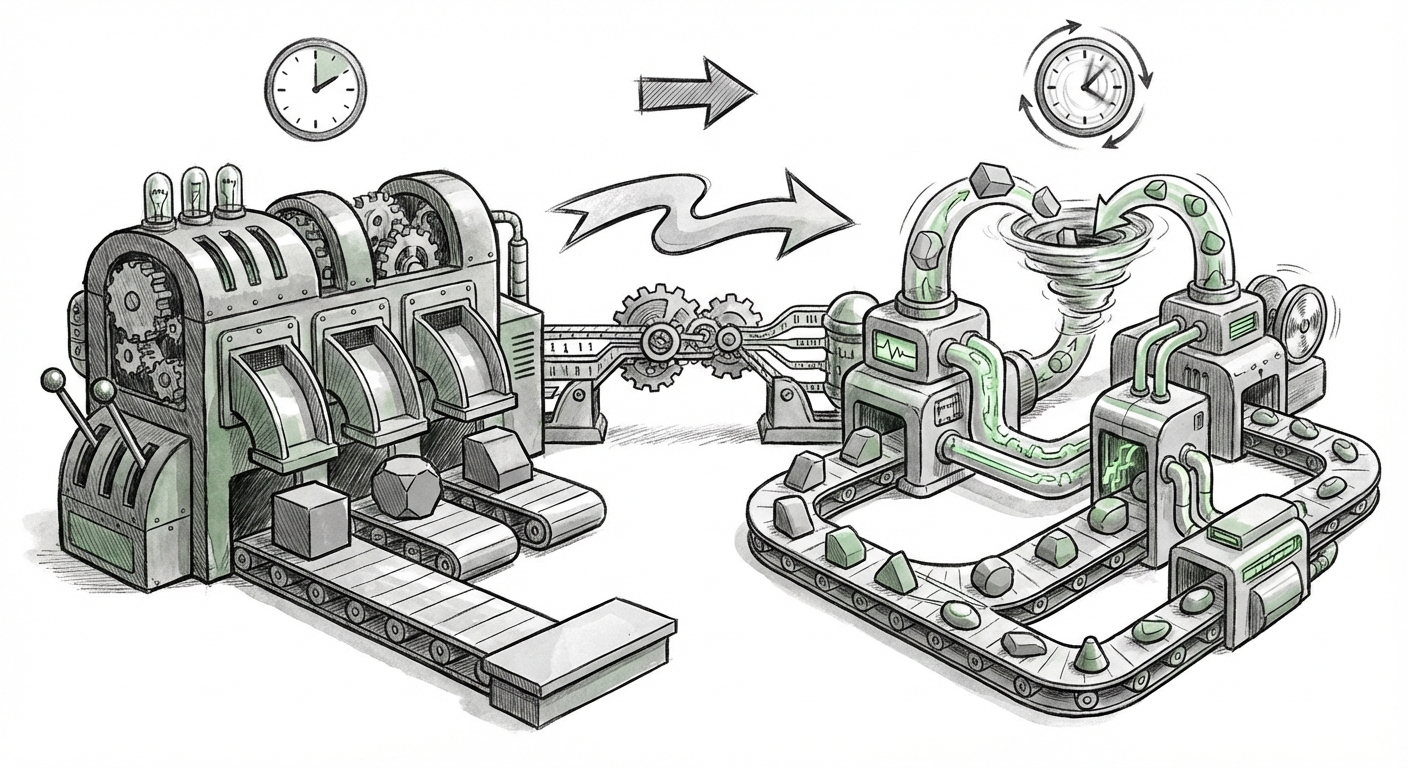
Optima's new approach flips the entire testing model upside down. Instead of forcing every user into the same standardized exam, it lets users test AI models against their own data.
The idea is straightforward: bring your own documents, your own queries, your own scenarios. Test how a model handles the exact kind of work you actually need it to do. Compare models on the material that matters to you, not on abstract questions that may never come up in your business.
This small shift in control has enormous consequences. The power to judge AI moves out of the hands of test creators and into the hands of the people who actually use it.
Rather than trusting a generic leaderboard, a business can ask a far more practical question: Which model performs best on my data? That's not a theoretical question. It's a procurement question, a budgeting question, and a risk-management question all at once.
And because the evaluation runs on private data, it stays private. Companies don't have to upload sensitive information to a public leaderboard. They can evaluate models securely, on their own terms, without exposing trade secrets or customer records.
Why "One Size Fits All" Testing Never Made Sense
To understand why this matters, consider how different real-world AI use cases can be. A hospital evaluating a model to summarize patient records has completely different needs from a law firm analyzing contracts, which has different needs again from a retailer forecasting inventory, a bank reviewing loan applications, or a manufacturer inspecting maintenance logs.
Each of these organizations works with its own vocabulary, its own document formats, its own compliance requirements, and its own definition of accuracy. A single generic test simply cannot capture that diversity.
Even within the same company, departments differ. The data that a marketing team cares about looks nothing like the data an engineering team works with. One model might crush the marketing workloads while stumbling on engineering tasks. A single benchmark score would never reveal that split.
This is why testing with your own data is not just a nice feature, it's the only truly honest way to evaluate AI. It replaces guesswork with evidence. It replaces generic assumptions with ground truth from your own operations.
The shift also puts pressure back on model developers. When buyers can test models against their own data before purchasing, hype matters less. Real performance matters more. Fluffy marketing claims about "state-of-the-art" capabilities dissolve in the face of data that shows how a model actually handles your documents, your prompts, and your edge cases. This forces developers to build models that genuinely perform well in the messy real world, rather than models that merely look good on curated tests.
What This Means for Your Business
For business leaders, the rise of user-driven evaluation is genuinely good news. It changes the AI buying process from a leap of faith into a measurable decision.
Better purchasing decisions. When you can test models on your own data before committing, you stop choosing based on reputation or hype. You choose based on results. That's a far more reliable way to spend your technology budget.
Less wasted spend. Wrong AI choices are expensive. Teams burn months integrating a model that looked great on paper, only to discover it can't handle their data. Testing first means you find out before the integration begins, not after.
More confidence in adoption. When an AI model has proven itself on your actual workloads, employees are far more likely to trust it. Instead of fighting a skeptical workforce, you can point to concrete evidence: we tested it on our own documents, and it performed.
Lower risk. Knowing how a model handles your edge cases, before it goes into production, reduces the chance of embarrassing mistakes, regulatory missteps, or harmful outputs. Evaluation becomes a risk-management tool, not just a shopping tool.
Fairer comparisons over time. The AI landscape moves fast. New models appear constantly. With user-driven testing, you can re-run your own evaluation whenever a new model launches, asking the same question: does this beat what we're currently using on our data? That turns benchmarking into an ongoing habit rather than a one-time exercise.
There's also a cultural benefit. When your organization builds a habit of testing AI against its own data, it builds a mindset of skepticism and evidence. That mindset is exactly what's needed to adopt AI responsibly.
The Future: From Leaderboards to Living Evaluations
This shift points toward a much bigger change in how we think about AI quality. For years, we've treated evaluation as a static event. A model gets tested once, earns a score, and that score follows it around. But real-world AI use is not static. Data changes. Markets change. Regulations change.
The future of AI evaluation is likely to be continuous, personalized, and data-driven. Instead of asking "what's the best model on a benchmark?", we'll ask "what's the best model for my data, right now?"
We should expect evaluation to become a service that runs alongside the AI itself, a permanent feedback loop rather than a one-time grade. Every batch of real customer queries, every new batch of documents, becomes part of an ongoing test. This is a future where AI earns its keep through measurable performance on the work it's actually hired to do.
We should also expect AI evaluation to become more democratic. Right now, only large companies can afford the expertise needed to deeply test AI models. Tools that let users test models against their own data lower that barrier dramatically. A mid-sized company, or even a small team, can now evaluate models with the same rigor that was once reserved for big enterprise technology departments.
And there's an intriguing long-term implication: eventually, every company's private dataset becomes its own unique benchmark. Think about what that means for the AI industry. The companies building models will need to prove their value across millions of customized evaluations, not just a handful of standardized ones. The competition will shift from "who has the best marketing story" to "who actually performs best in the trenches."
Actionable Steps You Can Take Today
This philosophy of testing AI on your own data is not just something to read about, it's something you can adopt right now. Here are practical steps to get started:
- Collect a small but realistic sample of your data. Pick real documents, real queries, and real tasks that you actually want AI to handle. Aim for a mix of routine cases and tricky edge cases. In an ideal scenario, you'll end up with somewhere between thirty and one hundred real-world examples that reflect your actual working conditions.
- Define "good" before you test. What does a correct answer look like for you? The more specific your definition of success, the more useful your evaluation will be. Include accuracy, but also factor in style, format, and helpfulness.
- Run your own side-by-side comparison. Try the leading AI options on that same sample. Document where each one shines and where each one struggles. If a result doesn't quite make sense, dig deeper �� one clever example can be far more instructive than a thousand generic test questions.
- Make evaluation a permanent habit. Re-test whenever a new model launches or whenever your data changes meaningfully. Keep a simple scorecard so you can track which models improve over time and which ones fall behind on your specific workloads.
- Share your findings internally. When you document how models perform on your own data, you build institutional knowledge. Other teams can learn from your evaluation instead of repeating the same trial and error.
You don't need a data science team to start. You need a handful of real examples and a clear sense of what success looks like. Over time, that small habit will save you from costly mistakes and help you choose AI tools that genuinely earn their place in your operations.
A Smarter Era of AI Evaluation
For too long, we've judged AI by tests that barely resemble the real world. We've watched impressively high benchmark scores fail to translate into practical results. We've made buying decisions based on headlines instead of evidence.
Optima's approach, letting users test models against their own data, points to a smarter path. It puts the power of evaluation back where it belongs: with the people who understand their data best. It makes AI more accountable. It makes adoption less risky. And it forces the entire industry toward real-world usefulness rather than test-taking performance.
The future of AI will not be measured by which model scores highest on a generic exam. It will be measured by which models solve real problems with real data, for real people. That future starts the moment we stop trusting abstract scores and start testing AI on the work that actually matters to us.
The tools to do that are arriving now. The smartest move you can make is to start using them before your competitors do.