Why AI and Data Centers Just Became the Biggest Battlefield in US Politics
For years, American elections were defined by a familiar set of flashpoint issues. Foreign policy conflicts, racial justice debates, and the wild swings of cryptocurrency markets dominated town halls, debates, and campaign ads. Then something surprising happened. AI and data centers leapfrogged Israel, racism, and crypto as the top US campaign topics. This is not a small shift. It is a loud signal that the technology economy has moved from the background to the center of American life, and that the future of AI will now be decided not just in research labs and corporate boardrooms, but in the messy, high-stakes arena of politics.
If you are a business leader, a technologist, or simply someone who pays an electricity bill, this change matters to you. Here is what happened, why it happened, and what it means for the future of AI and how we will all use it.
The Moment AI Became a Kitchen-Table Issue
It is easy to forget how fast this happened. Just a few election cycles ago, "artificial intelligence" was a phrase most voters associated with science fiction movies. Crypto was the new, exciting technology story, a digital gold rush that promised to reshape money and finance. But crypto lived mostly in apps and exchanges. You could not see it, hear it, or feel it in your neighborhood.
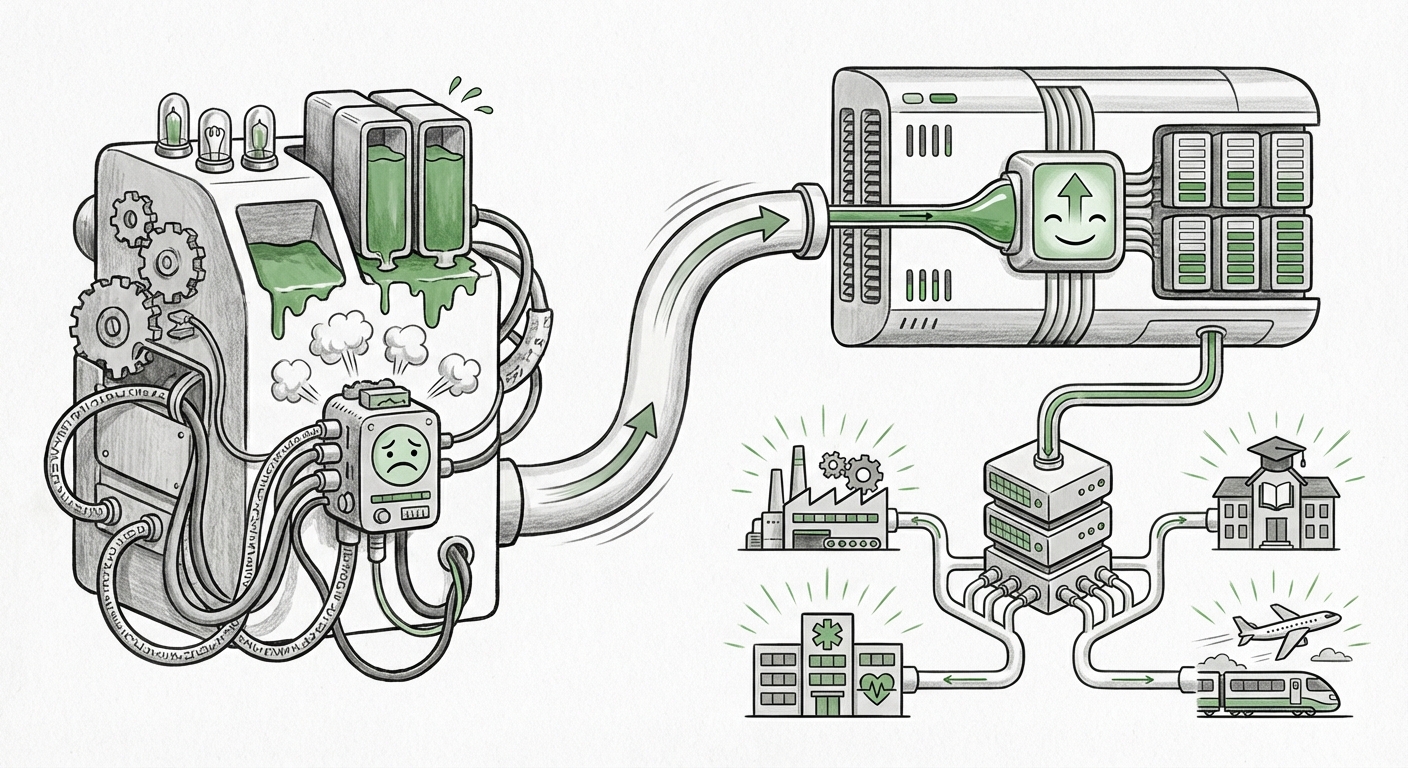
Data centers are completely different. They are giant buildings, often the size of several football fields, packed with thousands of servers running around the clock. They hum loudly, demand enormous amounts of electricity, and need millions of gallons of water to stay cool. When a data center comes to a community, residents notice. Their power grid gets tighter. Their water supply gets stretched. Their property values and local taxes change. And increasingly, they want to talk about it, and vote about it.
The fact that AI and data centers have now overtaken long-standing political heavyweights like Israel, racism, and crypto tells us that technology is no longer an abstract topic for specialists. It is a lived experience. Voters are not arguing about whether AI is coming. They are arguing about what it is doing to their hometowns right now.
Why Data Centers Suddenly Moved to Center Stage
Several forces came together to push AI infrastructure to the front of the political conversation.
1. The Power Problem
Artificial intelligence requires astonishing amounts of computing power. Training a single large AI model can consume more electricity than hundreds of homes use in a year. As AI adoption explodes, data center electricity demand has skyrocketed. Utilities in many regions are scrambling. Some communities face rolling blackout risks. Others see their energy bills climb as demand outpaces supply. When people worry about keeping the lights on, and about the size of their monthly bill, politicians pay attention.
2. Jobs vs. Costs
Data center developers promise thousands of construction jobs and hundreds of permanent technical jobs. That is a tempting offer for any local leader. But the reality is more complicated. Once built, data centers are surprisingly quiet employers relative to their size. They are mostly filled with racks of computers, not people. Meanwhile, the strain on local infrastructure is real and immediate. Communities are asking a sharp question: What are we really getting in exchange for our power, water, and land?
3. The Green Dilemma
Many of the same companies building data centers also claim ambitious climate goals. This creates a painful contradiction. On one hand, AI tools can help optimize energy use, model climate change, and accelerate scientific discovery. On the other hand, the data centers themselves produce massive carbon footprints and push utilities to keep fossil fuel plants running longer. Environmental groups are no longer silent on this tension. They are organizing, and their voices are reaching voters.
4. National Security and the AI Race
AI is now widely understood as a strategic asset. Nations that lead in AI are expected to lead in military capability, economic growth, and global influence. That makes data centers a matter of national security, not just local zoning. When a community rejects a data center project, it is no longer just a local story, it is a story about America's competitive position in the world.
What This Means for the Future of AI
Politics does not just react to technology. Politics shapes it. When AI and data centers become campaign topics, the future of AI changes in several important ways.
Policy Will Be Decided at Every Level of Government
For years, AI policy debates happened mostly at the federal level, and even then, largely behind closed doors. Now, county commissions, state legislatures, and city councils are becoming the places where AI's future is actually being negotiated. Local decisions about land use, energy rates, water rights, tax incentives, and building permits will determine where AI can grow. The result is a patchwork of rules across the country. Some regions will become AI-friendly havens. Others will become difficult places to build. For the AI industry, the map of opportunity is being redrawn in real time.
Infrastructure Becomes a First-Class Citizen
In the past, AI conversations focused almost entirely on software: better models, better algorithms, better data. Now the conversation has expanded to include concrete, steel, fiber optics, transformers, and water pipes. The future of AI depends as much on the electrical grid as it does on the latest research paper. This is a profound shift in perspective. It means that solving AI's infrastructure problem, building enough clean, reliable, affordable power, is now one of the most important technology challenges we face.
The End of the Build-First, Ask-Questions-Later Era
The early AI era was marked by breakneck speed. Companies raced to build bigger models and bigger data centers, often with little public consultation. That era is ending. Communities are demanding answers before they approve projects. They want to know about noise, water, traffic, and whether the jobs will actually benefit local residents. The companies that thrive will be the ones that treat communities as partners, not obstacles. The companies that ignore this new reality will find themselves blocked, delayed, and litigated into submission.
Practical Implications for Businesses
If you run a business, whether you build AI models, use AI tools, or buy cloud computing services, this political shift changes your calculus.
- Reconsider your data strategy. Where your data is stored matters not just for speed and cost, but for political risk. A region that is friendly to data centers today may pass restrictive laws tomorrow. Diversify across regions and plan for a future where data center locations are harder to secure.
- Add energy to your risk list. Energy availability and price are now existential business risks, not just line items. If you rely heavily on AI, your costs are tied to the grid. Support investments in grid modernization, renewable energy, and energy efficiency.
- Build a public affairs muscle. If your company depends on AI infrastructure, you now have a stake in local politics. Engage early with communities, be transparent about your footprint, and make the case for how your presence benefits the region. Silence is no longer a viable strategy.
- Look for the opportunity. Every constraint creates a market. The demand for cleaner energy, better cooling systems, smarter grid technology, and more efficient data center design is exploding. Companies that innovate in these areas will be the big winners of the next decade.
Practical Implications for Society
For everyday people, the rise of AI and data centers as campaign topics is a double-edged sword.
On the positive side, it means democracy is working. When an issue becomes a campaign topic, it means the public has a voice. People are no longer passive recipients of technology decisions made far away. They can vote for candidates who promise stronger grid protections, smarter zoning, or tougher environmental rules. The conversation around AI is becoming more transparent, more local, and more accountable.
On the challenging side, it means technology debates are becoming more polarized. When AI is a campaign issue, it can be reduced to slogans. Some candidates will promise to block all data centers. Others will promise to attract them at any cost. The nuanced middle ground, where thoughtful planning meets genuine innovation, is harder to defend in an election season. Citizens will need to look past the slogans and ask real questions about costs, benefits, and tradeoffs.
There is also the question of fairness. Data centers are not spread evenly across the country. They cluster in regions with cheap power, cool climates, and available land. That means some communities bear the burdens of the AI economy while others enjoy the benefits. This geographic inequality will become a major source of political tension in the years ahead. Expect fights over how to share the benefits of AI more fairly, through taxes, energy pricing, infrastructure investments, and job training programs.
Actionable Insights for the Road Ahead
Whether you are a policymaker, a business leader, or an engaged citizen, there are concrete steps you can take right now.
- For business leaders: Conduct an energy and location audit. Understand your exposure to grid constraints and political risk. Build relationships with local officials before you need them, not after a crisis erupts.
- For policymakers: Stop treating data centers as either pure windfalls or pure threats. Develop coherent, long-term strategies that pair AI growth with grid investment, water management, and workforce development. Clarity and predictability are the most valuable things you can offer, to both businesses and voters.
- For citizens: Educate yourself on the basics of how data centers work and what they consume. Attend local planning meetings. Ask your candidates specific questions about their AI and energy policies. Your vote now shapes the digital future.
- For technologists: Build with efficiency as a core value, not an afterthought. The models and systems that use less energy will be the ones that face fewer political obstacles. Sustainability is no longer a nice-to-have; it is a license to operate.
A Turning Point for the AI Era
The moment AI and data centers leapfrogged Israel, racism, and crypto as US campaign topics marks a genuine turning point. It means the AI revolution has officially entered its most consequential phase. The early years were about what was possible. The coming years will be about what is acceptable, to voters, to communities, and to the planet.
This is not a bad thing. It is the natural maturation of any transformative technology. Electricity went through the same journey. So did the automobile, the telephone, and the internet. At first, they were marvels. Then they became utilities. And eventually, they became ordinary parts of life that communities had to plan around and argue about.
AI has reached that third stage. The debate is no longer whether AI will shape America, it is how, where, and for whom. The next election will not just be about ideas. It will be about infrastructure. The companies, communities, and leaders who understand this shift first will be the ones who shape what comes next. Everyone else will be shaped by it.