Why AI Agents Need "Skills", and When They Fail: What It Means for the Future of AI
Artificial intelligence is changing fast. A few years ago, most people met AI through chatbots that answered questions and wrote emails. Today, a new kind of AI is moving to center stage: the AI agent. Agents do not just talk. They act. They can plan a vacation, organize an inbox, write and test code, research a market, or handle a customer service ticket from start to finish.
But a big question hides behind all that action: how do agents actually know how to get things done? The growing answer inside the AI world is a word that keeps showing up in product launches, research papers, and developer tools: "skills." A new study sets out to explain why AI agents benefit from skills, and, just as importantly, when those skills fail. The lessons matter far beyond the lab. They point to how businesses will build with AI, how work will change, and where the next generation of AI will succeed or stumble.
What Are "Skills" in an AI Agent?
Think of an AI agent as a very smart generalist. It has broad knowledge. It can reason, read, write, and adapt. But being good at everything in a general way is not the same as being great at one specific thing.
A skill, in the AI sense, is a package of trained behavior for one particular job. A skill might cover "how to book a flight," "how to summarize a legal contract," "how to fix a bug in code," or "how to process a refund." Instead of thinking through a familiar task from zero, the agent calls up the skill. It is like the difference between asking a handy friend to fix a sink and calling a licensed plumber with the right tools and years of practice.
For a non-technical audience, the simplest picture is a good toolbox. The handy friend stares at the sink and guesses. The plumber reaches for the correct wrench and knows exactly what to do with it, because the plumber has done it hundreds of times before. That repeated, packaged know-how is exactly what a skill gives an AI agent.
Why Skills Give AI Agents a Superpower
Skills matter because agents that use them get better in five major ways:
- Speed. A skill is a shortcut. The agent does not need to figure out a familiar process step by step. It runs the skill, and the job gets done in a fraction of the time.
- Consistency. A skill behaves the same way every time. It is never tired and it never forgets the policy that changed last Tuesday.
- Quality. A well-trained skill is built from many examples of the task done right. It makes fewer mistakes than improvising from scratch.
- Cost. Running a focused skill usually takes far less computing power than making a general model reason through everything from zero. In an industry where cost grows with raw thinking, skills save real money.
- Upgradability. When a process changes, you can update the one skill that owns that job. The rest of the agent is left untouched.
Skills also combine. One skill books the flight, another books the hotel, a third writes the itinerary, and a fourth sends it to the traveler. Each skill is simple on its own; together they can pull off large, complex jobs. This is why the biggest AI companies are racing to build skill libraries rather than one giant, do-everything brain.
The Flip Side: When Skills Fail
The study's second message is just as important as the first. Skills are powerful, but they fail, and they often fail in predictable ways.
- Novel situations. A skill is shaped by the material it learned from. When the world changes, a new policy, a new system, a new format, the skill may keep doing what it always did. That is exactly wrong.
- The wrong-tool trap. An agent with a rich skill library can reach for the wrong skill because it looks similar. It grabs the travel skill for a train question, or the refund skill for a complaint that really needs a human. When the only tool you have is a hammer, everything starts to look like a nail.
- Edge cases. Skills handle the typical case beautifully and the unusual case badly. The address that does not fit the form. The long-time customer with a tangled history. The exception no policy covers. Real work is full of these small surprises.
- Quiet breaking. A skill often depends on other systems, data sources, or tools. When one of those changes behind the scenes, the skill can break silently. The agent looks confident, but the output is wrong, and nobody notices until the damage is done.
- False confidence. A library of skills can make an agent look far more capable than it really is. The smooth surface hides the boundary. The agent keeps performing long past the point where it should stop and ask for help.
- Coordination problems. When an agent chains several skills together, the handoffs between them can go wrong. A flight booking skill and a hotel booking skill may disagree about dates, names, or time zones. Each skill is fine; the connection between them is not.
The unifying lesson is simple: skills are maps of known territory, and the world is full of territory that is not on the map. The failure rarely comes from the skill itself. It comes from using the skill in the wrong place, at the wrong time, or in the wrong context.
What This Means for the Future of AI
This is where the study carries its real weight. It changes how we should think about the next few years of AI.
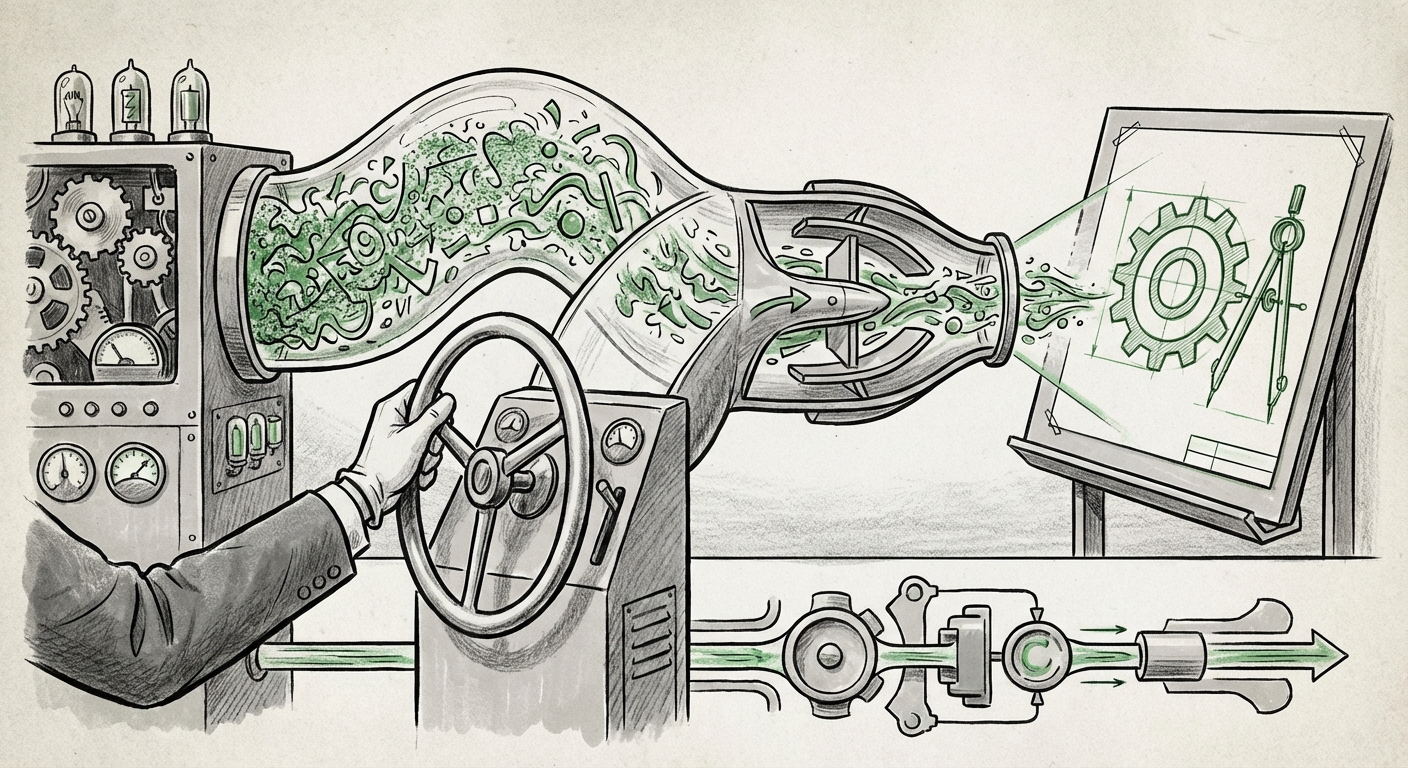
First, the future is hybrid. The winning agents will not be all skills or all reasoning. They will know when to run a skill and when to think. The "thinking" layer decides what to do; the "skill" layer does the doing. Instead of always asking "what is the answer?", the agent will first ask "does a skill exist for this?"
Second, the market will shift toward skill platforms. If skills are reusable, they can be shared, sold, versioned, and combined across companies. A business might buy a "contract review" skill the way it buys software today. Skills become valuable assets, owned, maintained, and traded. This could open an entirely new economy around AI capability, not just AI models.
Third, the hardest problem in AI will change. The difficult part will no longer be teaching a model to know things. It will be teaching the agent when to trust a skill and when to abandon it. Judgment about skill selection and skill boundaries becomes the new frontier of AI research. The agent that knows its own limits will beat the agent that never questions itself.
Fourth, safety and governance become more important. Skills need owners, version numbers, tests, and audits. In regulated industries, medicine, finance, law, a bad skill update could have serious real-world consequences. Expect a wave of new jobs: skill engineers, skill testers, and skill auditors.
Practical Implications for Businesses
If you lead a team or run a company, the study's lessons translate into a clear playbook.
- Find the repeatable work. Skills fit best where you do the same process over and over, with clear steps and clear rules. Those are the jobs to "skill-ify" first. Do not start with messy, creative, judgment-heavy work.
- Build a skill library like a software library. Version it. Test it. Assign someone to own it. Treat skills as infrastructure, not as a science experiment.
- Keep a generalist layer on top. The moment you rely only on skills, you lose the ability to handle novelty. Keep strong general reasoning as the safety net underneath everything else.
- Design for failure. Create fallback paths. When a skill fails or seems uncertain, the agent should hand off to a human or switch to plain reasoning, never plow ahead blindly.
- Test the ugly paths. Most AI demonstrations show the happy path. The real world lives on the edge-case path. Test your skills against unusual inputs, outdated policies, and broken tools before they meet your customers.
Actionable Insights for Leaders
For leaders who want to act this quarter, the takeaways need to be concrete:
- Audit your workflows. List the top ten processes your team repeats every week. Grade each one for stability and clarity. The most stable and clearest are your best candidates for skills.
- Start small. Pick one process, build a skill for it, and measure speed, cost, and error rate before and after. Let the data decide whether to expand.
- Run failure drills. Deliberately test the skill in situations it was not built for. Watch what happens. Fix the fallback. This is how you learn the boundaries before they cost you customers.
- Demand transparency from vendors. When you buy AI tools, ask where the skills come from, how they are updated, and what happens when they fail. If a vendor cannot answer, that is a red flag.
- Invest in people. The humans who decide which skills to trust and when to intervene are the new front line of work. Train them, support them, and listen to them.
Conclusion: The Map Is Not the Territory
Skills are one of the most important ideas in modern AI. They turn a clever talker into a dependable worker. They cut costs, raise quality, and let systems scale to jobs that would overwhelm a single general-purpose model. That is the first half of the story.
The second half is the warning: skills are maps of known territory, and the territory keeps changing. Every organization building with AI agents should ask two questions at the same time: what skills do we need, and what do we do when they fail?
The future of AI belongs to the teams that take both questions seriously. Agents will get more skilled, more specialized, and more useful every year. And the best of them will know precisely when to put the tool down and think. That judgment, sharp, quiet, and built into the system, will be the difference between agents that simply impress us and agents we can trust with real work.