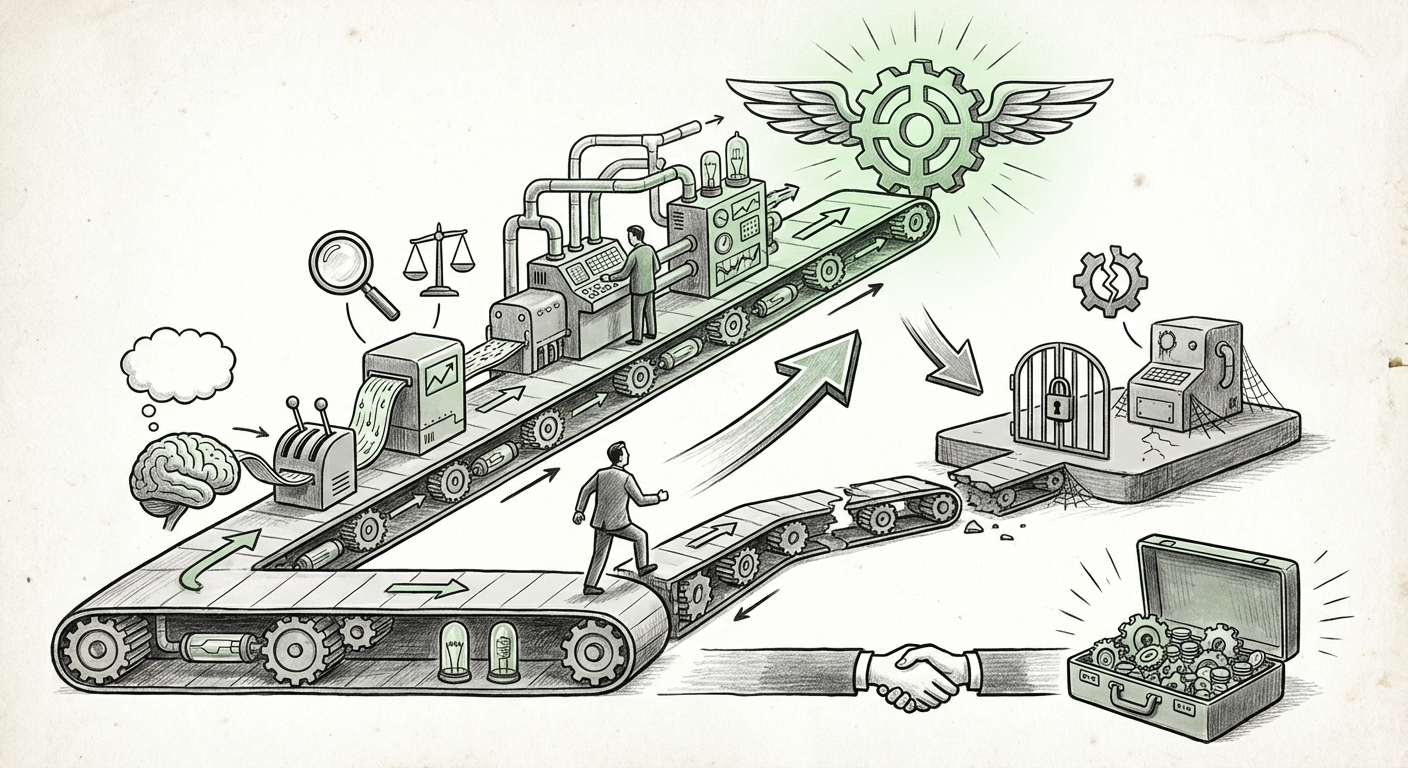
Identity as a Lifecycle, Not a Setting: How AI Is Redefining Who We Are Online
For most of the internet's history, your digital identity was something you set once and forgot. You picked a username, uploaded a profile photo, answered a few security questions, and that was that. Your identity sat there like a framed photograph on a shelf, static, fixed, and increasingly out of date.
That era is ending. A major shift is underway in how we think about identity, and it can be summed up in a single powerful idea: identity is a lifecycle, not a setting. Instead of being a one-time configuration that we lock in and protect, identity is becoming a living, breathing process that grows, changes, and adapts over time. And at the center of this transformation is artificial intelligence.
This article explores what that shift really means, why it matters for businesses and everyday people, and how AI will turn identity from a static snapshot into a dynamic, continuously evolving story.
The Problem with the "Setting" Mindset
To understand why identity must become a lifecycle, we first have to see why the old model is broken. Think of how identity works in the physical world. A person in their twenties is not the same person in their forties. They change jobs, move to new cities, gain new skills, start families, develop new interests, and take on new responsibilities. Their identity is a river, not a rock.
Yet digital systems have treated identity like a rock. Your online profile, the one that decides what ads you see, what content is recommended to you, and whether you are trusted with access to sensitive systems, often reflects who you were years ago, not who you are today. This mismatch creates real problems:
- Stale security: A password or ID check from five years ago says nothing about whether you are really you today.
- Bad personalization: AI systems recommend things based on old data, so they feel out of touch.
- Delayed updates: When your life changes, a new job, a new name, a new role, the system lags behind, sometimes for months.
- One-size-fits-all trust: The same level of verification is applied to a new user and a ten-year customer, which is both annoying and insecure.
The old approach treated identity as a door lock: something you install once and hope never fails. But identity is not a lock on a door. It is more like a living relationship that needs constant care, attention, and recalibration.
What an Identity Lifecycle Actually Looks Like
If identity is a lifecycle, then it has stages, just like any living thing. Understanding these stages is the key to building better AI systems and better digital experiences.
1. Creation
Every identity starts somewhere. A person signs up for a service, an AI agent is spun up, or an employee joins a company. At this stage, the system needs to capture enough information to recognize the entity later. This is the birth of the digital self.
2. Verification
Once created, identity must be checked. Who is this really? Are they who they claim to be? Historically, this was a one-time event, a passport check, an email confirmation, a text code. In a lifecycle model, verification never really ends. It just changes form over time.
3. Evolution
This is where the magic happens. As a person interacts with the world, their identity should grow and evolve. New skills, new connections, new behavioral patterns. An AI system that watches these changes can keep the identity fresh and accurate, continuously learning what is normal and what is suspicious.
4. Adaptation
Sometimes identity needs to change quickly. A user gets married and changes their name. An employee is promoted and needs new access. A customer moves to a new country. In a lifecycle model, these updates are smooth and automatic, not bureaucratic hurdles. The system adapts because it expects change rather than resisting it.
5. Retirement
Finally, identities must be able to end gracefully. Accounts are closed, data is deleted, access is revoked. In the old model, retired identities lingered forever in databases, forgotten, insecure, vulnerable. In a lifecycle model, retirement is a deliberate, secure process that protects the person even after they leave.
Looking at identity this way completely reframes the conversation. We stop asking, "Is this identity valid?" and start asking, "Is this identity in the right place in its lifecycle right now?" That is a much more powerful question.
AI: The Engine That Makes Identity Live
None of this would be possible at scale without artificial intelligence. AI is the force that turns identity from a static record into a dynamic, continuously updated stream. Here is how.
Continuous Authentication
Instead of checking who you are once at login, AI systems can check who you are constantly, in the background, without getting in your way. Behavioral signals like how you type, how you move your mouse, the words you use, and the times of day you are active all form a unique pattern. AI learns this pattern and notices when it changes. If something feels off, the system can quietly request extra verification. This is called continuous authentication, and it treats identity as something alive rather than something locked.
Adaptive Trust
Not all actions are equally risky. Reading an email is low risk. Transferring a million dollars is high risk. AI can adjust the level of identity verification to match the level of risk in real time. This is a huge improvement over the old approach, where every action gets the same blanket security, or worse, where security is so tight that it ruins the experience for everyone.
Personalization That Keeps Up
AI is also what makes personalization aware of lifecycle changes. When you switch careers, change hobbies, or move to a new city, your digital footprint changes too. Modern AI can pick up on those signals and update your experience accordingly. Instead of showing you ads for the job you left three years ago, the system reflects who you are becoming. Identity starts to feel less like a stale profile and more like a mirror.
AI Agents Need Identities Too
Here is a fascinating twist: it is not just humans who have identities anymore. AI agents, digital assistants, automated systems, and robotic processes, are increasingly acting on our behalf. Those agents need their own identity lifecycles. How do we verify an AI agent? How do we track what it has done, when its permissions expire, and when it should be retired? The lifecycle model applies here as well. An agent is given an identity, evolves as it completes tasks, and is finally retired when its job is done. Managing these machine identities is one of the biggest challenges, and biggest opportunities, of the AI era.
What This Means for Businesses
For companies, the shift from identity-as-a-setting to identity-as-a-lifecycle is not an abstract philosophy. It has concrete, practical consequences.
Better Customer Experience
Customers are endlessly frustrated by systems that treat them like strangers on every visit. A lifecycle approach means the system remembers where you are in your journey. It recognizes that a brand-new user needs hand-holding while a long-time customer needs speed. It makes digital experiences feel thoughtful instead of robotic.
Stronger Security
One of the most dangerous ideas in security is that a single check is ever enough. Data is stolen, passwords are leaked, and identities are faked. A lifecycle approach with continuous authentication means that even if an attacker gets past the front door, they will be caught somewhere in the hallway. Security becomes a net rather than a gate.
Simpler Compliance
Regulators around the world are increasingly demanding that companies know who their users are, not just at signup, but over time. A lifecycle model makes it much easier to prove that your knowledge of a customer is current, accurate, and well-maintained. Instead of scrambling to collect data at the last moment, the system has been tracking the lifecycle all along.
New Revenue Opportunities
When you truly understand where a customer is in their lifecycle, you can serve them at exactly the right moment. The person starting a new job needs different products than the person retiring. The student needs different services than the new parent. AI-driven lifecycle awareness lets businesses offer relevance instead of noise, which builds loyalty and revenue.
The Human and Social Side
All of this technology raises important questions for society, and we cannot afford to ignore them.
Privacy in a Perpetual Watch
Continuous authentication means constant observation. That is a double-edged sword. The same AI that keeps your account safe is also watching your every click, keystroke, and pause. We need strong rules about what this data can be used for, who can access it, and how long it can be kept. The lifecycle model must include a robust privacy lifecycle too, one where data is born, used, and eventually deleted.
The Right to be Current
People deserve an identity that reflects who they are now, not who they were years ago. This goes beyond marketing. It affects whether you can get a loan, pass a background check, or access health care. If AI keeps judging us on our past selves, the consequences can be deeply unfair. We need systems that make it easy to update, correct, and even challenge our digital identities.
When Change Is Hard
Not everyone's life changes smoothly, and not everyone's digital footprint is accurate. People who have experienced major life changes, a new name after marriage, a move abroad, recovery from illness, often get stuck with outdated identities that cause real harm. A lifecycle model is an opportunity to build systems that are more compassionate and more forgiving, systems that assume change and make it easy.
Actionable Insights: Preparing for the Identity Lifecycle
Whether you are a business leader, a developer, or simply someone who cares about the future of digital life, there are practical steps you can take today to prepare for this shift.
- Audit your current identity systems. Where are you treating identity as a one-time setting? Which touchpoints require re-verification, and which should? Find the gaps between who your users are and when you last checked.
- Design for change, not against it. When you build a profile or account system, assume it will need updates. Make it effortless for users to adjust their identities and for your AI to notice when something has shifted.
- Invest in behavioral and contextual signals. Static passwords are not going away overnight, but the future belongs to systems that combine many signals, device, behavior, location, timing, and pattern, to form a living picture of identity.
- Think about machine identities now. If your business is deploying AI agents or automation, give those agents proper identities with clear lifecycles. Track what they do, set their permissions, and retire them responsibly.
- Put privacy at the core. A lifecycle produces more data than a snapshot ever did. Bake in transparency, consent, and deletion from the start. Trust is the foundation of any lasting relationship, including the relationship between a person and their own identity.
- Educate your team. Shift the internal conversation from "How do we verify someone?" to "Where is this identity in its lifecycle, and what does it need next?" That one change in language changes everything that follows.
A Future Where We Are Never Finished
The most profound implication of treating identity as a lifecycle is that we accept a simple truth: we are never finished becoming ourselves. The person you were last year is a chapter, not the whole book. The same should be true of the digital systems that represent us.
AI makes this possible. It gives us the power to build identities that breathe, systems that verify us without interrupting us, that recognize our growth, that adapt to our changes, and that respect us enough to let our digital selves retire when the time comes. But technology alone is not enough. We also need ethical design, thoughtful regulation, and a shared commitment to placing human dignity at the center of every algorithm.
The shift from a setting to a lifecycle is one of the most important transitions in the AI era. It will change how we think about security, personalization, trust, and even what it means to be a person in a digital world. The companies and societies that embrace this change early will build deeper, more honest relationships with the people they serve. Those that cling to the old static model will find themselves increasingly out of touch, frozen snapshots in a world that keeps moving.
Identity was never a switch to be flipped. It is a story to be lived. It is time our technology finally caught up with that truth.