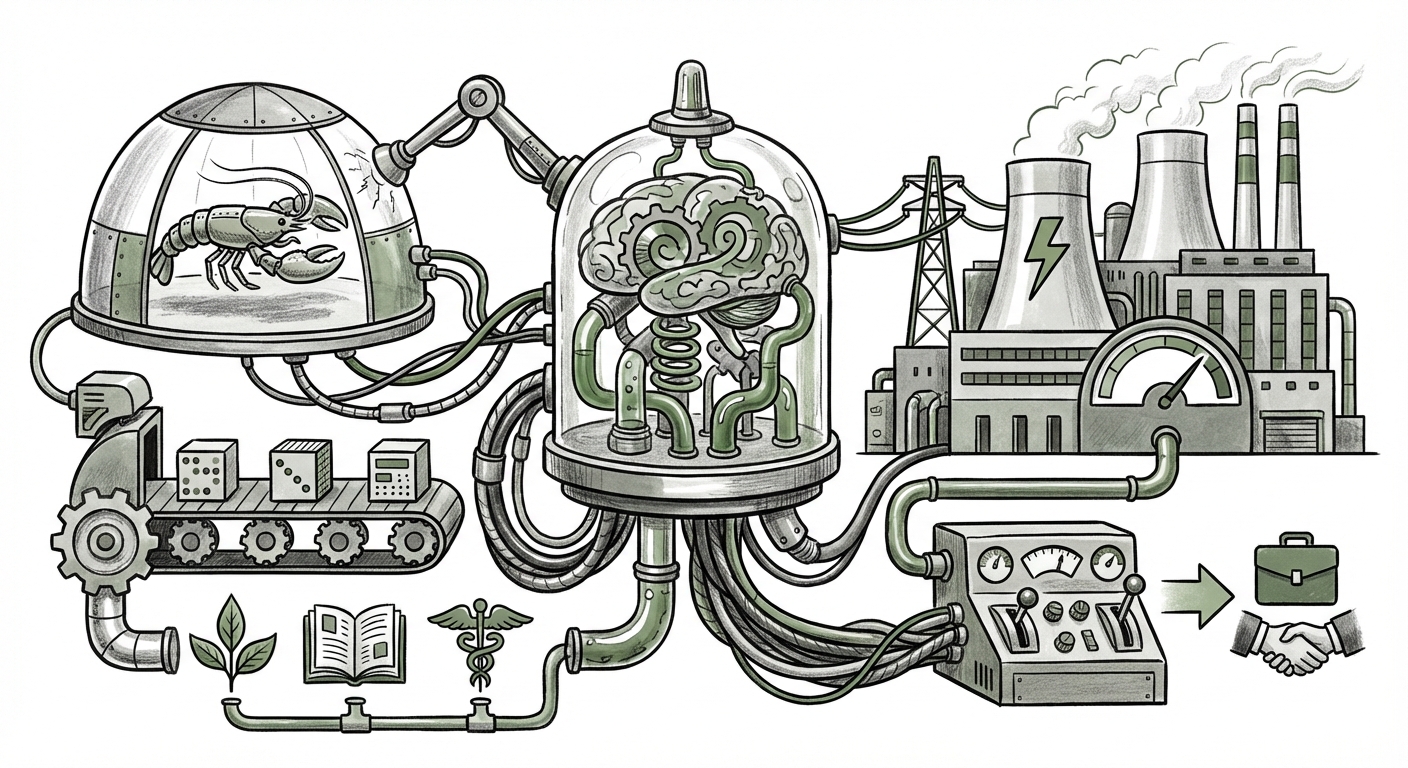
Why AI That Ignores Human Beliefs Predicts the Wrong Actions
Picture an AI assistant trying to guess what you will do next. It watches your patterns. It learns your habits. It thinks it knows you. But there is a serious blind spot. New research shows that AI systems which build "world models", internal pictures of how the world works, often leave out one crucial piece. They ignore what people believe. And when they do, they predict the wrong actions.
This is not a small technical issue. It affects every AI that tries to anticipate human behavior, from self-driving cars to digital assistants to customer service bots. Understanding the flaw is the first step to fixing it. And the lesson for everyone who builds or uses AI is simple: what people believe matters just as much as what is true.
What Is a World Model?
Before we dig into the problem, let's define the term. A world model is an AI system's internal simulation of its environment. Think of it like a video game engine running inside the machine. The AI uses this engine to imagine what might happen next. Then it chooses actions based on those imagined futures.
Self-driving cars use world models to picture the road ahead. The model tracks lanes, traffic lights, other vehicles, and pedestrians. It predicts where objects will be in the next few seconds. Robot arms use world models to plan how to pick up boxes without knocking things over. Game-playing AI uses world models to think several moves ahead.
The idea is powerful: if the AI's model of the world is accurate, its predictions will be accurate. If the model is missing something important, the predictions will fail. This new research shows that many world models are missing something very important indeed: human beliefs.
The Invisible Force That Drives Human Action
Here is a simple truth that is easy to overlook. People do not act on reality. They act on what they believe about reality.
Two people stand under the same gray sky. One believes it will rain and takes an umbrella. The other believes the storm will pass and walks out empty-handed. The sky is identical. The beliefs are different. The actions are different.
This is not a rare quirk. It happens all day, every day, in every part of life. A patient skips a dose of medicine because they believe it does more harm than good. An investor sells a stock because they believe the market is about to crash. A driver stops at a yellow light because they believe a police car is watching. In each case, physical facts alone cannot explain the action. You need to know the belief.
Now think about what this means for an AI world model. If the model only tracks physical things, objects, positions, speeds, shapes, it will see the gray sky but not the umbrella. It will see the medicine bottle but not the doubt. It will see the stock price but not the fear.
In other words, the model is blind to the most important driver of human behavior. And when it tries to predict what a person will do, it gets it wrong. This is exactly what the new research shows: world models that ignore human beliefs predict the wrong actions.
Why Machines Miss Beliefs
Why do so many world models leave beliefs out? There are three big reasons.
First, beliefs are invisible. You cannot detect a belief with a camera, a lidar sensor, or a GPS tracker. Beliefs live inside people's heads. They must be guessed from what people say, how they act, and the context around them. That is hard work, and many AI builders skip it.
Second, the history of AI has focused on the physical world. For decades, the big wins came from teaching machines to see objects, recognize speech, and understand language. Modeling physical reality was the natural first step. Modeling the mental world is much harder.
Third, it is tempting to think that behavior alone is enough. If an AI watches a person's past actions, can't it predict future actions? Sometimes, for short periods, yes. Patterns can carry you a long way. But patterns break when beliefs change. A person's routine changes after new information, a new experience, or a new story. An AI that never models beliefs will be caught off guard the moment a belief shifts.
The research is a strong reminder that visible behavior is only the surface. Underneath the surface sits a web of beliefs, hopes, and fears. Until AI models that web, its predictions will keep missing the mark.
Where This Problem Hurts Most
Let's make this concrete. Several areas face real harm from belief-blind AI.
Autonomous vehicles. A pedestrian steps into a crosswalk, hesitates, then steps back. Why? Because they believe the car did not see them. A self-driving car that cannot model that belief might misjudge the moment. It might creep forward while the human is about to step out, or freeze while the human waits for permission to cross. In traffic, small prediction errors can be dangerous.
Healthcare. An AI system tracks whether a patient takes their medication. The patient often skips doses. The AI flags the behavior but cannot see the cause: the patient believes the side effects are worse than the illness. Without modeling that belief, the system cannot really help. It sends reminders the patient ignores, because forgetfulness was never the problem.
Finance. Markets are powered by beliefs, about earnings, about politics, about risk. A trading AI with a world model made only of numbers will stumble when investor sentiment shifts. It sees the price movement but not the story driving it.
Digital assistants. You usually check the weather at 8 a.m., so your assistant has the forecast ready. But this morning you believe traffic will be heavy, and you are deciding when to leave. The assistant does not know, because it never modeled your belief. It offers weather. You need travel advice. Now imagine that miss repeated a thousand times a day.
Customer service and marketing. People buy products based on what they believe about quality, status, and identity. An AI that tracks clicks and purchases but not beliefs will keep recommending things people do not want, and will not understand why.
In all of these cases, the fix is the same: build world models that include a layer for human beliefs.
What This Means for the Future of AI
The bigger picture is exciting. This research points toward a new generation of AI that is more socially intelligent, AI that does not just track objects, but tracks minds.
We are likely to see world models grow a "theory of mind" layer. In psychology, theory of mind is the ability to understand that other people have their own beliefs, desires, and intentions. Until now, that has been a human skill. Future AI will need it too.
Imagine a robot that can infer what you believe about it, and adjust its behavior to build trust. Imagine a car that understands a pedestrian thinks it is moving too fast, even when the speed is legal. Imagine a tutor that senses a student's belief that they are bad at math, and addresses that belief before teaching the formula.
This shift will make AI feel less like a cold calculator and more like a perceptive teammate. Interactions will become smoother. Predictions will become sharper. AI will finally understand not just what we do, but why we do it.
There is also a deeper lesson. The hardest part of understanding people is not tracking their bodies. It is understanding their minds. Future AI will need to combine physics with psychology. The systems that master that combination will be the ones we trust with our most important decisions.
Practical Steps for Businesses
So what should a business do with this insight? Start with these steps.
- Audit your prediction systems. If your AI predicts customer behavior, employee behavior, or market behavior, ask a hard question: does it model beliefs, or only patterns? Look for moments when a belief shift broke the model. Those moments are clues.
- Collect belief signals. Surveys, reviews, support tickets, and social media comments reveal beliefs. So does the language customers use. Feed these signals into your models. Behavior data tells you what happened. Belief data tells you why.
- Test belief-breaking scenarios. Run simulations where a key belief changes: a rumor about your brand, a competitor's new product, a news story that shifts trust. Watch how your AI reacts. If it fails, you have found a weak spot.
- Keep humans in the loop. For high-stakes decisions, do not let a belief-blind model have the final word. A human who understands the customer's state of mind should review the machine's output.
- Prepare for the next wave. Belief-aware AI is coming. Start building the data pipelines and skills now. The businesses that understand beliefs will predict better, serve better, and earn more trust.
The Responsibility Question
As always in AI, capability comes with responsibility. An AI that can model human beliefs can also shape them. That is a powerful tool. Used well, it can personalize education, support mental health, and help people make better decisions. Used badly, it can manipulate, deceive, and exploit.
Society will need clear rules about how belief-aware AI is used. Transparency matters: people should know when a machine is modeling their beliefs. Privacy matters: beliefs are deeply personal. Ethics matter: influencing beliefs should never happen without consent. These conversations must start now, before the technology races ahead of the rules.
Looking Ahead
This research is both a warning and a promise. It warns us that today's AI is missing a key ingredient in predicting human action. And it points the way toward AI that finally understands the invisible world inside our heads.
For years, progress in AI has been measured by how well machines understand the physical world. The next chapter will be measured by how well they understand us, not just our words, our movements, or our clicks, but our beliefs. The quiet forces behind everything we do.
When AI learns to model beliefs, the possibilities are enormous. Cars will drive more safely. Assistants will feel genuinely helpful. Businesses will serve customers as individuals, not averages. And AI will take a giant step toward becoming something people can truly trust.