Catch AI Issues Before Production: What Local Tracing in the DataRobot CLI Means for the Future of AI
AI is getting faster, and models are getting smarter. But when something goes wrong with a model, finding the problem can feel like looking for a needle in a haystack, in the dark. For years, teams discovered serious AI issues only after their models were already live, making decisions and serving customers. Fixing those issues meant rollbacks, late nights, and a painful loss of trust.
That is starting to change.
A new capability in the DataRobot CLI, local tracing, is making a big difference. It lets developers and data scientists watch exactly what their models are doing on their own computers, step by step, before anything is pushed to production.
This matters more than it might sound. You no longer have to wonder why a model gave the wrong answer. You can see it. You no longer have to wait for a live system to crash to find a bug. You can catch it early, while the problem is still small and cheap to fix.
The idea is simple: catch issues before they reach production. But its impact on the future of AI is huge.
What Is Local Tracing?
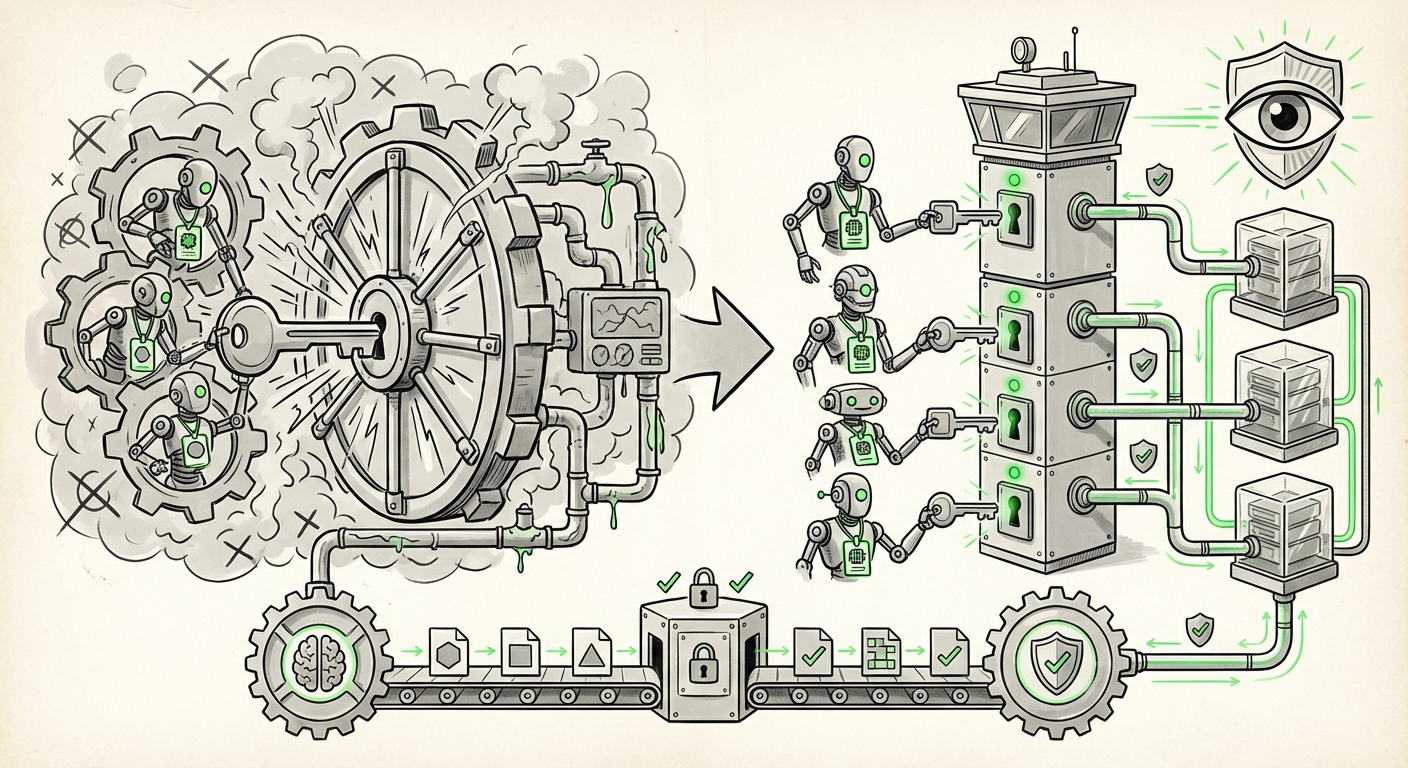
Imagine you order a package online. You can track its journey from the warehouse to your doorstep. Every stop is recorded, so if something goes wrong, you can see exactly where. Local tracing does the same thing for AI models.
A model doesn't just take one input and spit out one answer. It moves data through many steps. In a machine learning pipeline, data might be cleaned, transformed, combined with other data, and then passed through the model itself. If any step goes wrong, a missing value, a wrong format, a strange number, the final answer can be wrong.
Tracing records every step of that journey. It shows you what data went in, what happened to it, and what came out. If a model gives a strange prediction, you can trace backward and find the exact moment things went off track.
The "local" part is just as important. Local means it runs on your own machine, not on a distant cloud server. You don't have to deploy your model just to check its health. You don't have to wait for a shared server to be free. You get instant feedback, right on your computer, while you are still building.
Here is a simple example. Imagine a model that helps a bank decide whether to approve a home loan. The model takes in income, debt, credit history, and other details. If one of those inputs arrives in the wrong format, say, income comes in as text instead of a number, the model might reject a perfectly good customer. Without tracing, you would never know the cause. With local tracing, you would see the exact step where the data broke. You fix it in minutes instead of discovering it weeks later in production.
Local tracing gives developers superpowers: clear visibility, fast feedback, and a simple way to test ideas before sharing them with the world.
Why "Catch Issues Before Production" Matters
Why the big focus on "before production"? Because production is where problems become expensive.
When a model is in production, it is handling real traffic, real customers, and real money. A bug that seems tiny, a feature that got the wrong units, a data format that changed, a slight drift in incoming data, can become a disaster in minutes. The cost of fixing a bug after it reaches users is often many times higher than fixing it early.
Also, fixing AI bugs in production is hard. You are partially blind. Production data is messy, systems are spread across servers, and the model is facing new situations all the time. Debugging live AI is like trying to fix a car engine while the car is driving down the highway.
The better path is called "shifting left." In software development, shifting left means moving testing and problem-checking earlier in the process. Instead of waiting until the end, you check for problems at every stage. Catching an issue at the start is easier, faster, and far less painful.
Local tracing is a perfect example of shifting left for AI. It brings production-style checking into the early stages of development. With a trace in hand, you can see problems in your data, your code, or your model logic before those problems ever meet a customer.
What This Means for the Future of AI
Local tracing in the DataRobot CLI is more than just a nice feature. It is a strong signal about where AI is heading. Here are the biggest trends it points to.
Observability Becomes the Standard
"Observability" is a fancy word for being able to see inside a system and understand what it is doing. For a long time, AI models were treated like magic boxes. You put data in, you got an answer out, and you hoped it was right. Now the bar is rising. Teams expect to inspect, understand, and explain their models. Tools like local tracing make that a normal part of everyday work, not an extra task at the end of a project.
Agentic AI Will Demand Deeper Tracing
The next wave of AI involves agents, systems that take actions, use tools, and complete multi-step tasks. When an AI agent makes a bad decision, you need to trace the whole chain of reasoning to find out why. The groundwork starts with tools like local tracing. If you can trace a simple pipeline today, you will be ready to trace an agent's complex behavior tomorrow.
AI Development Is Growing Up
The CLI, the command-line interface, is a power tool for developers. By putting tracing in the CLI, the message is clear: building AI is becoming real software engineering. It deserves the same serious tools that software developers already use: version control, testing, debugging, and inspection. This is a sign of AI's maturity.
Local-First Development Saves Time and Money
When you can test everything locally before deploying, you save cloud costs, avoid long waits, and reduce wasted compute. The future of AI will be local-first: build fast on your own machine, and push to production only when you are confident.
Traces Build Trust
Soon, teams will share trace logs the way they share code today. A trace becomes evidence, proof that a model behaved in a certain way. That evidence is powerful for audits, for collaboration, and for winning trust from customers and regulators.
Practical Implications for Businesses
What does this mean for your business? Whether you run a small team or a large enterprise, local tracing changes the game in practical ways.
Lower cost of failure. The earlier you find a bug, the cheaper it is to fix. Local tracing helps you catch problems at their most affordable moment. Over time, that adds up to real savings on engineering time, cloud spending, and customer support.
Faster time to market. When developers can test and debug quickly on their own machines, they ship faster. They don't have to wait for complex deployments just to check if something works. Confidence up front means speed at the end.
Better teamwork. Data scientists and software engineers often speak different languages. A trace gives them a shared picture of what the model is doing. They can point at the same trace and discuss the same problem. That clears up confusion and speeds up collaboration.
Stronger governance. Many industries have rules about accountability. If a model makes a decision, someone needs to explain why. Local traces create a record of the model's behavior, a foundation for audits, reports, and regulatory conversations.
Skills become the differentiator. Tools get better, but people still matter. The organizations that win will invest in teaching their teams how to inspect, debug, and reason about models. Curiosity and attention to detail will become as important as math skills.
Actionable Insights
Ready to put these ideas to work? Here are practical steps to adopt local tracing and a shift-left mindset in your AI projects.
- Run a trace at every milestone. Before you move a model from experimentation to production, run a trace and review it carefully. Make it a habit, not an afterthought.
- Review traces like code. Add a "trace review" step to your team's workflow. When someone changes a model, let others review a trace of its behavior. Two sets of eyes catch more problems.
- Turn traces into tests. When a trace reveals a bug, save that case and turn it into a test. Every bug you catch becomes a guard for the future, it won't slip through again.
- Build a failure catalog. Write down common problems you have seen in traces: missing data, wrong types, silent failures. Share it with your team. Learning from past bugs is one of the fastest ways to prevent new ones.
- Train for observability. Give your team time to learn tracing skills. The more comfortable your team is with inspecting models, the more confident your releases will be.
- Encourage experimentation. Because local tracing catches issues early, experimentation becomes safer. Tell your team to try bold ideas locally, that is how breakthroughs happen.
The Future Is Clear
The days of treating AI as a mysterious black box are ending. With local tracing in the DataRobot CLI, developers have a clear window into what their models are doing before those models reach the real world. That means fewer surprises, lower costs, and far more confidence.
This is the direction all of AI is heading. The future belongs to teams that can see, understand, and correct their models early. In that future, catching issues before production isn't just nice to have, it's the standard. And thanks to tools like local tracing, that future is already here.