Why a Predictive AI Foundation Is the Fastest Route to Agentic AI Value
Artificial intelligence is at another turning point. For the past several years, the biggest wins have come from AI that predicts: What will customers buy next? Which machines will fail? Which transactions are fraudulent? Today, the spotlight is shifting to something called agentic AI, AI systems that don't just predict, but actually take action. They can plan, use tools, make decisions, and complete tasks on their own. The promise is huge. But there is a critical question: how do businesses get there the fastest? The answer emerging from the latest industry thinking is surprisingly simple: build your predictive AI foundation first. In fact, a predictive AI foundation is the fastest path to real agentic AI value.
This article explores what that means, why it matters, and how business and technical leaders can use this insight to move forward with confidence.
What Exactly Is a Predictive AI Foundation?
Before we talk about the future, we need to define the present. A predictive AI foundation is the set of data, models, and processes a company uses to look at the past and make informed guesses about the future. It is the layer of AI that answers questions like:
- How much demand will we see next month?
- Which customers are likely to cancel their subscriptions?
- What is the probability that this machine will break down within the next thirty days?
- Which job candidates are most likely to succeed?
Predictive AI has been around for a long time in various forms. Early versions used simple statistics. Modern versions use machine learning, neural networks, and large amounts of historical data. But the core idea stays the same: learn patterns from the past, then use those patterns to predict what happens next.
For many organizations, predictive AI is already delivering value. It powers recommendation engines, risk scoring, preventive maintenance schedules, dynamic pricing, and demand planning. These systems are not just experiments. They are embedded in daily operations. They run in production, monitor themselves, and continuously update with new data.
That last part is the key. A reliable predictive AI foundation is not just a single model. It is an entire infrastructure: clean data pipelines, feature stores, model training and deployment tools, performance monitoring, retraining cycles, and clear governance. It is the muscle memory of an organization learning to trust AI decisions.
What Makes Agentic AI Different?
Agentic AI represents the next step in the evolution. Instead of simply giving a prediction or a recommendation, an agentic AI system acts on that prediction. It does not just tell you that a customer is likely to churn. It can automatically send a tailored retention offer, schedule a follow-up email, update the customer record, and escalate the case to a human if needed.
Think of predictive AI as an advisor and agentic AI as an employee. The advisor looks at the situation and says, "Here is what I think will happen." The employee then decides what to do and actually does it. Agentic AI combines reasoning, planning, memory, and tool use. It can break a big task into smaller steps. It can interact with other software. It can navigate APIs, update databases, generate reports, and coordinate with other systems.
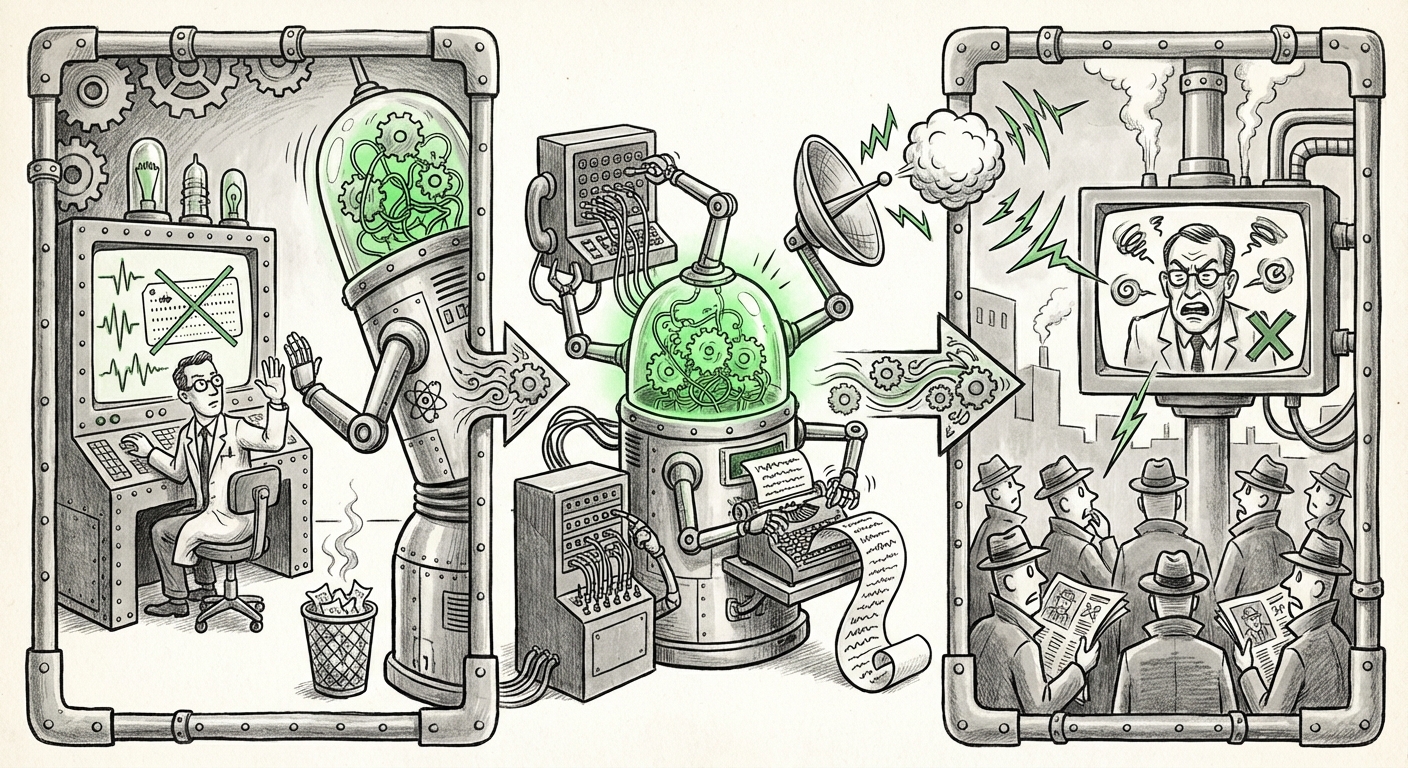
This is exciting because it moves AI from giving insights to creating outcomes. But it also raises the stakes. An agent that acts on bad predictions can cause real damage. In the same way you would not hire an employee with a terrible track record, you should not let an AI agent take meaningful action if the predictions it relies on are unreliable.
This is exactly why the predictive foundation matters so much.
Why Predictive First Is the Fastest Path
At first glance, it might seem like jumping straight to agentic AI is the fastest route. Why spend months tuning prediction models when you can deploy an agent that figures things out on its own? Without a predictive foundation, an agent is essentially blind. It can reason, but it has nothing solid to reason about. It lacks the historical context, the calibrated probabilities, and the feedback loops needed to make good decisions.
A strong predictive foundation provides several critical ingredients for agentic success:
1. Reliable Judgment
Predictive models give agents a sense of what is likely to happen. This is the core judgment an agent needs to choose its actions. If a predictive model tells an agent that a customer has a 90 percent chance of leaving, the agent can confidently act. If the model is vague or unreliable, the agent is guessing.
2. Clean and Accessible Data
Predictive AI projects require significant work to organize data. They build data warehouses, clean messy records, and create reliable data pipelines. Agentic AI needs that same data to understand its environment. Organizations that already have a solid data foundation can deploy agents much faster.
3. Model Operations and Monitoring
Predictive AI forces companies to build the operational machinery around models: versioning, testing, deployment, monitoring, and retraining. This same machinery is exactly what agentic AI systems need. In fact, agentic systems are even more complex because they act over time. If your organization already knows how to monitor model drift, you are far ahead of the game.
4. Institutional Trust
People trust AI at different levels. When an AI system is first introduced for prediction, stakeholders learn to check its accuracy and understand its limitations. Over time, they develop trust. By the time agents are introduced, decision-makers are already comfortable with AI-driven insight. That makes it easier to accept AI-driven action.
5. Feedback Loops
Predictive AI improves over time through feedback. When a prediction is made, you track what actually happened and feed that information back into the system. Agentic AI also needs feedback loops to learn whether its actions were effective. A predictive foundation teaches the entire organization how to close the loop between prediction, action, and outcome.
The Practical Journey from Predictive to Agentic
The transition to agentic AI does not have to be a big bang. The most practical path is gradual. Start with predictions embedded into human workflows. Let the AI recommend and let people act on the recommendations. Measure the outcomes. Then, once the predictions are proven, you can begin adding limited automation for low-risk decisions. Over time, expand the scope of automated actions and the level of autonomy.
For example, an e-commerce company might first build a model that predicts which customers are at risk of abandoning their shopping carts. This model outputs a risk score to a customer service dashboard. Staff use that score to send personalized offers. The company tracks which offers work best. Once the model is reliable, they give a chatbot permission to send offers automatically when the risk score passes a high threshold. The chatbot is now an agent, but it relies entirely on the predictive model's judgment. If the model improves, the agent gets smarter. If the model fails, the agent fails too.
This step-by-step approach is much faster in the long run than trying to build a fully autonomous agent from scratch. It also creates a natural testing ground. You can evaluate the value of each agentic feature before you scale it.
What This Means for Business Strategy
For business leaders, this insight changes the priority list. The message is not "ignore generative AI" or "skip agents." The message is: make sure your predictive engine is strong first. That means investing in data quality, feature engineering, model validation, and monitoring. It means treating AI as a product rather than a side project.
Many companies have multiple isolated predictive models built by different teams. Some are stale. Some were built for a single use case and never updated. The smart move is to consolidate these into a shared AI foundation. This foundation can serve many downstream applications, including future agentic systems. Think of it as building a reusable brain instead of hundreds of disconnected reflexes.
Here is what that shared foundation should include:
- A central data layer with clean, consistent, and well-governed data.
- A model registry so teams can see what models exist, how they perform, and who owns them.
- Standard evaluation metrics and thresholds for accuracy, bias, and reliability.
- Automated monitoring and retraining pipelines.
- Clear policies about which decisions can be automated and which require human review.
These elements not only make agents possible, they also make AI more profitable. When predictions are accurate, businesses can reduce waste, improve efficiency, and create better customer experiences. Every small improvement in predictive accuracy can result in large financial gains at scale.
Why Trust, Governance, and Explainability Matter More Than Ever
Agentic AI amplifies both the upside and the downside. If a predictive model is biased, an agent that acts on it will scale that bias thousands of times faster than a human team ever could. That makes governance a core part of the predictive foundation, not an afterthought.
Organizations need to be able to answer questions like: Why did the agent make this decision? What data informed that prediction? Which model was used? What was the confidence level? Was there a human in the loop? Without such transparency, it is nearly impossible to earn the trust of customers, regulators, and employees.
Explainability is important for another reason. If an agent makes a mistake, the organization needs to diagnose the root cause quickly. Often the mistake is not in the agent's logic but in the prediction it relied on. A strong monitoring system with model-level logs makes it much easier to find and fix the problem.
Society as a whole also benefits when agents are built on transparent, accountable foundations. As AI takes on more consequential actions, in healthcare, finance, logistics, and even government, the public will demand to know how decisions are made. Organizations that have been disciplined about predictive governance will be far better positioned to meet that demand.
Actionable Insights for Your AI Roadmap
If you are a CTO, data science leader, or product manager, here is how to apply the "predictive foundation first" idea today:
Audit Your Existing Models
Take inventory of every predictive model in your organization. How accurate is it? Is it still in production? Does it have a clear owner? Retire models that are not delivering value and update models that are outdated. This audit tells you the true health of your foundation.
Close the Data Gaps
Identify the data you need for the predictions that matter most. Are you collecting real-time events? Do you have clean historical records? Are there data silos between departments? Fixing these gaps is the highest-leverage work you can do.
Standardize Model Deployment and Monitoring
Treat every model like a production system. Use DevOps practices for machine learning. Automate testing, versioning, and rollback. Build a control panel that gives every team visibility into model performance. The more standardized your process, the faster you can add new models and eventually agents.
Start with Narrow Agentic Use Cases
Pick one repetitive, well-defined task that relies on a high-accuracy prediction. Give the agent a limited toolset and clear boundaries. Run it in parallel with human workers. Observe how often the agent makes good decisions. Then gradually expand its autonomy. This narrow focus reduces risk while building the skills your team needs for bigger challenges.
Design for Human Oversight
Even the best predictive foundation cannot guarantee perfect predictions. Design agents to escalate uncertain situations to humans. Define confidence thresholds clearly. Make sure a human can override any agent action. This creates a safety net and also teaches the AI system by showing it what humans do differently.
Invest in a Continuous Learning Culture
AI is not a one-time project. It is a continuous cycle of predictions, actions, outcomes, and learning. Build teams that think in feedback loops. Encourage them to ask, "What did we learn from this month's predictions?" and "How can we improve the next generation of models?" That mindset is what ultimately powers both predictive and agentic AI.
The Future of AI Is a Journey, Not a Leap
The excitement around agentic AI is completely justified. The idea of digital coworkers that plan, reason, and execute tasks has the potential to reshape industries. But the fastest way to get there is not to rush into autonomy. It is to build a rock-solid predictive foundation that gives agents the judgment they need to act wisely.
Organizations that already have strong predictive capabilities should view this as a competitive advantage. They are closer to agentic value than they may realize. By extending existing models with orchestration layers and tool access, they can begin delivering agentic outcomes in months rather than years. Organizations that are still early in their AI journey should slow down and build the basics properly.
There is one more trend worth noting. As the predictive foundation improves, agentic AI will improve along with it. The two are not separate technologies. They are deeply connected. Advancements in predictive modeling, richer data, better uncertainty estimation, causal reasoning, will directly translate into more reliable and more powerful agents. Conversely, if you invest only in sophisticated reasoning and tools while ignoring the predictive core, your clever agent will ultimately have nothing smart to act on.
It is tempting to chase the newest trend. But the fundamentals still win. The organizations that focus on clean data, accurate predictions, robust governance, and disciplined operations will be the ones that unlock the true value of agentic AI. They will not just be able to build a prototype agent. They will be able to scale autonomous systems safely, profitably, and responsibly.
In the end, the path from predictive AI to agentic AI is not a race to abandon the old in favor of the new. It is a staircase that builds step by step. The view from the top will be remarkable, but only those who laid a solid foundation will get to enjoy it.