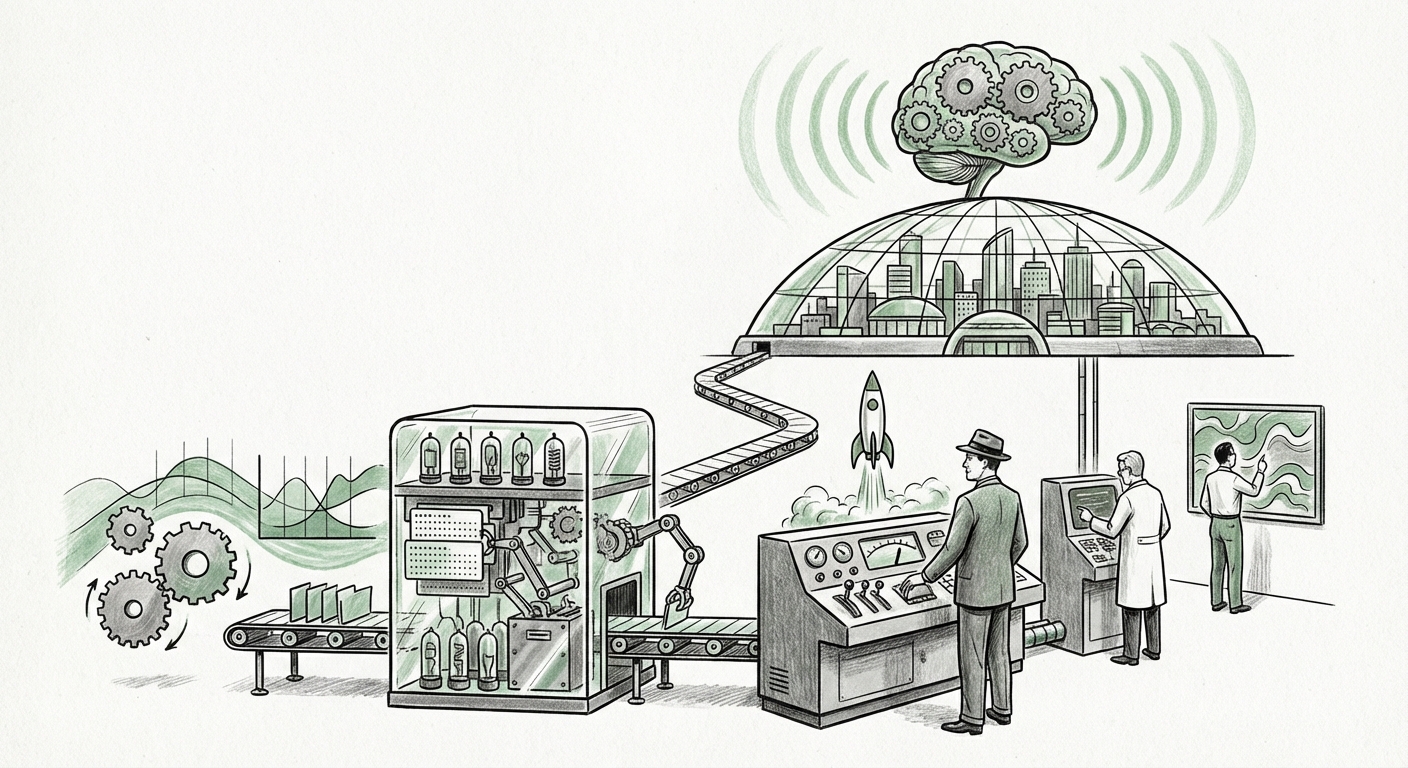
Cerebras CS-4 Doubles AI Performance on the Same Chip, What It Means for the Future of AI
Artificial intelligence has a serious problem: it is hungry for computing power. Every new AI model seems to need more chips, more energy, and more money than the last one. For years, the answer to "we need more power" has been "build a bigger machine."
But a major new announcement flips that idea on its head. Cerebras has unveiled the CS-4, its newest AI computing system. The headline is simple: the CS-4 delivers double the performance on the same chip. No bigger silicon. No brand-new manufacturing process. Just a dramatic leap in what the existing hardware can do.
This single announcement could change how we think about AI hardware, what it costs, and how fast the entire field can move. Efficiency is suddenly the most exciting word in AI.
What Just Happened? The CS-4 Announcement Explained
Cerebras is not a household name like some tech giants, but inside the AI world it is a serious player. The company has made a name for itself by building some of the largest computer chips in the industry. These are not the small processors inside your laptop. They are massive, powerful systems built for the heaviest AI workloads on the planet.
With the CS-4, Cerebras has done something remarkable: it doubled performance without enlarging the chip. Think of it like getting a car that goes twice as fast without adding a bigger engine or more fuel. That kind of gain usually comes from years of small, gradual improvements. The CS-4 delivers it in a single leap.
The "same chip" part is the key detail. In the past, performance gains in AI hardware usually meant one of three things: a larger chip, a newer manufacturing process, or more chips working together. The CS-4 breaks that pattern. It shows that clever design and better engineering can unlock huge gains from hardware that already exists.
This matters because the industry is hitting real walls. Chips cannot easily get much bigger. Manufacturing improvements are slowing down. And simply adding more chips creates new problems with speed, energy, and cost. The CS-4 offers a different path: do more with what you already have.
Why "Same Chip" Is a Bigger Deal Than It Sounds
It is tempting to skim past the phrase "on the same chip." But for anyone who tracks the AI industry, those four words are the real story.
AI systems are built on a simple bargain. You feed a computer enormous amounts of data, it finds patterns, and it learns to make predictions. But this takes serious horsepower. Training the largest AI models can cost enormous amounts of money, partly because they need many powerful chips running for weeks at a time.
Now imagine cutting that work in half. If a single chip can do twice as much, you need half as many chips. Your training runs finish twice as fast. Your electricity bill drops. Your data center takes up less space. Every part of the AI pipeline becomes cheaper and quicker.
That is the promise of the CS-4. It doesn't just make one machine faster. It changes the economics of AI for everyone who builds on top of it.
The technical community will dig into exactly how Cerebras achieved this jump, and competitors will surely try to match it. But the bigger lesson is already clear: innovation in AI hardware is not dead. In fact, it might just be getting started.
From Brute Force to Brain Power: The New Era of AI Hardware
For the last decade, the AI industry has leaned on brute force. Want a smarter model? Throw more chips at it. Want faster results? Build a bigger cluster. This approach worked, but it has become expensive and wasteful.
The CS-4 signals a shift toward what you might call brain power over brute force. Instead of asking "how can we build something bigger?", engineers are now asking "how can we make something smarter?" The answers are coming from better chip design, better software, and cleverer ways of moving data around.
This shift matters for the whole AI ecosystem. Small improvements in efficiency can unlock massive changes in what is possible. A model that was too expensive to train becomes affordable. A use case that was too slow for real-time answers becomes instant. The gap between "impossible" and "routine" is often just a matter of performance per chip.
There is another reason this matters: the world has only so many chips. Supply chains are stretched, and demand for AI hardware keeps climbing. Making each chip do more work eases that pressure. It also helps smaller companies and researchers who cannot always buy their way out of hardware shortages.
What the CS-4 Means for Businesses
For business leaders, the CS-4 announcement is not just a tech story. It is a preview of cheaper, faster AI.
Companies today face a tough choice when they want to use AI. Building their own models is powerful but pricey. Renting computing power from cloud providers is easier but can add up fast. Either way, the cost of computing is one of the biggest barriers to AI adoption. The CS-4 attacks that barrier directly.
If you are running an AI team, this matters in concrete ways. Training time is money. A system that doubles performance can cut the time it takes to bring a new model to market. That means faster innovation, quicker responses to customers, and less time waiting around for results.
It also matters for companies that run AI around the clock. Think of a bank detecting fraud, a hospital analyzing medical scans, or a retailer predicting what customers will buy next. These systems never sleep. Reducing the computing cost of those always-on workloads has a direct impact on the bottom line.
Leaders should also watch for a ripple effect. When one company raises the performance bar, competitors respond. Over the next couple of years, we can expect to see efficiency gains spread across the entire AI hardware market. Prices should fall, performance should climb, and the entry ticket for serious AI work should shrink.
What This Means for Society and the Planet
The benefits of the CS-4 go far beyond business spreadsheets. There is a growing environmental cost to AI, and efficiency is one of the best tools we have to fight it.
Data centers already consume a significant share of the world's electricity, and AI is making that number bigger. Every training run, every chatbot response, and every AI-generated image draws power from the grid. The carbon footprint of AI is becoming hard to ignore.
That is why "double the performance on the same chip" is also an environmental story. If AI workloads can run on half the hardware, they can use far less energy. That is a huge win for sustainability, and for the budgets of every company paying those power bills.
There is a social angle too. AI has the power to help with some of the world's biggest problems: better disease detection, smarter farming, and more efficient energy use. But those applications only help people if they are affordable enough to deploy widely. Cheaper, more efficient hardware makes AI more accessible to hospitals, schools, startups, and governments that cannot afford luxury computing budgets.
Efficiency, in other words, is not just an engineering goal. It is a way of spreading the benefits of AI more fairly across society.
Actionable Insights: How to Prepare for the Efficiency Era
So what should you do with this information? Whether you are a technical lead, a business owner, or just someone who follows AI, here are a few practical steps to keep in mind.
1. Watch the efficiency numbers, not just the raw specs. For years, chipmakers bragged about raw power. The CS-4 reminds us that performance per chip matters just as much. When comparing AI hardware, look at how much useful work you get per dollar and per watt, not just the impressive headline number.
2. Reconsider your AI budget assumptions. If you have stayed away from AI because it seemed too expensive, the trend is moving in your favor. Hardware efficiency is climbing, which means the cost of AI will likely keep falling. This might be a good moment to revisit projects you previously shelved.
3. Plan for shorter training cycles. If you build AI models, faster hardware changes your planning. Things that took weeks may soon take days. That allows for more experiments, faster iteration, and a real competitive edge for teams that adapt quickly.
4. Think about energy as a strategic resource. With efficiency gains, energy needs drop. But the opposite can also happen: teams may use the savings to run even bigger models. Be intentional about whether you want lower costs, bigger ambitions, or a smart mix of both.
5. Keep an eye on the market. The CS-4 is one announcement, but it is part of a broader wave of AI hardware innovation. New systems, new architectures, and new approaches are arriving constantly. Staying informed is no longer optional for anyone making technology decisions.
The Road Ahead
The CS-4 is a snapshot of where AI hardware is heading: smarter, more efficient, and more accessible. The days of solving every problem by adding more chips are fading. In their place, we are seeing an era where engineering creativity does the heavy lifting.
This is good news for AI as a whole. It means the field can keep growing even as physical limits close in. It means more people can participate. And it means the benefits of AI, better medicine, smarter businesses, faster science, can reach more corners of the world.
Of course, one system does not change everything overnight. Competitors will respond. Prices will shift. The market will sort out which innovations win. But the direction is clear: the future of AI will be built on efficiency, not just size.
Cerebras has thrown down a marker with the CS-4. If doubling performance on the same chip is possible now, imagine what the next few years will bring.
Conclusion
When a company doubles performance without changing the chip, it sends a message to the entire AI industry: there is still plenty of room to grow. The CS-4 is a technical achievement, but its real significance is economic and social. It makes AI faster, cheaper, and greener. It gives businesses new options and gives the world new reasons to believe that AI can scale responsibly.
For anyone building with AI, or planning to, the takeaway is simple. The tools are getting better, the costs are coming down, and the future is being written by people who understand that doing more with less is the smartest innovation of all.