Why AI Professionals Need Data Engineering Skills: The Complete Guide to What's Coming Next
There is a quiet revolution happening in the world of artificial intelligence. It is not about bigger models, faster chips, or flashier demos. It is about something far more basic, yet far more powerful: data. The AI industry is learning a hard lesson, a model is only as smart as the data it is built on. And the people who understand how data is collected, cleaned, stored, and moved are becoming the most valuable players in the field.
This shift is the core of a growing conversation among AI professionals. The message is clear: if you work in AI, you can no longer afford to ignore data engineering. It is no longer just the job of a separate team in the basement. It is the foundation of every successful AI system, and the future of AI depends on getting it right.
The Hidden Engine Behind Every AI System
Think of an AI model like a high-performance sports car. The algorithm is the engine, the computing power is the fuel, and the data is the road. You can have the finest engine ever built, but if the road is full of potholes, washed-out bridges, and dead ends, the car will never reach its destination. In fact, it will probably crash.
This analogy captures why data engineering matters so much. Data engineering is the practice of building and maintaining the systems that move, transform, and store data. It includes everything from writing code that pulls information from a database, to building pipelines that stream millions of records every minute, to making sure the data is clean, consistent, and secure.
For years, AI professionals treated data engineering as someone else's problem. They focused on building clever models and tuning parameters. But the reality is that most AI projects do not fail because of the model. They fail because of the data. Messy data, missing data, biased data, outdated data, these are the real reasons AI initiatives fall short.
Understanding data engineering helps AI professionals see the whole picture. It helps them ask better questions, build better systems, and avoid the embarrassing situation of delivering a model that performs brilliantly in the lab and terribly in the real world.
The Shift from Model-Centric to Data-Centric AI
One of the biggest trends in the industry is the move from a model-centric approach to a data-centric approach. In the old way of thinking, the model was everything. Teams would constantly tweak the algorithm, adjust the settings, and try to squeeze out better results by changing the code.
The new way of thinking flips this on its head. Instead of changing the model to fit the data, teams change the data to fit the model. They focus on improving the quality, diversity, and relevance of the training data. This simple shift has produced dramatic improvements in performance in many real-world applications.
Why does this matter for AI professionals? Because it means the most important skills are no longer just mathematics and coding. The most important skills now include understanding data pipelines, knowing how to find and fix data errors, and designing systems that continuously feed better data into the model over time.
This is a huge opportunity. AI professionals who embrace data engineering are not just keeping their jobs relevant, they are positioning themselves at the center of the next wave of AI innovation.
The Core Concepts Every AI Professional Must Understand
So what exactly should an AI professional know about data engineering? The field is broad, but there are a few core concepts that matter most. These are the building blocks that connect the world of raw data to the world of intelligent models.
1. Data Pipelines and Orchestration
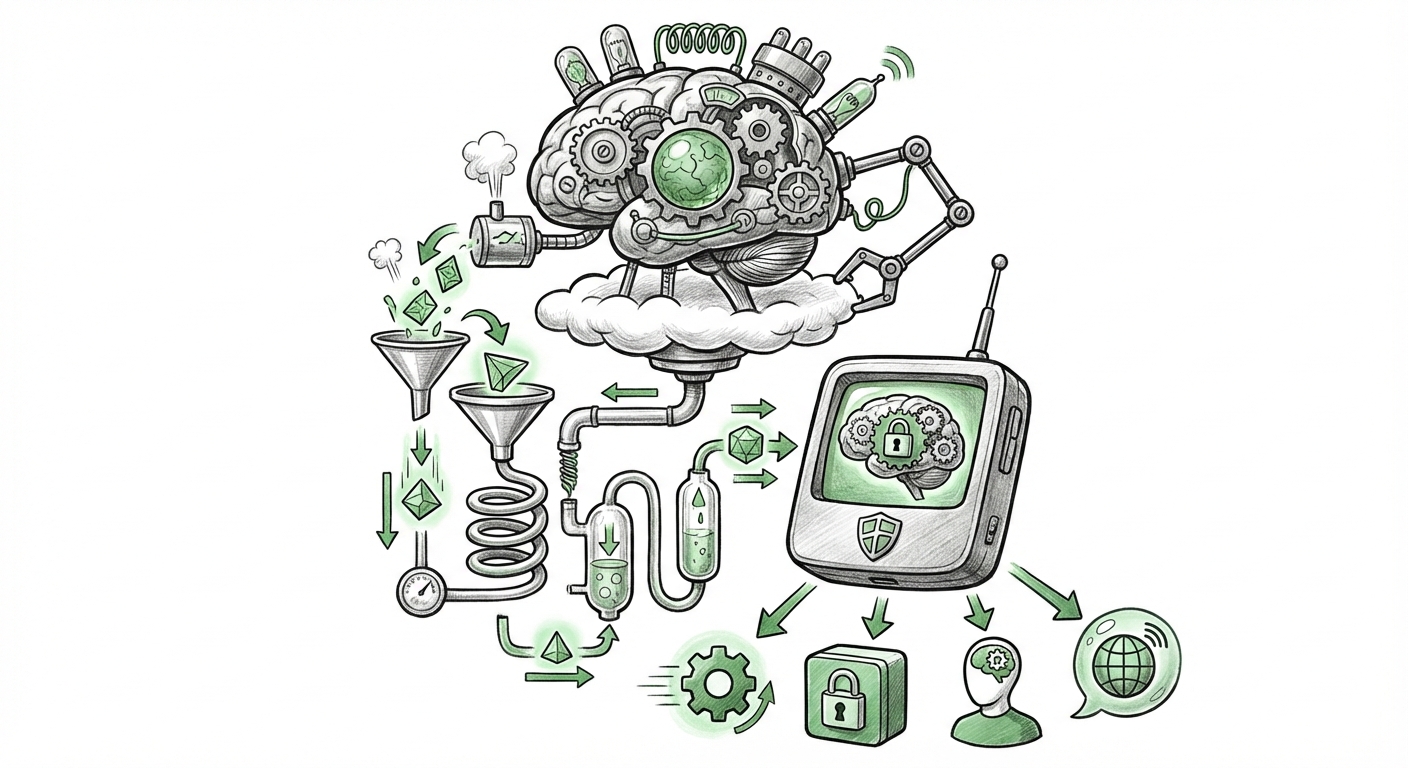
A data pipeline is a series of steps that take raw data from one place, transform it, and deliver it somewhere useful. Think of it like a factory assembly line. Raw materials go in one end, and finished products come out the other.
AI professionals need to understand how these pipelines work because a model is only as good as the pipeline that feeds it. If the pipeline is broken, the model gets no data. If the pipeline is slow, the model gets stale data. If the pipeline is messy, the model gets garbage.
Modern pipelines often run on schedules, processing new data every hour, every minute, or even every second. This is called orchestration, the art of coordinating all these moving parts so they work together smoothly. Understanding orchestration helps AI professionals spot bottlenecks and build systems that can handle real-world scale.
2. Storage: Lakes, Warehouses, and Everything Between
Data needs a home, and the choices you make about where data lives have a massive impact on AI success. Two terms dominate the conversation: data lakes and data warehouses.
A data warehouse is like a tidy library. Everything is organized, labeled, and easy to find. It is perfect for structured data, things like sales records, customer information, and financial transactions. A data lake is more like a giant shed where you throw everything in, neat or not. It holds massive amounts of raw data in any format, which is great for experimentation and machine learning.
AI professionals do not need to become database administrators, but they do need to know the difference. The choice of storage affects how fast models can access data, how fresh the data is, and how much it costs to run the system. Getting this wrong can turn a promising AI project into a slow, expensive disaster.
3. Data Quality: The Silent Killer of AI
There is an old saying in computer science: garbage in, garbage out. Nowhere is this more true than in AI. A model trained on bad data will produce bad predictions, even if the algorithm is mathematically perfect.
Data quality problems come in many shapes. There are missing values, where important information simply is not there. There are duplicates, where the same record appears two or ten or a hundred times, skewing the results. There are outliers, where a single wrong number throws off the entire pattern. And there is bias, where the data does not represent the real world fairly.
The best AI professionals treat data quality as a first-class concern. They build checks and tests that catch problems before they reach the model. They monitor data over time to catch drift, where the data slowly changes and the model slowly becomes irrelevant. This kind of vigilance separates successful AI teams from those that constantly fight fires.
4. Governance, Privacy, and Security
As AI becomes more powerful, the rules around data are getting stricter. Governments around the world are passing laws about how personal data can be collected, used, and stored. Companies are facing serious fines if they get it wrong.
Data governance is the system of rules and practices that keep data safe, legal, and trustworthy. It covers who can access what, how long data is kept, and how it is protected from hackers and leaks.
AI professionals who ignore governance are taking a huge risk. A single data breach or a single violation of privacy law can destroy a company's reputation and cost millions. Understanding the basics of governance is no longer optional, it is a core part of responsible AI development.
Real-Time Data: The New Frontier
Another major trend is the move from batch processing to real-time processing. In the old days, data was collected overnight and analyzed the next morning. Today, businesses want answers instantly. They want to detect fraud the moment it happens, recommend a product while the customer is still browsing, and adjust prices based on live demand.
This shift is transforming AI. Real-time AI requires real-time data engineering. Instead of loading data once a day, systems must stream data continuously and make decisions in milliseconds.
For AI professionals, this is both a challenge and an opportunity. It requires new skills in streaming technologies and event-driven architectures. But it also opens the door to applications that were unimaginable just a few years ago. The future of AI is not just smart, it is instant.
Feature Stores and the Reuse Revolution
One of the most practical innovations in AI data engineering is the rise of the feature store. A feature is a measurable property used by a model to make predictions. For example, a model that predicts house prices might use features like square footage, location, and number of bedrooms.
In the past, every team built its own features from scratch, duplicating work and creating confusion. A feature store is a central place where features are defined, stored, and shared across the entire organization.
This is a game changer. It means teams no longer waste time reinventing the wheel. They can reuse proven features, ensure consistency between training and live systems, and get models into production much faster. AI professionals who understand feature stores are better equipped to build scalable, maintainable AI systems.
What This Means for Business Leaders
This shift toward data engineering is not just a technical story. It has huge implications for business leaders, executives, and anyone responsible for investing in AI.
The first implication is simple: data is a business asset, not just an IT expense. Companies that invest in solid data foundations will get far more value from their AI initiatives. Companies that treat data as an afterthought will watch their AI budgets go up in smoke.
Leaders should ask tough questions before launching AI projects. Where does our data come from? How do we know it is accurate? Who is responsible for keeping it clean? Can it be accessed quickly and securely? If leaders cannot answer these questions, the AI project is not ready to begin.
The second implication is about talent. The most sought-after professionals in the coming years will be those who sit at the intersection of AI and data engineering. They understand both the algorithms and the data that powers them. Companies should invest in training their existing teams and hiring people with this rare combination of skills.
The Data Mesh and Organizational Change
Another important trend is the data mesh, a new way of organizing data work across a company. Instead of having one central data team that everyone depends on, a data mesh distributes data ownership to the individual business teams. Each team owns its own data products, while a central group provides the tools and standards.
This approach has gained popularity because it solves a common problem: the central team becomes a bottleneck. When every department needs data, the central team gets overwhelmed, and everyone waits.
For AI professionals, the data mesh represents a new way of collaborating. It means working closely with business teams, understanding their needs, and building data products that everyone can trust. It is a shift from being a service provider to being a partner.
The Human Side of Data Engineering
It is easy to get lost in the technology, but the human side of data engineering is just as important. Data does not appear out of thin air. It is created by people, customers making purchases, patients visiting doctors, drivers navigating streets, citizens filling out forms.
AI professionals who understand this human element build better systems. They think about where bias enters the data. They think about whose voices are missing. They think about the ethical implications of using personal information, even when it is technically legal.
The future of AI will be shaped as much by ethics as by technology. Data engineering is where ethics meets the ground. It is where abstract principles become concrete decisions about what data is collected, how it is labeled, and who gets to use it.
Actionable Insights: Where to Start
For AI professionals who want to level up, the path forward is clear. Start by learning the fundamentals of data engineering. Understand how data flows through an organization, from source systems to storage to models. Volunteer to help with data pipelines, even if it feels like grunt work. The experience is invaluable.
Learn to think in terms of data quality. Build automated checks that catch problems early. Write tests for your data just as you write tests for your code. Treat a data anomaly as a bug that needs fixing, not a mystery to ignore.
Develop a governance mindset. Know where your data comes from, who is allowed to use it, and what rules apply. Build privacy protections into your systems from the start, not as an afterthought.
Finally, collaborate across the organization. Talk to the data engineers, the database administrators, and the business analysts. Break down the walls between teams. The best AI systems are built by people who understand the whole journey, from raw data to real-world impact.
Looking Ahead: The Future of AI and Data
What does the future hold? The lines between AI and data engineering will continue to blur. In time, the distinction may disappear altogether. The AI professionals of the future will simply be people who understand how to turn raw data into intelligent action.
We will see more automated data tools that make engineering easier and more accessible. We will see models that help build better data pipelines, creating a positive feedback loop of improvement. We will see new approaches to synthetic data, which can fill gaps in real-world datasets and help address privacy concerns.
But the fundamentals will not change. Data will always need to be collected responsibly, stored securely, cleaned carefully, and connected meaningfully. The human skills of judgment, curiosity, and ethical reasoning will always matter.
The message for every AI professional is simple and urgent: learn data engineering. Not because it is trendy, but because it is the true foundation of everything AI can achieve. The future belongs to those who understand that a model is only as powerful as the data behind it, and who have the skills to build both.
Conclusion: The Great Unifying Skill
Artificial intelligence has captured the world's imagination. It promises to transform healthcare, education, transportation, and countless other fields. But none of that promise will be realized without solid data engineering.
This is the insight that every AI professional needs to internalize. Models get the headlines, but data does the work. The next wave of AI breakthroughs will not come from cleverer algorithms alone. They will come from smarter pipelines, cleaner datasets, and more reliable systems that put better information in the hands of better models.
For businesses, the message is equally clear. Invest in data foundations before chasing the latest AI craze. Build teams that understand both sides of the equation. Create a culture where data is treated as a precious asset, because that is exactly what it is.
The future of AI is bright, but it is also demanding. It demands more from the people who build it. It demands a deeper understanding of the messy, complicated, beautiful world of data. Those who answer the call will not just shape the future of AI, they will define what machines can truly do for humanity.
TLDR: Data engineering is becoming the most important skill for AI professionals because models are only as good as the data they learn from. The industry is shifting from model-centric AI to data-centric AI, making data pipelines, quality, governance, and real-time processing essential knowledge. Business leaders must invest in data foundations and cross-functional teams to unlock the full value of AI. The future of AI will be built by people who understand that great data is the greatest algorithm of all.