Agentic RAG in Insurance: How AI Supercharges Claims Without Seizing Control
Insurance claims are built on mountains of paper. Policy documents. Repair estimates. Police reports. Medical records. Photos. Emails. Every claim tells a story, but finding the truth inside it takes time, often weeks. For customers waiting on a payout, that time feels like forever. For adjusters drowning in files, it feels like an endless race.
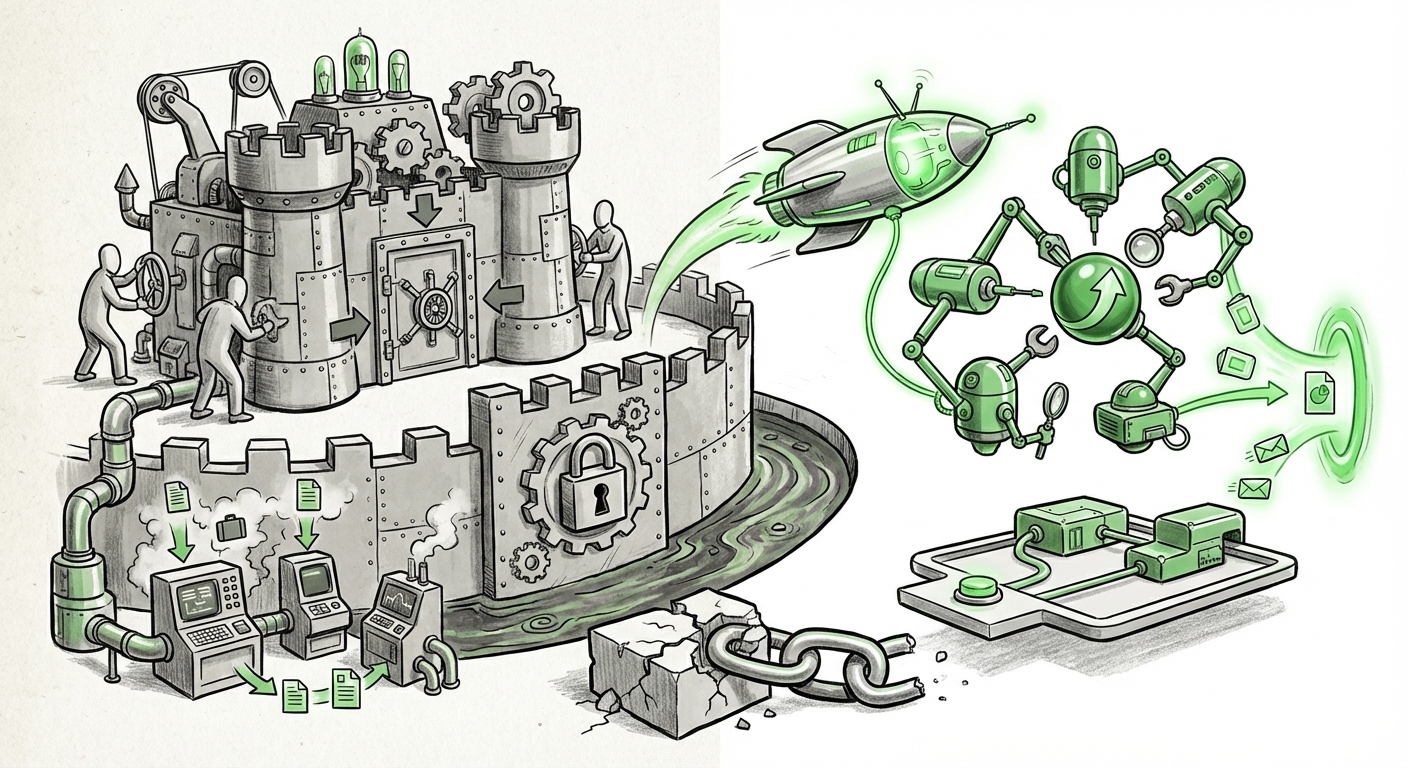
Now a new kind of artificial intelligence is stepping into this world. It is called agentic RAG, and it promises to make claims faster, smarter, and more accurate. But here is the twist that matters most: the best version of this technology does not make the final decision. It gathers everything the human decision-maker needs, presents it clearly, and lets the human keep the final call.
This is not a small detail. It is the entire point. Let's unpack what agentic RAG is, how it changes insurance claims, and why the most powerful AI systems of the future will be built to support people instead of replacing them.
What Exactly Is Agentic RAG?
To understand agentic RAG, start with the simpler idea: RAG, which stands for Retrieval-Augmented Generation. Traditional AI models answer questions based only on what they learned during training. That means they can go out of date, and they can confidently state things that are completely wrong.
RAG fixes this by connecting the AI to real, current data sources. When you ask a RAG-powered system a question, it first retrieves relevant documents, like searching a database, and then generates an answer based on what it found. Every response is grounded in actual evidence. You can check where the answer came from.
Now add the word agentic. An agent is an AI that can take steps on its own to reach a goal. It doesn't just answer a single question. It plans. It decides which documents it still needs. It requests them. It compares information across sources. It flags gaps and inconsistencies. In other words, it behaves less like a chatbot and more like a diligent research assistant.
In an insurance setting, this means the AI can look at a claim and say: "Here is what the policy covers. Here are the repair estimates. Here is the police report. Here is a similar claim from last year. Here is what is missing. And here is a recommendation based on all of it."
The key difference from earlier AI tools is traceability. The system's reasoning is not a black box. It points to the documents that support its conclusions. That single feature makes it radically safer to use in serious decisions.
How Agentic RAG Supports the Claims Process
Let's walk through what this looks like in practice for a typical auto insurance claim.
1. Gathering Everything in Seconds
When a claim is filed, the agent pulls the customer's policy, the accident report, the photos, the repair quote, and any prior claims on file. In older systems, an adjuster might spend hours or days collecting these pieces. The agent does it in seconds and assembles one clean digital claim file.
2. Checking the Coverage
Does this policy actually cover this type of damage? Was the premium paid up to date? Are there deductibles that apply? The agent scans the policy language and flags the relevant clauses. It doesn't guess, it quotes the actual policy text.
3. Comparing Against History
Has this customer filed similar claims before? Have repair prices in this region changed? The agent compares the current claim against thousands of past cases and highlights anything that looks unusual.
4. Drafting the Analysis
Instead of a summary written from scratch, the agent produces a structured file: what happened, what is covered, what the repair should cost, what questions remain. The adjuster gets a clear starting point, not a pile of raw data.
5. Flagging Red Flags
Fraud detection is one of the most exciting uses. The agent can notice patterns that humans might miss, odd timing, mismatched dates, documents that contradict each other. It alerts the adjuster: "This claim has three red flags. Here is the evidence. Please review."
Notice what the AI never does in this list. It never says "pay this" or "deny this." It says "here is what I found." That distinction changes everything about how the technology can be used responsibly.
Why the Final Decision Should Stay Human
There is a tempting fantasy in the business world: a fully automated system that handles claims end to end with no human involved. It sounds efficient. But it is also a trap. Here is why.
Accountability Matters
When an insurance company makes a decision, someone must own it. If a claim is denied unfairly, the customer deserves an explanation from a person who can reconsider. An AI cannot be held responsible in a courtroom. A licensed adjuster can. Keeping a human at the center of the decision preserves accountability.
Bias Is Everyone's Problem
AI learns from data, and data can carry hidden bias. If past claims were handled unfairly, the AI can quietly repeat those patterns at massive scale. A human reviewer is the guardrail that catches, questions, and overrides those biases. The technology should surface patterns; the person should judge fairness.
Nuance Cannot Be Sliced Into Data Points
Consider a grieving family who lost a home in a fire. The documents might not show the emotional weight of the moment. A skilled adjuster reads between the lines, communicates with empathy, and handles the case with care. No algorithm can do that, and no algorithm should try.
Rules and Regulations Demand It
Insurance is one of the most regulated industries in the world. Regulators require that decisions be explainable, appealable, and fair. A system where the AI recommends and the human approves creates a clear trail: what the AI found, what the human considered, and why the final call was made.
This is the "human-in-the-loop" model, and it is quickly becoming the gold standard for AI in decisions that change people's lives.
What This Means for the Future of AI
Agentic RAG in insurance is not just a niche tool. It is a preview of how AI will evolve across every industry that makes consequential decisions, finance, healthcare, legal, and more. The pattern is simple and powerful: machines do the heavy information work; humans do the heavy judgment work.
We are moving away from the old debate of "AI versus humans" and toward a more mature idea: AI and humans as a team. The AI provides speed, memory, and pattern detection that no person can match. The human provides context, empathy, ethics, and accountability that no machine can fake.
This collaboration also changes what skills will matter in the future. Adjusters will worry less about typing summaries and filing papers. They will worry more about assessing risk, communicating with customers, and making judgment calls in the gray zones. The job doesn't disappear, it gets upgraded.
We will also see new roles emerge. "AI stewards" will monitor these systems, test them for bias, audit their recommendations, and decide when they need fine-tuning. The future insurance team won't just include claims experts. It will include people whose full-time job is keeping the AI honest.
And there is a deeper shift worth noticing: the most trusted AI systems will be the self-explaining ones. An AI that can show its work, its sources, its logic, its uncertainties, will earn trust. An AI that only announces answers will be pushed out of serious industries.
Actionable Insights for Business Leaders
If you lead an insurance company, a startup, or any business considering agentic AI, here are practical steps to get it right.
1. Start With a Contained Problem
Do not try to automate everything. Pick one high-volume, document-heavy process, like auto claims intake or medical bill review, and build the agent there first. Learn, tune, and measure before expanding.
2. Design for Transparency From Day One
Every AI recommendation must come with links to the source documents it used. If a suggestion cannot be traced, it should not be shown. Make this a technical requirement, not a hope.
3. Build Human-in-the-Loop Workflows
Define clear rules for what the AI may do alone (gather, summarize, flag) and what requires human approval (payment, denial, settlement). Put technology in service of those rules. Never the other way around.
4. Pilot Small, Then Scale Smart
Run a pilot with a small team of skeptical, experienced adjusters. Ask them what the AI gets wrong. Use their feedback to tune the system. Then measure two things: time saved and quality of outcomes. Speed without fairness is a failure.
5. Train Your People for the New Division of Labor
Staff need to know what the AI can do, what it cannot do, and how to challenge its recommendations properly. An AI that everyone blindly trusts is a liability. An AI that everyone questions is an asset.
6. Watch for Bias Constantly
Set up routine checks: is the AI treating customers equally across ages, regions, backgrounds, and claim types? Track the data. If an unfair pattern shows up, fix the system before it scales.
The Bigger Picture for Society
The insurance industry is a perfect testing ground for a question society is asking everywhere: How much power should we hand to machines? The answer emerging from agentic RAG is a healthy one. Let machines do what they are great at, processing information at enormous speed and scale. Let people do what they are great at, understanding context, weighing fairness, and owning the outcome.
This balanced approach protects customers from the dangers of unchecked automation: invisible bias, unexplainable denials, and an unaccountable algorithm deciding who gets help. It also protects businesses from the reputational landmines that come with those failures.
The lesson extends far beyond insurance. Any company deploying AI for decisions that affect lives, loans, jobs, healthcare, housing, should adopt the same philosophy. The AI can assemble the file. The human makes the call. That is not an old-fashioned limit on technology. It is the most advanced feature of all.
Conclusion: The Smartest AI Knows Its Limits
Agentic RAG is not the first AI technology to promise a revolution in insurance, and it won't be the last. But it may be the first to get the balance right. It picks up the paperwork, finds the evidence, spots the patterns, and prepares the human decision-maker to act with confidence.
The future of AI is not autonomy. It is alliance. The winning systems will not be the ones that push people out of the loop. They will be the ones that make the people in the loop dramatically better at their jobs. That is the future agentic RAG points to, and it is a future worth building.