Enterprise AI's Real Risk Isn't Autonomous Agents, It's the Complexity Between Them
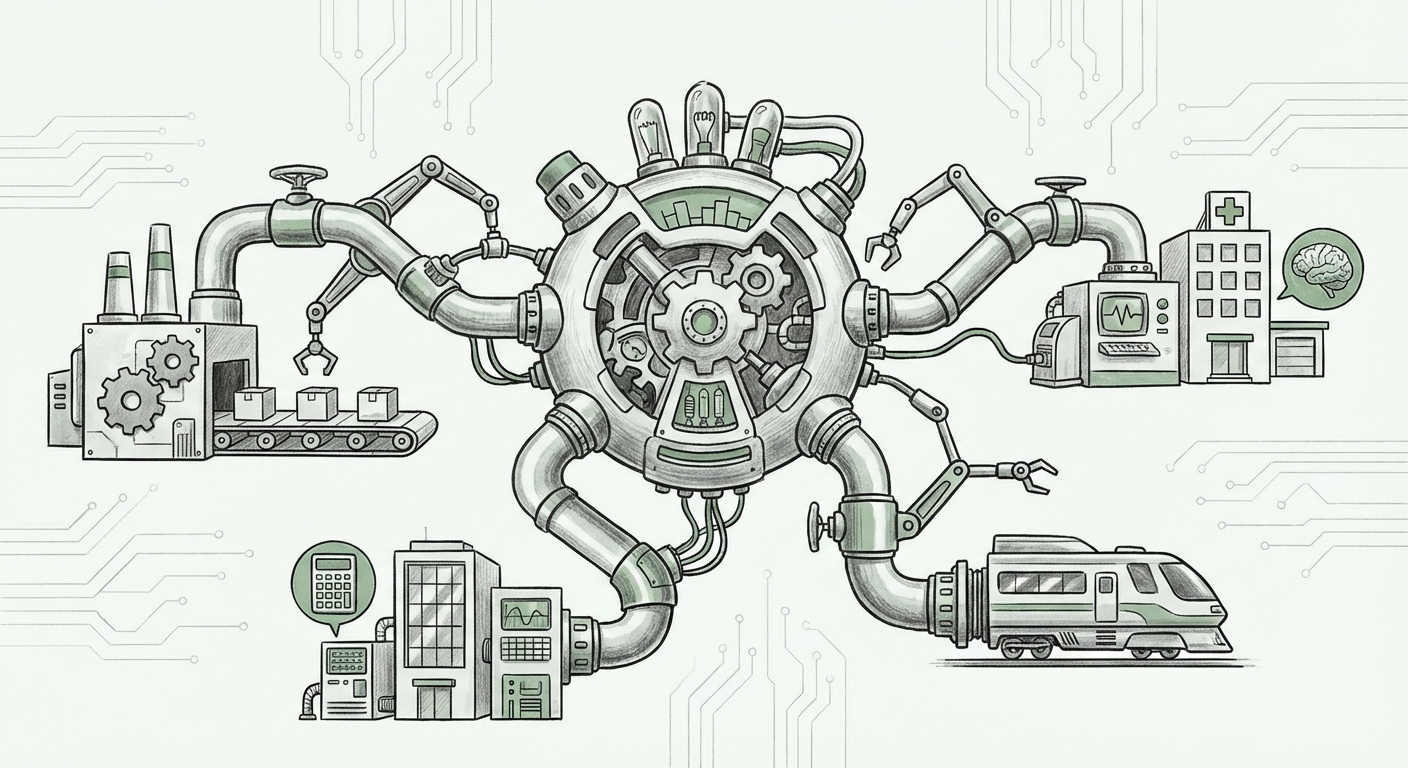
Imagine a factory floor where every worker is a genius. Each one can do their own job perfectly. They are fast, skilled, and tireless. But none of them speak the same language. None of them share the same playbook. And nobody has a map of how work flows from one station to the next.
That, in a nutshell, is the state of enterprise artificial intelligence in 2026. The hype around autonomous AI agents is everywhere. These are not simple chatbots that answer questions. They are systems that take action, booking meetings, processing refunds, updating customer records, drafting contracts, and even negotiating with other software. The promise is huge: a business that runs itself, with humans stepping in only when things get complicated.
But beneath the buzz, a quieter and more dangerous problem is forming. The real risk in enterprise AI is not the agents themselves. It is the complexity between them. This idea is quickly becoming one of the most important conversations in enterprise technology.
The Agent Era Is Here
Let's start with a clear picture of what an autonomous agent actually is. Think of a traditional chatbot as a librarian. It can find information and talk about it, but it cannot leave the desk. An autonomous agent is more like an employee. It can read an email, decide what it means, update a database, send a reply, and move on to the next task without waiting for permission.
For many companies, the appeal is obvious. A single customer-service agent can handle thousands of routine requests a day. A finance agent can reconcile invoices while a supply-chain agent tracks shipments. Put enough of these to work, and the organization runs faster, cheaper, and with fewer boring tasks left for humans.
None of that value is imaginary. Early adopters are seeing real gains in speed and efficiency. But here is the problem: almost nobody deploys just one agent. They deploy fleets. And fleets need to work together.
The Hidden Danger Lives in the Gaps
Individual agents are becoming more reliable. That is not where the risk sits. The risk sits in the spaces between them, the handoffs, the shared data, the timing, the permissions, and the unspoken assumptions that connect one agent's output to another agent's input.
Consider a simple example. A sales agent closes a deal and records a discount in the customer relationship system. A billing agent reads that record and generates an invoice. An inventory agent checks whether the product is available. If the sales agent used a slightly different date format, or the billing agent read an old copy of the record, or the inventory agent runs before the sales update is saved, the whole chain breaks. Worse, it may silently produce a wrong result.
This is the same reason an all-star sports team can lose to a less talented one. Skill at each position matters, but chemistry between positions matters more. In enterprise AI, chemistry is the hardest part.
Anatomy of the Complexity
To understand the risk, it helps to look at the messy middle, the places where complexity actually lives.
Data Dependencies and Shared State
Every agent needs to know the current state of the world. Is the customer still active? Was the order shipped? Has the budget been approved? Agents share this information through databases, messages, and memory systems. When two agents disagree about the facts, trust collapses.
The core question is: who owns the source of truth? If every agent keeps its own copy of a customer record, the copies will drift. The sales agent thinks the customer owes nothing. The collections agent thinks they owe $500. The customer experiences the contradiction. Someone, or some system, has to be the single authority.
Orchestration and Workflow Ordering
Many enterprise workflows are relay races. One agent runs its leg and passes the baton to the next. If the baton is dropped, a delayed message, a timeout, a retry loop firing three times at once, the whole race falls apart.
Ordering matters just as much. An approval agent should not sign off before a compliance agent reviews the request. But when agents run in parallel, order is not guaranteed unless someone choreographs it carefully. This choreography, often called orchestration, is where much of the complexity hides. And unlike traditional software, AI agents are not perfectly predictable. The same input can produce different outputs each time, which makes timing problems even harder.
Identity, Permissions, and Security
In a normal company, people have badges and locks. Security guards check who enters which room. Agents need the same controls, but they multiply faster than anyone expects.
Each agent needs access to certain data and systems. Give it too little access and it stalls on legitimate tasks. Give it too much and it becomes dangerous if something goes wrong. In an agent-to-agent network, one confused or compromised agent can pass bad instructions to the next. A single weak link can spiral into a company-wide problem. Identity management for AI is becoming one of the most urgent challenges in enterprise IT.
Governance and Accountability
Here is a question every business leader should ask: if three agents together make a mistake, who is responsible? In many cases, no single agent did anything wrong. Each one followed its instructions. But together, they produced a bad outcome.
Existing audit and compliance systems were built for human employees and traditional software. They were not built for networks of semi-autonomous agents that make thousands of decisions per hour. Regulators are still catching up, and companies that move faster than their governance will find themselves exposed.
One Crack Can Break the System
Once you see the complexity, the failure patterns become clear. Small errors do not stay small. They travel.
An agent misreads a date on an order. It sends the wrong date downstream. The next agent trusts the input, why wouldn't it?, and schedules a shipment a month late. Another agent flags the shipment as overdue. Another issues penalty charges to a customer who did nothing wrong. When a human finally looks at the mess, the trail is almost impossible to follow. This is not a single bug. It is a conversation between systems that each made a reasonable choice.
Experts sometimes call this the hallucination handoff. One agent confidently guesses. Another treats that guess as fact. The error grows at every step. By the end, the result can be spectacularly wrong in a way that is nearly impossible to trace.
Then there are runaway loops. An agent cannot reach a system, so it retries. The retry triggers another agent, which retries too. Soon, systems are shouting at each other, burning computing power and money. In traditional software, engineers can trace a loop by reading code. With AI agents, they often have to reconstruct a conversation from messy, incomplete logs. It is a debugging nightmare.
What This Means for the Future of AI
So what does this mean for the future of AI? The next big phase of enterprise AI will not be about building smarter agents. It will be about building simpler, stronger connections between them.
Expect a wave of new tools and standards for agent-to-agent communication. Just as email needed common protocols to connect different companies, agents will need common languages and rules, a shared way to describe their abilities, request help, and confirm results.
We will also see the rise of what some call AI operations. This means monitoring, logging, and managing agent systems the way IT teams run servers and networks. Observability will become a first-class feature. Companies will demand to know, at any moment, what each agent is doing, why it made that decision, and what data it saw.
The idea of a blast radius will shape design. A well-built agent ecosystem will limit the damage any single failure can cause. Agents will get guardrails: spending limits, permission boundaries, approval gates, and automatic shutoffs when behavior looks unusual.
For workers, the shift is just as big. The most valuable skills will not be prompt engineering. They will be systems thinking, problem solving, and the ability to design workflows that keep complexity under control. New roles are emerging: agent architects, AI reliability engineers, and AI risk managers. The people who can tame complexity will be in high demand.
Actionable Guidance for Business Leaders
What should a business leader do today? Here are concrete steps.
- Map the seams before you build. Draw every handoff between agents on a whiteboard. If you cannot draw the system, you should not run the system. The gaps between agents are where failures live.
- Make one owner for every important type of data. One source of truth for customers, one for products, one for orders. Agents should read from that source instead of trusting their own memory.
- Put guardrails on every agent. Set limits on what it can do, how much it can spend, and what it can change. For high-impact actions, require human approval. Friction is a feature, not a bug.
- Invest in end-to-end tracing. You must be able to answer two questions about any outcome: What did the agent see, and why did it act? Without those answers, you cannot improve, and you cannot defend yourself in an audit.
- Start small. Run a pilot with a handful of agents in a narrow workflow. Measure reliability, watch for silent errors, and expand only once the seams are strong.
- Build governance in from day one. Log everything. Review decisions regularly. Run failure drills the way fire departments run fire drills. Find out the safety systems work before the fire, not after.
- Keep humans in the loop for big decisions. Not because agents are untrustworthy, but because accountability needs a human face. Customers want to talk to a person. Regulators expect a person to answer. The best AI systems will be human-centered, not human-free.
The Human Element
All of this has a human side too. Employees will not trust a system they cannot understand. When agents make decisions that affect their work, people need to see the reasons behind them. Transparency builds trust.
Customers need the same thing. An AI system that cannot explain a decision is frustrating. But one that shows its work and always offers a path to a human will earn loyalty.
There is also a workforce story. Some routine tasks will be automated, and some jobs will change. But new tasks will appear: watching the watchers, tuning the workflows, and solving the puzzles that only happen between systems. The future belongs to people who can work alongside AI and keep the seams clean.
Taming Complexity Is the New Competitive Advantage
The era of autonomous agents is not a fantasy. It is already here, and it will only grow. But the organizations that succeed will not be the ones with the most agents or the smartest models. They will be the ones that take the space between agents seriously.
The real risk in enterprise AI is complexity. The real opportunity is in taming it. Companies that map their handoffs, govern their data, watch their seams, and keep humans in the loop will build systems that are powerful and trustworthy. That trust will be the ultimate advantage.
The future of AI is not a thousand brilliant agents doing whatever they want. It is a disciplined, well-designed network where every connection is intentional, every action is traceable, and every failure stays small. That is the future worth building.