Agentic AI Guardrails: What Enterprise Leaders Must Own Before It's Too Late
There is a quiet revolution happening inside enterprises right now. For years, artificial intelligence was a helper. It suggested. It recommended. It drafted. A human always made the final call. That era is ending. A new kind of AI, agentic AI, is taking over tasks that once required constant human supervision. These systems don't just answer questions. They plan, make decisions, and take actions on their own.
This shift is exciting. It is also deeply serious. When an AI agent can place an order, approve a refund, send a legal notice, or reconfigure a cloud server, someone has to answer for what happens. That someone is you, the enterprise leader.
The big question for every executive in 2026 is no longer "Should we use agentic AI?" It is "What guardrails are in place, and am I personally accountable for them?" This article breaks down exactly what enterprise leaders are accountable for as agentic AI moves from pilot projects to core business operations, and what it means for the future of how we work.
The Age of Autonomous AI Is Here
To understand the accountability shift, you first need to understand what makes agentic AI different from the AI tools most companies already use.
Traditional AI, the kind behind chatbots, writing assistants, and recommendation engines, works on a simple loop. It receives a prompt or request, processes it, and returns an answer. The human reads the answer and decides what to do next. The human is always in the driver's seat.
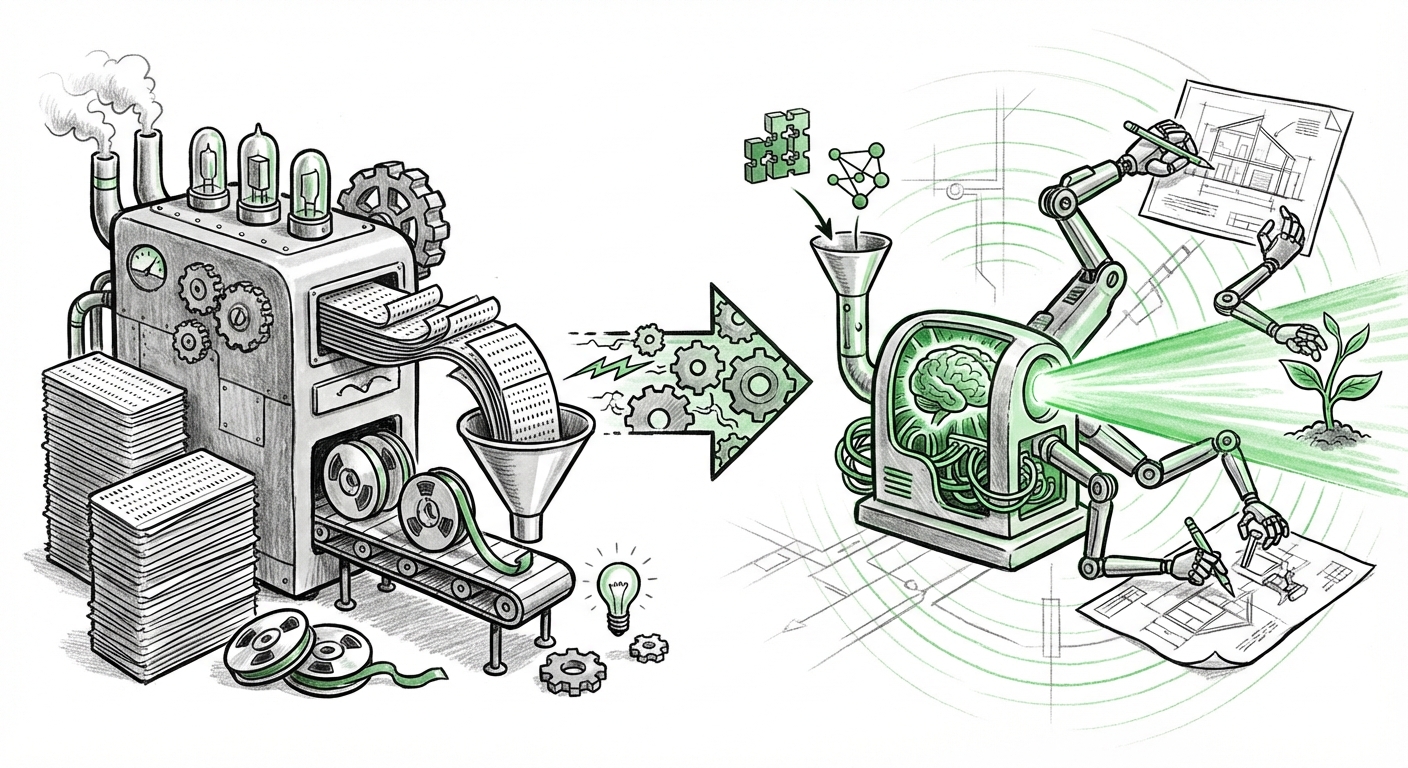
Agentic AI flips this model. An agent is given a goal, say, "resolve all customer refund disputes under $500 within 24 hours", and then it works toward that goal independently. It can break the goal into smaller steps. It can call other software tools. It can read databases. It can send emails. It can even negotiate with other AI agents. Most importantly, it can take action without asking permission for every step.
This is a powerful leap forward. But it also means that the old safety net, the human reviewing every output, is gone. When an AI agent acts independently, it can do a thousand things right and one thing catastrophically wrong. The leader who deployed it is the one who must explain what happened.
Why Agentic AI Changes the Accountability Game
Accountability in the age of AI has always been a bit fuzzy. When a chatbot gave a bad answer, companies could shrug and call it a "software glitch." The stakes were low. The damage was usually a frustrated customer, not a lawsuit.
Agentic AI raises the stakes dramatically. Consider what happens when an autonomous agent is given access to payment systems, customer records, or supply chain networks. A single poorly designed instruction could result in:
- Financial losses from unauthorized transactions or bad deals
- Privacy breaches from mishandled personal data
- Regulatory violations from decisions that break compliance rules
- Reputational damage from actions that harm customers or communities
- Legal liability when the agent's decisions cause harm
The uncomfortable truth is that you cannot fire an AI agent. You cannot hold a model accountable in court. Accountability flows upward, to the executives, board members, and leaders who decided to deploy the system, set its objectives, and chose its limits.
Regulators around the world are paying close attention. The direction of travel is clear: organizations that deploy autonomous systems need to prove they had reasonable guardrails in place. "The AI did it" will not be a defense. "We built it responsibly" will be the only acceptable answer.
Guardrails Are Not Optional Anymore
A guardrail, in the context of agentic AI, is any control that keeps the system operating within acceptable boundaries. Think of it like the safety systems in a nuclear power plant or the brake lines on a car. You don't add them after a crash. You build them in from the start.
There are two broad types of guardrails every leader must understand.
Technical Guardrails
These are the hard limits encoded into the software itself. They include permissions that restrict which systems an agent can access, spending limits that cap what an agent can authorize, and approval checkpoints that require human sign-off for high-risk actions. They also include monitoring systems that track everything the agent does, so that any mistake can be traced and corrected quickly.
Organizational Guardrails
These are the policies, procedures, and human oversight structures around the technology. Who is allowed to deploy an agent? What training do they need? What escalation path exists when something goes wrong? Which decisions are permanently off-limits for automation? Answering these questions is a leadership responsibility, not an IT responsibility.
The most effective guardrail frameworks combine both. A strong technical control without a clear policy behind it will be applied inconsistently. A great policy without technical enforcement is just a suggestion.
What Enterprise Leaders Are Actually Accountable For
This is the heart of the matter. Let's get specific about the areas where leadership accountability is non-negotiable when deploying agentic AI.
1. Defining the Boundaries of Autonomy
Leaders are accountable for deciding how much autonomy each AI agent gets. Not every task needs the same level of independence. A low-risk task like sorting internal documents might be fully automated. A high-risk task like approving a loan or terminating a supplier contract should have strict human checkpoints.
The responsibility here is to create a clear classification system. Every use case should be rated for risk, and that rating should determine the level of autonomy granted. Leaving this to individual teams without leadership guidance is a recipe for chaos.
2. Ensuring Human Oversight
There is a myth that agentic AI means "set it and forget it." Nothing could be further from the truth. Leaders are accountable for ensuring that humans remain in the loop for critical decisions and that there are clear owners for every AI deployment.
This means asking tough questions. Who is watching the agent's actions in real time? Who reviews the logs at the end of the day? Who has the authority to pull the plug when something goes wrong? If you cannot name the person responsible for overseeing a given agent, you are not ready to deploy it.
3. Protecting Data and Privacy
Agents are hungry. They consume data to make decisions, and they often need access to sensitive information, customer records, employee files, financial data, to do their jobs. Leaders are accountable for making sure that data access is minimal, justified, and protected.
This is where guardrails become critical. An agent should only see the data it needs for its specific task, nothing more. Its access should be revoked the moment the task is complete. And every data interaction should be logged so that auditors can inspect what happened.
4. Managing Security and Access
Every AI agent is also a potential attack surface. A hacker who compromises an agent gains access to everything the agent can touch. Leaders are accountable for treating agents like privileged users, subject to the same identity checks, access reviews, and security monitoring as senior employees.
One of the most dangerous scenarios in enterprise AI is prompt injection, where malicious instructions are hidden inside data the agent reads. A well-designed guardrail system assumes agents will be attacked and builds in defenses accordingly.
5. Staying Ahead of Regulation
The legal landscape for AI is evolving quickly. New rules are emerging around transparency, explainability, and accountability for automated decisions. Leaders are accountable for understanding which regulations apply to their industry and building compliance into their agentic AI strategy from the start.
This is not just a legal department concern. It is a strategic one. Companies that build compliant systems early will have a competitive advantage. Companies that wait and try to retrofit compliance after a problem will face fines, bans, and public distrust.
6. Owning Outcomes, Including Failures
The hardest part of leadership accountability is accepting that AI failures are your failures. If an agent makes a discriminatory decision, the company must answer for it. If an agent causes environmental harm through a bad supply chain decision, the company must answer for it.
Leaders who set up a "blame the algorithm" culture are not just unethical, they are strategically foolish. The mature response is to build a culture where problems are reported quickly, investigated honestly, and fixed permanently. That culture starts at the top.
Building a Guardrail Framework That Actually Works
So what does responsible deployment look like in practice? Here is a practical framework that leaders can put in place today.
Start with a Risk Review
Before any agent goes live, run it through a structured risk review. What could go wrong? What is the worst-case outcome? What is the likelihood? If the worst-case outcome is unacceptable, design additional controls before deployment.
Set Hard Limits in Code
Do not rely on policies alone. Put technical limits in place, spending caps, access boundaries, action blacklists, and escalation triggers. Make it impossible for the agent to do certain things, not just against policy but against the system's design.
Require Human Checkpoints
Define which actions require human approval. This might be percentage-based (any transaction over a certain amount), category-based (any communication with a regulator), or scenario-based (any decision that affects a person's legal rights).
Monitor Everything
You cannot manage what you cannot see. Every agent action should be logged in a tamper-proof audit trail. Monitoring should be continuous and should generate alerts when the agent behaves in unexpected ways.
Test, Test, and Test Again
Run simulations and adversarial tests before deployment. Try to break the agent. Feed it tricky inputs. See what happens when it encounters edge cases. Then test again after deployment. Agentic AI needs continuous evaluation, not one-time validation.
Create a Response Plan
Have a documented incident response plan specifically for AI failures. Who is on the call? Who has the authority to shut down the agent? How do you communicate with affected customers and regulators? Rehearse it like a fire drill.
What This Means for the Future of AI
Looking ahead, it is clear that agentic AI is not a passing trend. It is the next major phase of enterprise technology. The companies that will win are not necessarily the ones with the most advanced models. They are the ones with the most trusted systems.
The future of AI use will be shaped by guardrails. When enterprises deploy agents with confidence, they will find uses far beyond simple automation. We will see agents that manage entire business processes from end to end. We will see fleets of agents collaborating with each other, coordinating across departments, and even working across company boundaries.
But this future only materializes if people trust the systems. And trust is built through accountability. Every time an enterprise deploys a well-guarded agent and it performs flawlessly, trust grows. Every time an unguarded agent causes harm, trust erodes, not just for that company, but for the entire industry.
The leaders who understand this dynamic will treat guardrails not as a cost or a bottleneck, but as the foundation of their AI strategy. They will invest in governance the same way they invest in security. They will hire for AI risk skills the same way they hire for engineering talent. And they will measure success not just in efficiency gains, but in safety records and customer trust.
For employees, the rise of agentic AI will change daily work in profound ways. Many routine tasks will be handed to agents. The human roles that remain will increasingly be about judgment, creativity, ethics, and oversight. That is a positive shift, but it requires workers to develop new skills in "acting as the human in the loop." Enterprises that train their workforce for this reality will thrive.
Actionable Insights for Leaders
If you are an executive, board member, or senior manager, here is where to start this week, not next quarter.
- Take an inventory. List every agentic AI system currently running in your organization. You cannot govern what you do not know exists.
- Assign a named owner to every system. Accountability without a name is just a slogan.
- Ask for the guardrail documentation. If a team cannot explain the technical limits and human checkpoints on their agent, that agent should not be in production.
- Review your insurance. Ensure your coverage accounts for autonomous system risks.
- Build an AI risk committee that meets regularly, includes legal, security, compliance, and operations, and reports to the board.
- Invest in monitoring tools. If your current systems cannot log AI agent actions in detail, that is a gap to close urgently.
- Communicate transparently with customers and employees about where AI agents are used and what safeguards exist. Transparency builds trust.
The Bottom Line: Accountability Is the New Competitive Advantage
Agentic AI has crossed the line from experiment to enterprise infrastructure. It is fast, capable, and increasingly essential. But it has also triggered one of the biggest accountability questions in the history of business: who is responsible when an autonomous system makes the wrong call?
The answer is clear. Enterprise leaders are. Not the engineers who wrote the code. Not the vendors who sold the platform. Not the "algorithm." The leaders who decide to deploy the systems, set their goals, and choose their limits bear the responsibility.
That may sound like a heavy burden. It is. But it is also an opportunity. Companies that embrace accountability will distinguish themselves in an era where trust is scarce. They will attract better customers, better employees, and better partners. They will be safer from regulation, litigation, and public backlash. And they will be the ones leading the market as agentic AI reshapes every industry.
Guardrails are not about slowing down AI. They are about making AI worth trusting. And in the end, trustworthy AI is the only AI that will last.