GLM-5.3-Flash Matches the Best AI Models, at a Fraction of the Cost and Without Nvidia
The world of artificial intelligence has quietly accepted two "truths" for the past several years. First, the most powerful AI models are too expensive for most businesses to run on their own. Second, if you want serious AI, you need serious Nvidia hardware. Both of those truths are now being challenged in a big way.
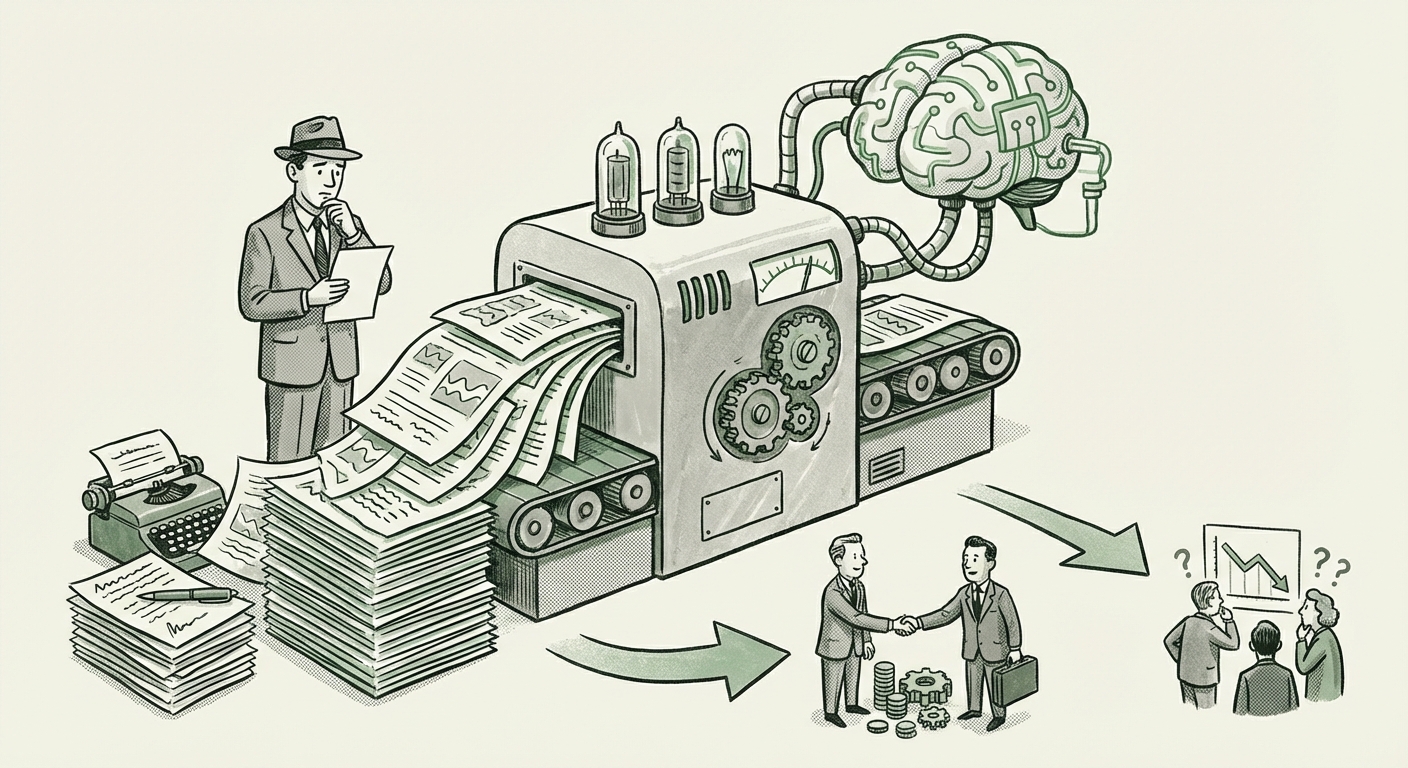
A new model called GLM-5.3-Flash is making waves because it flips the old rules upside down. It delivers performance that matches the top models, but costs a fraction of the price to run. And it runs just fine without Nvidia. In an industry where computing costs and chip shortages have shaped everything from product prices to company strategies, this is much more than a small technical win. It could be the beginning of a major shift in how AI is built, bought, and used.
What Exactly Is GLM-5.3-Flash?
Let's break down what we know. GLM-5.3-Flash is a new AI model, and its "Flash" name points to its personality: it is designed to move fast and work efficiently. Unlike the giant models that demand massive data centers and huge electricity bills, Flash-style models are built to do more with less.
The central claim is simple. GLM-5.3-Flash matches the quality of top models. That means for many real-world tasks, answering questions, writing, summarizing, coding assistance, data analysis, it can stand toe-to-toe with the biggest names in the field. The phrase "matches top models" does not mean it wins every test on every task. But across the things that matter to typical users, it delivers results that are hard to tell apart from far pricier options.
Then comes the surprise that has the industry buzzing: it does not require Nvidia hardware. Nvidia has become the engine of the AI boom. Its chips power most of the world's most advanced models. A model that runs comfortably on non-Nvidia hardware is more than a technical curiosity, it is a fork in the road for an entire industry.
Why Running Without Nvidia Is a Huge Deal
To understand why this matters, you first have to understand how much Nvidia dominates AI. For years, if you wanted to train or run a cutting-edge model, you needed Nvidia chips. That created a situation where one company controlled the most important resource in AI: computing power.
This has led to real-world pain. Some chips have been in such high demand that they became hard to buy at any price. Cloud providers charge premium rates for access to the best hardware. Even large companies have had to wait in line, plan months ahead, and reshape their budgets around chip availability.
A model like GLM-5.3-Flash, which is comfortable running on other hardware, changes the entire math. Consider the benefits this unlocks:
- Freedom of choice. Companies can pick hardware based on price, performance, and availability, instead of being locked into one vendor.
- Lower cloud bills. When a model can run on many types of machines, cloud providers have to compete for your business. Competition usually brings prices down.
- Use what you already own. Many companies already have servers and systems that are not powered by Nvidia chips. If a top-quality model runs on that existing equipment, there is no need for a costly buying spree.
- More negotiating power. If one provider raises prices too high, you can move your AI work somewhere else. That threat keeps everyone honest.
- Stronger, safer supply chains. Depending on a single chip maker is risky. Hardware-agnostic AI protects you from shortages, shipping delays, and sudden price spikes.
The lesson here is bigger than one model. The future of AI should not depend on one company's factory output. GLM-5.3-Flash proves that top-tier performance can be separated from top-tier hardware, and that separation is healthy for the whole industry.
The Real Story: Making AI Dramatically Cheaper
The other headline, a fraction of the cost, deserves just as much attention. Most AI costs come from "inference," which simply means the act of running the model to produce an answer. Every time an AI writes an email, summarizes a document, or generates an image, it burns computing power. And computing power has been priced like gold.
When a model matches top performance at a fraction of the cost, it changes what businesses can afford to do. Think about what becomes possible when each AI task costs far less:
- Companies can experiment more freely. When every test is cheaper, teams are more willing to try new ideas, new features, and new workflows.
- Companies can scale further. A feature that is barely profitable at a high cost per task becomes strongly profitable at a lower one.
- Companies can serve more customers, including price-sensitive ones who would never pay for a premium AI product.
- Companies can build AI into everyday tools, not just fancy standalone apps, but the behind-the-scenes software that runs their entire operations.
Cost is not a boring detail. Cost decides which ideas live and which ideas die. Every major technology shift in history, from the personal computer to the smartphone, followed a dramatic drop in price. If GLM-5.3-Flash is a true sign of things to come, we are at the start of a similar drop for AI.
What This Means for the Future of AI
If we zoom out and look at the bigger picture, this moment signals a change in what the AI world celebrates. For years, the status symbol was a giant model trained on enormous clusters of the most expensive chips. The new status symbol is becoming performance per dollar.
Efficiency is now the new frontier. The company that can deliver 95 percent of the quality at 10 percent of the cost will win more customers than the company that delivers 100 percent of the quality at 100 percent of the cost. This is a healthy shift. It pushes the entire industry to work smarter, not just bigger.
This development also accelerates several trends that were already building steam:
- More competition. When one model can match the top names at a lower price, it forces every other AI developer to justify their pricing. Competitors will respond by cutting costs, improving quality, or both.
- A more open hardware landscape. The success of a model that runs without Nvidia encourages other developers to make their models hardware-neutral. Over time, AI will run on many types of chips, not just one.
- AI in more places. Cheaper, more flexible models can run closer to users, on company servers, on edge devices, even on everyday machines. That makes AI faster, more private, and more reliable.
- An innovation flywheel. Cheaper AI leads to more users. More users lead to more real-world feedback. More feedback leads to better models. And better models make AI valuable to even more people. This loop feeds itself.
In short, the future of AI is not just about brainpower anymore. It is about affordable brainpower. GLM-5.3-Flash is an early and powerful example of that trend, and it will not be the last.
What This Means for Businesses
For business leaders, the most important message is that the rules of the AI game are changing. If top-tier quality is available at a fraction of the old cost, then every AI-related business plan deserves a second look.
Startups suddenly have a fighting chance. In the past, competing in AI meant raising enormous sums of money to rent expensive infrastructure. Now a small team with a smart idea can access model quality that was once reserved for the wealthiest companies. That evens the playing field in a major way.
Established companies benefit too. Instead of rolling out AI in one carefully chosen corner of the business, they can afford to put AI to work across every department, sales, marketing, customer support, finance, human resources, and operations. When the cost per task drops, the number of tasks you can justify automating rises.
There is also a strategic angle. By choosing hardware-neutral models, businesses protect themselves from the ups and downs of the chip market. They avoid being held hostage by a single vendor's supply problems or pricing decisions. In a truly uncertain world, that kind of flexibility is gold.
What This Means for Society
The social implications of cheaper AI are just as important as the business ones. For years, advanced AI has been a tool for wealthy organizations. Schools, small hospitals, local governments, and nonprofits in developing regions have often been priced out of the market.
If AI matches top quality at a fraction of the cost, access widens dramatically. A rural clinic could afford a powerful medical assistant. A small school district could use AI to create personalized lessons. A local charity could automate paperwork and spend more time helping people. When the price of intelligence drops, the benefits spread further.
Wider access also brings new responsibilities. If powerful AI becomes cheaper and easier to run, we need clear rules about how it should be used. Safety, privacy, and fairness become more important precisely because the technology is reaching more people. Good governance is not a barrier to AI adoption, it is the foundation that makes widespread adoption trustworthy.
There may also be an environmental benefit worth keeping in mind. When a model achieves more with less computing power, it generally uses less energy per task. An AI industry built on efficiency will likely have a lighter footprint than one built on ever-larger machines. That is a win for the planet as well as for budgets.
Actionable Insights: How to Prepare Now
So what should you actually do with this information? Here are practical steps for any business leader, technical professional, or everyday AI user:
- Test before you trust. Headlines are not evidence. Put GLM-5.3-Flash, and any similar model, through your own real-world tests. Use your own data, your own tasks, and your own success criteria.
- Compare cost and quality together. Do not ask, "Which model is best?" Ask, "Which model gives me the best results for the price I can afford?" That is the question that will define the next era of AI.
- Design for portability. Build your AI applications in a way that lets you switch models or hardware providers without rebuilding everything. Treat vendor neutrality as a design requirement, not an optional extra.
- Reconsider big hardware investments. Before buying expensive, specialized systems, check whether a more efficient model can run on the infrastructure you already have. A cheaper path may be waiting in front of you.
- Revisit old business cases. Think about every AI idea your team shelved because it was too expensive. The cost picture may have changed. Dust off those plans and run the numbers again.
- Keep your AI strategy flexible. Prices are likely to keep falling, and new models will keep appearing. Build a budgeting and planning approach that can adapt quickly, rather than one locked into a single vendor or a single model.
The Bottom Line
The arrival of GLM-5.3-Flash is a reminder that the AI industry is still in its early days. The future will not be owned by whoever spends the most money or hoards the most chips. The future will be owned by whoever makes intelligent technology useful, affordable, and accessible to the most people.
Matching top models at a fraction of the cost strikes at the heart of the current AI economy. Running without Nvidia strikes at the heart of the current AI hardware monopoly. Taken together, these two ideas point to a future where AI is no longer a luxury, but a practical, everyday utility available to almost anyone.
Change like this does not come along often. When it does, the people and organizations that respond quickly tend to lead the next wave. The question is not whether cheaper, hardware-free AI will reshape the industry. It already has. The real question is whether you will be a passenger or a pioneer.