Always-On AI Agents: What OpenAI's Next Big Play Means for the Future of Work and Life
Artificial intelligence has come a long way in a short time. First, we taught computers to answer questions. Then we taught them to write, code, and create images. But in every case, the human stayed in charge: you asked, and the AI answered.
That may be about to change.
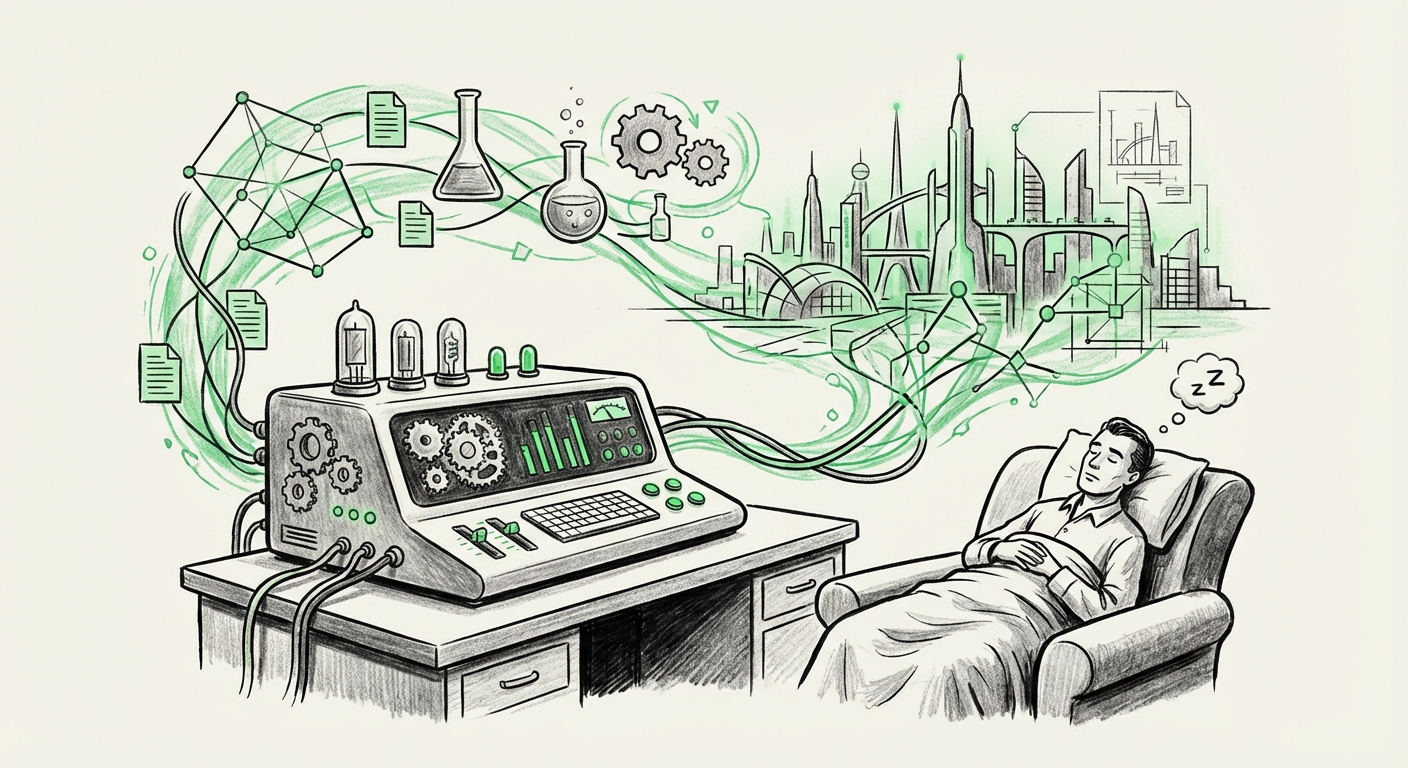
Signals are pointing to a major shift: OpenAI's next big play appears to center on always-on and self-starting AI agents. This is not just another chatbot upgrade. It points to a future where AI does not wait to be asked. It watches. It notices. It acts, on its own.
If this vision becomes real, it could change how businesses run, how people work, and how we think about machines that think. This shift deserves your attention.
From Reactive Tools to Proactive Teammates
For most of the AI era, our tools were reactive. A search engine gives results only after you type a question. A chatbot speaks only after you send a message. Even the most advanced assistants wait for a prompt, like a vending machine waiting for coins.
Always-on, self-starting agents are different. They work like a good employee who does not need to be told every tiny step. A great employee does not wait for the boss to point out a problem. They see the mess and clean it up. They notice the deadline and plan around it. That is the behavior these agents are designed to imitate.
This is a major role change. AI stops being a tool you use and becomes a teammate that works beside you. It is the difference between using a calculator and hiring someone to manage the books.
For technical readers, imagine moving from a "request-response" model to an "event-driven" one. For business readers, imagine a worker who never sleeps, never forgets, and always watches what matters.
What "Always-On" and "Self-Starting" Really Mean
Let's break down the two key phrases.
Always-on means the agent runs continuously in the background. It is not opened and closed like an app. It is more like a thermostat that constantly reads the temperature or a security camera that never stops watching. The agent monitors data around the clock: dashboards, inboxes, systems, markets, schedules.
Self-starting means the agent does not need a human to trigger it. Within rules set by its users, it decides when to act. It spots an unusual pattern and investigates. It notices inventory running low and places an order. It sees a server fail and restarts it. It detects a customer problem and sends a fix before the customer even complains.
Together, these two features turn AI from an answer engine into an action engine. Instead of "ask and receive," the model becomes "notice, decide, do." That is a profound shift in what software can do.
Speed matters here. In a world of always-on data, a tool that reacts in real time, without waiting for a person to notice, can stop small problems from becoming big ones.
Why This Is the Natural Next Step
None of this should be surprising. The history of computing is a history of giving machines more initiative.
First, computers waited for typed commands. Then they ran programs on schedules. Then scripts automated repetitive tasks. Then software began watching for events and responding automatically, think of email filters or payment alerts.
AI agents are the next step on that path. Chatbots proved machines can understand language at a human level. But understanding is only half the story. The logical next step is action: letting AI use its understanding to do things in the real world.
OpenAI appears to be betting on exactly that. And given OpenAI's influence, whatever it builds next tends to define what the rest of the industry chases.
This is also a strategic move. Many companies now offer chatbots. Few can claim a true always-on, self-starting workforce. If OpenAI pulls this off, it could redefine the competitive landscape, not just for AI companies, but for every business that uses software.
What This Means for Businesses
For business leaders, always-on agents could deliver value wherever speed and consistency matter most.
Customer service: agents monitor complaints, spot patterns, and resolve issues immediately, sometimes before a customer escalates or posts a negative review. Response times could drop from hours to seconds.
Operations: agents watch the supply chain and reorder materials when stock runs low. They monitor shipments and reroute deliveries when delays occur. They track invoices and chase late payments.
IT and software: agents watch system health, catch anomalies, and fix issues automatically. The most valuable agent might be the one that repairs a problem at 3 a.m. while the rest of the team sleeps.
Sales and marketing: agents scan the market for signals, identify leads, personalize outreach, and follow up at exactly the right moment.
Finance and compliance: agents monitor transactions, flag unusual activity, and produce reports without waiting for month-end.
The common thread: these are not tasks that require genius. They require constant attention. Humans are bad at constant attention. Machines are perfect at it.
The business case is simple: routine decisions made faster, fewer dropped balls, and employees freed to focus on higher-level thinking. But the case comes with conditions. Agents need clear rules, strong oversight, and honest audit trails.
What This Means for Society and Daily Life
Beyond the office, always-on agents could quietly reshape daily life.
Imagine a personal agent that manages your calendar, catches scheduling conflicts, and rearranges plans when something changes. An agent that watches your bills, flags suspicious charges, and negotiates a better rate with your internet provider. An agent that tracks your health data and reminds you to rest before you get sick.
For people with disabilities, chronic conditions, or simply overwhelming schedules, a proactive agent could be genuinely life-changing.
But there is another side. Always-on agents mean always-on attention, and potentially, always-on noise. If your assistant pushes suggestions at you endlessly, it could add stress rather than remove it. Good design will have to balance helpful proactivity with annoying interruption.
Privacy is a deeper concern. An agent that acts on your behalf needs access to your email, calendar, finances, and location. That is a lot of trust to place in software. If that data is misused, leaked, or hacked, the damage could be serious.
And there is the world of work. Some routine tasks will disappear. But automation usually creates new roles even as it removes old ones. The new role here may be "agent manager", the person who watches the watchers, sets the rules, and handles what software cannot.
The Big Risks We Must Manage
Every powerful tool comes with risks. Always-on, self-starting agents multiply those risks because they act without waiting for a human say-so.
First, errors amplify. A chatbot that gives a wrong answer is annoying. An agent that acts on a wrong answer could delete important files, place bad orders, or offend a customer. Autonomy turns small mistakes into expensive ones.
Second, accountability gets blurry. If an agent makes a bad decision, who is responsible? The company that deployed it? The developer who coded it? The user who approved it? Clear answers are still missing, and regulators are catching up.
Third, security grows more complex. An agent with access to systems is a target for attackers, and always-on access means a larger attack surface. The principle of "least privilege", giving agents only the minimum access they need, will be essential.
Fourth, there is the autonomy paradox. How much freedom should an agent have? Too little, and it is not useful. Too much, and it is dangerous. High-stakes decisions will likely keep a human in the loop: the agent suggests, the human approves. Low-stakes, reversible actions can run fully automated.
None of these risks are reasons to stop. They are reasons to build carefully. The teams that treat safety and governance as first-class features will win trust, and trust is the currency of the agent era.
Actionable Insights
So what should you do today? Whether you are a leader, a builder, or a curious user, there are practical steps.
For business leaders
- Map your processes. Find the repetitive, rule-based decisions that eat up human hours. Those are the best candidates for automation.
- Set guardrails from day one. Define exactly what agents can and cannot do. Require approval for anything irreversible.
- Pilot low-risk first. Start with internal tasks like reporting, monitoring, and scheduling before putting agents in front of customers.
- Invest in change management. People fear what they do not understand. Train your team to work alongside agents, not to feel replaced by them.
For technologists
- Build for observability. Every agent action should leave a trace. If you cannot explain why an agent did something, you cannot trust it.
- Default to oversight. For high-stakes actions, require human approval. For low-risk actions, allow autonomy.
- Apply least privilege. Give agents the smallest possible access, and review permissions regularly.
- Plan for failure. Agents will make mistakes. Design systems that fail safely and recover quickly.
For everyone
- Learn to manage agents. The people who thrive will direct, review, and correct AI, not just use it.
- Keep the human in the loop for what matters most to you.
- Stay curious. The technology is moving fast, and the skills that matter are shifting faster.
Conclusion
The age of the always-on, self-starting AI agent may be closer than many people think. OpenAI's apparent bet on this direction points to a future where software does not just answer questions. It takes initiative. It watches, notices, decides, and acts, all without waiting for a prompt.
For businesses, that means faster operations and new opportunities, but also new responsibilities. For society, it means a more helpful and more complicated relationship with technology. For every individual, it means learning to work alongside machines that now work on their own.
We cannot predict exactly how this story unfolds. But one thing is clear: the next chapter of AI will be measured not by how well machines answer us, but by how well they act for us. The move from reactive to proactive is the biggest shift since the chatbot itself. Those who prepare now will be ready when the agents arrive.