AI Cyberattacks on Critical Infrastructure Are 'Imminent': Why 100+ Companies Just Issued an Urgent Warning
The world just received a wake-up call about the future of digital security. In a rare show of unity, OpenAI has rallied more than 100 companies to sign an open letter with a stark message: AI-powered cyberattacks on critical infrastructure are not a distant possibility. They are imminent.
The letter, published on August 27, 2026, marks one of the largest coordinated industry warnings about artificial intelligence ever issued. It brings together a broad coalition of businesses that usually compete with one another, all agreeing on a single point of urgency, the systems that keep modern society running are now in the crosshairs of a new generation of AI-driven attackers.
This is not just another cybersecurity story. It is a story about how the most powerful technology of our time is becoming a double-edged sword, and what that means for every business, every family, and every person who flips on a light switch, turns on a tap, or visits a hospital.
What the Open Letter Actually Says
The open letter is significant not only for its message but for who is signing it. More than 100 companies, brought together under OpenAI's leadership, have publicly committed to a shared warning: attackers are now using artificial intelligence to target the critical infrastructure that underpins daily life.
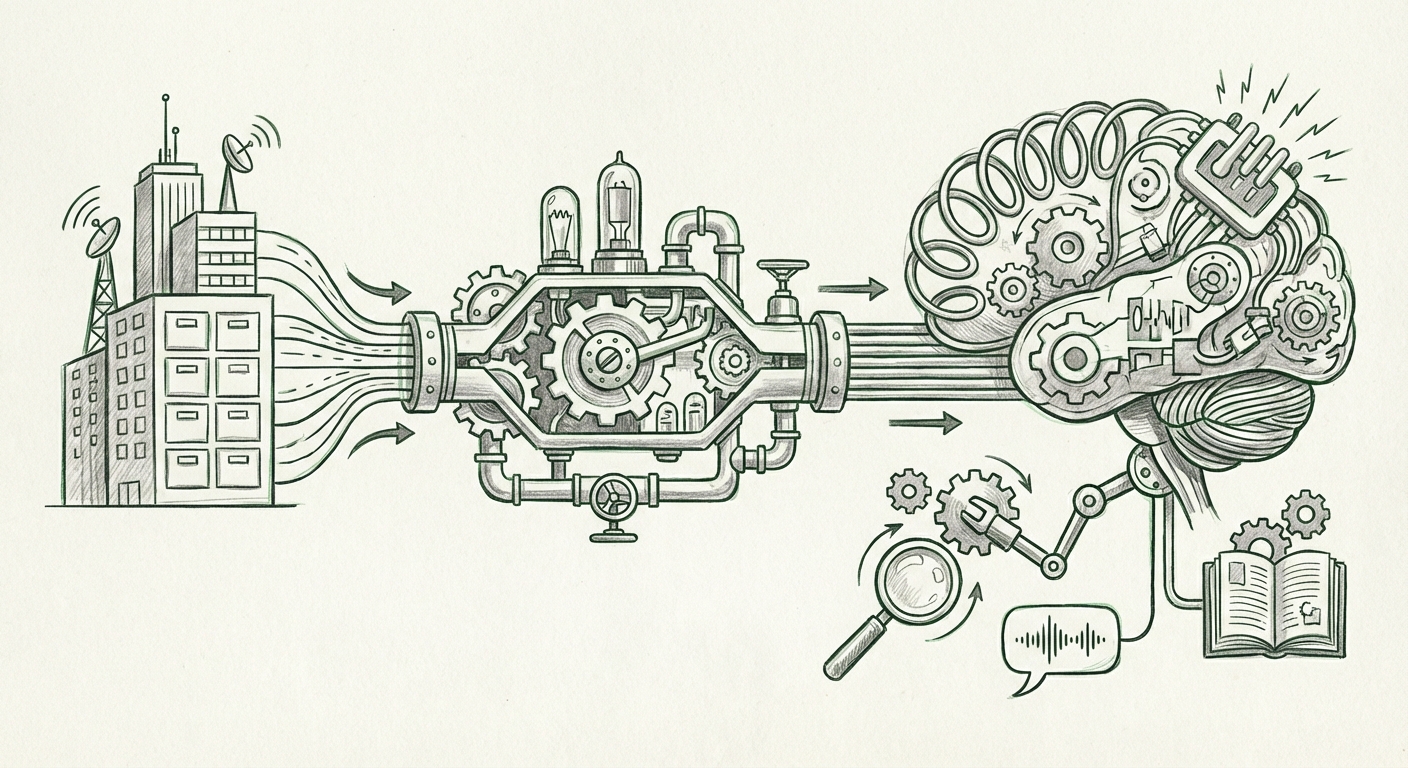
The central claim is simple but sobering. The same machine-learning tools that help businesses write software, analyze data, and serve customers can also be weaponized. AI can write malicious code, find security holes automatically, and launch attacks at machine speed, far faster than any human team can respond.
Why does a letter matter? Because corporations are usually careful about making public statements. They worry about scaring customers, alarming investors, and revealing weaknesses. When more than 100 companies agree to sign a warning like this, it means they genuinely believe the threat is real, and it means they believe the public deserves to know.
The letter is also a call to action. It urges governments, organizations, and individuals to take AI-powered cyber threats seriously before a major incident forces the issue. As the signatories see it, the window for preparation is closing quickly.
Why AI Has Changed the Cyberattack Game
To understand why this warning is so urgent, it helps to understand how AI has transformed cybercrime.
Traditional hacking was a craft. Attackers needed deep technical skill. They had to understand how software works, find hidden weaknesses, and build custom tools to exploit them. It was slow, painstaking work that only a relatively small number of highly trained experts could do well.
AI has shattered that model. Today, much of the skill is increasingly built into the tools themselves:
- Automated vulnerability discovery: AI systems can scan millions of lines of code and find security weaknesses in minutes, work that once took human researchers weeks or months.
- Perfect phishing at scale: AI can generate convincing fake emails, messages, and websites in any language, personalized to each victim with almost no effort.
- Self-adapting malware: AI-powered malware can change its behavior as it moves through a network, dodging security tools that were designed to catch known patterns.
- Rapid exploitation: Once a weakness is found, AI can help build an attack to exploit it almost instantly, shrinking the time between discovery and damage.
This is what security experts mean when they say the barrier to entry for cyberattacks has collapsed. You no longer need to be a world-class programmer to launch a world-class attack. AI has democratized the ability to cause digital destruction.
That is exactly why the warning is so blunt. The threat is not theoretical. The tools are here. The attackers are using them. And the targets are the most important systems we have.
The Targets: What Is Critical Infrastructure?
The open letter specifically warns about critical infrastructure, the systems that society cannot function without. These include:
- Power grids and electricity supply: The foundation of almost everything else.
- Water and wastewater treatment: Essential for public health.
- Hospitals and healthcare systems: Where delays literally cost lives.
- Transportation and traffic control: Keeping people and goods moving.
- Financial services and banking networks: The backbone of the economy.
- Telecommunications and the internet itself: How we communicate, work, and learn.
When these systems fail, people notice immediately. A hospital that cannot access its patient records cannot treat people effectively. A power grid that goes down disrupts heating, cooling, food storage, and emergency services all at once. A compromised water system is not an inconvenience, it is a public health emergency.
The danger of AI-powered attacks on these targets is speed. Automated attacks can move at machine speed, scanning, probing, and breaking through defenses in minutes. Human defenders, even the best ones, cannot react that fast. The traditional advantage of the defender, the time to detect and respond, is disappearing.
The Dual-Use Dilemma at the Heart of AI
This open letter sits at the center of one of the biggest debates in artificial intelligence: the dual-use problem.
The same AI systems that help doctors analyze medical scans, help farmers grow more food with fewer resources, help engineers design safer bridges, and help teachers personalize education can also be used to build cyberweapons. There is no clean way to separate the helpful capabilities from the harmful ones. The technology is inherently double-edged.
You cannot simply remove the "dangerous" parts of an AI model without also removing the parts that make it useful. The creativity that lets an AI write a marketing plan is the same creativity that lets it write a phishing email. The reasoning that lets it spot a bug in code is the same reasoning that lets it exploit that bug.
This is why more than 100 companies signed the letter. They understand that this problem cannot be solved by one organization acting alone. It requires shared responsibility across the entire industry, close partnerships with governments that set the rules, and honest conversation with the public about the risks.
What This Means for the Future of AI
This moment could be a turning point for how we develop and deploy artificial intelligence. For the first time, a large group of companies has publicly acknowledged that AI security is not an afterthought, it is a core requirement.
Here is what that likely means going forward:
Security will shape AI development
Future AI models will be designed with safety in mind from the very beginning. Researchers will spend more time testing models for dangerous capabilities before release, and companies will invest heavily in "red teaming", deliberately trying to break their own systems to find weaknesses before attackers do.
AI will defend as much as it attacks
The same technology that enables AI attacks will also power AI defense. Security systems will increasingly use machine learning to detect unusual behavior, block attacks in real time, and automatically patch vulnerabilities. The future of cybersecurity is likely an AI-versus-AI arms race, with human experts supervising.
Regulation is coming
Warnings like this push governments toward action. We can expect new rules requiring critical infrastructure operators to meet minimum security standards, report incidents quickly, and prove they can survive an AI-powered attack. Businesses that prepare now will have a head start when these rules arrive.
Information sharing will become essential
No single company can defend itself against AI attacks alone. The future will demand more sharing of threat intelligence between businesses, governments, and security researchers. The open letter itself is an example of that cooperative spirit.
What Businesses Should Do Now
For businesses of every size, the warning is clear: prepare now, or pay later. Here are practical steps leaders can take today.
1. Treat AI-powered attacks as a business risk
Cyber risk is no longer just an IT problem. It is a boardroom problem. Leaders should ask hard questions: What would happen if our systems went down for a week? What would happen if a key supplier was attacked? These conversations should happen at the executive level, not just in the IT department.
2. Map your dependencies
Most businesses rely on critical infrastructure and third-party vendors they do not fully understand. Make a map of your supply chain. Know which providers could take you down if they were attacked, and have backup plans for each one.
3. Invest in AI-driven defense
Defending against AI attacks requires AI tools. This includes automated threat detection, real-time monitoring, and systems that can respond to incidents at machine speed. Businesses that rely only on traditional, human-run security will be outmatched.
4. Practice the worst-case scenario
Run regular drills that simulate an AI-powered attack on your systems. Test how long it takes to detect, respond, and recover. The lessons you learn during practice are the lessons that save you during a real crisis.
5. Train every employee
AI-generated phishing messages are nearly perfect. Employee training must evolve to teach people how to spot subtle signs of AI-powered scams, and to encourage a culture where asking for help is normal. People remain the strongest, and weakest, link in any security strategy.
What Society Should Expect
For the rest of us, this warning is a reminder that the digital world and the physical world are one and the same. When we talk about cybersecurity, we are really talking about keeping the lights on, the water flowing, and the hospitals running.
Society should expect more public-private partnerships. Governments cannot protect critical infrastructure on their own, and neither can private companies. The open letter is a step toward that shared model.
Consumers should also expect more transparency. When an AI-powered attack affects a service you rely on, the companies and agencies involved will likely be required to tell you quickly and clearly. That is a good thing. Awareness is the first line of defense.
And there is a quiet but important benefit to this warning: the more aware the public becomes, the more pressure there is on leaders to take action. Public attention drives funding, regulation, and accountability.
A Roadmap for a Safer AI Future
The open letter is not just a warning, it is a roadmap. It acknowledges a hard truth about the future of AI: the technology will be used by both defenders and attackers, and the outcome depends on the choices we make today.
The companies that signed this letter have already made one important choice: to speak up, share the risk, and work together. That cooperative spirit is exactly what will be needed in the years ahead.
The future of AI is not written in stone. It will be shaped by the security measures we build, the regulations we pass, the tools we deploy, and the way we prepare. The threat is imminent, but so is the opportunity, the opportunity to build defenses that match the threat, to protect the systems we depend on, and to make sure the AI revolution makes life better, not more dangerous.
Conclusion
When more than 100 companies sign an open letter warning that AI-powered attacks on critical infrastructure are imminent, it is time to pay attention. This is not fearmongering; it is a realistic assessment of where technology is headed. AI has given attackers powerful new tools, and it must now give defenders even stronger ones.
For businesses, the message is to prepare, map your risks, invest in AI-driven defense, and train your people. For society, the message is to expect more cooperation between the public and private sectors, and to demand resilient systems. For all of us, the message is that the future of AI will be shaped by how seriously we take security, starting right now.
The warning has been issued. The question is whether we will act on it before the first major attack proves it right.