CXMT's First HBM3E Chips Close the AI Memory Gap: What It Means for the Future of AI
The global AI race just hit a major turning point. In late August 2026, China's CXMT, one of the country's leading memory chip makers, announced that it has produced its first HBM3E chips. That may sound like a small technical detail, but it is actually a giant leap for the entire AI industry.
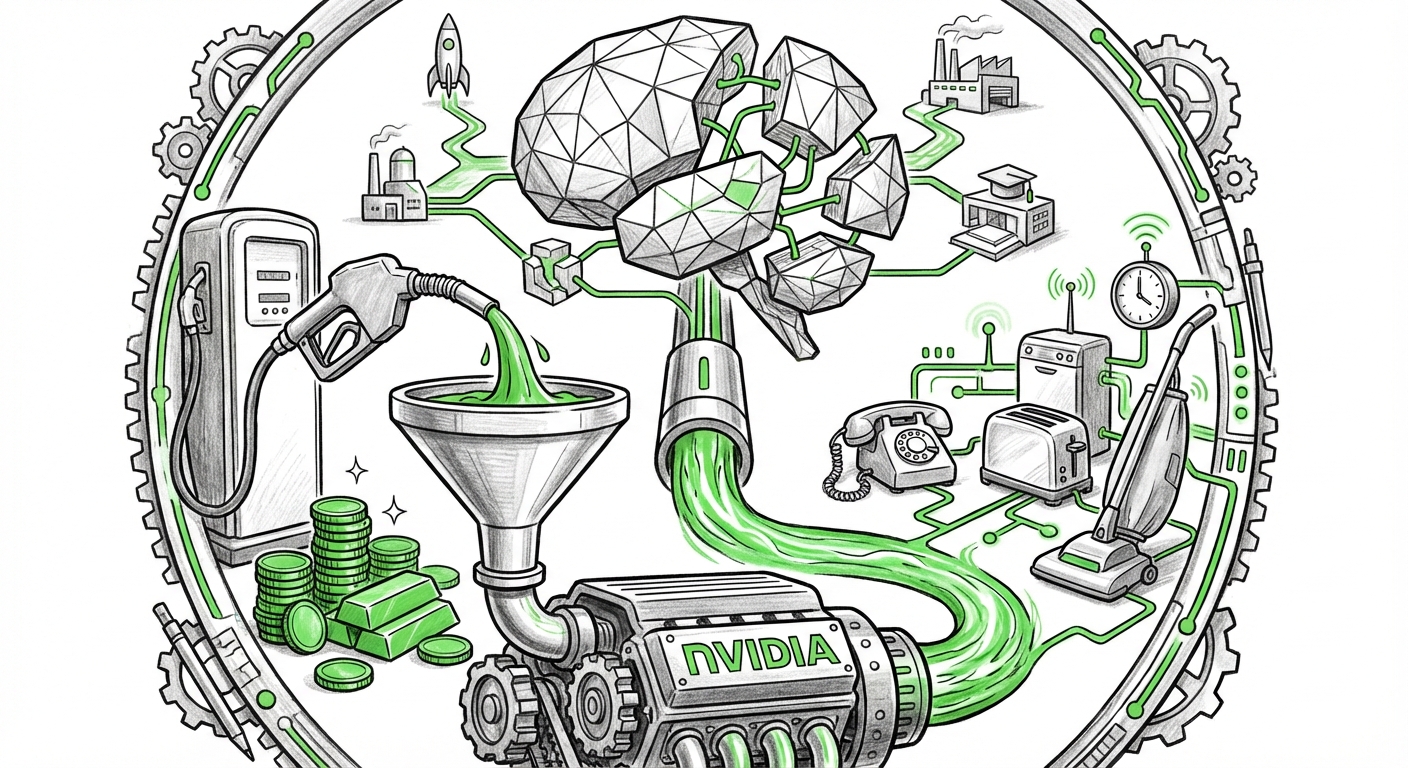
HBM3E stands for High Bandwidth Memory, and it is the fuel that powers the world's most advanced AI systems. Until now, China has trailed behind in making this critical component. This milestone changes the picture. It marks the closing of the "AI memory gap", and the beginning of a new, more competitive era for AI.
Let's break down what happened, why it matters, and what it means for businesses, governments, and everyday people who use AI.
What Is HBM3E, and Why Should You Care?
To understand this news, you first need to understand the problem HBM3E solves.
Think of an AI model as a brilliant chef. The chef can cook amazing dishes, but only if the ingredients are within arm's reach. In computing, the ingredients are data, and the arm's reach is memory.
AI models, the kind behind chatbots, image generators, and self-driving cars, need to process enormous amounts of data very quickly. Regular memory is too slow. It creates a bottleneck. The processor sits waiting for data instead of thinking. That wasted time slows everything down.
HBM fixes this problem. It stacks memory chips vertically and connects them with lightning-fast pathways. The result is a memory system that moves data at incredibly high speeds. It is like upgrading from a narrow two-lane road to a twenty-lane superhighway.
HBM3E is the latest major generation of this technology. It offers more speed and more capacity than earlier versions. It is the kind of memory that top-tier AI accelerators rely on, and it has become one of the most wanted components in the world.
For a long time, only a handful of companies could make HBM3E. And for China, getting access to it was even harder. That brings us to the gap.
The AI Memory Gap: The Bottleneck Nobody Talked About
Most conversations about AI competition focus on processors, the chips that do the math. But memory is just as important. An advanced AI processor without advanced memory is like a sports car with bicycle tires. It cannot reach full speed.
The AI memory gap refers to the distance between China and the global leaders in advanced memory technology. Chinese AI companies had the processors and the ideas, but they struggled to get enough cutting-edge HBM memory to make their systems run at full power.
Trade restrictions and limited domestic capability made the problem worse. China could not simply buy the best HBM3E chips from outside. That left the country's AI ambitions with a serious weak point. It could design world-class AI, but it depended on memory it could not easily source.
This gap had real consequences. It slowed training times. It limited the size of models. It added cost and uncertainty to every project. In the high-stakes AI race, that is a big disadvantage.
So when CXMT announced its first HBM3E chips, it was not just a company milestone. It was a national capability, a clear sign that China is closing the memory gap from within.
First Chips, Big Milestone: What CXMT Actually Achieved
The headline is simple: China's CXMT has made its first HBM3E chips. But what does that really mean?
Making a chip for the first time is a proof of capability. It shows that a company can design, build, and test the technology. It is the difference between knowing how to build a rocket and actually launching one. The design works. Now the hard work of mass production begins.
The significance runs three levels deep.
First, technology. HBM3E is one of the most complex memory products on earth. Producing it requires mastering advanced stacking, packaging, and testing techniques. By reaching this milestone, CXMT has proven that China can play in the top tier of memory technology.
Second, independence. For Chinese AI companies, this means a future with less reliance on imported memory. A domestic source of HBM3E reduces supply chain risk. It also makes Chinese AI systems less vulnerable to outside pressure.
Third, competition. The advanced memory market was a small club. New players change the dynamics. More supply means more options. And more options usually mean better prices and faster innovation for everyone.
It is important to be honest about what "first chips" means. It is not the same as "full production." There will be challenges ahead: improving yields, scaling volume, and proving reliability. But the direction is unmistakable. The gap is closing.
What This Means for the Future of AI
Looking ahead, this milestone is much more than a headline. It reshapes the future of AI in several important ways.
- Faster global progress. When more countries can build the core components of AI, development speeds up. China's AI researchers will no longer be held back by memory limits. That means more models trained, more experiments run, and a faster pace of discovery worldwide.
- A more balanced playing field. For years, advanced AI was concentrated in regions with access to the best chips and memory. The closing of the memory gap spreads the ability to build frontier AI more evenly. We are entering a truly multipolar AI world.
- Stronger supply chains. The world has learned that depending on a single region for critical technology is risky. A new HBM3E producer adds resilience to the global supply chain and gives countries a genuine second option when building AI infrastructure.
- More accessible AI. Memory has been a major cost driver in AI systems. Over time, more competition in memory could lower costs. Cheaper AI infrastructure means cheaper AI products and services, and that benefits businesses and consumers everywhere.
- New applications. With better access to memory, Chinese AI companies can push into areas that once seemed out of reach: larger models, real-time systems, and ambitious research. The effects of that research will be felt around the globe.
In simple terms, the future of AI just got more crowded, more competitive, and more interesting.
Practical Implications for Businesses and Society
For business leaders, this news is not abstract. It touches the bottom line.
If you build AI products, memory is part of your cost structure. More memory suppliers mean more negotiating power and, over time, potentially lower costs. If you buy AI services, competition among providers will likely lead to better features at better prices. If you plan AI projects, a key supply constraint just became less scary.
Supply chain planning should change too. Companies that assumed advanced memory would always come from a few sources should revisit that assumption. A world with multiple HBM3E producers is a world with more options, and more complexity. Smart businesses will track the market and build flexibility into their plans.
For society, the implications are broader. AI is becoming a general-purpose technology, like electricity or the internet. When the building blocks of AI become more widely available, the benefits, and the challenges, spread as well. More countries will be able to develop AI tailored to their own needs, languages, and cultures. That is a meaningful shift toward a more inclusive AI future.
There are also questions to watch. How quickly can CXMT scale production? How will the technology perform in real-world systems? Will other companies follow in its footsteps? These questions will shape the speed of change in the coming years.
Actionable Insights: How to Prepare
So what should you actually do with this information? Here are some practical steps.
1. Watch the production signals
The first chip is a milestone; mass production is the real test. Follow announcements about capacity, yields, and reliability. These will tell you whether the gap is truly closing or just narrowing slowly.
2. Rethink your supply chain
If your business relies on AI hardware, map where your critical components come from. A world with more suppliers is a world with more resilience, but only if you plan for it.
3. Update your cost models
Memory pricing directly affects AI economics. As new competitors enter the market, costs may shift. Build flexibility into your financial planning.
4. Plan for a multi-region AI future
The era of AI concentrated in one region is fading. Prepare for a landscape where AI capability is distributed across the globe, with different regions offering different strengths and priorities.
5. Stay curious but grounded
Milestones are exciting, but they are not overnight transformations. The memory gap took years to create and will take time to fully close. Treat this as the beginning of a trend, not the end of one.
The Road Ahead
The road from "first chips" to "industry standard" is long. CXMT will need to prove that its HBM3E can match the performance, reliability, and efficiency demanded by the world's toughest AI workloads. It will need to win customers and build trust. It will also face competition from established players who are not standing still.
Yet the milestone itself is historic. It marks the moment when the memory gap began to close, when the map of global AI capability started to look different. For anyone watching the technology race, this is a very big deal.
Conclusion: A New Chapter for AI
China's CXMT making its first HBM3E chips is the kind of news that quietly changes everything. On the surface, it is a technical achievement in a niche corner of the chip world. In reality, it rebalances the global AI landscape.
Memory was the invisible bottleneck, the reason some AI systems could run at full speed while others had to wait. With the memory gap closing, AI development becomes more global, more competitive, and more resilient. Businesses will find new opportunities. Society will benefit from a more inclusive AI future.
The future of AI is no longer being built in a single country. It is being built everywhere, and this milestone just proved it.