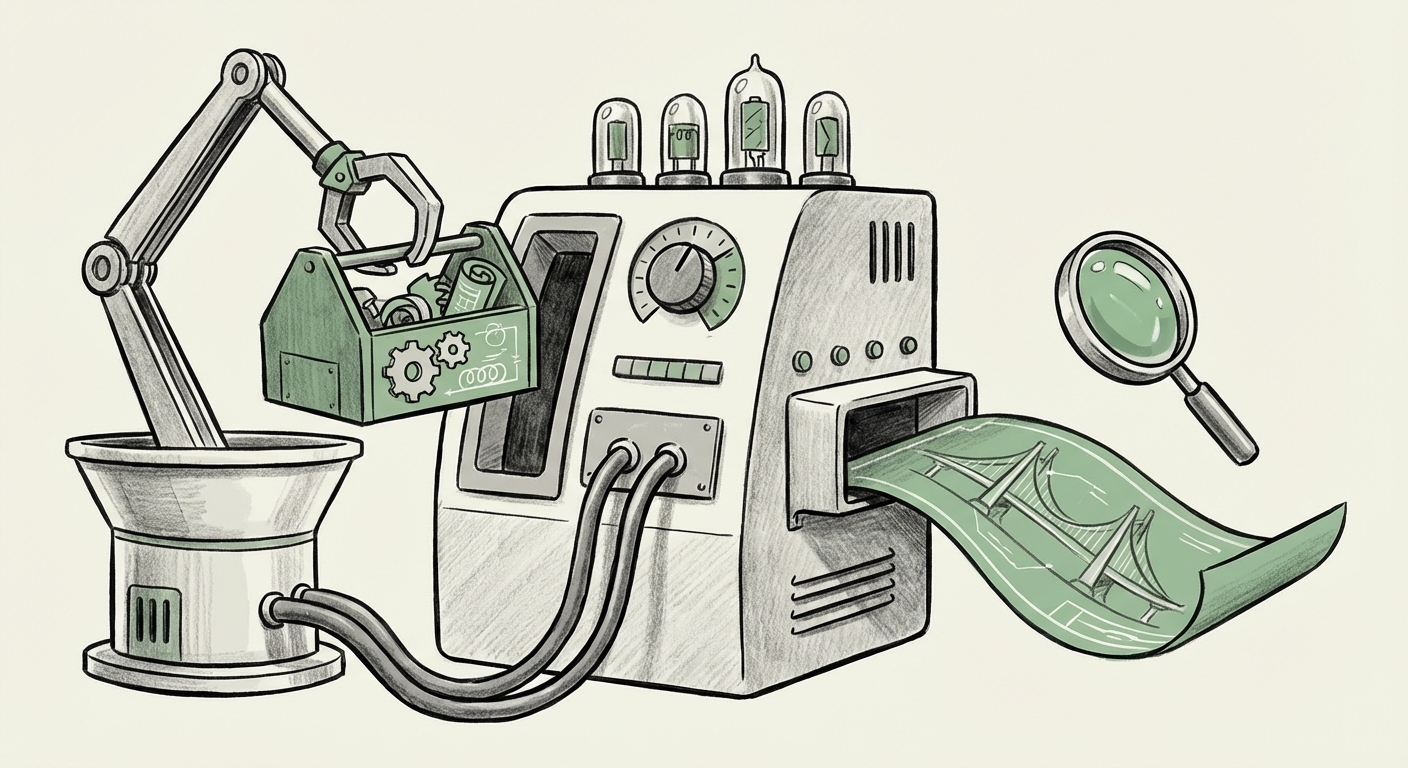
The US DOJ Backs Fair Use for AI Training: A Landmark Moment That Could Define the Future of Artificial Intelligence
The relationship between artificial intelligence and copyright law has been one of the most explosive questions of the AI era. For years, developers, publishers, and artists have argued over a simple but profound issue: when an AI system learns from existing books, articles, images, and code, is that legally allowed? Now, the United States Department of Justice has stepped into the middle of that debate with a clear and powerful answer. In a landmark copyright case, the DOJ has formally backed the position that training AI on copyrighted material can qualify as fair use. That single move could reshape the future of AI development, business strategy, and creative work around the world.
A Major Legal Pivot: What Just Happened?
In a landmark copyright case that has drawn attention from every corner of the technology industry, the US Department of Justice filed a brief supporting fair use for AI training. This is not a small procedural note. When the federal government's top law enforcement and legal agency takes a side in a foundational legal dispute, courts, companies, and lawmakers pay attention.
The core issue in this case is straightforward. AI models are trained on enormous collections of data, including text, images, and other creative works that are protected by copyright. The people who created those works often argue that using them without permission is theft. AI companies argue that the process is more like a student reading books in a library: the student learns ideas and patterns but does not copy the books themselves.
By siding with fair use, the DOJ is saying that this kind of training does not automatically infringe copyright. In the government's view, the act of teaching an AI system from existing works falls within the legal protections that have long allowed people to comment on, quote, study, and transform copyrighted material without asking permission first.
Fair Use in Plain English
To understand why this matters, it helps to understand what fair use actually is. Fair use is a legal doctrine in US copyright law that allows limited use of copyrighted material without a license. It is the reason a book reviewer can quote a few lines from a novel, a teacher can share an article with a class, or a comedian can poke fun at a song. Fair use is the breathing room that keeps copyright from strangling creativity and learning.
Courts typically weigh four factors when deciding whether a use is fair:
- The purpose of the use: Is the new use commercial, educational, or transformative? Uses that add something new are more likely to be fair.
- The nature of the original work: Creative works like novels and songs get more protection than factual works like scientific papers.
- The amount used: Using a small portion of a work is safer than using the whole thing, though even whole works can be fair in the right context.
- The effect on the market: If the new use hurts the original creator's ability to earn money, it is less likely to be fair.
The DOJ's position applies these familiar factors to a totally new situation: the training of AI systems. When a model "learns" from millions of documents, it is not reproducing those documents to sell to readers. It is abstracting patterns, relationships, grammar, and knowledge. For that reason, the government argues, the training process looks more like fair use than like piracy.
Why the DOJ's Voice Carries So Much Weight
A brief from the Department of Justice matters for several reasons. First, the DOJ is the federal agency that represents the US government in legal disputes. Its interpretation of the law signals how the executive branch views the balance between intellectual property protection and technological progress.
Second, courts do not decide these cases in a vacuum. Judges often look to the government's position as a trustworthy guide to public policy. While the DOJ does not control the outcome, its legal reasoning can be persuasive.
Third, the DOJ's endorsement of fair use for AI training sends a powerful signal beyond the courtroom. Federal agencies, international regulators, and industry groups study these filings closely. If the United States is moving toward a permissive framework for AI training, other jurisdictions may follow, creating a more predictable global environment for AI innovation.
What This Means for the Future of AI Development
The stakes here could hardly be higher. If courts had ruled that every copyrighted work used in training data requires a license, the cost and complexity of building large AI models would explode. Developers would need to negotiate with millions of individual rights holders, and smaller companies without giant legal teams would be locked out entirely. The result would be an AI industry dominated by a handful of mega-corporations with the resources to navigate a licensing maze.
A ruling that embraces fair use, by contrast, keeps the doors of AI development open to a much wider group of participants. Universities, startups, researchers, and open-source communities could continue to train models on vast datasets without fear of crippling liability. That is a major boost for the competitive future of AI.
The DOJ's position also suggests a particular vision of how AI should evolve. Under that vision, AI models are learning tools, not copying machines. They absorb patterns and ideas from human culture, then generate entirely new expressions. This mirrors how human creators have always worked: every writer has been influenced by previous writers, every artist has studied the greats who came before. Fair use for AI training treats machine learning as a natural continuation of that human tradition.
That said, the future is not simple. The DOJ's brief is one step in a long legal journey. Courts may still draw important lines. Training that copies a work into an output without transformation, or that clearly competes with the original market, could still be deemed infringing. A model that spits out near-verbatim passages from a novel, for example, would not be saved by the fair use doctrine. The distinction between learning and copying will remain central.
What This Means for Businesses
For businesses that build AI tools, the DOJ's position offers some welcome relief. It reduces the threat that core training activities will be declared illegal retroactively. That makes it easier to plan long-term investments in AI infrastructure, research, and product development.
However, this is not a free pass. Businesses should still pay close attention to a few key areas:
- Output risk, not just input risk: Even if training is fair use, the things a model generates can still infringe copyright. Companies need safeguards to prevent models from reproducing protected works verbatim.
- Transactional data: Some training data comes from sources that are already covered by explicit contracts, terms of service, or licenses. Fair use does not override a contract you agreed to.
- Evolving law: Court decisions, new legislation, and international rules can all shift the balance. Legal clarity is improving, but it is not permanently settled.
- Reputation and relationships: Even where the law is on your side, creators may still feel harmed. Smart companies will build transparent data practices and voluntary licensing programs where appropriate.
For business leaders, the practical takeaway is this: keep innovating, but build a responsible AI program. Track what data your models train on, document your decisions, and make sure you have clear policies for how your AI products should and should not use copyrighted material.
Creators and Innovators: Finding the Balance
It is natural for writers, artists, musicians, and journalists to feel uneasy about this news. After all, fair use means, in some cases, that their work can be used in AI training without payment or permission. For many creators, that feels unfair, even if it is technically legal.
The honest truth is that the tension between creators and AI will not be resolved by any single court filing. Even if the DOJ wins the argument that training is fair use, society still needs to answer deeper questions. How can creators share in the value that AI companies create? How can we ensure human creativity continues to be rewarded and celebrated?
Some of those answers will come from new business models. We are already seeing the rise of data licensing markets, where content owners sell access to high-quality datasets. We are seeing AI companies strike partnerships with publishers. And we are seeing new tools that let creators choose how their work is used by AI systems. These voluntary arrangements may grow in importance even if the legal baseline is fair use.
The best future is probably a mixed one. Fair use provides the legal room for AI to learn broadly from human knowledge, while licensing, attribution, and opt-out mechanisms give creators meaningful control and compensation. Getting that mix right is one of the defining challenges of our time.
Actionable Insights for a Changing Landscape
Whether you are a technologist, a business owner, or a content creator, there are concrete steps you can take right now to prepare for the future this case helps shape:
- Stay informed about AI law: Follow the major court decisions and legislative proposals closely. The legal ground is shifting quickly, and awareness is your best defense.
- Audit your data practices: If you build or operate AI systems, create a clear record of where your training data comes from and why your use is appropriate.
- Invest in provenance and governance: Tools that track data lineage, model behavior, and generated outputs will become essential for compliance and trust.
- Adopt responsible output policies: Filter or block outputs that could replicate copyrighted material. This reduces legal risk and builds user confidence.
- If you are a creator, diversify your revenue: Licensing your work for AI training, offering premium experiences, and building direct relationships with your audience will all become more valuable.
- Watch international developments: AI regulation is a global conversation. The rules that win in Europe, Asia, and elsewhere will influence what is possible in the US market.
The Road Ahead
The Department of Justice backing fair use for AI training is a landmark moment, but it is a beginning, not an end. It clears some of the fog around the single most important legal question facing the AI industry, and it signals that the US government wants to protect the freedom to innovate. Yet the debate over AI and creativity is bigger than any one legal doctrine. It is about how humans and machines will share the cultural landscape.
Expect more court battles, more legislative proposals, and more public debate in the months and years ahead. Expect companies to build more sophisticated governance systems. Expect creators to demand new ways to participate in the AI economy. And expect the boundary between learning and copying to be tested again and again as models become more powerful.
For anyone who cares about the future of AI, this is a moment worth understanding. The decision to treat AI training as fair use does more than protect current models; it opens the door to a generation of AI tools that can learn from the full richness of human knowledge. How we balance that opportunity with fairness to creators will determine whether this powerful technology becomes a force for shared progress or for deepening division. The DOJ has made its choice. Now the rest of us must decide how to build responsibly on top of it.