Meet Atlas: The AI That Turns a Few Photos Into Living 3D Worlds
Artificial intelligence has followed a clear path over the past few years. First, it learned to read and write. Then it learned to see images and understand speech. Then it learned to generate pictures and videos from simple text prompts. Now, with the unveiling of World Labs' Atlas, AI is taking the biggest step yet: it is learning to understand, build, and operate in full three-dimensional space.
Atlas is a single AI model designed to do something that once required huge teams, expensive software, and weeks of work. It can generate 3D worlds from scratch. It can reconstruct real places from ordinary photographs. And it can simulate those worlds so they behave like spaces you could actually walk through. The most striking part? It does all of this from just a few photos.
This is not a small improvement on older tools. It is a signal that AI is moving from creating flat media on a screen to creating interactive, navigable places. That shift will touch gaming, film, real estate, architecture, retail, robotics, and beyond. Here is what Atlas means for the future of AI and how businesses and everyday people will use it.
One Model, Three Superpowers
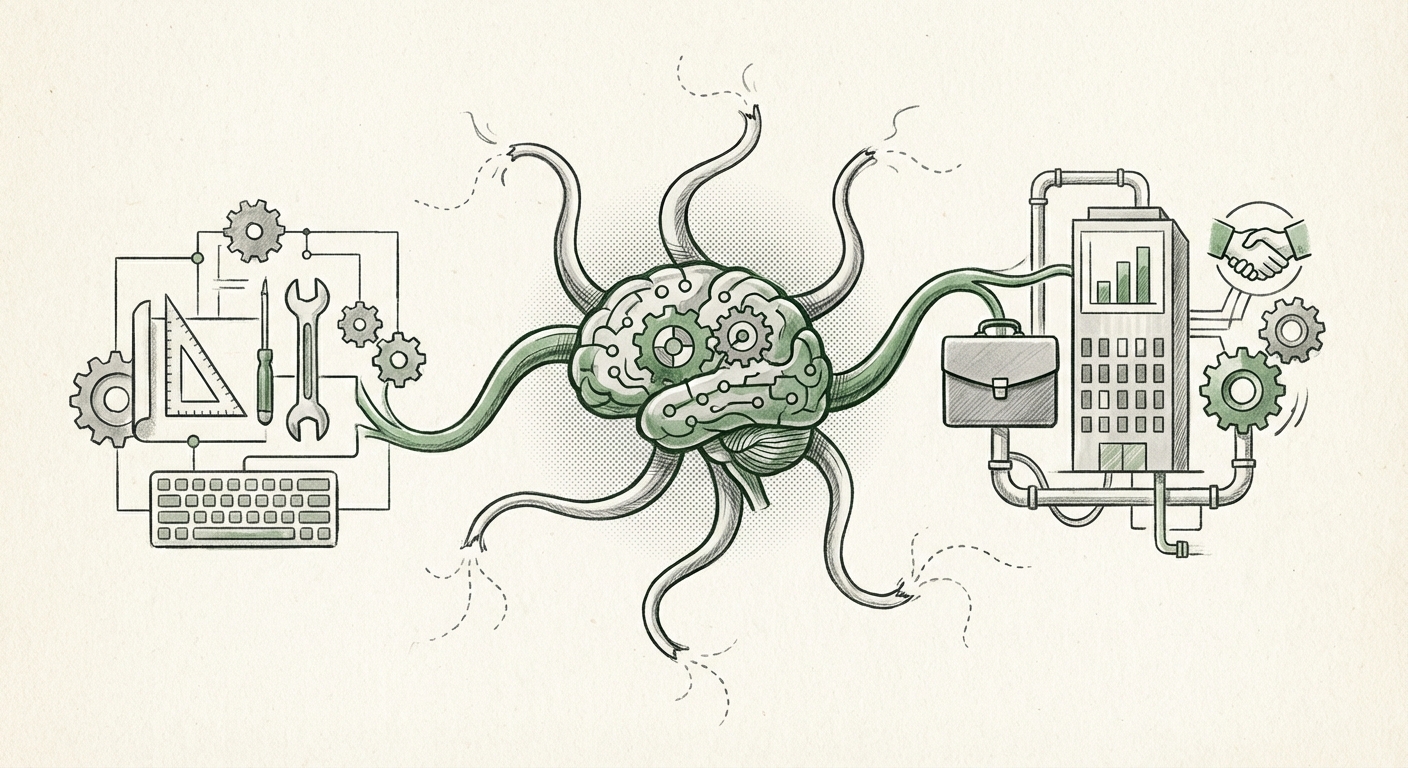
The most important detail about Atlas is that it is a single model. In the past, building a 3D world usually meant chaining together separate systems. One tool might turn photos into a rough digital shape. Another tool might add realistic textures. A third might try to make objects behave physically. Each step created its own errors, and those errors compounded. The final result often looked broken or fake.
Atlas collapses that pipeline into one unified process. Because the same model handles generation, reconstruction, and simulation, the world stays consistent. The geometry matches the visuals. The lighting behaves the way your eyes expect. The objects obey a sense of physical logic. That consistency matters more than any single feature because it is what makes a digital space feel like a real place rather than a collection of tricks.
Think of it this way. Older tools were like a team of translators passing a story from one language to another; details always got lost. Atlas is more like one author who writes the whole novel in a single language. The result is coherent from beginning to end.
This also points to a deeper change in how AI understands the world. Most popular AI models today are essentially pattern matchers. They have seen billions of images and texts, so they know what a chair usually looks like or what a beach scene tends to contain. But they do not truly understand that a chair has a back you can lean against, or that a beach is a place with depth and distance. Atlas represents a move toward what researchers often call spatial intelligence: the ability to reason about how objects sit in space, how they relate to each other, and how a viewer could move around them.
Why "Just a Few Photos" Changes Everything
To appreciate how big a deal this is, consider what it used to take to create a digital version of a real place. Professional studios used laser scanners, drones, fleets of cameras, and specialised capture rigs costing enormous sums. A realistic 3D scan of a single building could require hundreds of thousands of individual photos carefully stitched together by powerful computers.
Atlas changes the input requirements dramatically. A handful of ordinary snapshots, the kind anyone could take with a phone, appears to be enough to reconstruct a space that feels complete and navigable. The model fills in the missing details intelligently, predicting what lies around corners and beyond the edges of the frame.
This is significant for three reasons.
First, it makes 3D creation accessible. You no longer need a studio budget to create immersive environments. A small design firm, a solo game developer, or a local real estate agent could potentially create rich 3D experiences using images they already own.
Second, it makes the physical world a reusable resource. Every real building, home, store, or factory that has ever been photographed becomes potential source material for a digital twin. Companies are sitting on mountains of photos they never thought of as data. Atlas suggests that those photos could become the foundation of interactive 3D records of their physical assets.
Third, it speeds up the loop between imagination and reality. When creating a world becomes as easy as taking a few photos or sketching a rough scene, people can iterate quickly. They can test ideas in 3D before spending money and time in the physical world.
The Bigger Trend: AI Is Learning Space and Time
Atlas did not appear in a vacuum. It is part of a clear trend across the AI industry. Text models gave machines language. Image models gave them sight. Video models are now giving them an understanding of how scenes change over time. The logical next step is models that understand space itself: depth, layout, physics, and the ability to move through an environment. These are often called "world models."
Why does this matter so much? Because the real world is not a static picture. It is a continuous, three-dimensional place where things happen. If AI is ever going to help us in the physical world, it needs to understand that world the way we do. A robot vacuum needs to know not just that a chair exists, but how to navigate around it. An autonomous vehicle needs a model of the street that includes distance and movement. A warehouse robot must understand how boxes stack and shift.
Atlas is an early but telling example of AI building a shared model of space that it can act within. The line between "AI that describes the world" and "AI that operates in the world" is starting to blur. This has major implications for robotics, augmented reality, and any field where a machine must interact with physical surroundings.
What This Means for Creative Industries
For gaming, film, and interactive entertainment, the implications are immediate and exciting.
Game development is about to become faster and more experimental. Designers could feed the model concept art or location photos and receive an explorable scene back in minutes. Teams could prototype a dozen different level designs in the time it once took to build one. Smaller studios, which previously could not compete with the budgets of major publishers, may suddenly have access to world-building power that was once reserved for the giants.
Film and television production could change just as much. In pre-production, directors often create "previsualization", simple 3D versions of scenes to plan camera angles and lighting. Atlas could make those previews far more realistic and far cheaper. In virtual production, where actors perform in front of giant LED screens showing digital backgrounds, a model that can reconstruct real locations from photos means a crew could shoot anywhere on Earth without leaving the studio.
Architecture and urban planning will also feel the effect. Architects already use 3D models, but those models are expensive to build and hard to update. A tool that reconstructs a building or an entire city block from a few photos could let planners show clients, officials, and neighbours exactly what a project will look like before a single shovel enters the ground.
The creative opportunity here is not about replacing human artists. It is about giving them better assistants. The artists still decide what worlds to make, what mood to create, and what story to tell. Atlas removes the heavy technical lifting between the vision and the finished environment.
Practical Impact for Businesses
Beyond entertainment, businesses of all kinds should start thinking about how spatial AI changes their operations.
Real estate is the most obvious candidate. A seller with a few clear photos of a property could generate a virtual walkthrough for buyers across the world. Instead of relying on flat listing images, potential buyers could explore homes as if they were standing inside them. That could speed up buying decisions and open markets to remote investors.
Retail and e-commerce have equally promising applications. Imagine a furniture store that reconstructs a customer's room from a couple of snapshots, then fills it with realistic 3D versions of its sofas and lamps so the customer can see how everything fits before purchasing. That kind of experience was previously available only to companies with large technical teams. Atlas-level tools could make it standard.
Training and safety are another high-value use case. Employees in industries like manufacturing, energy, and healthcare often need to practise procedures in realistic settings. Simulated 3D environments of real facilities could let them train without risk. A worker could rehearse an emergency response in a faithful digital copy of their actual building, not a generic stand-in.
Insurance and facilities management could use photo-based reconstruction to document the state of buildings after disasters or during routine inspections. A few photos taken by a field worker could generate an accurate 3D record, making claims processing and maintenance planning more reliable.
The common thread is this: any business that owns physical spaces, sells physical products, or depends on physical processes now has a reason to pay attention to spatial AI.
Responsibilities and Risks to Watch
Every powerful technology carries responsibilities, and Atlas is no exception. The ability to reconstruct real places from a few photos raises serious questions about consent and privacy.
The internet is full of photos of homes, offices, schools, and other private spaces. If those images can be turned into believable 3D environments, then people may find digital versions of their homes appearing in places they never approved. This could be used for harassment, for more convincing scams, or simply in ways that make people deeply uncomfortable.
There are also security concerns. Sensitive facilities, data centres, laboratories, government buildings, private estates, are often visible in photos shared online by visitors or employees. A tool that can reconstruct those spaces could give criminals or hostile actors a detailed virtual tour they could never obtain in person.
Misinformation is another worry. We have already seen how convincing fake images and videos can be. Convincing fake environments take that risk to another level. A fabricated 3D world made to look like a real place could be used to spread false claims, a "walkthrough" of a building that does not exist, or a simulated event designed to look real.
These risks do not mean the technology should be stopped. They mean it needs thoughtful guardrails. Companies deploying spatial AI should build in clear labelling and watermarking so synthetic worlds are identifiable. Photo-sharing platforms and policymakers should discuss rules around using images of private spaces to build digital twins. As with earlier waves of AI, the responsibility falls on builders to design systems that respect the people they serve.
Actionable Insights: How to Prepare
If you run a business or lead a creative team, you do not need to wait for the perfect product release to start preparing. Here are concrete steps you can take today.
Start treating your photos as assets. Audit the visual data your organisation already holds. Photos of your facilities, products, and projects are future raw material for spatial AI. Store them well, organise them, and think about who owns the rights to them.
Run a small pilot. Pick one high-value use case, a flagship property, a popular product, a safety training scenario, and test how world-building AI handles it. The earlier you experiment, the sooner you will understand what works and what does not.
Review your privacy and consent policies. If your business photographs spaces that belong to others, clarify whether those images could be used to create 3D reconstructions. Update contracts and permissions if needed.
Build the right skills. The people who will thrive in this era are not necessarily expert 3D programmers. They are designers, storytellers, and operators who know how to guide AI tools. Look for team members who combine creative judgment with technical curiosity.
Plan for falling costs. Technologies like this tend to get dramatically cheaper and easier within a short time. Avoid building expensive, rigid workflows around today's limitations. Design your process as if this capability will soon be a cheap commodity that everybody has.
The Road Ahead
Atlas is best understood as a milestone on a long road. We are moving from AI systems that merely describe the world to AI systems that model it, build it, and eventually move through it. The difference is like the difference between reading a map and walking through a city.
For creators, the arrival of tools like Atlas means imagination becomes the main bottleneck. For businesses, it means the physical world is becoming programmable in ways that were unthinkable just a few years ago. For all of us, it is a reminder that AI's real promise is not just making words or pictures. It is helping us understand, preserve, and reshape the spaces we live in.
The world-building era of AI has begun. The only question is what worlds we will choose to build.