AI's Energy Scaling Laws: Why Electricity Is the New Bottleneck for Smarter Models
For years, the race to build more powerful artificial intelligence was measured in chips, data, and raw computing power. The biggest models got bigger. The fastest supercomputers got faster. And almost every conversation about AI eventually landed on the same question: how much compute can we throw at a problem?
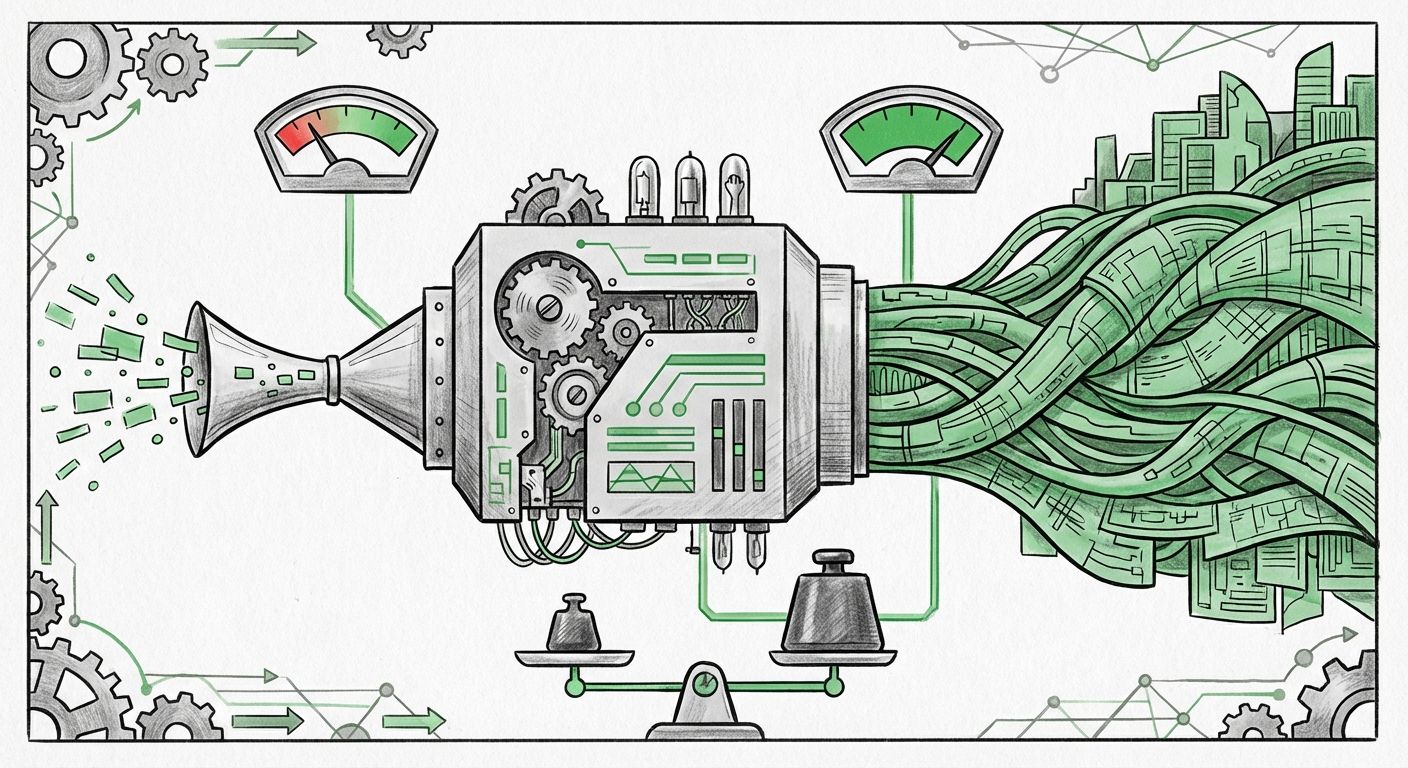
But a quieter, more important shift is now underway. The AI community is starting to talk about a different kind of scaling law, not one based on performance, but one based on energy. The idea is simple to state and hard to ignore: as AI models become more capable, their appetite for electricity follows its own predictable growth curve. Understanding that curve may now matter more than understanding any benchmark score.
This article explores what the energy scaling laws of AI mean for the future of intelligence, for businesses that depend on it, and for a world that is already trying to power everything from electric cars to air conditioners. The bottom line: energy is no longer just an operating cost for AI. It is becoming the single most important constraint on what AI can do next.
What Are Energy Scaling Laws?
To understand energy scaling laws, it helps to understand how AI researchers talk about scaling in general. In machine learning, a "scaling law" is a predictable mathematical relationship. Researchers noticed years ago that when you increase three things, the size of a model, the amount of data it learns from, and the compute used to train it, the model's performance improves in a smooth, predictable way.
This discovery changed the entire industry. Instead of hoping for breakthroughs, AI developers could simply plan for them. Add more of everything, and you could confidently expect better results. It felt almost like a law of nature.
The energy scaling law looks at the other side of the same coin. Every calculation an AI performs requires physical work. Electricity must flow through chips. Those chips generate heat. That heat must be removed with cooling systems. Even the most elegant software in the world cannot escape physics. If you train a larger model, you do not just pay a onetime financial cost, you commit to an energy cost that grows as the model grows.
This matters because energy is different from compute. Compute can be manufactured. Chips can be built in new factories. But electricity must come from power plants, transmission lines, and energy sources that take years, often decades, to build. When an AI system's energy needs grow faster than the grid can expand, the grid becomes the real limit on progress.
Why Energy Now Determines AI Growth
For most of AI's recent history, energy was an afterthought. Early models were small enough that their electricity bills barely registered. Even as models grew, the focus stayed on hardware costs and training time. But the pattern has changed in a fundamental way.
Modern AI development has moved from occasional training runs to constant, always-on operation. A model that is trained once and then used by millions of people every day is an inference engine, it runs continuously, answering questions, generating text, analyzing images, and making decisions around the clock. Each individual request is tiny. But multiplied by billions of requests, the steady draw of electricity becomes enormous.
This is where the energy scaling law becomes uncomfortable. Training a model is like building a skyscraper: a huge but temporary burst of effort. Running AI at scale is like lighting that skyscraper forever: a constant, unending demand. The energy needed for everyday AI use may soon be greater than the energy needed to create the models in the first place.
There is also a second dynamic at work. As AI systems get smarter, people trust them with bigger tasks. A smarter assistant may be asked to handle a longer document, generate a more complex report, or reason through a harder problem. These bigger tasks require the model to "think" longer, which means more computing steps, and more energy per request. In other words, capability itself drives consumption. The more useful AI becomes, the more energy society willingly spends on it.
When Intelligence Meets the Power Grid
The collision between AI growth and energy supply is most visible in the data center. Data centers have always needed electricity, but traditional computing workloads were often flexible. A bank could run its overnight calculations whenever electricity was cheapest. A cloud provider could shift work between regions.
AI is different. Training large models requires massive, consistent power over long periods. Interruptions are expensive and disruptive. And when models are serving users in real time, they need power on demand, every second of every day. This turns a data center from a flexible energy user into something closer to a giant, unrelenting machine.
Communities and utilities are beginning to feel the pressure. In many areas, the electrical grid was built for a world where demand grew slowly and predictably. AI has broken that pattern. Sudden requests for hundreds of megawatts, enough to power entire towns, are becoming part of ordinary business planning. Grid operators must answer difficult questions. Where will the power come from? Can the transmission lines handle it? What happens when a heat wave pushes home air conditioning to record levels while AI workloads run at full strength?
These questions explain why energy is now appearing in decisions where it never did before. Where should a new AI data center be built? Not just where land is cheap, but where power is available, reliable, and affordable. Which regions will host the next generation of AI infrastructure? Almost certainly those with access to large, stable electricity sources and modern grids.
The New Efficiency Race: Getting More Intelligence per Watt
If energy is the new constraint, then efficiency is the new competitive battleground. The future of AI will not belong to whoever builds the biggest model. It will belong to whoever gets the most intelligence out of every watt of electricity.
This efficiency race is already taking shape on several fronts:
- Better chips: New processor designs are being built specifically for AI, with a focus on performance per watt rather than raw speed alone.
- Smarter algorithms: Techniques that compress models, remove unnecessary calculations, or let multiple tasks share the same work can dramatically cut energy use without sacrificing quality.
- Right-sized models: Instead of always using the largest model available, developers are learning to match model size to task difficulty. Simple questions do not need the full force of a giant model.
- Flexible timing: Some training work can be scheduled when renewable energy is plentiful, such as sunny afternoons for solar power or windy nights for turbines.
- Better cooling: Advanced cooling methods reduce the large share of data center electricity that goes to keeping machines from overheating.
But there is an uncomfortable paradox in all of this. Making AI more efficient will not necessarily reduce total energy use. History shows the opposite. When something becomes cheaper and more efficient, people use more of it. This pattern, often called the efficiency paradox, is already visible in AI. A model that costs less to run becomes a model that runs more often. A cheaper AI assistant becomes a default tool for millions more tasks. The result is that efficiency gains can be swallowed by increased usage.
This is exactly why energy scaling laws matter so much. They remind us that we cannot simply engineer our way out of the problem with efficiency alone. We need a coordinated approach: more efficient AI, cleaner energy, and smart decisions about which AI uses are truly worth the power they consume.
What This Means for Business
For business leaders, the energy dimension of AI is no longer a technical footnote. It is becoming a strategic issue with real financial consequences. Companies that understand this early will have a significant advantage over those that treat electricity as an invisible utility bill.
Total cost of ownership has changed. When a company evaluates an AI project, the biggest long-term cost may not be software licenses or hardware leases. It may be the electricity needed to run models continuously. Energy price volatility now flows directly into the cost of AI products, and businesses must plan for that exposure.
Location is becoming an energy decision. Companies building their own AI infrastructure will increasingly choose locations based on power availability, grid reliability, and access to clean energy. Power-advantaged regions will attract the next wave of AI investment, while energy-constrained regions may fall behind.
Procurement will demand transparency. Large enterprises are already being asked to report their carbon footprints. As AI becomes a bigger share of their energy use, they will demand that AI vendors disclose how much electricity their models consume. Energy efficiency will become a selling point, just as speed and accuracy are today.
New business opportunities are emerging. The same AI technologies that consume energy can also be used to save it. AI is already being applied to optimize energy grids, reduce waste in factories, manage building heating and cooling, and predict renewable energy output. Companies that connect these two worlds, AI as an energy consumer and AI as an energy saver, will find themselves at the center of the next industrial opportunity.
Practical advice for business leaders:
- Audit the real energy footprint of your AI usage, not just your cloud bill.
- Ask your AI vendors about their efficiency efforts and power sources.
- Design AI systems that use the smallest model that can do the job well.
- Factor energy availability into decisions about where to build or buy AI capacity.
- Look for ways your own operations can become more energy-efficient using AI.
What This Means for Society and Policy
Energy scaling laws are not just a business problem. They raise questions about fairness, climate, and the kind of future we want to build with AI.
The fairness question is real. When AI data centers compete for electricity with homes, hospitals, and schools, the results can be painful. In communities where the grid is tight, a new AI facility can drive up electricity prices for everyone. Policymakers will need to ensure that the benefits of AI, and the costs of powering it, are shared fairly.
The climate question is urgent. The world is simultaneously trying to electrify transportation, heating, and industry while also building more AI. These goals can either compete or cooperate. If AI's energy comes from fossil fuels, it could worsen climate change. If AI's growth forces faster investment in renewable energy, storage, and modern grids, it could accelerate the clean energy transition. The outcome depends on choices made now.
Transparency must become the norm. Just as we require nutritional labels on food and fuel economy labels on cars, we may soon require energy labels on AI systems. Simple, comparable information about how much electricity a model uses would empower buyers, regulators, and the public to make better decisions.
Planning and coordination are essential. Grid modernization, permitting reform, and investment in transmission lines take time. AI moves fast; infrastructure moves slowly. Policymakers who start planning for AI's energy needs today will spare their communities the painful shortages of tomorrow.
The Future of AI Is an Energy Story
Looking forward, it is becoming clear that the next chapter of AI will be written as much by engineers as by physicists, energy experts, and grid planners. The era of ignoring energy is over. The era of treating it as a first-class design constraint has begun.
This does not mean AI progress will stop. It means AI progress will take new shapes. We are likely to see more diverse models, smaller, specialized systems that deliver strong performance with modest energy demands. We are likely to see AI development move to places blessed with abundant clean power. And we are likely to see an even deeper partnership between AI researchers and energy innovators, with each field pushing the other forward.
In many ways, this is a healthy development. A technology that learns to respect physical limits is a technology maturing into something sustainable. The energy scaling laws of AI are not a warning against progress. They are a roadmap for making progress that can actually last.
The organizations that treat energy as a strategic advantage, rather than an inconvenient cost, will define the next era of AI. The researchers who measure their work in intelligence per watt, alongside traditional accuracy metrics, will deliver the models that the world can afford to run. And the societies that plan electricity systems hand in hand with AI strategy will capture the benefits while avoiding the worst collisions.
The fundamental message is simple: we used to ask whether we could build smarter AI. Now we must ask whether we can power it. Energy has become the quiet gatekeeper of artificial intelligence, and how we manage that gate will shape everything that comes next.